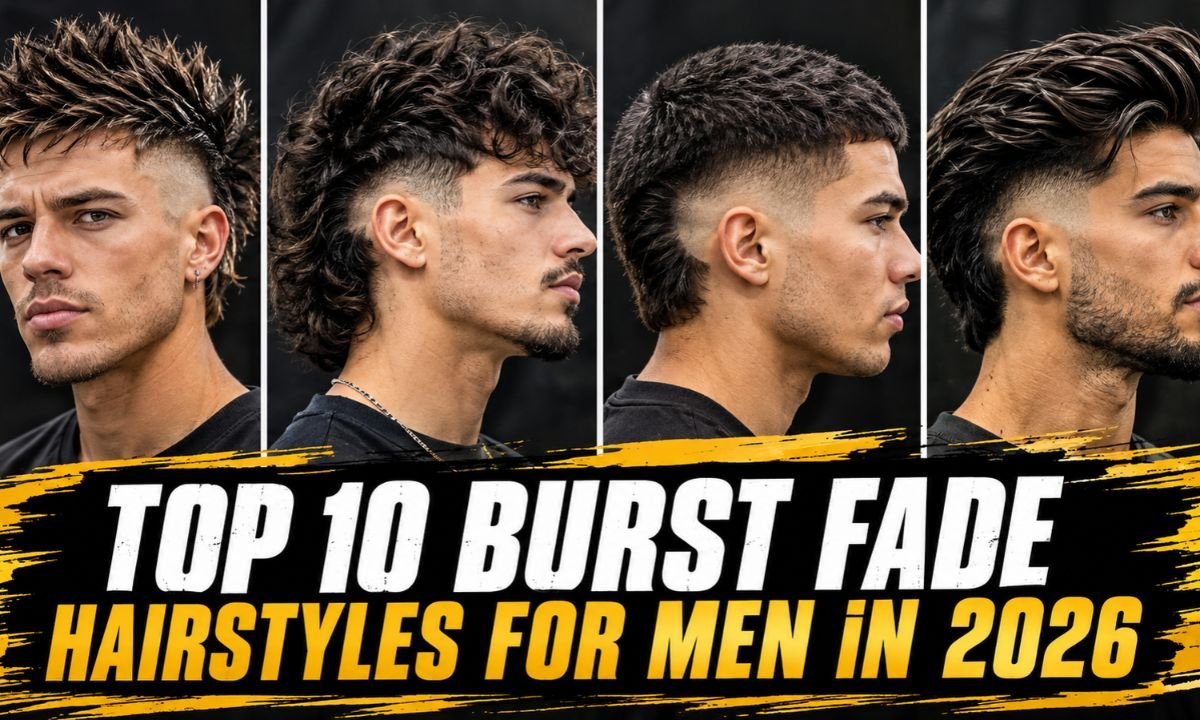
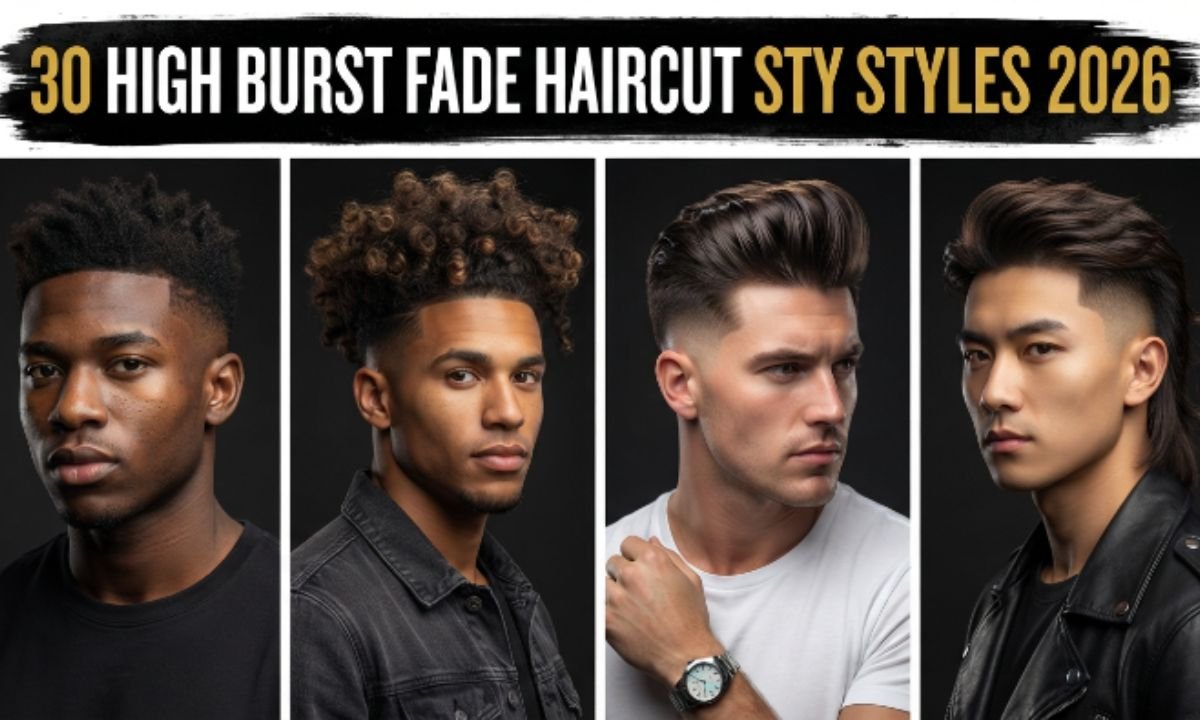
Ever notice how some fades just look sharper than others, even at the same length? The secret is usually the curve around the ear. That curve has a name — the burst fade — and it’s behind the sharpest men’s haircuts trending right now. Here are the 10 versions worth knowing before your next appointment.
A burst fade is a fade that curves around the ear in a semicircle instead of cutting straight down the side of the head. Barbers sometimes call this the “burst arc.” It can fade all the way to skin, blend to a short guard length, or taper gradually for a softer finish.
The technique works because it follows the natural shape of your ear rather than fighting it. That’s why it looks clean from the front, the side, and the back — not just from one angle.
Burst Fade vs Other Fades: What Makes It Unique?
A drop fade curves down toward the back of the head. A temple fade stays high and boxy around the front hairline. A burst fade does neither — it wraps around the ear specifically, leaving the rest of the fade line straighter.
This makes the burst fade more versatile for round and oval faces, since the curved line doesn’t add extra width the way a straight temple fade can. It’s also easier to pair with longer top styles like mohawks and mullets, since the ear stays the visual focal point.
Fade Height Explained: Low, Mid, High, and Skin
Fade height changes how bold the haircut looks. Here’s a quick breakdown:
Fade Height
Where It Starts
Best For
Low Burst
Just above the ear
Office settings, first-timers
Mid Burst
Temple level
Everyday wear, most face shapes
High Burst
Near the crown
Bold looks, angular faces
Skin Burst
Faded to bare scalp
Maximum contrast, sharp lines
Burst Taper
Gradual blend, no skin
Low-maintenance, softer looks
Low and mid heights suit conservative settings. High and skin bursts suit guys who want their haircuts to make a statement.
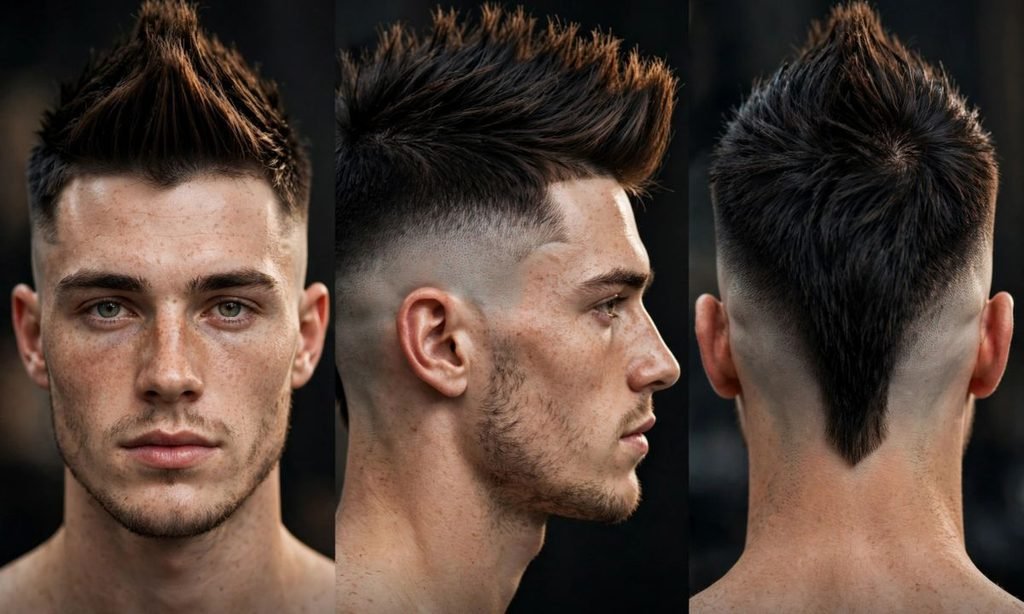
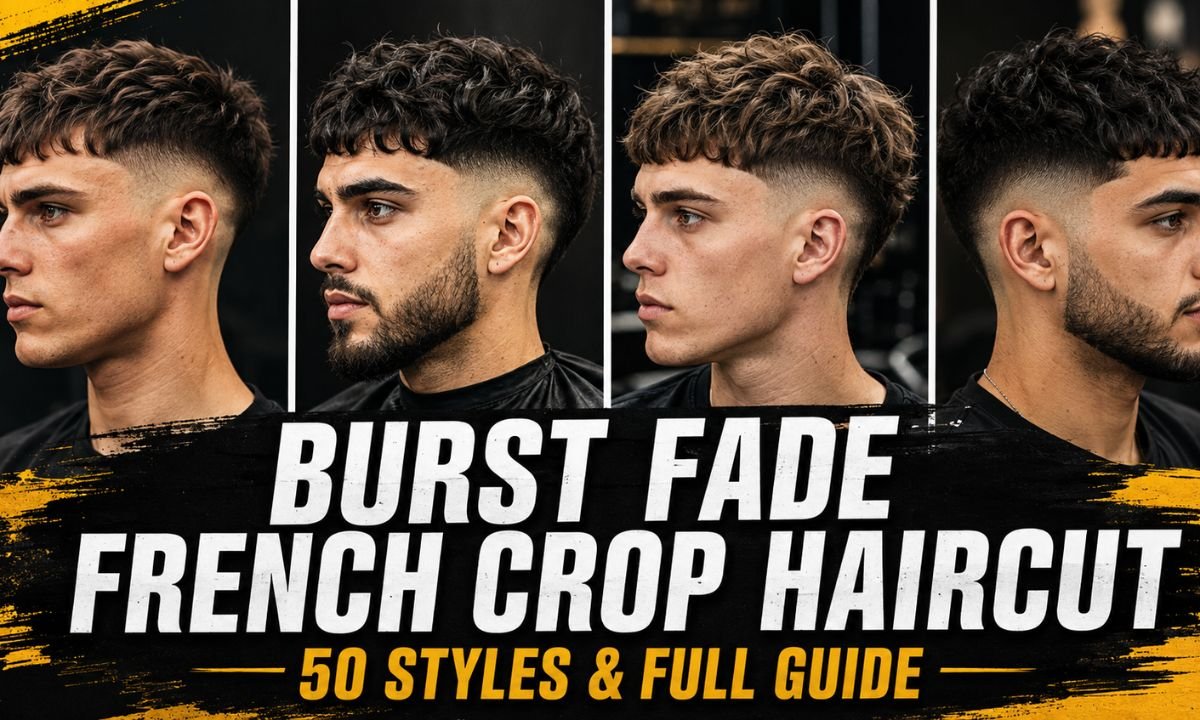
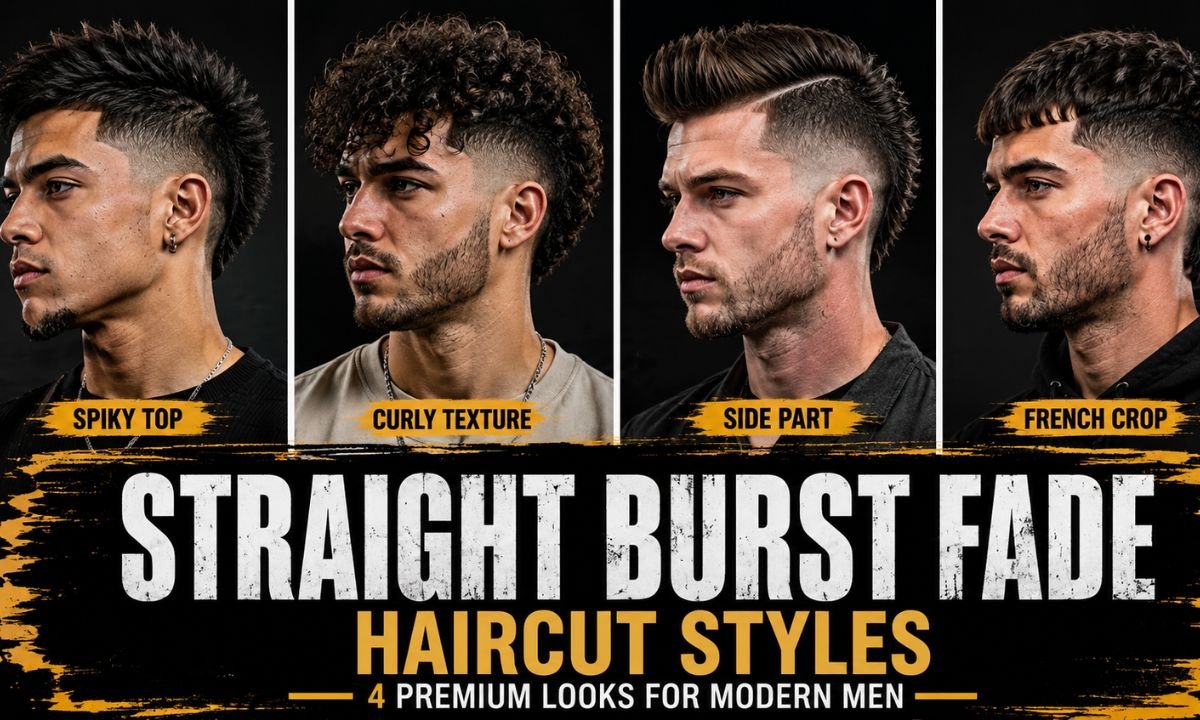
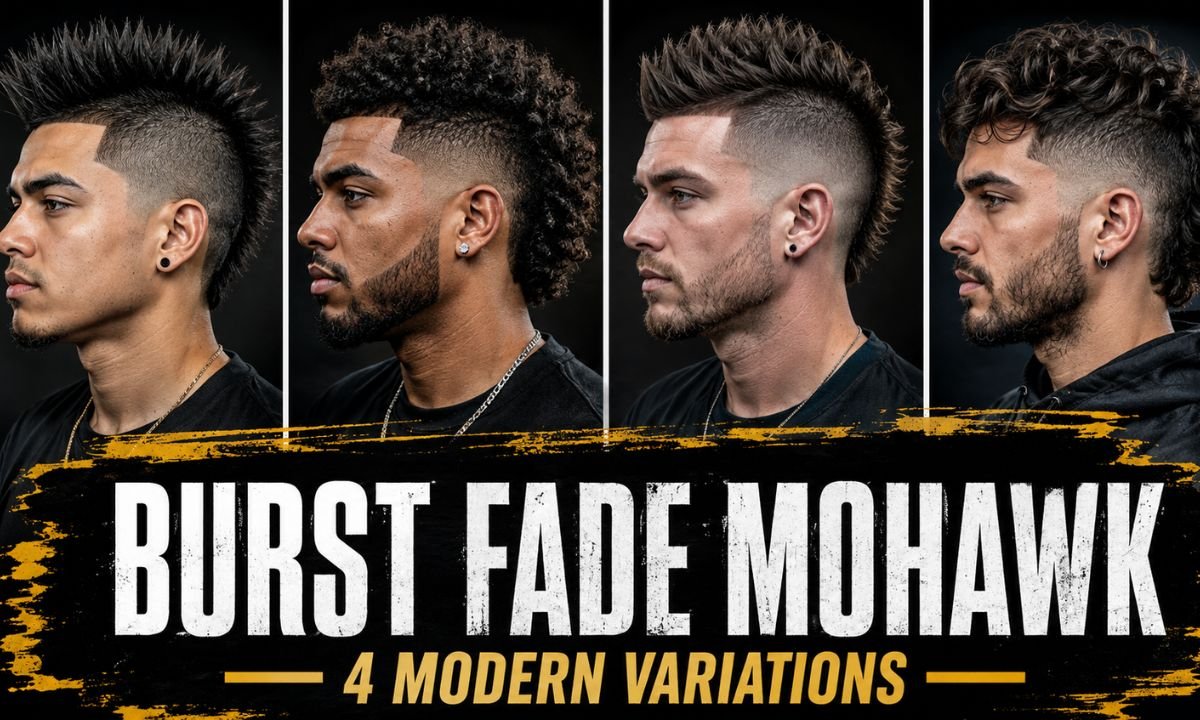
A strip of length runs from front to back while both sides fade tight into a high or skin burst. The top can be styled spiky, smoothed into a peak, or brushed forward depending on how bold you want it. This is the most attention-grabbing style on the list, and it works best with thicker hair that holds shape without much product. Many barbers consider it the signature burst fade look because the contrast between the strip and the fade is so sharp.
Best For: Thick or coarse hair; square and oval faces.
Tell Your Barber: “High burst fade to skin, mohawk strip about 3 inches, spiked upward.”
Maintenance: Trim every 2–3 weeks to keep the strip defined.
2. Burst Fade Mullet
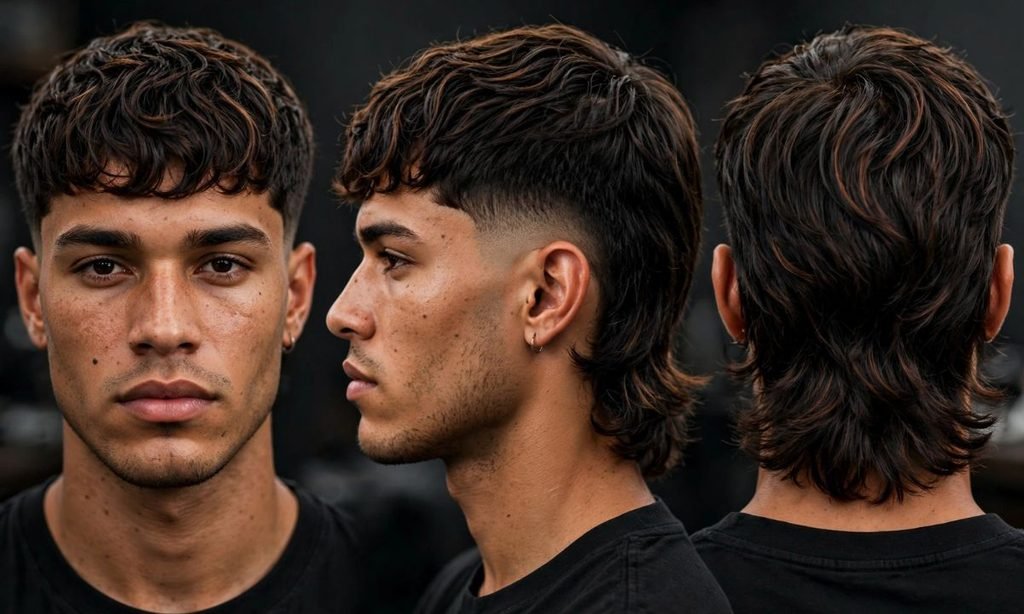
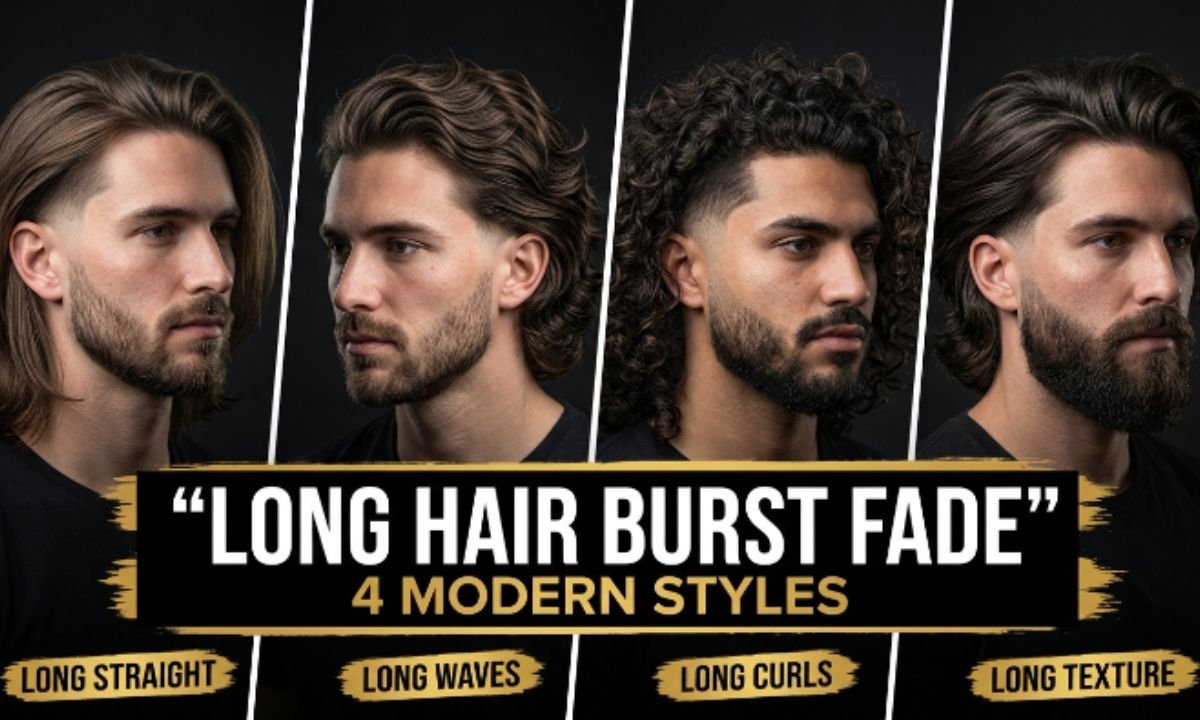
The front and top stay short while the nape grows out long, and the sides burst-fade in between. This creates a strong contrast between a “business” side and a “party” back. Layering at the back keeps it from looking bulky, and color techniques like balayage or dark-to-light ombre add extra depth. It suits guys who want a distinct silhouette without going full mohawk.
Best For: Guys who want a non-traditional shape and wavy or straight hair.
Tell Your Barber: “Mid burst fade sides, short on top, leave 4 to 5 inches at the nape.”
Maintenance: Trim sides every 3 weeks; trim back length only every 8–10 weeks.
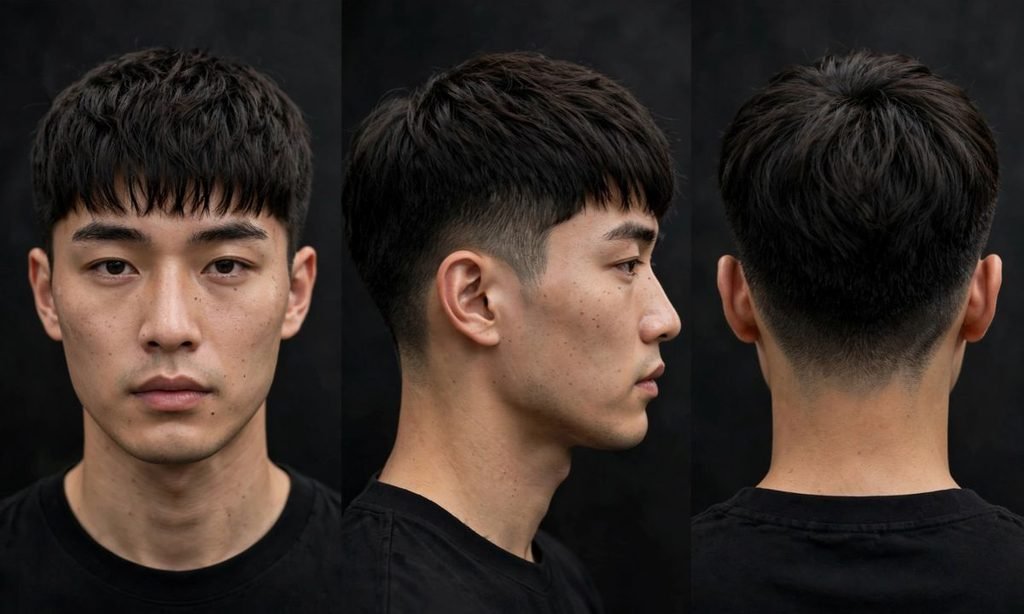
3. Burst Fade Textured Crop
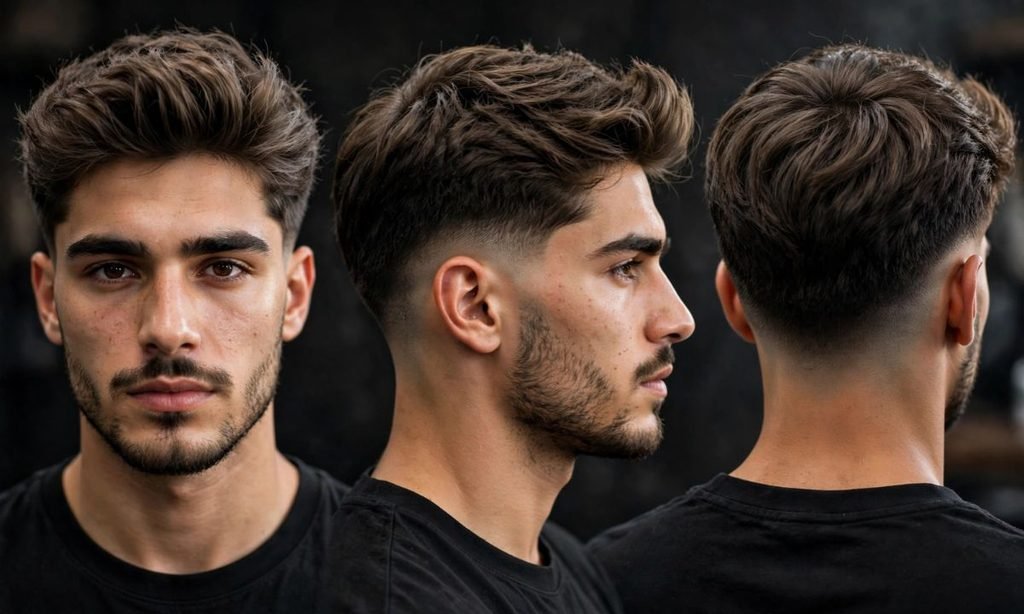
A short, choppy top with forward-pushed fringe sits above a low or mid burst fade. Point-cutting gives the top a rough, piece-y texture instead of a smooth finish. Matte paste keeps it looking natural rather than slicked down. This style suits straight to wavy hair and works especially well on oval and round faces since the fringe softens the forehead.
Best For: Straight to wavy hair; oval and round faces.
Tell Your Barber: “Low burst fade, point-cut the top for texture, push the fringe forward.”
Maintenance: Trim every 3–4 weeks; apply matt paste to damp hair.
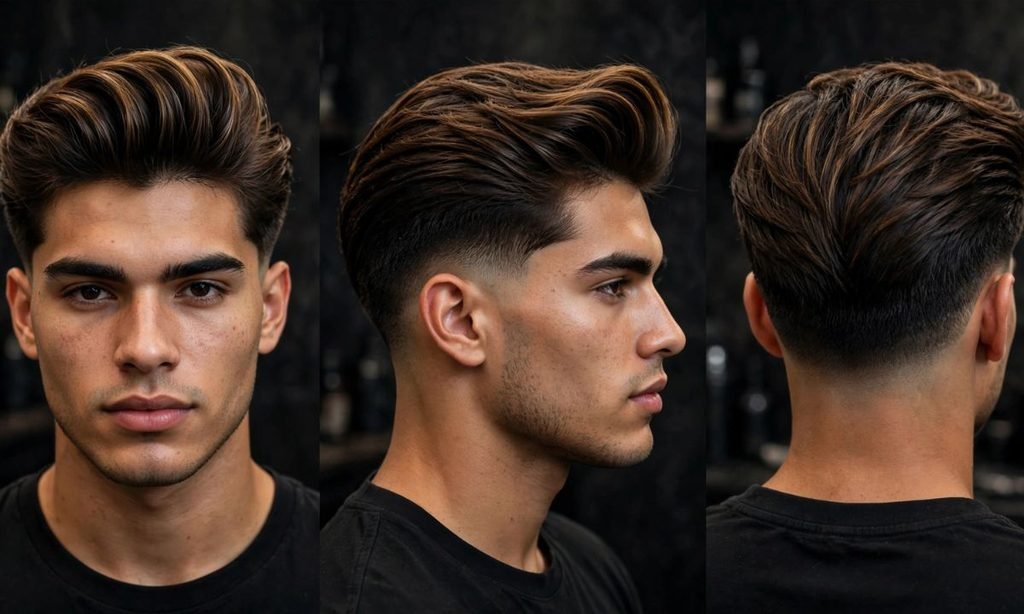
4. Burst Fade Pompadour
Volume builds at the front and sweeps upward and back, contrasting against a mid or high burst fade underneath. This is one of the longer top styles here, often reaching 3 to 5 inches. Blow-drying with a round brush creates the lift, and a strong-hold spray locks it in place. It’s a polished, classic option that still looks current thanks to the burst fade underneath.
Best For: Straight or wavy hair with natural volume; oval and oblong faces.
Tell Your Barber: “Mid burst fade, keep 4 inches on top for a pompadour, and leave enough length to sweep back.”
Maintenance: Trim every 4 weeks; blow-dry with a brush and finish with hairspray.
5. Burst Fade Faux Hawk
This softens the mohawk into something more wearable day-to-day. A raised center ridge sits on top while a high burst fade tapers the sides. Matte clay holds the ridge upward without the stiff, shiny look of gel. It gives guys the mohawk silhouette without committing to the full, sharper version.
Best For: Guys wanting a mohawk style without the commitment; medium to thick hair.
Tell Your Barber: “High burst fade, faux hawk ridge about 2 inches, styled up with matte clay.”
Maintenance: Trim every 3 weeks; clay is applied daily to hold the ridge.
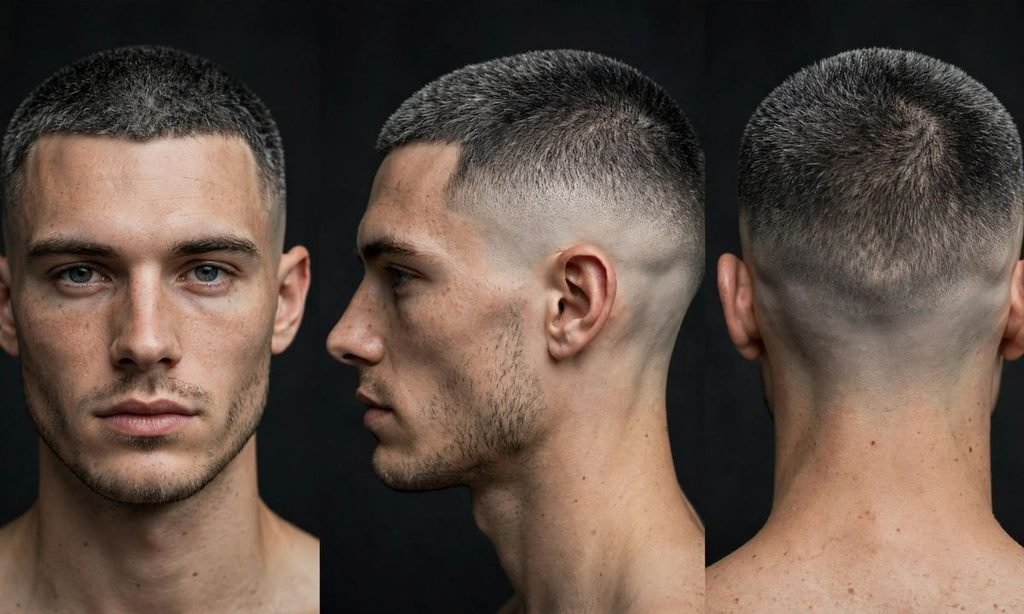
6. Burst Fade Buzz Cut
This is the simplest style on the list — an even, short buzz on top that fades straight to skin around the ear in a burst arc. There’s no styling involved, which makes it the fastest option to maintain. It works particularly well on grey or salt-and-pepper hair, where the clean scalp line looks intentional rather than accidental.
Best For: Any hair type; grey, thinning, or low-maintenance guys.
Tell Your Barber: “Skin burst fade; buzz the top evenly with a half-inch guard.”
Maintenance: Trim every 2–3 weeks to keep the line crisp.
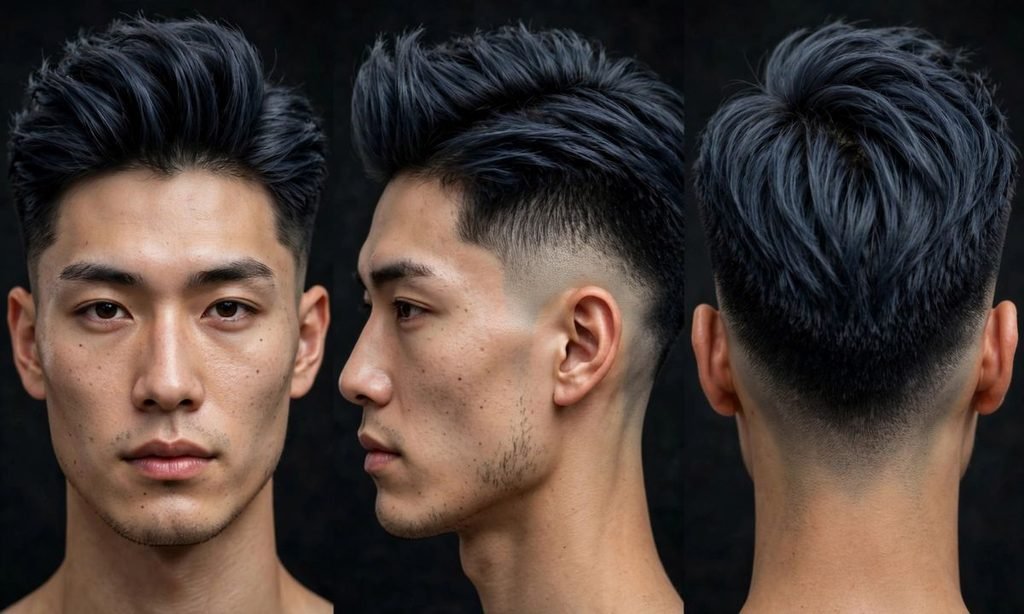
7. Burst Fade Quiff
The front lifts upward and slightly forward while a mid or high burst fade tapers the sides. Unlike the pompadour, the quiff stays shorter and less structured, giving it a more relaxed feel. A pre-styler followed by matte paste creates lift without stiffness. This suits guys who want volume without a full formal look.
Best For: Hair with natural body; oval and square faces.
Tell Your Barber: “Mid burst fade, 3 inches on top for a quiff, lifted at the front.”
Maintenance: Trim every 4 weeks; blow-dry upward before applying paste.
8. Burst Fade Slick Back
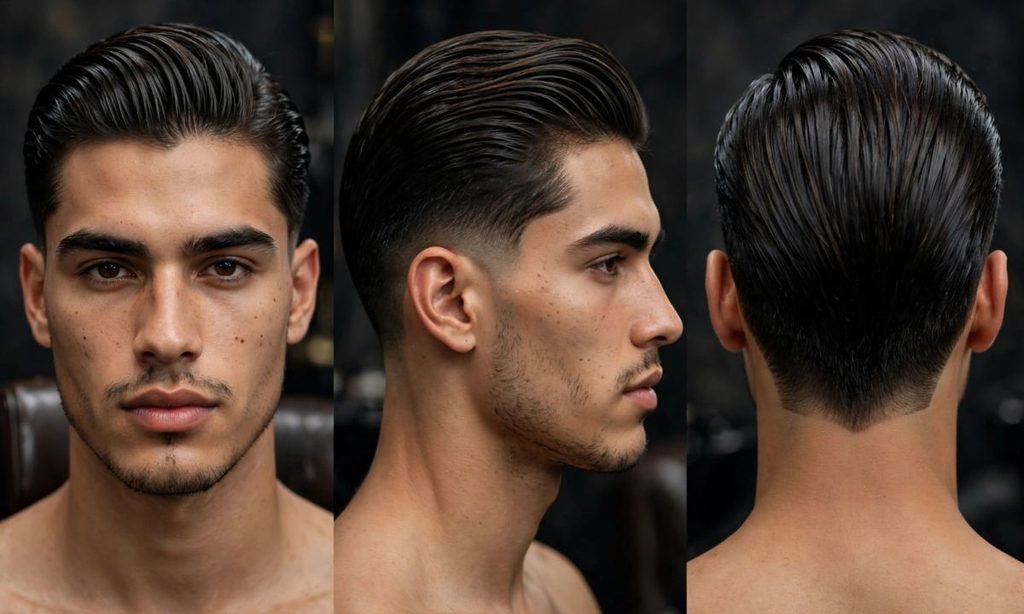
Every strand is combed straight back into a smooth, glossy finish, sitting above a low or mid burst fade. This is the most formal option on the list, built for guys who want a sharp, put-together look. High-shine pomade is essential here — matte products won’t give the same sleek result. It photographs especially well for events and formal settings.
Best For: Straight hair; formal or professional settings.
Tell Your Barber: “Low burst fade, keep the top long enough to comb straight back, high-shine finish.”
Maintenance: Trim every 4 weeks; pomade applied daily for hold and shine.
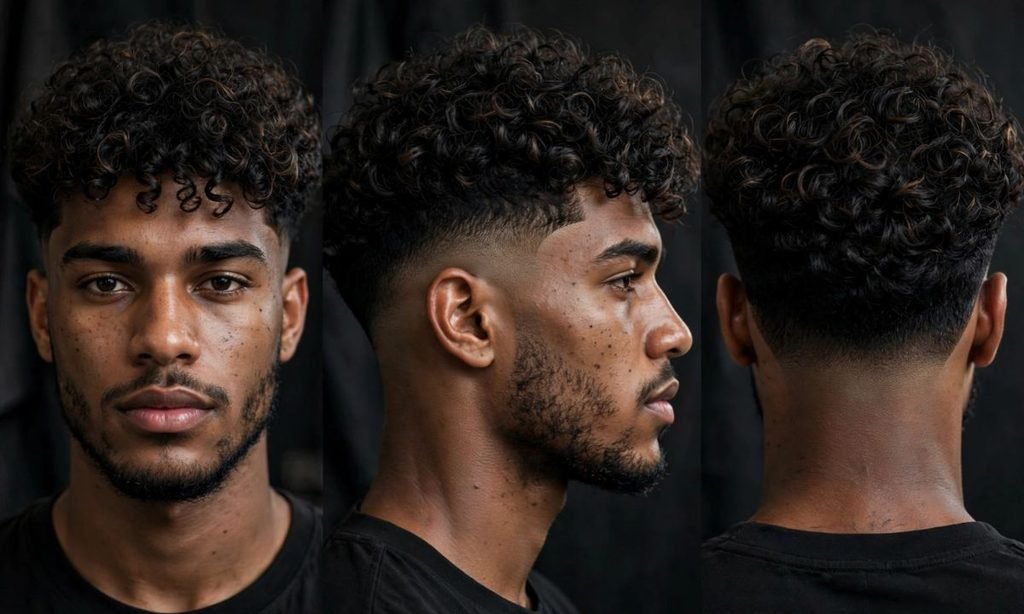
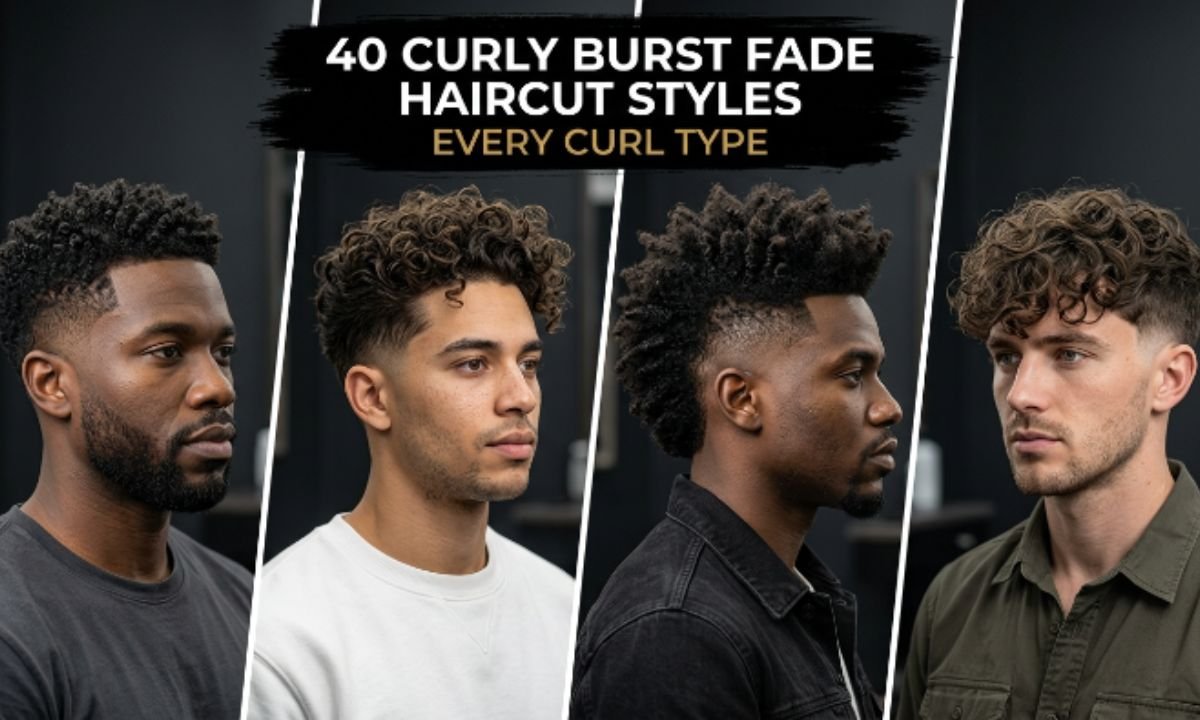
Natural curls stay full and defined on top while the sides burst-fade into a tight mid-height blend. This style works with the curl pattern instead of straightening it, using curl cream rather than heat tools. It gives shape and control without flattening natural texture. It’s one of the best options for guys who want to keep their curls intact.
Best For: Curly or coily hair; oval and heart-shaped faces.
Tell Your Barber: “Mid burst fade on the sides, keep the curls natural on top, and don’t cut into the curl pattern.”
Maintenance: Trim every 5–6 weeks; air-dry with curl cream; avoid brushing when dry.
10. Burst Fade V-Cut / Comb-Over
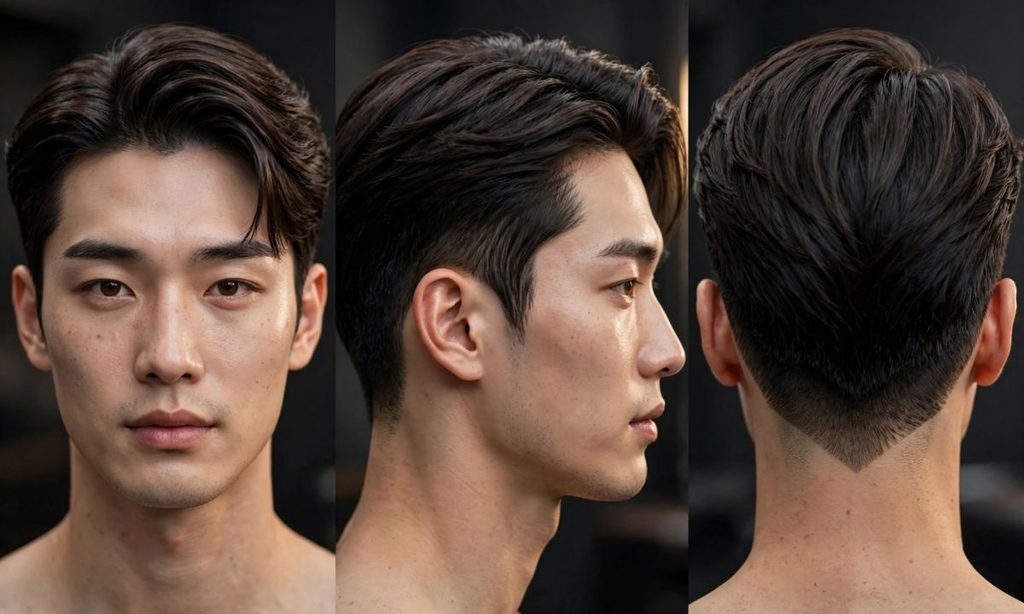
The back is shaped into a distinct V at the nape, or the top is styled as a smooth side-part comb-over — both paired with a mid to high burst fade. This is the most customizable style on the list, since the top can lean formal or edgy depending on styling. Ombré or two-tone coloring often highlights the V-shape at the back. It suits guys who want a modern twist on a classic silhouette.
Best For: Guys who want a customizable, modern look; any face shape.
Tell Your Barber: “Mid burst fade, V-shape at the nape, side-part comb-over on top.”
Maintenance: Trim every 3–4 weeks to keep the V and part line defined.
How to Tell Your Barber: Exact Scripts & Photos
Miscommunication is the biggest reason burst fade haircuts go wrong. Follow this order when you sit in the chair:
Name the technique: say “burst fade,” not just “fade.”
Specify the height: low, mid, high, or skin.
Specify the top style: mohawk, crop, quiff, and so on.
Give a top length in inches or a guard number.
Bring two or three reference photos from different angles.
A solid example script sounds like this: “Mid burst fade to skin, 2 inches on top, textured and pushed forward.” Clear, specific language gets you a much closer result than a vague description.
Best Burst Fade for Your Face Shape and Hair Type
Face shape narrows down your options fast:
Round faces do best with low or mid bursts and shorter tops, since extra width on top can widen the face further.
Square faces handle high bursts and angular tops like mohawks or quiffs well.
Oval faces can wear almost any style on this list without issue.
Heart-shaped faces benefit from textured or curly tops that soften a wider forehead.
Hair type matters just as much. Straight hair suits slick backs and pompadours. Curly hair suits the curly top or mullet. Thick hair can handle high bursts and undercuts. Thin hair looks fuller with textured crops that create the illusion of volume.
Styling Tips and Product Picks
Different tops need different products:
Matte paste or clay for textured, piece-y looks like the crop or faux hawk.
Strong-hold gel for spiked or upright styles like the mohawk.
High-shine pomade for slick backs and polished finishes.
Curl cream for natural curl definition without frizz.
A round brush and hairspray for volume-based styles like the pompadour and quiff.
Cut hair slightly damp for precision, but ask your barber to check texture on dry hair before you leave — wet hair can hide how choppy or smooth a cut will actually look once styled.
How to Choose the Right Burst Fade Hairstyle
The best burst fade depends on more than the style you like. Your hair texture, face shape, desired fade height, and daily styling routine can all affect the final result. Straight hair can work well with textured crops, quiffs, and slick backs, while curly and coily hair can showcase natural texture with a tighter burst fade.
Burst Fade by Hair Type
Hair Type
Best Burst Fade Styles
Styling Approach
Straight
Slick Back, Quiff, Pompadour
Use paste or pomade for control
Wavy
Mullet, Textured Crop, Quiff
Enhance natural movement
Curly
Curly Top, Mohawk
Define curls without flattening them
Coily
High Burst Fade, Afro
Keep texture controlled and defined
Thick
Mohawk, Faux Hawk, Pompadour
Add structure and reduce excess bulk
Fine
Textured Crop, Buzz Cut
Create texture and visual fullness
Burst Fade by Face Shape
Face Shape
Recommended Style
Why It Works
Round
Mid Burst, Textured Crop
Adds definition and visual height
Oval
Almost Any Style
Balanced proportions suit many cuts
Square
Mohawk, Quiff, Buzz Cut
Works well with strong facial angles
Heart
Curly Top, Textured Styles
Helps balance a wider forehead
Long
Mid Burst with Texture
Adds balance without extra length
Diamond
Curly Top, Textured Crop
Complements prominent cheekbones
These combinations are consistent with the face-shape and hair-type guidance in the two sources.
Low, Mid, High or Skin Burst Fade: Which Should You Get?
Fade height can completely change the personality of the same haircut. A low burst fade gives a softer, more conservative appearance, while a high or skin burst creates stronger contrast. The PressHair guide also distinguishes low, mid, high, skin, and burst taper options based on how dramatic or subtle the result should be.
Fade Type
Look
Best For
Low Burst Fade
Subtle and clean
Professional or everyday styles
Mid Burst Fade
Balanced and versatile
Most face shapes
High Burst Fade
Bold and noticeable
Statement hairstyles
Skin Burst Fade
Sharp, high contrast
Edgy modern looks
Burst Taper
Softer and natural
Low-maintenance styling
Burst Fade vs Drop Fade
Although both styles create a curved appearance, they are not the same haircut. A burst fade concentrates its curved transition around the ear, while a drop fade follows a lower path toward the back of the head. Your choice should depend on the shape you want and how you want the sides and neckline to flow.
Feature
Burst Fade
Drop Fade
Main Curve
Around the ear
Drops toward the back
Overall Shape
Rounded
More downward/angular
Best Pairings
Mohawk, mullet, crop
Many classic fade styles
Visual Effect
Highlights the ear area
Emphasizes the back of the head
Maintenance
Needs regular cleanups
Can grow out more subtly
What to Tell Your Barber for a Burst Fade
A clear barber request can make a big difference. Instead of simply asking for a “fade,” specify that you want a burst fade, then mention the height, top style, desired length, and neckline. Bringing photos from multiple angles can also help your barber understand the exact shape you want.
Before your appointment, tell your barber:
Ask for a burst fade around the ears.
Choose low, mid, high, or skin fade height.
Explain your preferred top style.
Give a specific top length or guard number.
Mention whether you want a natural or sharp neckline.
Bring 2–3 clear photos from different angles.
Tell the barber how much daily styling you are willing to do.
How to Style a Burst Fade at Home
Start with clean, slightly damp hair so your styling product spreads evenly. For volume and texture, a pre-styler such as sea salt spray or volumizing mousse can help. Finish with a product suited to your chosen hairstyle, such as matte clay for texture or pomade for a smoother finish.
Simple styling routine:
Wash and towel-dry your hair.
Apply a lightweight pre-styler.
Blow-dry in the direction of your desired shape.
Add a small amount of styling product.
Use your fingers or a comb to finish the top.
Check the sides and neckline for stray hairs.
Burst Fade Maintenance: How Often Should You Get a Trim?
A burst fade looks best when the curved area around the ears stays clean and defined. Regular trims help prevent the fade from becoming bulky or losing its shape. A general maintenance schedule is around every 2–3 weeks, although softer styles can sometimes last longer depending on hair growth and the desired finish.
Haircut Type
Suggested Touch-Up
Skin Burst Fade
About 2 weeks
High Burst Fade
2–3 weeks
Mid Burst Fade
2–3 weeks
Low Burst Fade
3–4 weeks
Burst Taper
3–4 weeks
Quick Maintenance Tips
Keep the area around the ears clean.
Use the right product for your hair texture.
Avoid overloading the top with heavy product.
Schedule regular barber cleanups.
Refresh the neckline when it starts looking untidy.
Follow a consistent washing and conditioning routine.
Frequently Asked Questions
What is a burst fade haircut?
A burst fade is a fade that curves around the ear in a semicircle instead of cutting straight down the side of the head.
How often should I trim a burst fade?
Skin-level burst fades need a trim every 2 weeks, while softer taper versions can go 3–4 weeks.
What do I tell my barber for a burst fade?
Specify the fade height (low, mid, high, or skin); the top style; an exact top length; and bring reference photos.
Is a burst fade good for curly hair?
Yes, the curved burst line blends naturally with curl movement better than a straight fade line does.
What’s the difference between a burst fade and a drop fade?
A burst fade curves around the ear specifically, while a drop fade curves downward toward the back of the head.
Final Thoughts
The burst fade earns its spot as one of 2026’s most requested cuts because it adapts to nearly any top style, hair type, and face shape without losing its signature curved line.
Whether you want the bold contrast of a mohawk or the low-key ease of a buzz cut, the key is choosing a top style that matches your hair texture and being specific with your barber about fade height and length. Get that combination right, and the burst fade will hold its shape — and your attention — between every visit.
Hi, I’m Oliver Bennett. I’m passionate about men’s hairstyles and love exploring modern cuts that are easy to understand and easy to ask your barber for. On this website, I share simple guides on styles like burst fades, mullets, curtain cuts, tapers, and other trending men’s hairstyles. My goal is to help you find a haircut that matches your hair type, face shape, and personal style.
1 thought on “Top 10 Burst Fade Hairstyles for Men in 2026”