Burst Fade Guide35 Best Straight Burst Fade Haircut Styles for Stylish Men to Try Right Now
35 Best Straight Burst Fade Haircut Styles for Stylish Men to Try Right Now
August 17, 2026
/
1 Comment
/
Oliver Bennett
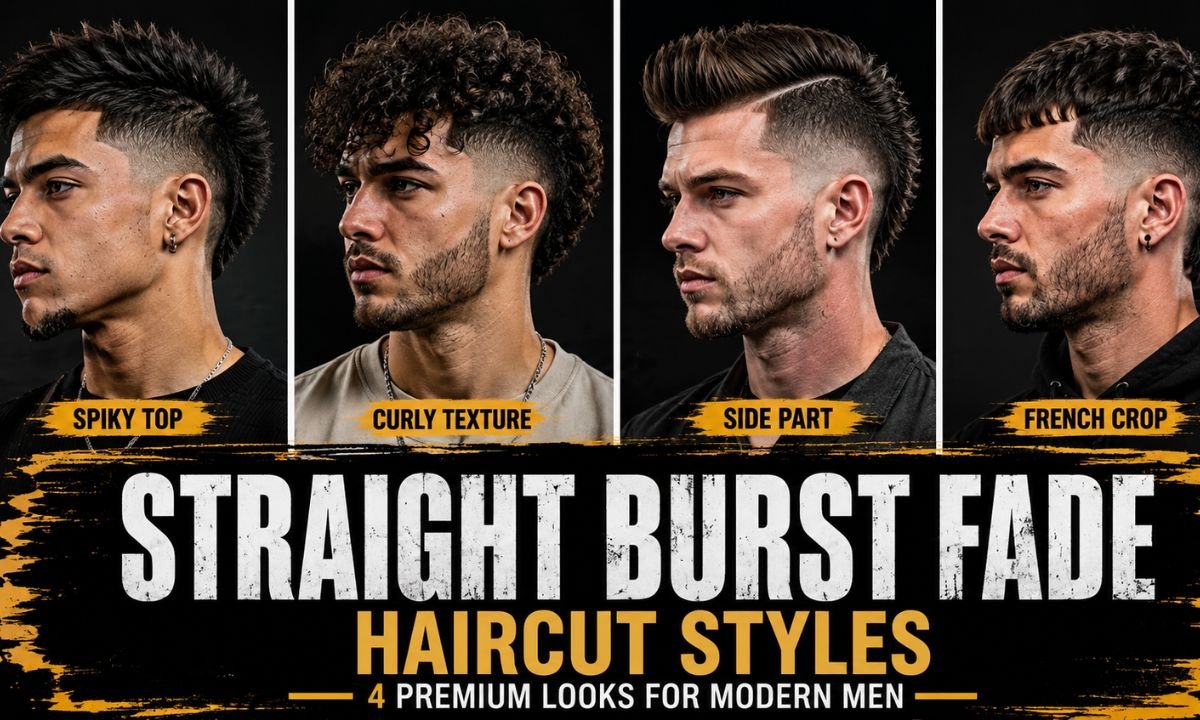
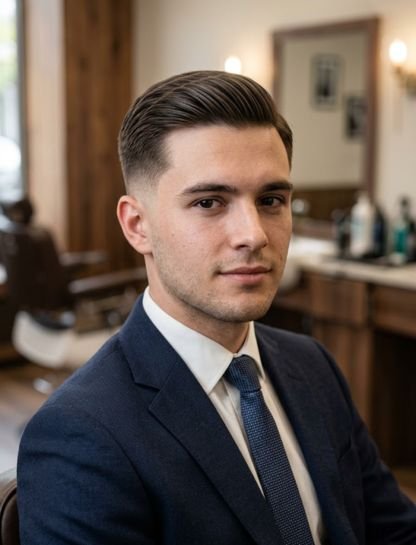
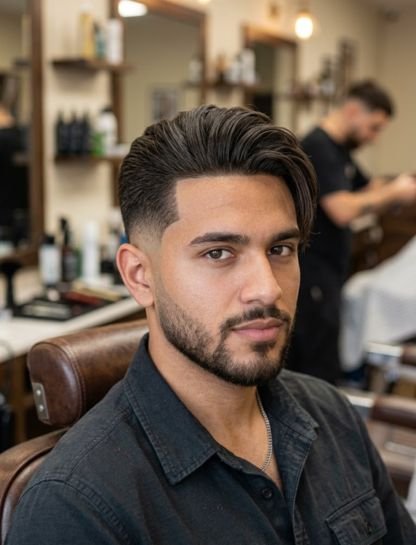
The straight burst fade has become one of the most requested cuts at modern barbershops because it blends sharp fading with natural, straight hair texture on top. It works on almost every hair density, face shape, and lifestyle, from office jobs to weekend casual looks. Below you’ll find a full breakdown of what this haircut actually is, why it’s so popular, and 35 distinct ways to wear it. Every style listed includes real styling notes so you know exactly what to expect in the chair.
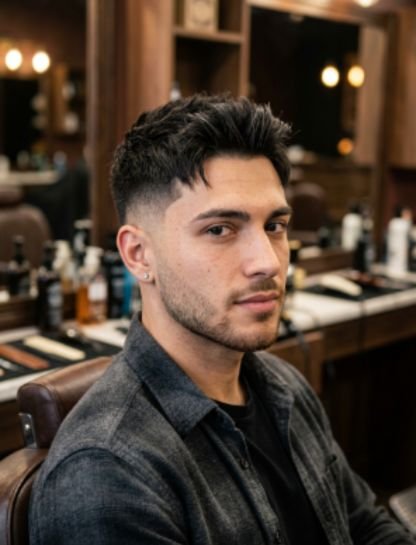
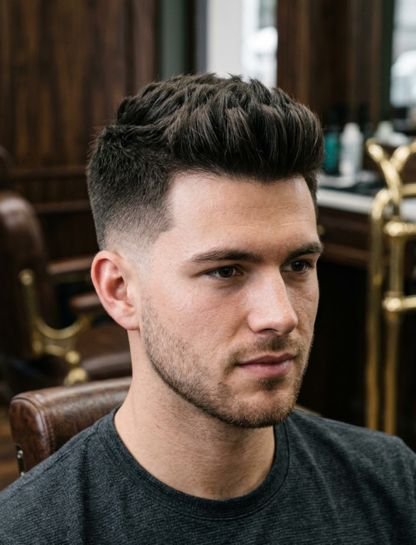
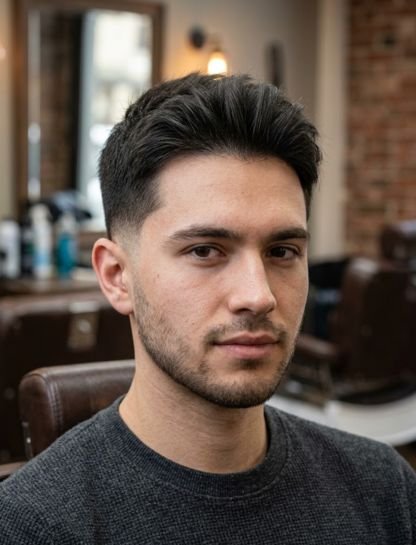
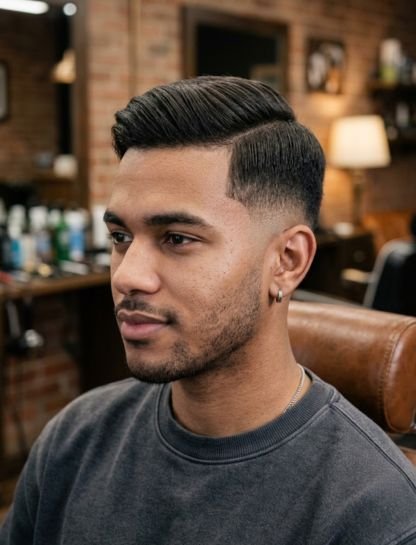
A straight burst fade is a men’s haircut where the fade curves around the ear in a rounded, semicircle shape instead of running in a straight horizontal line across the side of the head.
The straight, unpermed top hair contrasts with this curved fade, creating a look that feels sharper and more sculpted than a standard taper. Barbers usually leave more length at the back of the head near the nape, which is what gives the burst fade its signature “halo” shape around the ear.
Because the top hair stays straight rather than textured or curly, the line of separation between the fade and the length above it looks cleaner and more defined. This makes the style popular with men who want a fade that reads as precise from every angle, not just from the side.
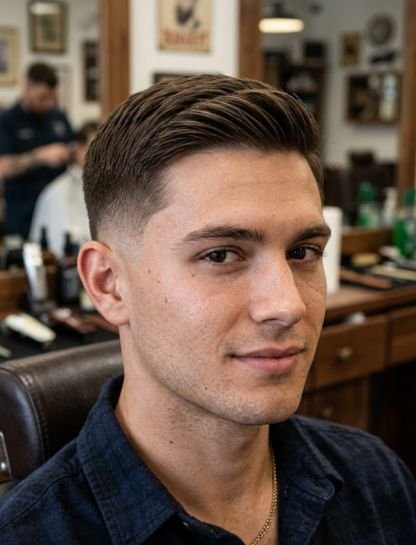
Key Features of a Straight Burst Fade Haircut
The fade graduates in a curved arc around the ear rather than a straight side part
Straight, flat-lying hair on top instead of curly or heavily textured hair
Length is usually kept longer at the back and crown compared to the temples
Works with skin fades, taper fades, or mid-length fades depending on preference
Can be combined with a hard part, fringe, or slicked styling for added variation
Why Men Choose This Hairstyle
Men gravitate toward the straight burst fade because it looks intentional without needing daily heavy styling. The curved fade line does most of the visual work, so even a simple comb-through in the morning looks finished. It also photographs well because the burst shape catches light and shadow differently than a flat fade, giving the haircut more depth in person and on camera.
It’s also a practical choice for men transitioning out oback,buzz cut who want to grow their hair longer without looking unkempt during the growing-out phase. The fade stays sharp while the top slowly gains length, so the haircut ages gracefully between barber visits.
Benefits of a Straight Burst Fade Haircut
Low daily upkeep once the initial cut is dialed in correctly
Versatile styling since the top can be worn forward, back, up, or flat
Face-shape friendly, as the curved fade softens angular jawlines and adds height for rounder faces
Works with straight hair types that don’t hold curl or texture patterns easily
Easy to adjust for climate, since sides can run short in summer and grow slightly in winter without losing their shape
35 Modern Straight Burst Fade Haircut Styles
1. Classic Straight Burst Fade
This is the baseline version most barbers use as a reference point. The top sits around two to three inches, combed forward with light separation, while the fade curves tightly around the ear before blending into a low taper at the back. It suits nearly any hair type and doesn’t require heavy product to look finished. This is the version to request if you’ve never had a burst fade before and want something safe but sharp.
Best For: First-timers and men who want a low-maintenance daily look
Tell Your Barber: “Standard burst fade, medium length on top, comb it forward.”
Maintenance: Trim every 3-4 weeks to keep the burst line crisp
2. Low Straight Burst Fade
The fade line starts just above the ear instead of higher up the head, leaving more hair on the sides overall. This creates a softer, more subtle transition that works well in conservative workplaces. The straight top can be left slightly longer since the fade itself is less aggressive. It’s a good middle ground between a full fade and a simple trim.
Best For: Office environments and older men who prefer subtle grooming
Tell Your Barber: “Low burst fade starting right above the ear; keep it soft.”
Maintenance: Can stretch to 4-5 weeks between cuts since the fade grows out less noticeably
3. Mid Straight Burst Fade
Positioned between the low and high versions, the mid burst fade starts around the middle of the ear and creates noticeably more contrast than the low variant. It’s the most commonly requested height because it balances visibility with versatility. Straight hair on top can be worn at almost any length with this fade height. This version photographs particularly well due to the balanced contrast ratio.
Best For: Most face shapes and hair densities, especially medium-thick hair
Tell Your Barber: “Mid-burst fade; blend it into two inches on top.”
Maintenance: Trim every 3 weeks to maintain the contrast line
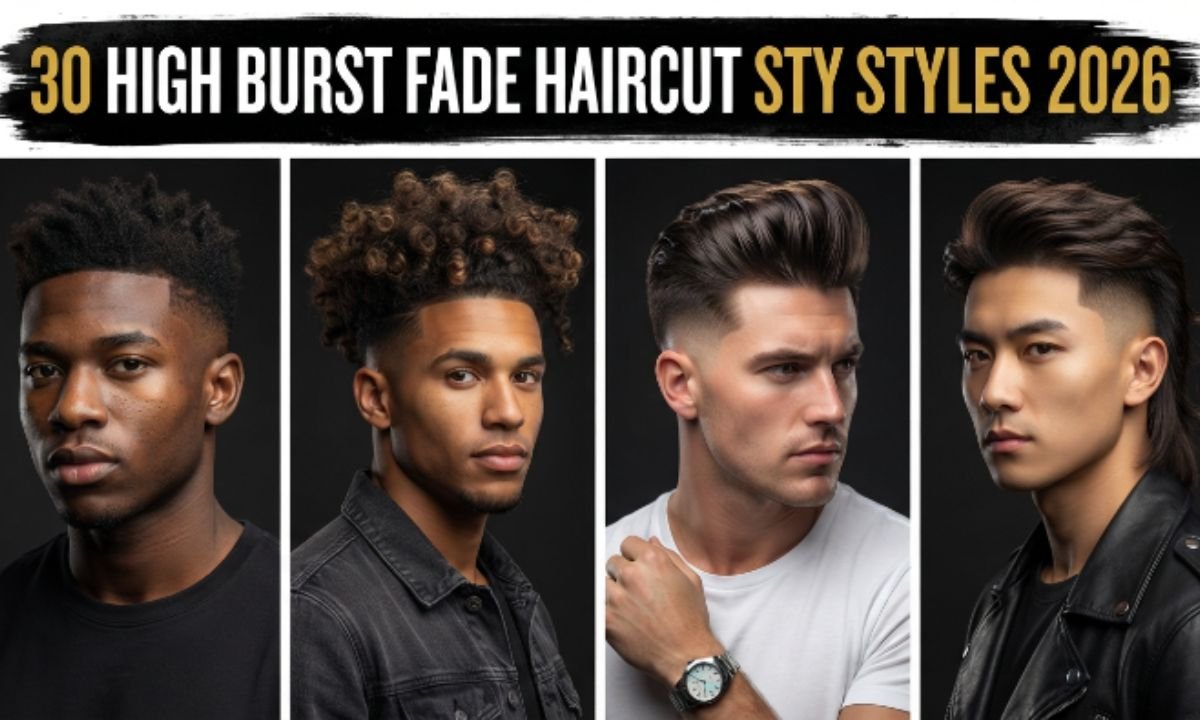
4. High Straight Burst Fade
The fade rises well above the ear, sometimes close to the temple, leaving a much smaller area of longer hair on top. This creates the boldest contrast of the height variations and draws the eye upward, which can visually elongate a rounder face. It’s a striking option but grows out faster than lower fades. Straight hair handles this cut particularly well since it keeps a crisp line without frizz interfering.
Best For: Round or square face shapes wanting more definition
Tell Your Barber: “High burst fade, aggressive contrast, keep the top short and straight.”
Maintenance: Needs a touch-up every 2-3 weeks to avoid a grown-out, patchy look
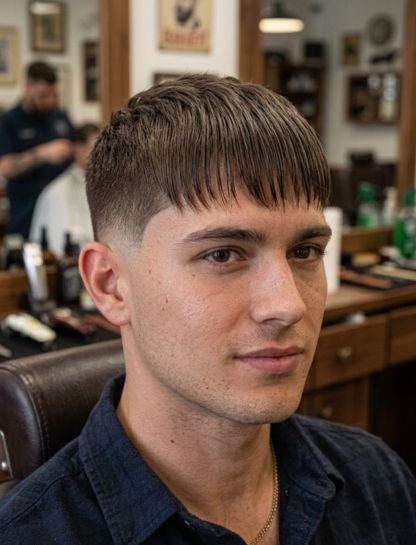
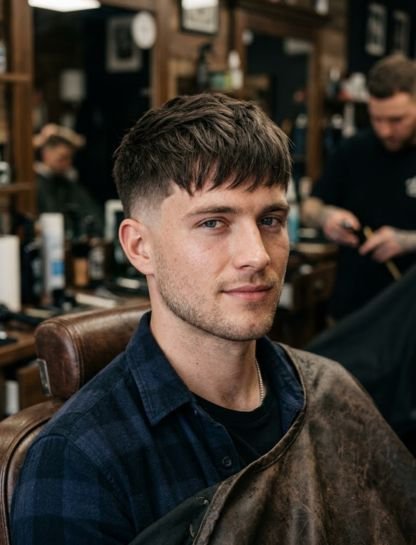
5. Straight Burst Fade with Fringe
The front section is left longer and brushed down over the forehead into a soft, straight fringe, while the sides fade in the usual burst shape. This gives a youthful, slightly edgy look that works especially well on men with a straight hairline. The fringe can be blunt-cut or lightly textured at the tips depending on preference. It pairs naturally with oval and diamond face shapes.
Best For: Men with straight hairlines and oval or diamond face shapes
Tell Your Barber: “Burst fade with a straight fringe left long over the forehead.”
Maintenance: Fringe needs trimming every 3 weeks to stay above the eyebrows
6. Textured Crop Burst Fade
Instead of fully flat straight hair, this version adds light texturizing with scissor-over-comb work so the top has some movement without curling. The burst fade stays tight and clean around the ear for contrast against the slightly rougher top texture. It works well for men who want a cut that looks a little more relaxed day to day. A matte product finishes the look without shine.
Best For: Casual, everyday wear and thick, straight hair
Tell Your Barber: “Burst fade with a textured crop on top, not fully flat.”
Maintenance: Trim every 4 weeks; texture hides regrowth better than a blunt cut
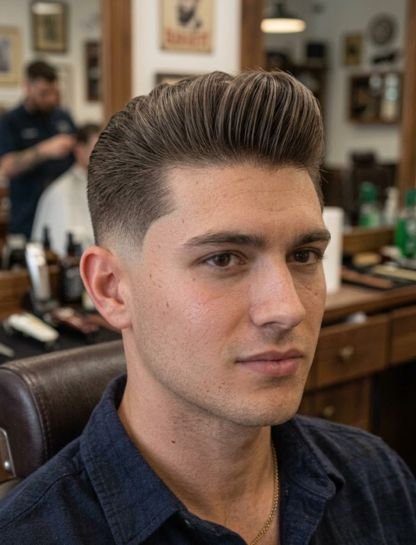
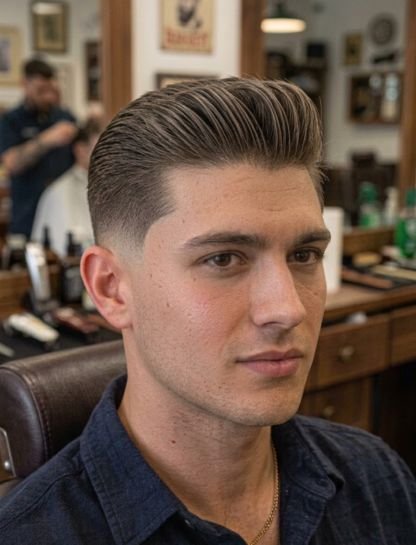
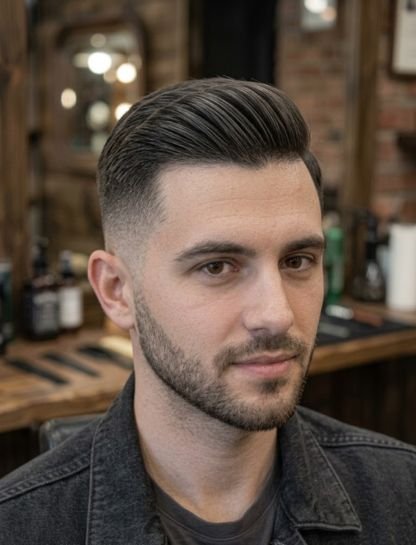
7. Straight Burst Fade Pompadour
The front section is left considerably longer and swept upward and back to create height, while the burst fade handles the sides. This is a dressier take that suits formal occasions or professions where a polished look matters. Straight hair holds the pompadour shape cleanly with the right pomade, without needing a blow dryer every day. The burst fade keeps the overall silhouette from looking too vintage.
Best For: Formal settings, weddings, and professional headshots
Tell Your Barber: “Burst fade with extra length up front for a pompadour.”
Maintenance: Daily restyling with pomade; trim the top every 5-6 weeks
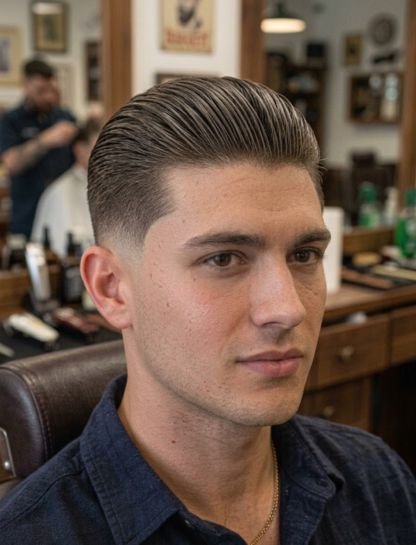
8. Slicked-Back Burst Fade
All the top hair is combed directly backward using a strong-hold gel or pomade, creating a sleek, wet-look finish. The burst fade underneath adds a clean edge that keeps the slicked style from looking flat or old-fashioned. This works best on medium-length straight hair since very short hair won’t hold the slick-back shape. It’s a strong choice for business meetings or evening events.
Best For: Business professionals and evening or formal events
Tell Your Barber: “Burst fade with enough length on top to slick straight back.”
Maintenance: Wash out product nightly to avoid buildup; trim every 4 weeks
9. Straight Burst Fade Quiff
The front hair is lifted and pushed slightly backward at an angle rather than straight up, creating a soft peak at the front hairline. The burst fade tightens the sides so all visual focus stays on the quiff shape. This style needs a blow dryer and round brush to set the lift before applying products. It suits men with a strong, straight hairline who want a bit of height without a full pompadour.
Best For: Men wanting height without a formal pompadour commitment
Tell Your Barber: “Burst fade with a soft quiff, angled back, not straight up.”
Maintenance: Restyle each morning; trim front section every 4 weeks
10. Burst Fade with Hard Part
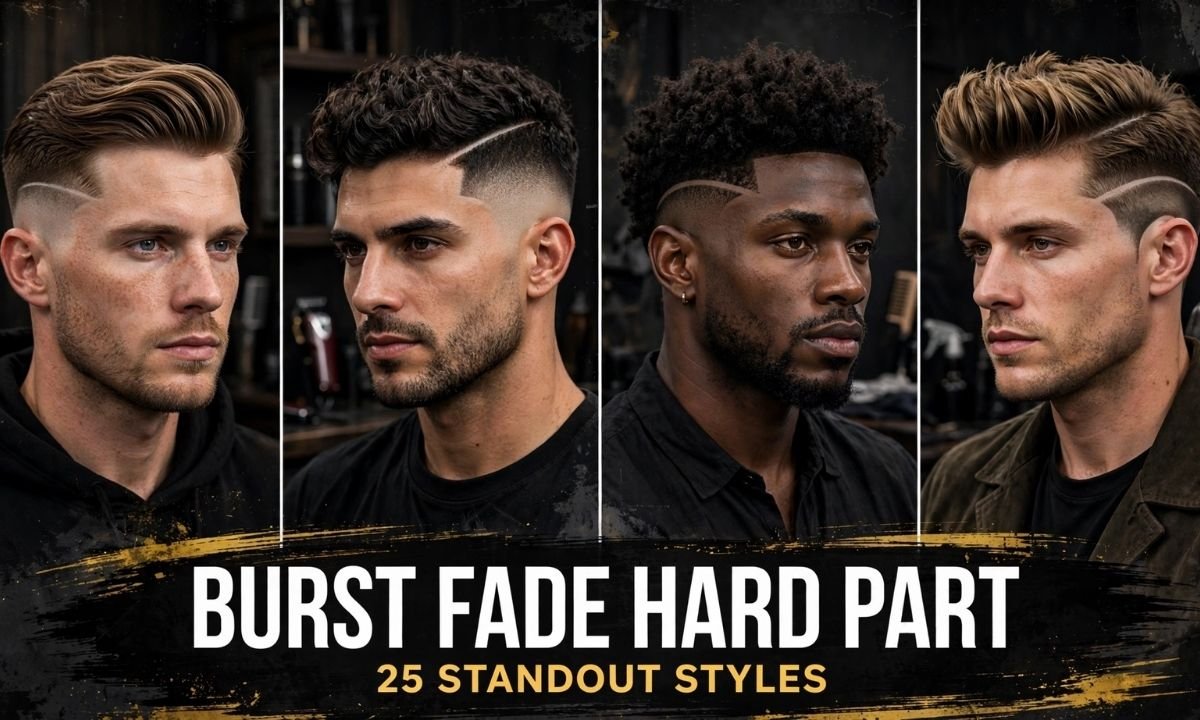
A shaved line is cut into the side of the head, separating the fade from the top section with a crisp, visible stripe. Combined with the curved burst fade, this creates two distinct fade lines that add a graphic, structured look. It works best on straight hair since the part line stays visible without curl disrupting it. This style requires more frequent upkeep to keep the shaved line sharp.
Best For: Men who want a bold, structured, statement haircut
Tell Your Barber: “Burst fade plus a hard part line separating the top.”
Maintenance: The part needs re-shaving every 1-2 weeks to stay defined
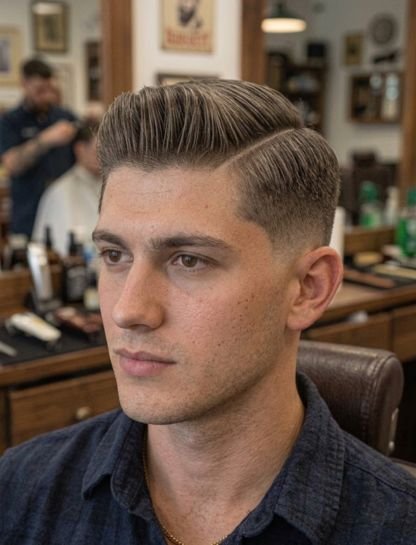
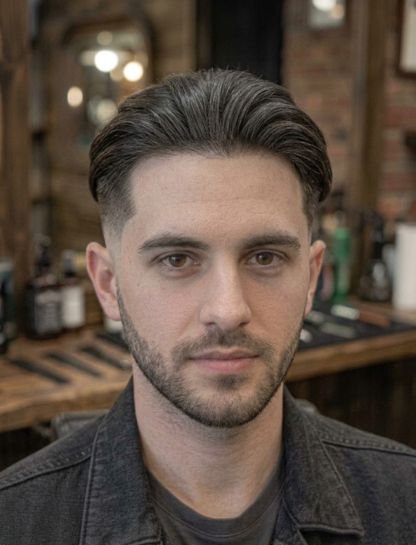
11. Burst Fade with Side Part
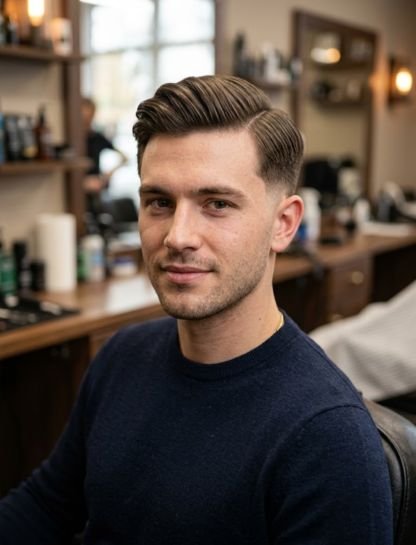
A more traditional, natural side part is combed into the top without shaving a visible line, giving a softer, more polished version of the hard part look. The burst fade keeps the sides clean while the part organizes the straight top hair into two clear sections. This is an easy style to maintain since it just needs a comb and light product each morning. It reads as more professional than the hard-part version.
Best For: Corporate offices and client-facing jobs
Tell Your Barber: “Burst fade with a natural comb-over side part, no shaved line.”
Maintenance: Trim every 4 weeks; re-part with a comb daily
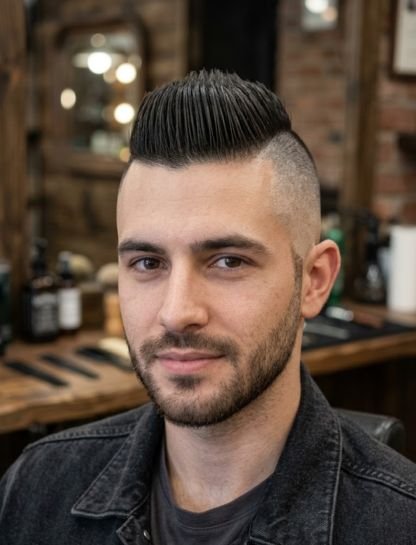
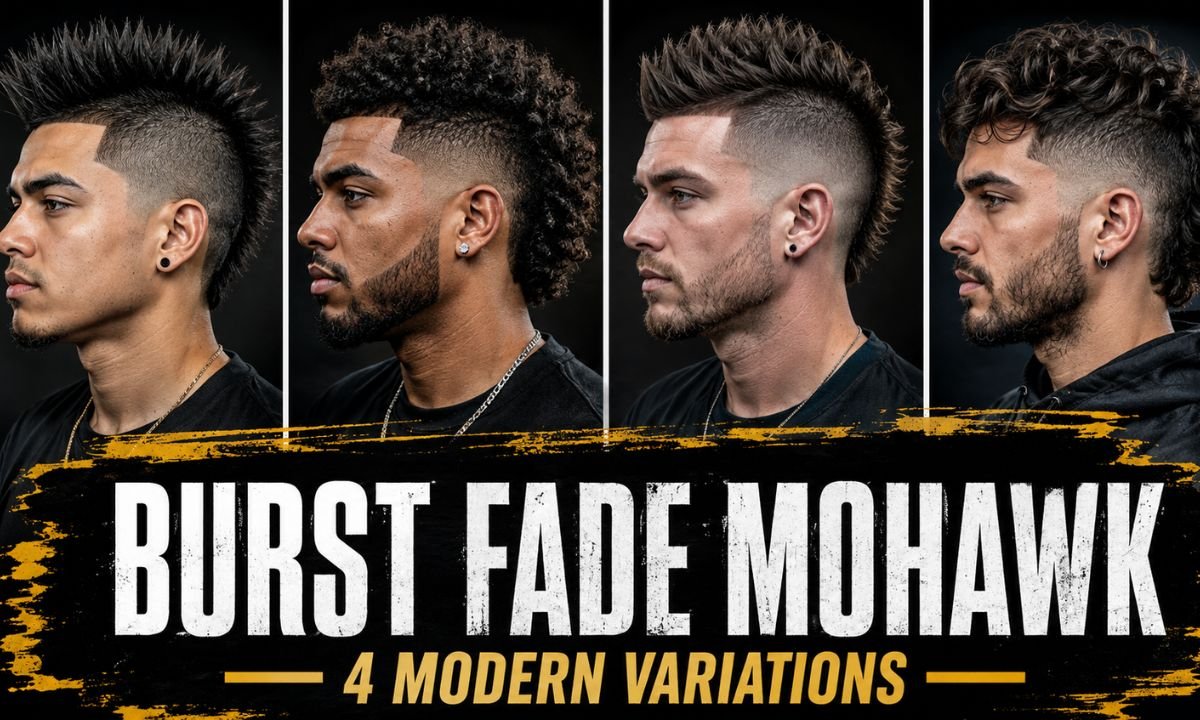
The center strip of hair is left noticeably longer than the rest of the top, styled upward into a controlled mohawk shape, while the burst fade clears the sides completely. This is one of the bolder variations and works best on men comfortable with more attention-grabbing haircuts. Straight hair needs strong-hold product to keep the center strip standing upright throughout the day. The burst fade curve keeps it from looking too severe compared to a traditional mohawk.
Best For: Creative industries and men wanting a statement look
Tell Your Barber: “Burst fade with a longer center strip for a mohawk.”
Maintenance: Daily styling required; trim the strip every 3-4 weeks
13. Straight Burst Fade Faux Hawk
A softer version of the mohawk, the fauxhawk keeps the center section only slightly longer than the rest of the top rather than dramatically longer. It’s lifted gently at the center for subtle definition without committing to a full mohawk shape. The burst fade frames this nicely since the sides stay short and clean. This is a good transitional style for men easing into bolder cuts.
Best For: Men who want edge without an overly dramatic haircut
Tell Your Barber: “Burst fade with a subtle faux hawk, not a full mohawk.”
Maintenance: Light daily styling; trim every 4 weeks
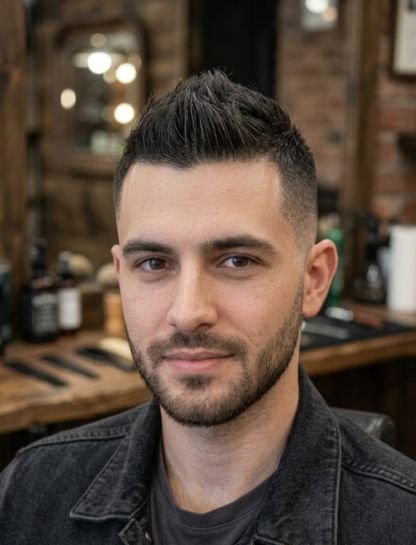
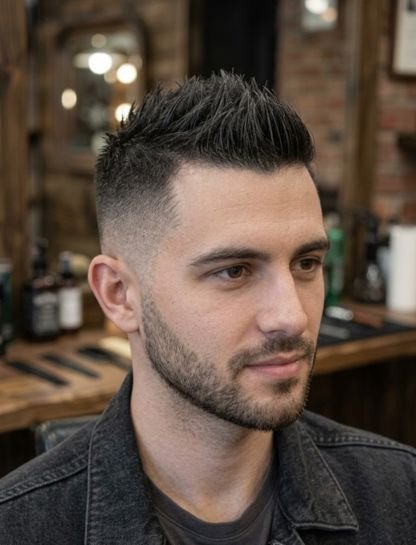
14. Spiky Straight Burst Fade
The top hair is cut to short- or medium length and styled into individual defined spikes using a strong wax or gel. The burst fade keeps the sides tidy so the spikes remain the clear focal point of the haircut. This style suits thicker straight hair that holds spike shapes well without collapsing during the day. It has a slightly more casual, youthful energy than other burst fade variations.
Best For: Younger men and casual, weekend styling
Tell Your Barber: “Burst fade with short, spiky texture on top.”
Maintenance: Restyle daily with wax; trim every 3-4 weeks
15. Straight Burst Fade Comb Over
A classic, business-appropriate style where the top is combed neatly to one side without a hard shaved part. The burst fade provides just enough edge to keep this traditional cut from looking outdated. This works particularly well for men with fine to medium straight hair since heavier hair can weigh the comb-over down. It’s one of the more conservative options on this list.
Best For: Conservative workplaces and men over 30
Tell Your Barber: “Burst fade with a smooth comb-over on top, business appropriate.”
Maintenance: Trim every 4 weeks; comb into place each morning
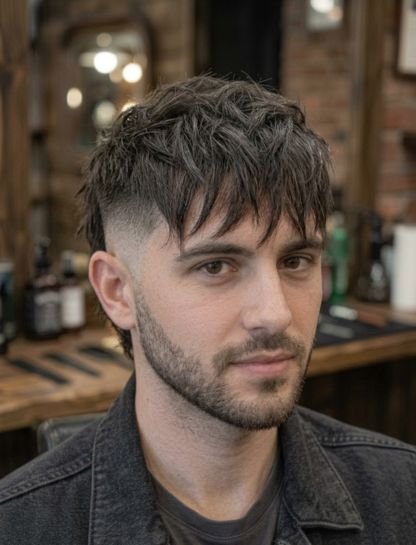
16. Wolf Cut Burst Fade
This combines the shaggy, layered wolf cut trend with a burst fade on the sides for contrast. The top is cut in choppy layers with movement, often left a bit longer at the crown, while the fade tightens everything below the ear. It gives a rock-and-roll, effortless vibe that stands apart from cleaner burst fade versions. Straight hair with natural volume works best for this layered approach.
Best For: Men with thick, voluminous straight hair wanting an edgier look
Tell Your Barber: “Burst fade with a layered wolf cut on top, choppy and shaggy.”
Maintenance: Trim every 5-6 weeks to maintain the layered shape
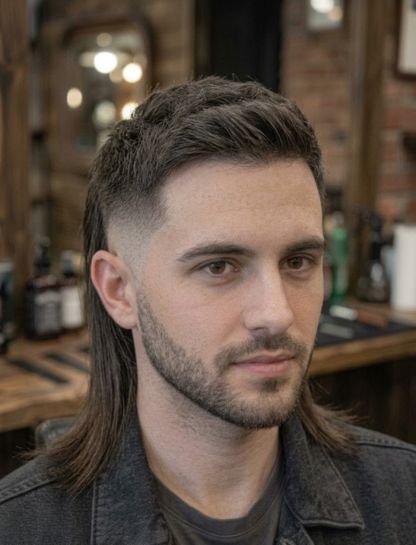
17. Straight Burst Fade Mullet
Length is deliberately left at the back and neckline, while the sides and top stay shorter and faded in the burst shape. This modern mullet variation keeps the front tidy and professional-looking while the back carries more personality. It’s grown significantly in popularity as a way to wear longer hair without losing a clean fade structure. Straight hair gives the back section a sharp, structured edge rather than a wavy, unkempt look.
Best For: Men wanting a bold, trend-forward statement cut
Tell Your Barber: “Burst fade mullet: keep length at the back and neckline only.”
Maintenance: Trim the sides every 3 weeks; the back can grow for months
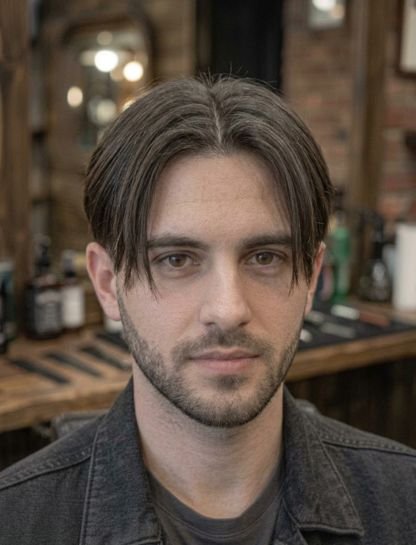
18. Curtain Bangs Burst Fade
The front hair is parted in the middle and falls on both sides of the forehead like curtains, while the burst fade cleans up the temples and back. This is a distinctly 90s-inspired look that has returned to popularity, especially among younger men. It requires straight hair with enough length to fall naturally rather than curl upward. The burst fade keeps this nostalgic style from looking dated.
Best For: Men with straight, medium-length hair and round or oval faces
Tell Your Barber: “Burst fade with curtain bangs parted in the middle.”
Maintenance: Trim the bangs every 3-4 weeks to keep them framing the face
19. Straight Burst Fade Undercut
The top is left noticeably longer than in most burst fade versions, creating a strong length contrast against the closely faded sides. Unlike a standard burst fade where the transition is gradual, the undercut version has a sharper break between long and short sections. This works well for men who want maximum versatility in daily styling since the longer top can be worn several different ways. It requires more consistent product use to control the extra length.
Best For: Men who like changing their top style day to day
Tell Your Barber: “Burst fade undercut; keep the top noticeably long and separated.”
Maintenance: Trim every 6-8 weeks for the top and every 3 weeks for the sides
20. Disconnected Straight Burst Fade
Here, the top length is cut without blending gradually into the fade, creating a visible, deliberate break between the two sections. This gives a more graphic, editorial look compared to the smoothly blended standard burst fade. It works best on men who already have some styling experience since the disconnected sections need intentional daily direction. Straight hair keeps the disconnection line crisp and easy to see.
Best For: Fashion-forward men comfortable with bolder cuts
Tell Your Barber: “Disconnected burst fade; don’t blend the top into the sides.”
Maintenance: Trim every 4 weeks to keep the disconnected line sharp
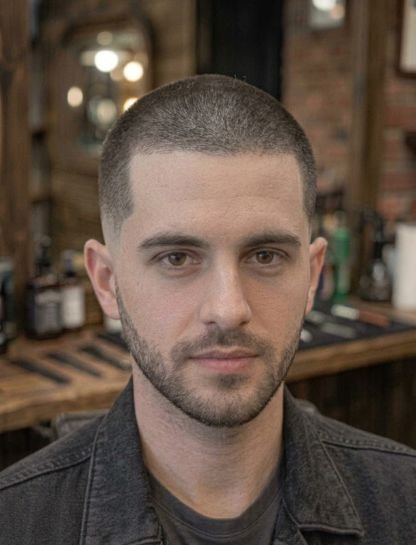
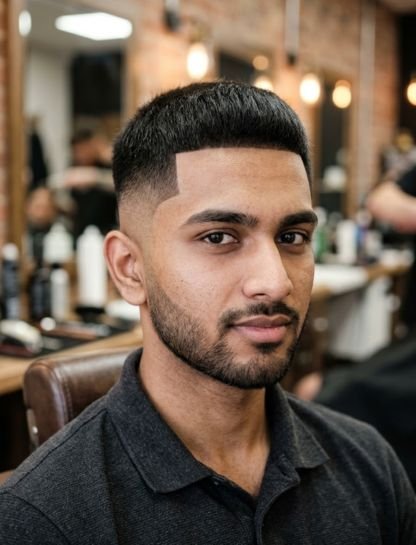
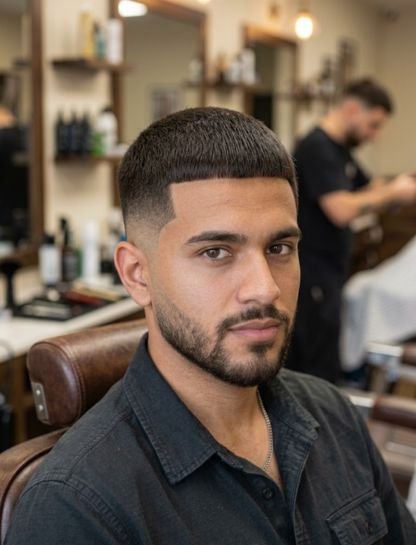
21. Straight Burst Fade Buzz Top
The top hair is cut very short, close to a buzz cut length, while the burst fade handles the sides at an even shorter length for contrast. This is one of the lowest-maintenance versions on the list since there’s minimal length to style. It works for men who want the burst fade’s shape without spending time on daily top styling. Straight or fine hair both work well here since there’s little length for texture to matter.
Best For: Athletes, gym-goers, and men wanting minimal daily upkeep
Tell Your Barber: “Burst fade with a short buzzed top, low maintenance.”
Maintenance: Trim every 2-3 weeks since short hair grows out visibly fast
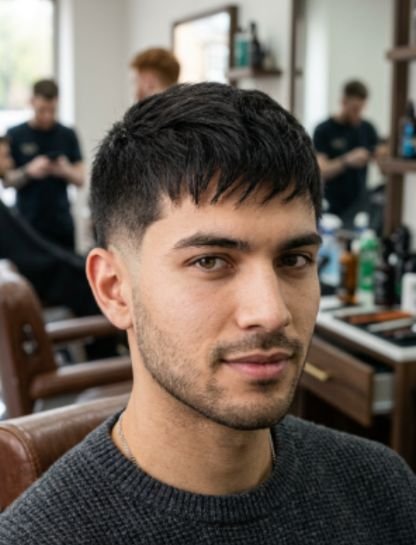
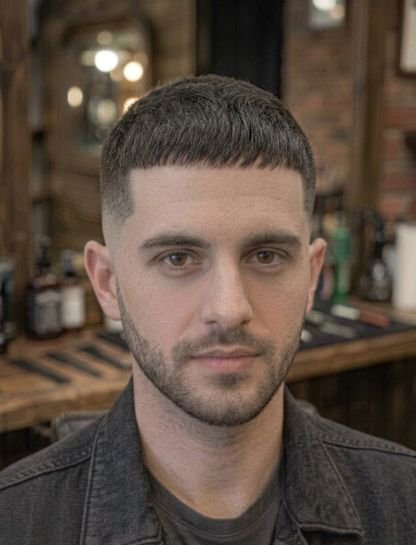
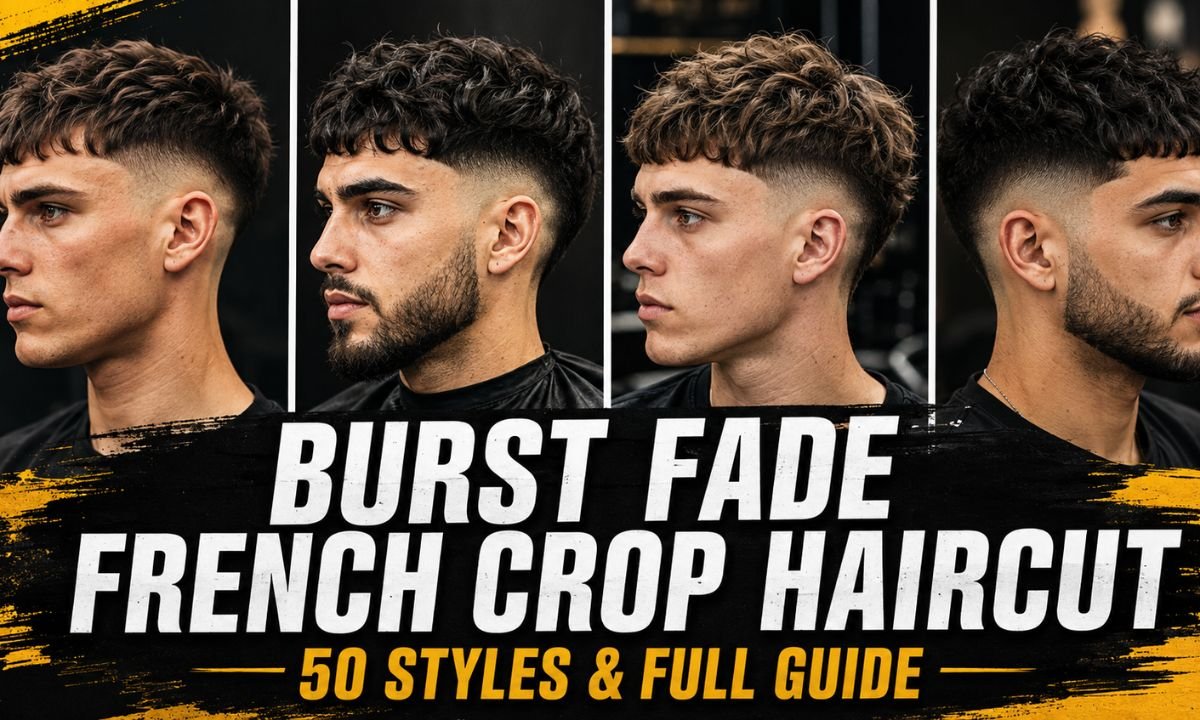
22. French Crop Burst Fade
The top is kept short with a straight, slightly forward-pushed fringe, while the burst fade tightens around the ears. This combination gives a clean, tailored appearance that reads as modern without being flashy. The French crop element keeps the front structured while the burst fade adds the curved detail at the sides. It’s a strong option for men wanting a cut that looks equally good styled or freshly washed.
Best For: Men wanting a modern but understated look
Tell Your Barber: “French crop on top with a burst fade on the sides.”
Maintenance: Trim every 3-4 weeks to keep the crop shape neat
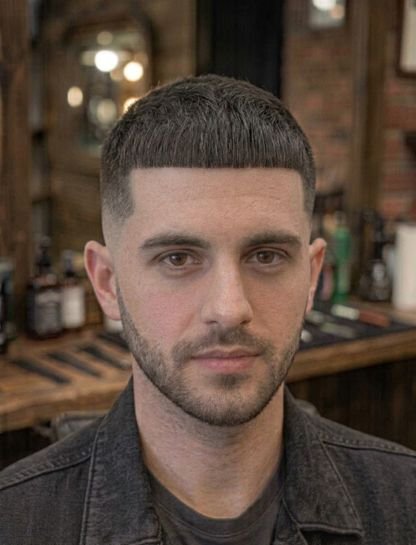
23. Caesar Cut Burst Fade
A short, straight fringe is cut horizontally across the forehead, paired with a burst fade instead of the traditional Caesar cut’s regular fade. The horizontal fringe line contrasts sharply with the curved fade shape below it, creating visual interest without added length. This works especially well for men with receding or uneven hairlines since the fringe provides coverage. It’s a low-effort style that still looks deliberate.
Best For: Men with receding hairlines wanting forehead coverage
Tell Your Barber: “Caesar cut fringe with a burst fade instead of a regular fade.”
Maintenance: Trim every 3 weeks to keep the fringe line straight
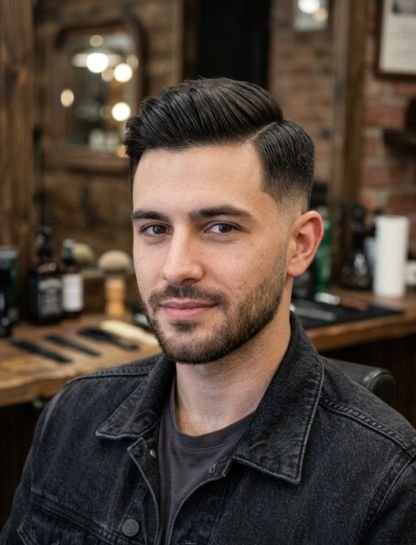
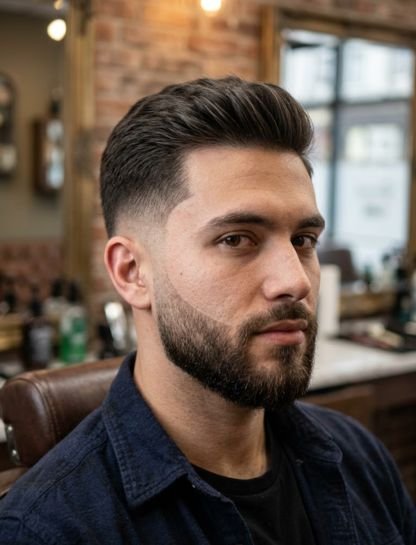
24. Straight Burst Fade with Beard Fade
The burst fade on the head is matched with a fading beard that blends into the sideburns and jawline, creating one continuous, connected look. This requires coordination between the barber’s hair and beard work so both fades meet at the same graduation point. It’s a popular choice for men who want their facial hair and haircut to look like a single cohesive style rather than two separate grooming choices. A straight-top haircut keeps the upper portion of the look clean and structured.
Best For: Men with full beards wanting a unified, connected look
Tell Your Barber: “Connect my burst fade into a beard fade at the same height.”
Maintenance: Both areas need trimming every 2 weeks to stay connected
25. Straight Burst Fade for Thick Hair
This version is specifically cut with extra thinning and weight removal on top so thick, dense straight hair doesn’t look bulky or heavy above the fade. Scissor-over-comb techniques are used to taper the length gradually rather than leaving a blunt, heavy edge. The burst fade itself may need to be slightly higher to balance out the volume on top. This approach prevents the classic “helmet head” look that thick hair can create if left unthinned.
Best For: Men with naturally thick or dense straight hair
Tell Your Barber: “Thin out the top before the burst fade so it doesn’t look bulky.”
Maintenance: Trim every 4 weeks; ask for thinning shears at each visit
26. Straight Burst Fade for Fine Hair
Fine, straight hair is cut with minimal layering since thinning can make it look sparse rather than textured. Instead, length is kept slightly longer on top to create the illusion of more density, and the burst fade is often kept lower to avoid overly exposing thin areas. Styling products with a matte, fiber-based formula helps fine hair appear thicker throughout the day. This version prioritizes the illusion of volume over dramatic texture work.
Best For: Men with fine or thinning straight hair
Tell Your Barber: “Keep the top a bit longer for volume, low burst fade, no thinning.”
Maintenance: Trim every 5 weeks; avoid over-cutting to preserve visible density
27. Layered Straight Burst Fade
Multiple length layers are cut into the top section, giving straight hair more movement and dimension than a single blunt length would provide. The burst fade stays consistent at the sides while the layers create subtle shape changes as the hair moves. This works particularly well for medium to long top sections where a single length would otherwise look flat. It’s a good option for men who want texture without committing to a fully choppy or messy finish.
Best For: Medium-to-long top lengths wanting natural movement
Tell Your Barber: “Layer the top for movement and a straight burst fade on the sides.”
Maintenance: Trim every 5-6 weeks to maintain the layer structure
28. Straight Burst Fade with Line Up
A precise, straight line is shaved along the front hairline and temples before the burst fade blends into the rest of the head. This adds extra sharpness and definition, particularly noticeable on men with naturally soft or uneven hairlines. The lineup is typically redone more often than the rest of the haircut since hairline growth shows quickly. It’s a popular add-on for men who want a fresh, just-cut look for longer between full trims.
Best For: Men wanting extra sharpness between full haircuts
Tell Your Barber: “Add a lineup at the front with my usual burst fade.”
Maintenance: Line up touch-ups every 1-2 weeks; get a full cut every 4 weeks
29. Business Professional Burst Fade
This is a deliberately conservative take that keeps the fade lower and the top shorter and neatly combed, avoiding anything too textured or dramatic. It’s designed to read as polished and low-key in client meetings or interviews while still having the modern shape of a burst fade underneath. Minimal product is used so the finish looks natural rather than heavily styled. This version prioritizes subtlety over any bold styling choices.
Best For: Interviews, client meetings, and formal work environments
Tell Your Barber: “Conservative burst fade, keep it low-key and business-appropriate.”
Maintenance: Trim every 3-4 weeks to keep a consistently neat appearance
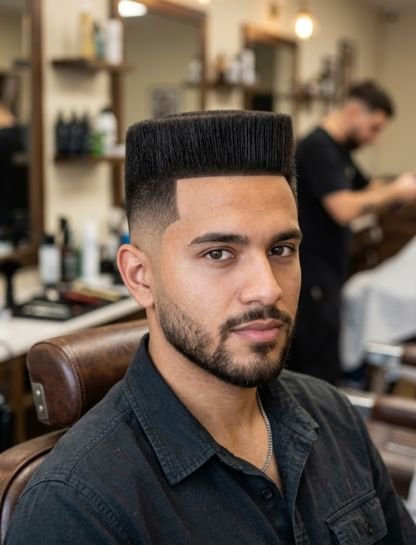
30. Straight Burst Fade Flat Top
The top is cut level and squared off across the crown, creating a distinct flat surface rather than the usual rounded or textured top shape. The burst fade transitions into this flat section at the sides, giving a structured, almost architectural look. This style requires denser straight hair to hold the flat shape without visible gaps. It’s a less common but distinctive option for men wanting something different from typical burst fade looks.
Best For: Dense, straight hair and men wanting a unique silhouette
Tell Your Barber: “Flat top with a burst fade blending in at the sides.”
Maintenance: Trim every 2-3 weeks since the flat shape grows out quickly
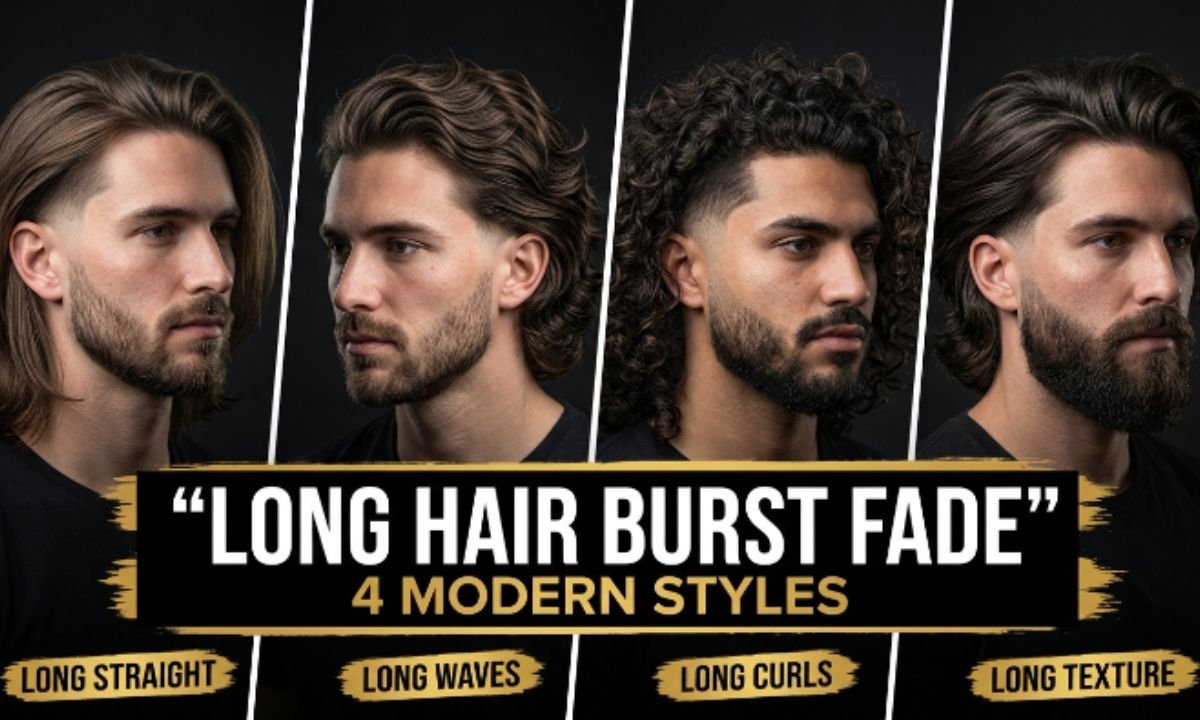
31. Long Top Straight Burst Fade
Significant length is retained on top, sometimes four inches or more, giving maximum flexibility for styling forward, back, or to the side on any given day. The burst fade provides a strong structural base that keeps the overall haircut from looking overgrown despite the length up top. This version needs the most daily product and styling time of any on this list. It suits men who enjoy experimenting with different looks throughout the week.
Best For: Men who like variety and don’t mind daily styling effort
Tell Your Barber: “Burst fade but leave maximum length on top for flexibility.”
Maintenance: Trim every 6-8 weeks on top; sides every 3 weeks
32. Cropped Fringe Burst Fade
A short, blunt fringe sits just above the eyebrows, cut straight across rather than tapered or textured at the ends. The burst fade handles the rest of the head, creating a clean frame around the face. This differs from the longer fringe variation earlier in the list by keeping the fringe notably shorter and more structured. It suits men with straight hairlines who want a defined, geometric front section.
Best For: Straight hairlines and square or oval face shapes
Tell Your Barber: “Short blunt fringe above the eyebrows with a burst fade.”
Maintenance: Trim the fringe every 2-3 weeks to keep the blunt line sharp
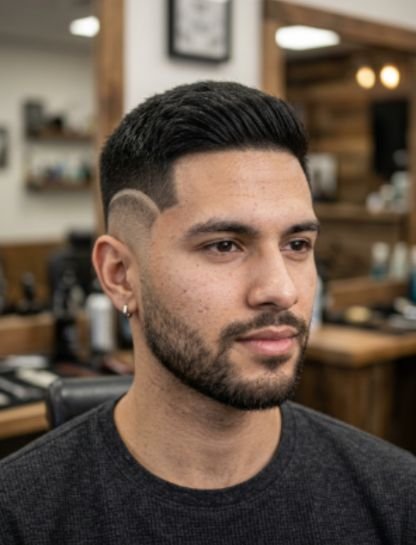
33. Straight Burst Fade with Design
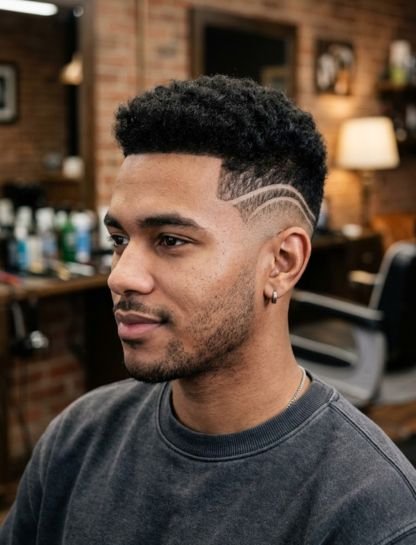
A shaved pattern, line, or geometric shape is added into the fade section itself, turning the burst fade into a more personalized, decorative statement. Designs range from simple single lines to more elaborate patterns depending on the barber’s skill and the client’s preference. This works only on skin fades or very short sides since the pattern needs a bare area to stand out against. It’s the most customizable version on this list.
Best For: Men wanting a fully personalized, one-of-a-kind haircut
Tell Your Barber: “Add a design into the burst fade and skin fade base.”
Maintenance: Designs need re-shaving every 1-2 weeks to stay visible
34. Ivy League Burst Fade
Adapted from the classic American Ivy League cut, this version keeps the top slightly longer than a crew cut with a straight, side-swept finish, while the burst fade replaces the traditional straight-line fade at the sides. It’s a preppy, tailored look that suits smart-casual and formal settings equally well. Straight hair holds the side-swept shape without needing heavy product. This is one of the more timeless options among the 35 styles listed here.
Best For: Smart-casual settings and classic, timeless grooming preferences
Tell Your Barber: “Ivy League length on top with a burst fade instead of a regular fade.”
Maintenance: Trim every 4 weeks to keep the classic shape intact
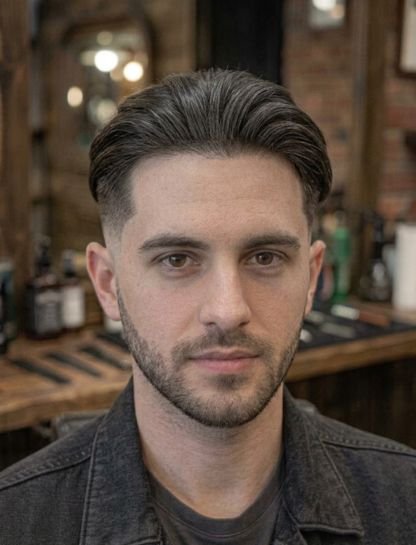
35. Modern Gentleman Burst Fade
This all-around polished version combines medium top length, a mid-height burst fade, and a subtle side part for a look that works equally well at the office, on a date, or at a formal event. It avoids extremes in any direction, making it the most universally adaptable style on this list. Straight hair keeps the finish looking tailored without requiring advanced styling skills. It’s a strong choice for men who want one reliable haircut for every occasion.
Best For: Men wanting one versatile cut for all occasions
Tell Your Barber: “Balanced burst fade, medium top, subtle side part, nothing extreme.”
Maintenance: Trim every 3-4 weeks to keep the balanced shape consistent
How to Get a Straight Burst Fade Haircut
Getting a clean burst fade starts before you even sit in the chair. Follow these steps for the best result:
Bring a reference photo, since “burst fade” can be interpreted differently by different barbers
Specify the fade height (low, mid, or high) and how much length to leave on top
Mention your hair type (thick, fine, straight) so the barber can adjust thinning and layering accordingly
Ask the barber to curve the fade around the ear specifically, not just blend it in a straight line
Request a demonstration or mirror check midway through if you’re trying this style for the first time
Discuss how you plan to style it daily so the cut is tailored to your actual routine, not just the initial finish
Common Mistakes to Avoid
Skipping reference photos — barbers interpret “burst fade” differently, so vague requests lead to inconsistent results
Choosing too high a fade for thick hair — this can make the top look disproportionately bulky against very short sides
Not mentioning hair type — thick and fine hair need different thinning approaches for the same style to work
Over-styling with heavy product — too much pomade or gel can weigh straight hair down and hide the fade’s shape
Waiting too long between trims — burst fades grow out faster around the ear than standard fades, so gaps show quickly
Ignoring the beard line — if you have facial hair, an unmatched beard and fade height can make the whole look feel disconnected
Best Hair Products for a Straight Burst Fade Haircut
Matte clay works well for textured or messy top styles since it adds hold without shine
Pomade suits slicked-back, pompadour, or Ivy League versions where a polished finish is needed
Styling powder adds volume for fine, straight hair that tends to lie flat
Sea salt spray gives natural texture and grip before blow-drying, useful for wolf cut or shag-influenced versions
Light-hold gel works for hard part or line-up styles where a crisp, defined edge matters
Beard oil or balm is worth adding if you’re pairing the cut with a beard fade for a coordinated finish
Frequently Asked Questions
What is the difference between a burst fade and a regular fade?
A burst fade curves around the ear in a rounded shape, while a regular fade runs in a straight line across the side of the head.
Does a straight burst fade work with thick hair?
Yes, but thinning shears are usually needed on top to prevent the hair from looking too heavy above the fade.
How often should I get a burst fade trimmed?
Most versions need a touch-up every 2-4 weeks, since the fade grows out faster than a regular taper.
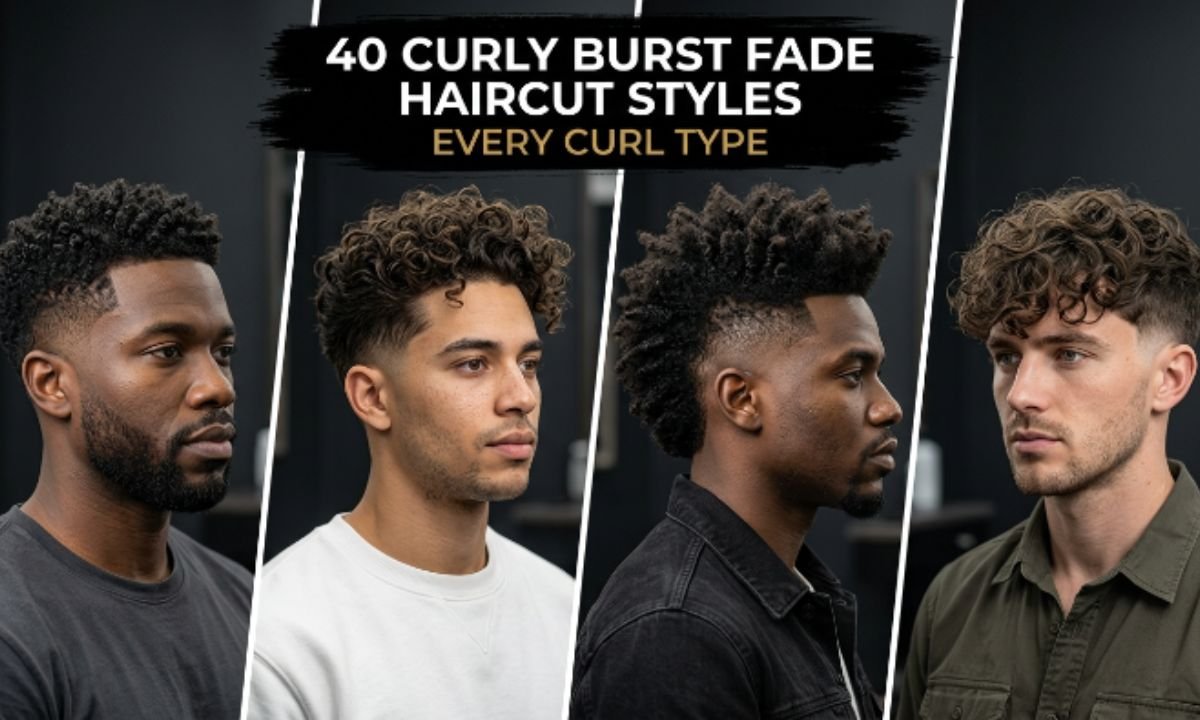
Can I get a burst fade with curly hair?
Yes, though this article focuses on straight-hair versions since the flat texture creates a cleaner line against the curved fade.
Is a burst fade good for a receding hairline?
Yes, especially versions with a fringe or Caesar-style front, since added length up front can help cover early recession.
Can a burst fade be paired with a beard?
Yes, many barbers connect the fade into a matching beard fade for a unified, coordinated look.
Is a straight burst fade suitable for professional workplaces?
Yes, low- or mid-fade versions with a comb-over or side part look polished enough for most offices.
How long does it take to grow out a burst fade into a longer style?
Most men can transition to a longer top style within 8-12 weeks while keeping the sides maintained on their regular schedule.
Final Thoughts
The straight burst fade earns its popularity by offering a haircut that looks sharp with minimal daily effort while still leaving room for real personalization. Whether you prefer a low-key business version or a bold mohawk or mullet variation, the curved fade shape adapts to almost any top style and hair density.
Bring a clear reference to your next appointment and communicate your hair type and lifestyle so your barber can tailor the exact height and length to you. With the right upkeep schedule, this haircut stays sharp and easy to manage between every visit.
Hi, I’m Oliver Bennett. I’m passionate about men’s hairstyles and love exploring modern cuts that are easy to understand and easy to ask your barber for. On this website, I share simple guides on styles like burst fades, mullets, curtain cuts, tapers, and other trending men’s hairstyles. My goal is to help you find a haircut that matches your hair type, face shape, and personal style.


1 thought on “35 Best Straight Burst Fade Haircut Styles for Stylish Men to Try Right Now”