HairWhat Is a Burst Taper Fade? Variations, Styles & Complete Guide 2026
What Is a Burst Taper Fade? Variations, Styles & Complete Guide 2026
August 15, 2026
/
1 Comment
/
Oliver Bennett
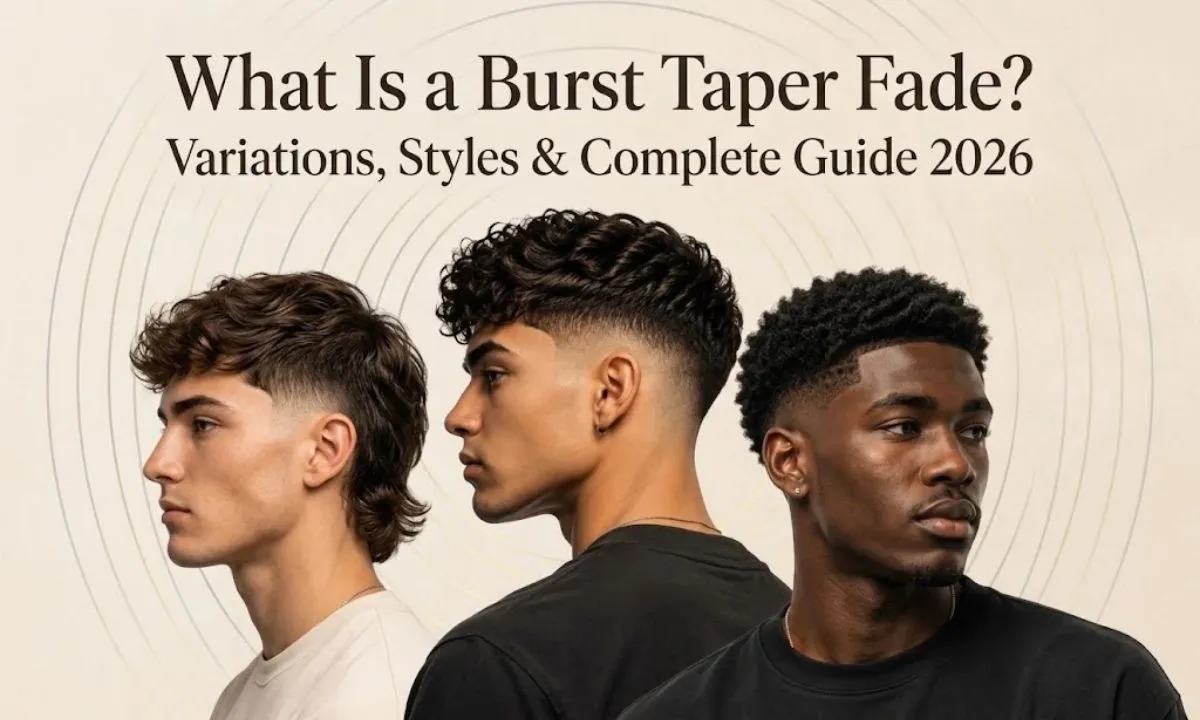
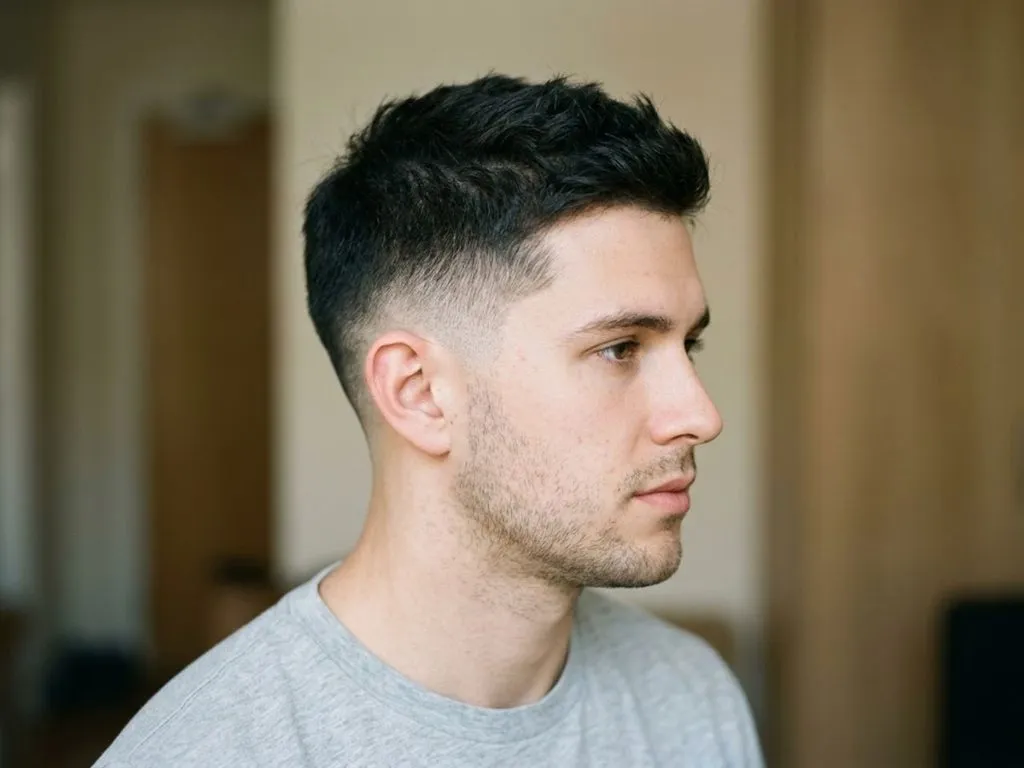
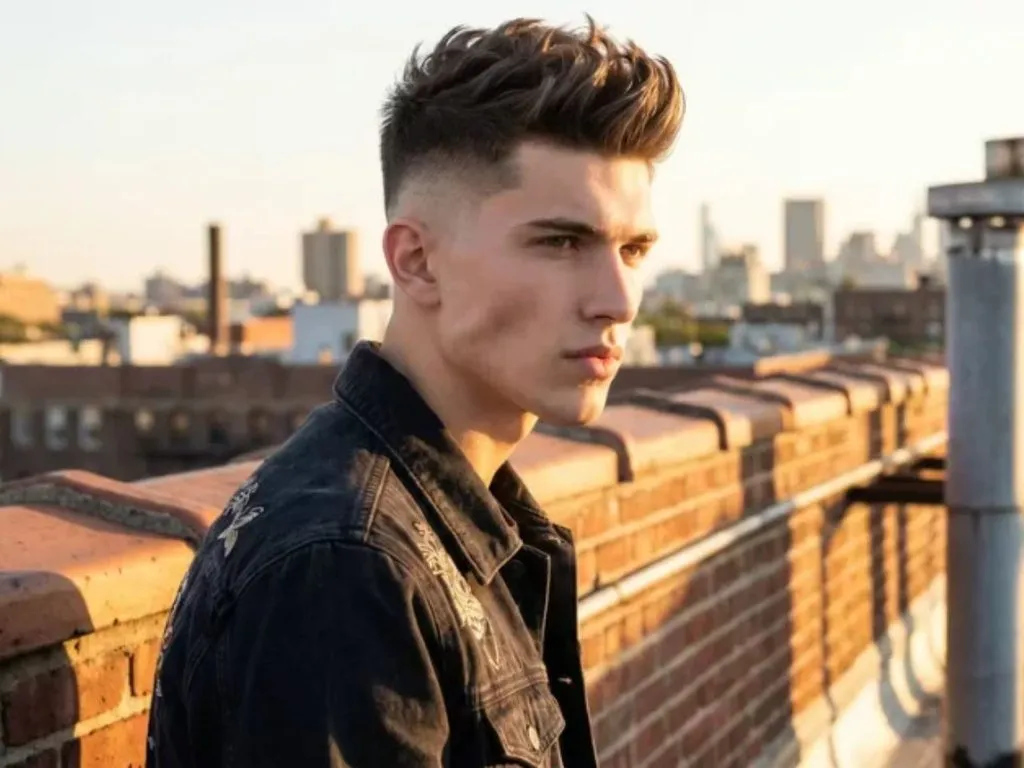
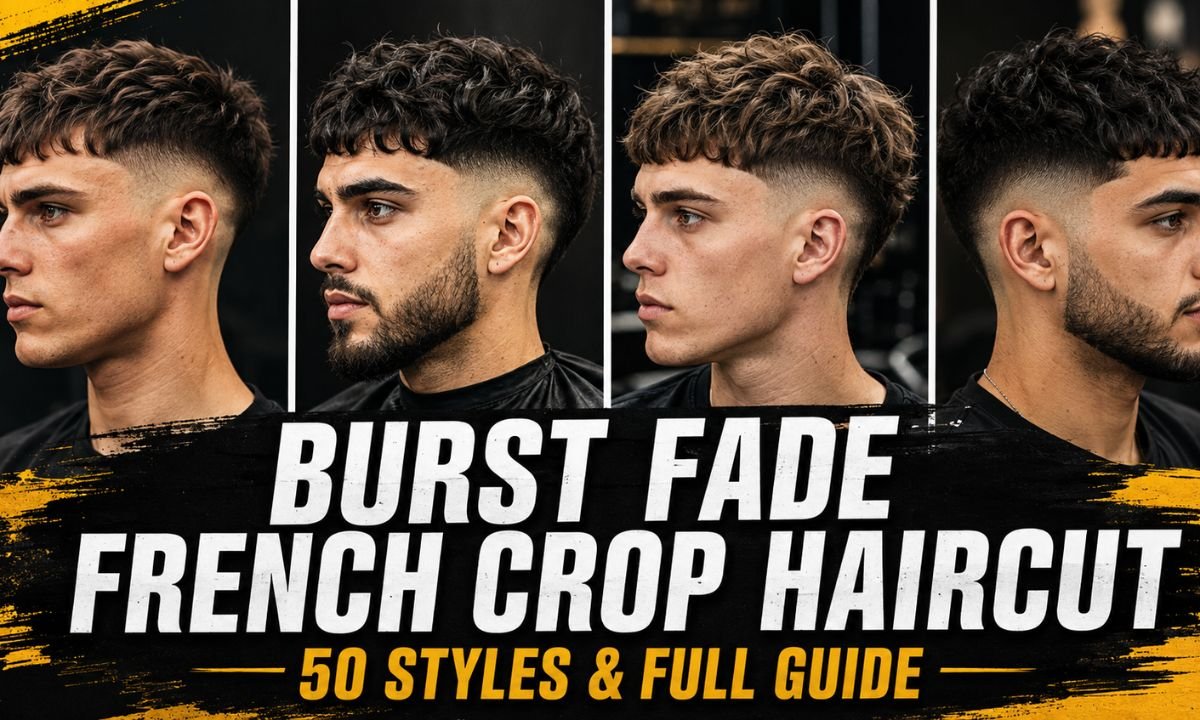
A burst taper fade combines a curved fade around the ears with a softer taper at the neckline and sideburns. Unlike a traditional fade, it follows a rounded, semicircular path around the ear. The cut keeps more length toward the back. At the same time, it creates a clean transition around the sides.
This haircut works especially well with curly, wavy, coily, afro-textured, and longer hairstyles. You can also adapt it for straight hair. This gives you a sharper and more defined finish. From subtle low versions to bold mullets, the burst taper fade gives you many ways to personalize your haircut.
A burst taper fade combines two haircut techniques: a burst fade and a taper.
The burst section creates the haircut’s signature curved shape around the ear. Instead of fading in a straight line down the side of the head, the barber follows a semicircular path around the ear.
The hair gets longer as the blend moves away from the shortest area. This creates the distinct “burst” effect.
The taper section keeps the neckline and sideburns softer. Instead of removing all the hair around these areas, the barber gradually reduces the length.
This creates a clean finish without making the neckline or sideburns look too harsh.
The combination gives you a defined shape around the ears. It also avoids the extremely high-contrast look that a full skin fade can create.
The burst shape leaves more length toward the back of the head. That extra length makes the haircut a strong choice for styles such as mullets, textured crops, curls, afros, fringes, and other longer top styles.
How Does a Burst Taper Fade Work?
The easiest way to understand this haircut is to separate the shape from the height.
“Burst” describes the direction and shape of the fade. The fade curves around the ear instead of moving straight across the side of the head.
“Taper” describes how the barber reduces the hair around areas such as the neckline and sideburns.
“Low,” “mid,” and “high” describe where the shortest or strongest part of the fade sits.
This gives you several options. You can choose a low burst taper fade, a mid burst taper fade, or a higher version based on the amount of contrast you want.
The final look also depends on the length you keep on top.
A short, textured top creates a neat and controlled finish. Curls, an afro, a fringe, or a mullet creates a much stronger silhouette.
The same burst taper shape can therefore look subtle or bold. The top length plays a major role in how noticeable the finished haircut becomes.
Burst Taper Fade vs Regular Taper Fade
A regular taper gradually shortens the hair around the sideburns and neckline while keeping most of the sides relatively full. It generally creates a subtle and traditional appearance.
A burst taper fade adds the curved section around the ear. This makes the side profile more noticeable and gives the haircut a more distinctive shape.
Feature
Burst Taper Fade
Regular Taper
Shape
Curves around the ear
Gradually shortens around the edges
Sides
More defined around the ear
More natural and subtle
Back
Can retain more length
Usually follows a traditional shape
Style
Modern and noticeable
Classic and understated
Hair types
Excellent for textured hair, but works on straight hair
Works with nearly every texture
Top styles
Curls, afros, crops, mullets, fringes
Side parts, crops, brush-ups, classic styles
Maintenance
Usually needs more frequent shaping
Generally easier to grow out
Overall look
Curved, detailed, modern
Clean, simple, versatile
The main difference is therefore the curved burst shape. A taper can be subtle, while the burst detail gives the haircut a more recognizable profile.
Burst Fade vs Taper vs Drop Fade
These terms are often confused because barbers use them to describe different parts of a haircut.
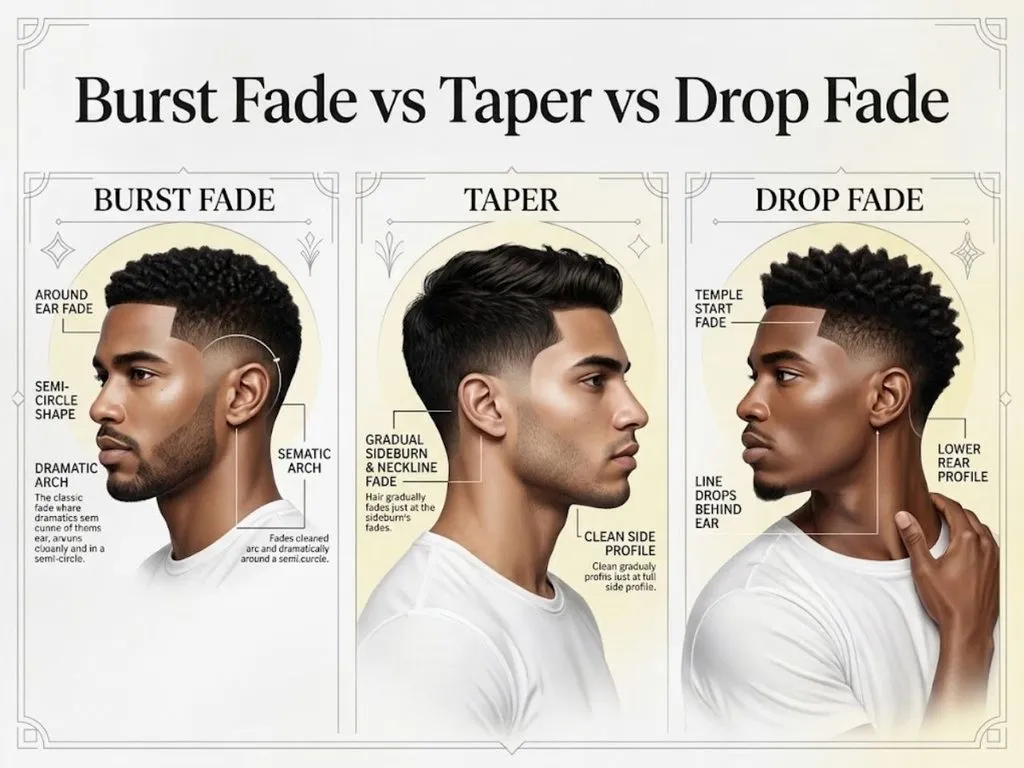
Burst Fade
A burst fade curves around the ear in a semicircle. The shape is the defining feature. It works especially well when you want to keep length behind the ear or at the back.
Taper
A taper gradually reduces hair around the neckline and sideburns without necessarily taking the sides down to bare skin. It usually looks softer and more conservative.
Drop Fade
A drop fade curves downward behind the ear toward the back of the head. Its shape follows the head and drops lower at the back.
A burst fade and drop fade therefore curve in different directions. The burst wraps around the ear, while the drop moves downward behind it.
Low Fade
“Low” describes placement rather than shape. A low fade begins closer to the ears and neckline, leaving more hair on the upper sides.
This distinction matters when speaking with a barber. You can ask for a low burst taper fade, which combines a low placement with the curved burst shape and softer taper details.
Burst Taper Fade Styles by Hair Type
Hair texture has a major effect on how this haircut looks. The same burst shape can appear completely different on straight, wavy, curly, and coily hair.
The following sections use the same format so you can compare each version easily.
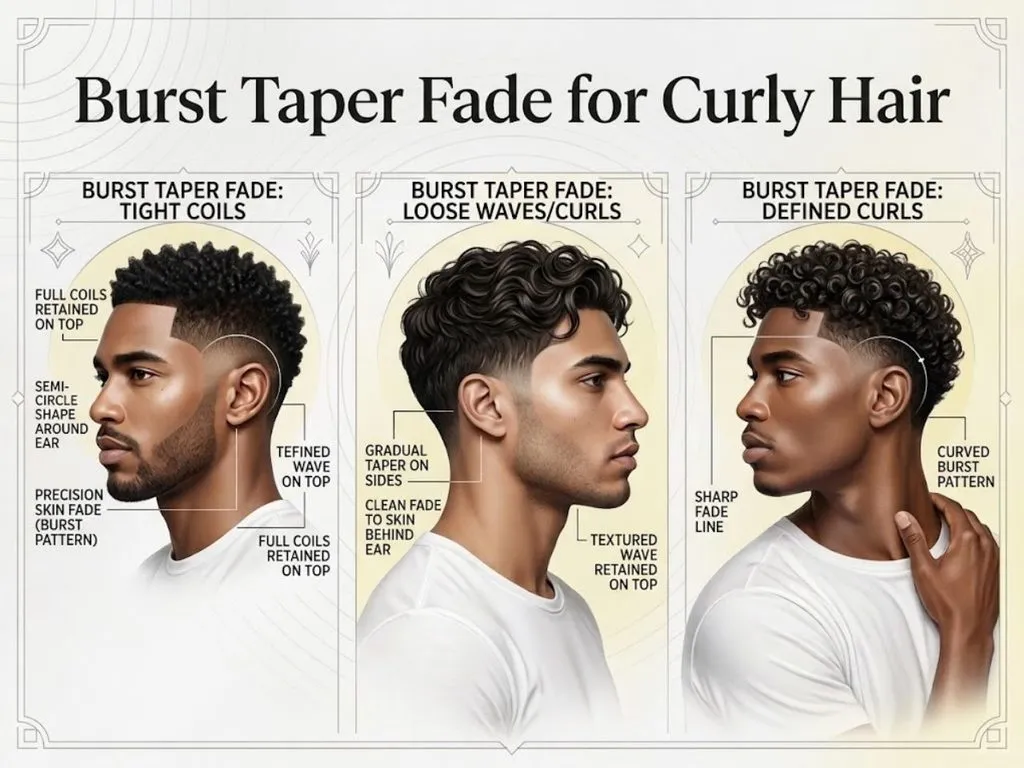
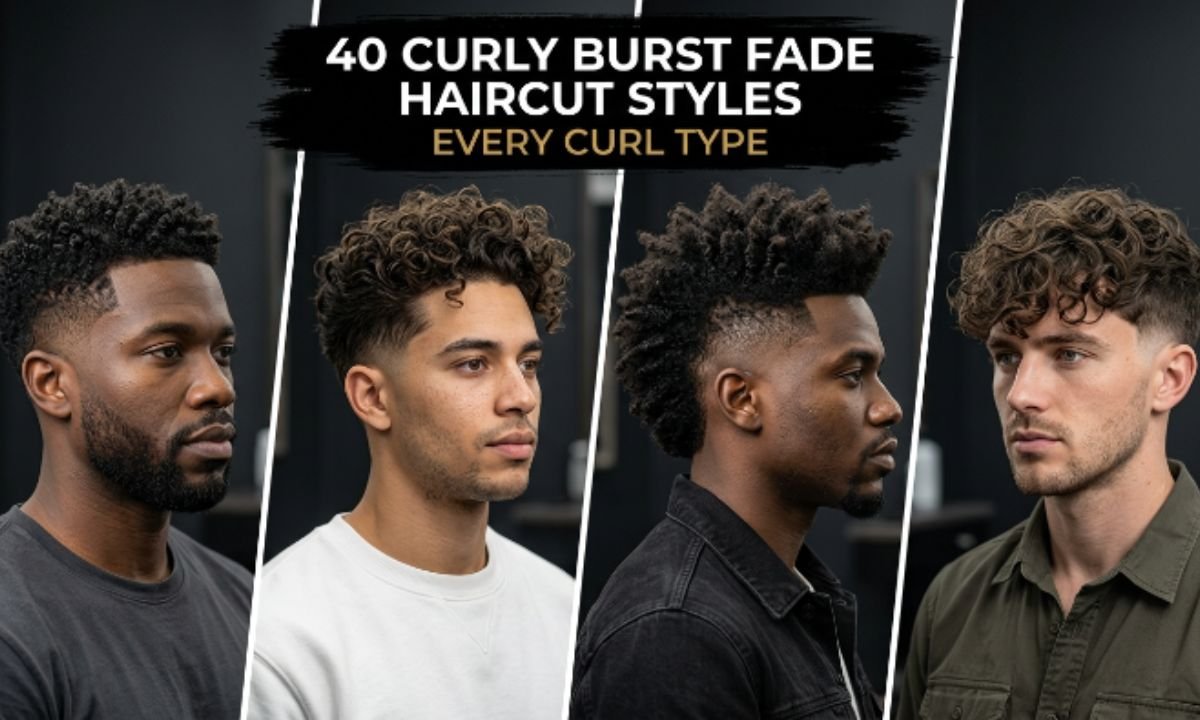
Burst Taper Fade for Curly Hair
Curly hair is one of the most popular textures for a burst taper fade because the curved sides create a strong contrast with the natural volume on top.
The barber can keep the curls longer while cleaning up the area around the ears. This allows the natural curl pattern to become the main feature without making the sides look bulky.
How to Style
Apply curl cream or a lightweight defining gel to damp hair. Scrunch the curls upward and allow them to air-dry, or use a diffuser on low heat.
Best For
Men who want to show their natural curls while keeping the sides and neckline controlled.
Face Shape
It can work well with round, square, heart, and diamond-shaped faces. Adding controlled height through the curls can visually lengthen a round face.
Hair Type
Best suited to naturally curly or wavy hair with enough density to maintain volume.
Barber Instructions
Ask for a low or mid burst taper fade, depending on the amount of contrast you want. Tell the barber to preserve enough length on top for the curls to spring naturally.
Hair Density & Volume
Thick curls usually create strong natural volume. Fine curls may need a lightweight styling cream to prevent the top from falling flat.
Maintenance
Plan a trim roughly every three to four weeks, although faster-growing hair may need attention sooner.
Beard Integration
A short or full beard can complement the textured top. Ask the barber to blend the sideburn area naturally into the beard.
Hairline & Cowlicks
The natural curl pattern can disguise minor irregularities around the crown and hairline.
Lifestyle & Profession
This version works especially well for casual, creative, and modern environments. A low version with a controlled top can look more conservative.
Hair Products Needed
Use curl cream, leave-in conditioner, or a light-hold gel. Avoid heavy products that can make curls stiff or greasy.
Growth Cycle
Curly hair can hide some regrowth because the curls maintain volume as they grow. The curved area around the ears will still need regular cleanup.
Scalp Care
Use a moisturizing conditioner if your scalp and curls become dry. Avoid excessive washing if it strips away natural moisture.
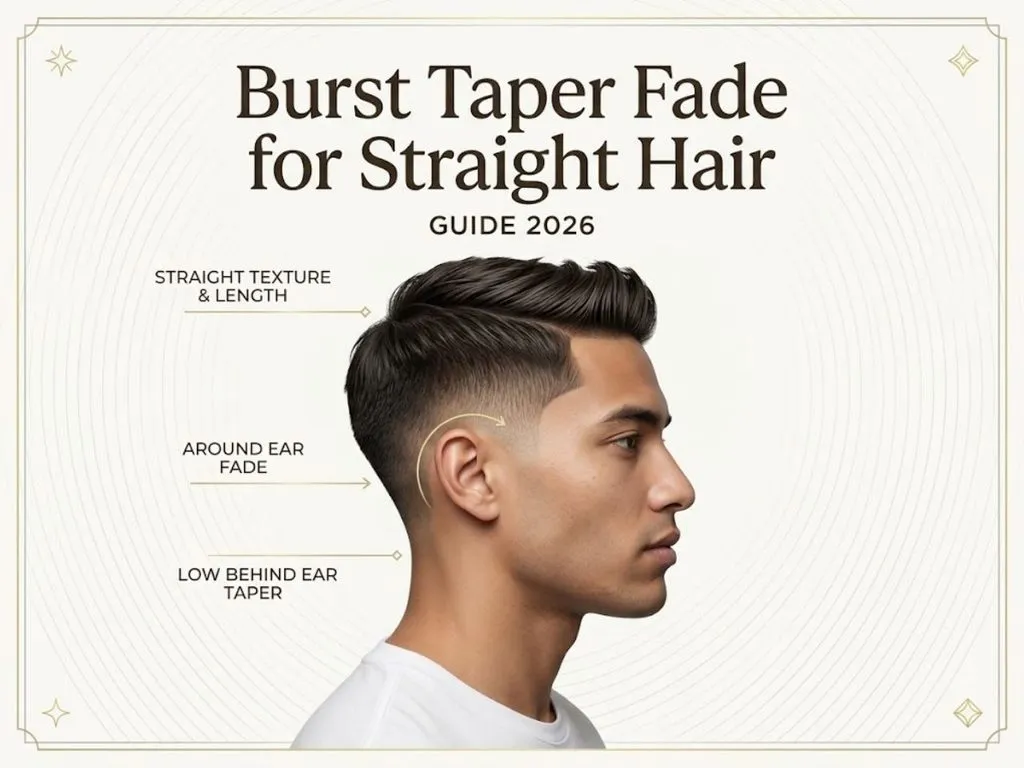
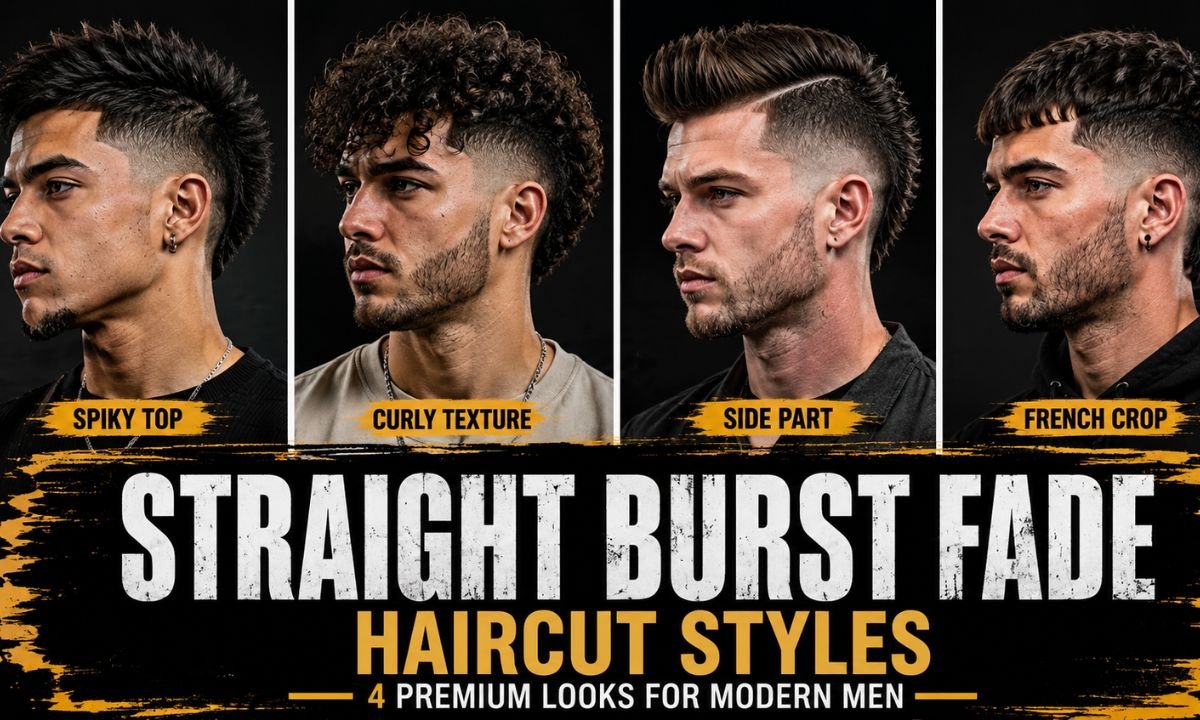
Burst Taper Fade for Straight Hair
Straight hair gives the burst taper fade a sharper and more graphic appearance. Because straight strands do not naturally create as much volume as curls, the top can be textured or lifted with styling products.
How to Style
Blow-dry the hair upward or slightly backward for volume, then use a matte paste or clay to add texture.
Best For
Men who want a clean, structured haircut with a noticeable curved detail around the ears.
Face Shape
Oval and diamond-shaped faces can work particularly well with structured versions. Round faces can benefit from controlled height on top.
Hair Type
Works well with fine, medium, or thick straight hair.
Barber Instructions
Ask for a low burst taper fade if you want a subtle result. Request textured or point-cut ends on top if your hair needs more movement.
Hair Density & Volume
Fine straight hair may need texture and root lift. Thick straight hair can support a heavier, more sculpted top.
Maintenance
A two- to three-week cleanup can keep the curved section sharp, especially if your hair grows quickly.
Beard Integration
Stubble or a short boxed beard can add contrast without overwhelming the clean haircut.
Hairline & Cowlicks
Leave extra length around stubborn cowlicks if needed. The added length can give you more control when styling.
Lifestyle & Profession
A low burst taper with a short, controlled top can work well in many professional settings. Higher or more dramatic versions create a more casual appearance.
Hair Products Needed
Try matte clay, styling paste, or texture powder. Choose a lightweight product if your hair is fine.
Growth Cycle
Straight hair often makes regrowth easier to see, so the fade can lose its sharp appearance sooner.
Scalp Care
Wash regularly enough to control product buildup, especially if you use clay, paste, or powder frequently.
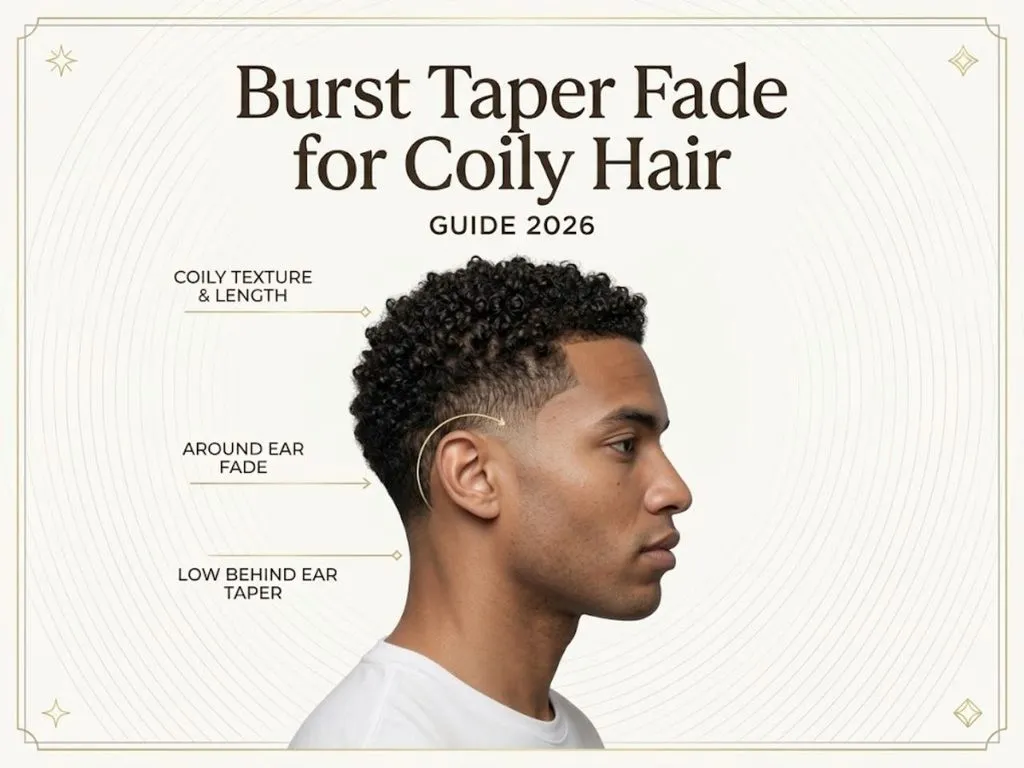
Burst Taper Fade for Coily Hair
Coily hair creates a strong visual contrast against the curved fade. The natural density and shrinkage of coily hair can make the top look compact while the burst shape keeps the sides controlled.
How to Style
Apply leave-in conditioner to damp hair and use a light cream to define the texture. You can also use finger coils or twists depending on your preferred style.
Best For
Men who want a strong contrast between a fuller textured top and a clean curved fade.
Face Shape
It can complement longer, oval, and oblong faces by adding visual width and volume around the crown.
Hair Type
Best suited to tightly curled or coily textures with noticeable natural shrinkage.
Barber Instructions
Tell your barber how much top length you want to keep after shrinkage. Ask for a rounded top shape if you want the natural volume to remain balanced.
Hair Density & Volume
Coily hair can appear shorter than its actual length because of shrinkage. Your barber should account for this when deciding how much to remove.
Maintenance
A three- to five-week schedule may work for some clients, although the curved fade itself may need earlier cleanup.
Beard Integration
A rounded full beard can balance a fuller coily top. Keep the beard shape consistent with the haircut.
Hairline & Cowlicks
The texture can naturally soften minor unevenness around the hairline.
Lifestyle & Profession
This style can be adapted for casual, creative, active, and professional environments by changing the fade height and top length.
Hair Products Needed
Use leave-in conditioner, moisturizing cream, and a light oil when needed.
Growth Cycle
Shrinkage can make growth less obvious on the top, but the fade around the ears becomes less defined as it grows.
Scalp Care
Moisturizing products can help prevent excessive dryness. Avoid over-washing if your scalp becomes dry easily.
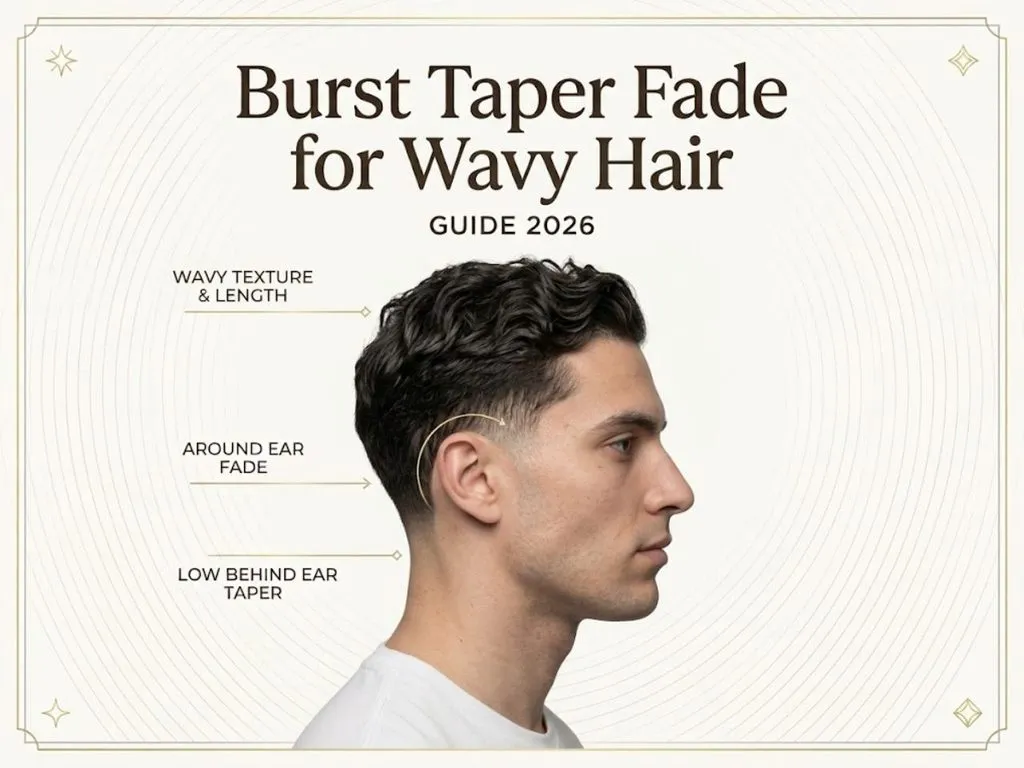
Burst Taper Fade for Wavy Hair
Wavy hair sits between straight and curly textures, making it naturally suited to a textured burst taper. The waves add movement to the top while the curved sides create a clean outline.
How to Style
Use a lightweight texture cream or sea-salt-style texturizer and allow the waves to dry naturally.
Best For
Men who want natural movement without committing to a highly sculpted hairstyle.
Face Shape
Works across many face shapes. Extra height can help balance rounder faces.
Hair Type
Best for naturally wavy hair with medium or thick density.
Barber Instructions
Ask for a low or mid burst taper and explain how much wave length you want preserved.
Hair Density & Volume
Thicker waves create more natural movement. Fine waves may need root-lifting products.
Maintenance
A three- to four-week schedule usually keeps the sides controlled while allowing the top to retain its texture.
Beard Integration
A light beard or stubble works well with the relaxed texture.
Hairline & Cowlicks
The natural movement of waves can help disguise minor irregularities.
Lifestyle & Profession
This is one of the easier versions to adapt between casual and professional environments.
Hair Products Needed
Use texture cream, lightweight paste, or sea-salt-style texturizing products.
Growth Cycle
The top can grow naturally without losing its overall shape, but the burst area needs regular cleanup.
Scalp Care
Use a gentle shampoo and conditioner to keep the waves clean without making them excessively dry.
Burst Taper Fade Variations by Look and Length
Hair texture is only one part of the equation. You can also change the haircut by adjusting the fade height, top length, neckline, facial hair, and back length.
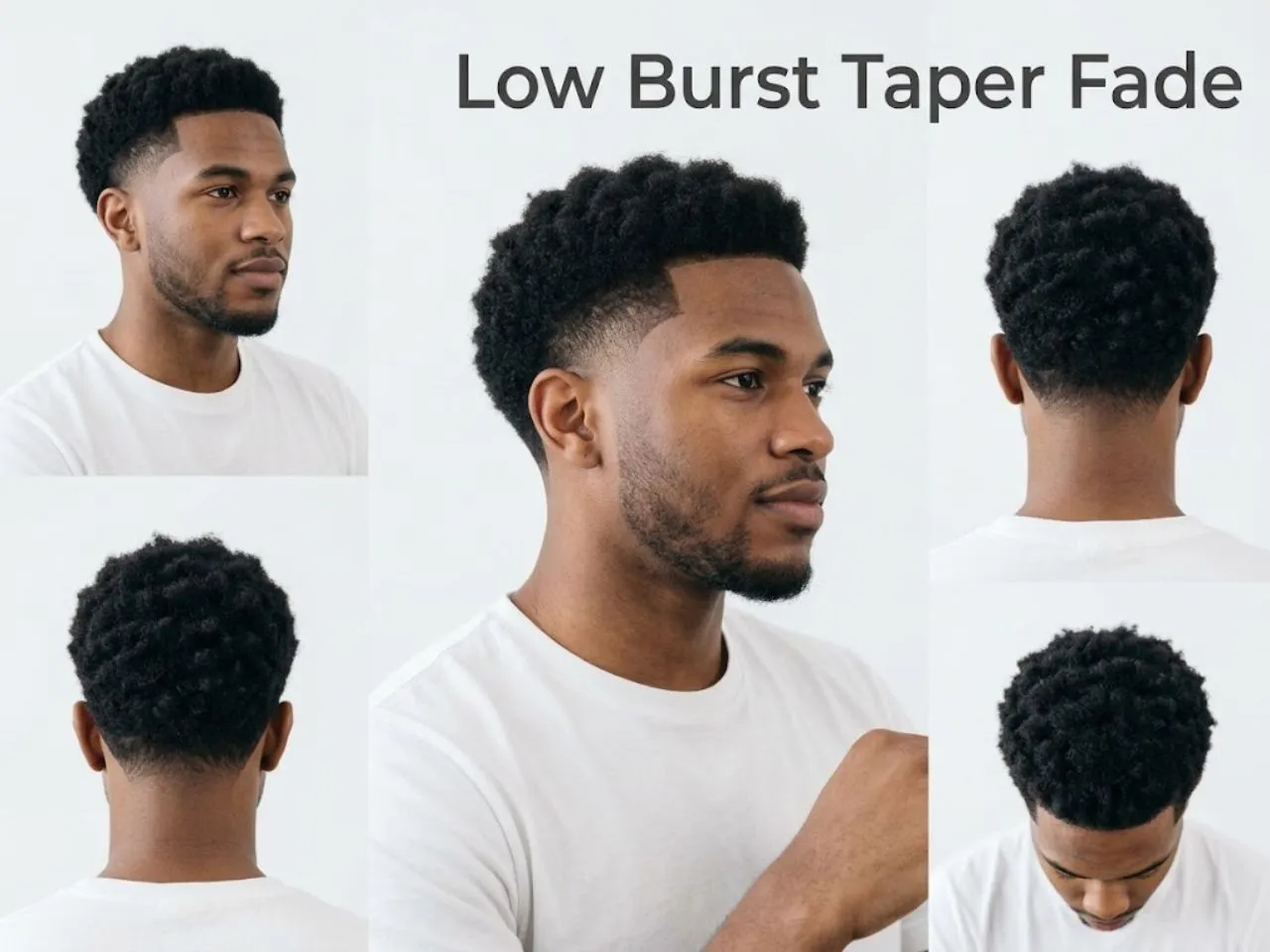
Low Burst Taper Fade
The low burst taper fade keeps the shortest area close to the ears and neckline. This creates one of the softer and more subtle versions of the haircut.
The curved burst shape stays low on the sides. This keeps more hair on the upper sides while still giving the haircut its signature burst detail.
How to Style
Comb the top forward for a clean and controlled look.
Push it upward if you want more height and volume.
Sweep it to the side for a classic finish.
Use a lightweight styling cream to keep the hair natural and flexible.
Best For
Men who want the burst detail without an extremely dramatic fade.
Anyone who prefers a softer transition around the ears.
People who want a modern haircut that does not create excessive contrast.
Face Shape
Works with many different face shapes.
Keep moderate volume on top to help balance rounder faces.
Adjust the top length and shape based on your facial proportions.
Hair Type
Works with straight hair.
Works with wavy hair.
Works with curly hair.
Works with coily hair.
The final appearance changes with the natural texture and volume of the hair.
Barber Instructions
Tell your barber: “I want a low burst taper around the ear. Keep the curve low and leave the top at my desired length.”
Show a reference photo if you want a specific curve or top length.
Make it clear how much hair you want to keep around the upper sides.
Hair Density & Volume
The barber removes less hair from the upper sides.
This can help fine hair appear fuller.
Thicker hair can keep more natural weight and volume around the top and sides.
Maintenance
A three- to four-week schedule can work well for a softer version.
A very sharp finish may need an earlier cleanup.
Regular touch-ups help keep the curved burst area clear and defined.
Beard Integration
Light stubble creates a subtle transition from the haircut to the face.
A fuller beard can also blend into the sideburn.
Ask your barber to keep the sideburn transition smooth if you want a connected look.
Hairline & Cowlicks
The low placement does not heavily change the upper hairline.
This makes the style flexible for different natural hair patterns.
Natural cowlicks can remain part of the hairstyle instead of requiring major changes to the top.
Lifestyle & Profession
The low burst taper works well for school settings.
It can also suit office environments.
The softer shape makes it easier to adapt to formal settings than a high or dramatic burst taper fade.
Hair Products Needed
Use light pomade for a controlled finish with some shine.
Use styling cream for a softer and more natural appearance.
Use matte paste when you want stronger texture without much shine.
Use styling powder when you want added volume and a lighter feel.
Growth Cycle
The lower placement can remain wearable as the hair grows.
The style may still look balanced after some regrowth.
Over time, the curved burst area loses definition and needs a cleanup.
Scalp Care
A low burst taper exposes less skin than a skin fade.
This can make the scalp feel less affected by frequent close clipping.
Keep the scalp clean and comfortable between appointments.
Mid Burst Taper Fade
A mid burst taper fade places the stronger fade higher around the ear than a low burst taper. This creates more contrast while preserving the haircut’s signature curved shape.
The fade becomes more noticeable around the sides. The top can still keep enough length for curls, waves, texture, or lifted styling.
How to Style
Keep the top textured to emphasize the contrast.
Define curls if you have naturally curly hair.
Use a lifted style when you want more height.
Keep wavy hair loose and textured for a relaxed finish.
Best For
Men who want more definition than a low burst taper.
Anyone who wants stronger contrast without choosing an aggressive high fade.
People who want a modern haircut with a noticeable curved shape.
Face Shape
A controlled top can add visual height and structure.
Moderate volume can help balance rounder face shapes.
The top can also be shaped to complement longer or more angular faces.
Hair Type
Works across most hair textures.
Straight hair can create a clean and sharp contrast.
Wavy hair adds natural movement.
Curly and coily hair can make the burst shape more pronounced.
Barber Instructions
Ask for a mid burst fade that curves around the ear.
Tell your barber to blend it smoothly into the longer top.
Specify how much length you want to keep above the burst area.
A reference photo can help communicate the exact height and curve.
Hair Density & Volume
Thick hair creates strong contrast between the fuller top and shorter sides.
Fine hair may benefit from texture products that add volume.
The right top length can make thinner hair appear more structured.
Maintenance
Plan for a two- to three-week cleanup if you want the fade to remain crisp.
Regular trimming keeps the curved section sharp.
Longer gaps between cuts create a softer and less defined appearance.
Beard Integration
A connected beard can balance the stronger contrast around the sides.
The sideburn can transition gradually into the beard.
A cleaner beard shape can reinforce the structured appearance of the haircut.
Hairline & Cowlicks
Keep enough length on top to work around natural cowlicks.
Your barber can shape the top around difficult growth patterns.
The burst itself can remain separate from the natural direction of the top hair.
Lifestyle & Profession
A mid burst taper has a more modern and noticeable appearance than a low burst.
It can work well in casual and creative settings.
Workplace suitability depends on the specific dress code and how sharp or bold you keep the style.
Hair Products Needed
Use matte clay for straight or thicker hair that needs control.
Use texture powder for extra volume and separation.
Use curl cream to define naturally curly hair.
Use styling paste when you want texture with moderate control.
Growth Cycle
The stronger contrast becomes easier to notice as the short sides grow.
Regrowth can soften the curved shape.
Regular trims help preserve the original height and structure of the burst taper fade.
Scalp Care
Close clipping can leave some areas more exposed.
Keep exposed skin clean and moisturized if it becomes dry.
Use gentle scalp care if close clipping causes irritation.
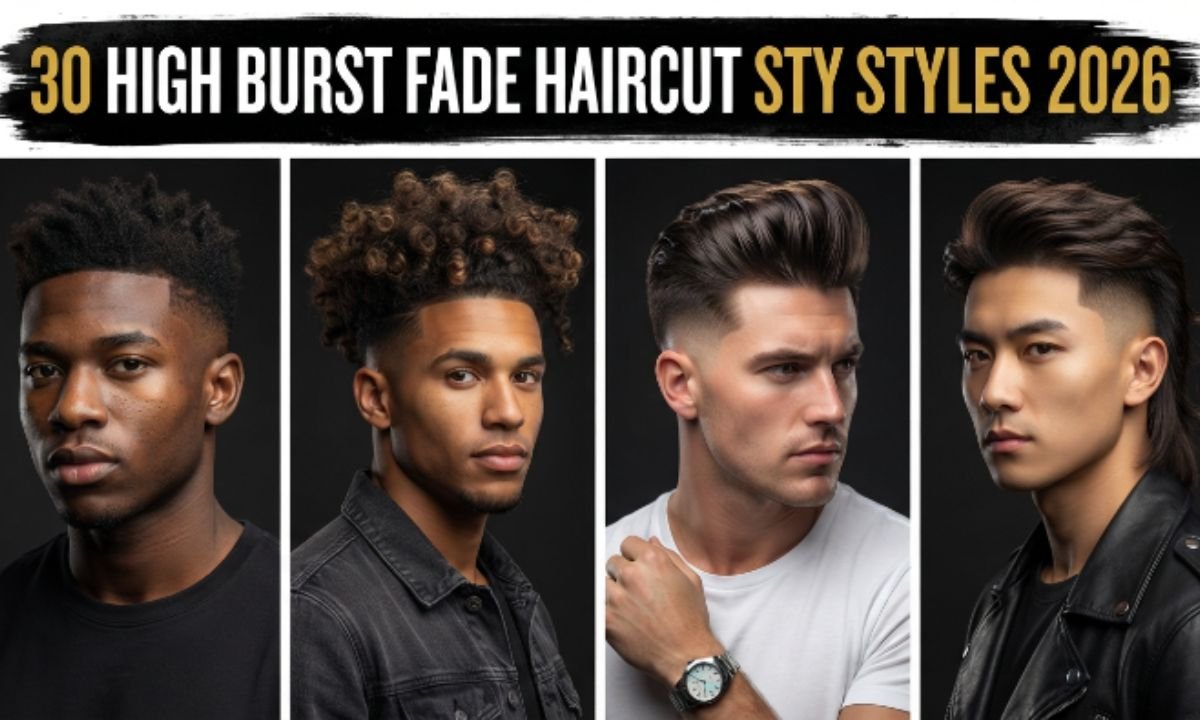
High Burst Taper Fade
A high burst taper fade creates the strongest visual contrast among the three main height options. The fade rises higher around the ear while the top remains noticeably fuller.
The higher placement makes the difference between the short sides and longer top much clearer. This gives the haircut a bold and modern appearance.
How to Style
Keep the top textured for a defined finish.
Lift the hair upward to create more height.
Keep curls defined if you have naturally curly hair.
Leave the top longer when you want a stronger contrast with the high burst.
Shape the top according to your preferred silhouette.
Best For
Men who want a bold and modern haircut.
Anyone who wants the burst taper to stand out.
People who prefer strong contrast between the sides and top.
Face Shape
Works especially well when the top can be shaped to balance facial proportions.
Added height can change the visual appearance of the face.
Your barber can adjust the top volume based on your face shape.
Hair Type
Thick hair can create a strong and full result.
Curly hair can make the burst shape more noticeable.
Coily and textured hair can create a powerful contrast.
Straight hair can also work with the right length and styling.
Barber Instructions
Tell your barber exactly how high you want the burst to rise around the ear.
Explain how much length you want to keep on top.
A reference photo is especially useful for a high burst taper because small changes in height can change the overall look.
Hair Density & Volume
Dense hair creates the strongest contrast between the fuller top and faded area.
Thick hair can support taller and more textured styles.
Fine hair may need styling products to create enough volume and separation.
Maintenance
Higher versions often require more frequent touch-ups.
Regrowth becomes visible faster because the contrast is stronger.
Regular barber visits help maintain the sharp curve and clean transition.
Beard Integration
A fuller beard can balance a high burst by adding visual weight around the jaw.
A connected sideburn can create a smoother transition.
Keep the beard shape controlled if you want the haircut to remain the main focus.
Hairline & Cowlicks
Discuss your natural hairline with your barber before cutting.
Explain any strong crown patterns or difficult growth areas.
The barber can adjust the top length to work around natural cowlicks.
Lifestyle & Profession
A high burst taper has a stronger fashion-forward appearance.
It can suit casual, creative, and expressive styles.
It may not fit strict dress codes or conservative workplace standards.
Hair Products Needed
Use matte clay for straight hair that needs structure and control.
Use curl cream for curly textures.
Use leave-in products for curls and coils that need moisture and definition.
Choose the product based on your natural texture and desired finish.
Growth Cycle
The strong contrast changes quickly as the short sides grow.
Regrowth can make the fade look softer within a short period.
Frequent touch-ups help preserve the original high placement and sharp shape.
Scalp Care
A high burst can expose more scalp than a lower version.
Close clipping may cause irritation for some people.
Keep the exposed skin clean and moisturized when necessary.
Burst Taper Fade With Beard
A burst taper fade with beard can connect the haircut to the facial hair when the sideburn and beard receive a careful blend.
The goal is to make the haircut and beard look like one continuous shape. A smooth transition prevents the two areas from looking disconnected.
How to Style
Keep the top textured or moderately long.
Maintain the beard at a length that balances the hairstyle.
Keep the beard edges clean if you want a sharper overall appearance.
Match the beard volume to the amount of volume on top.
Best For
Men who want a groomed look with clear structure.
Anyone who wants the haircut to flow naturally into the jawline.
People who prefer a defined hairstyle with coordinated facial hair.
Face Shape
Beard length can change the visual proportions of the face.
A fuller beard can add visual weight around the jaw.
A shorter beard can create a lighter and cleaner appearance.
Hair Type
Works with straight hair.
Works with wavy hair.
Works with curly hair.
Works with coily hair.
The beard connection can be adjusted to match the natural texture of the hairstyle.
Barber Instructions
Ask your barber to blend the burst taper into the sideburn and beard.
Tell the barber to avoid a sudden transition between the haircut and facial hair.
Specify how much beard length you want to keep.
Show a reference photo if you want a particular beard-to-hair transition.
Hair Density & Volume
A thick beard usually pairs well with a fuller top.
A lighter beard may look better with a shorter or more controlled hairstyle.
Balance the volume on both sides to keep the overall shape proportional.
Maintenance
Both the haircut and beard need regular shaping.
The burst taper may need attention every two to four weeks.
Beard cleanup between haircut appointments can keep the transition sharp.
Beard Integration
Beard integration is the defining feature of this variation.
Ask for a smooth transition between the sideburn, cheek area, and beard.
The blend should connect the haircut and facial hair without creating a hard break.
Hairline & Cowlicks
A balanced beard shape can draw attention toward the jaw.
This can keep the focus from resting only on the hairline.
Natural cowlicks and hairline patterns can remain part of the top style.
Lifestyle & Profession
This style works well in environments where facial hair and modern hairstyles are accepted.
A shorter beard can create a more controlled appearance.
A fuller beard creates a stronger and more rugged overall shape.
Hair Products Needed
Use beard oil to keep facial hair conditioned.
Use beard balm when you need more control and shape.
Use matte clay or styling cream for the hair on top.
Choose the product based on the texture and finish you want.
Growth Cycle
Beards can become noticeably fuller between haircut appointments.
Small beard cleanups may help maintain the intended shape.
The burst taper can also lose definition as the sides grow.
Scalp Care
Avoid excessive clipper irritation around the sideburn and temple area.
Keep the scalp clean between appointments.
Use gentle care if close clipping causes dryness or discomfort.
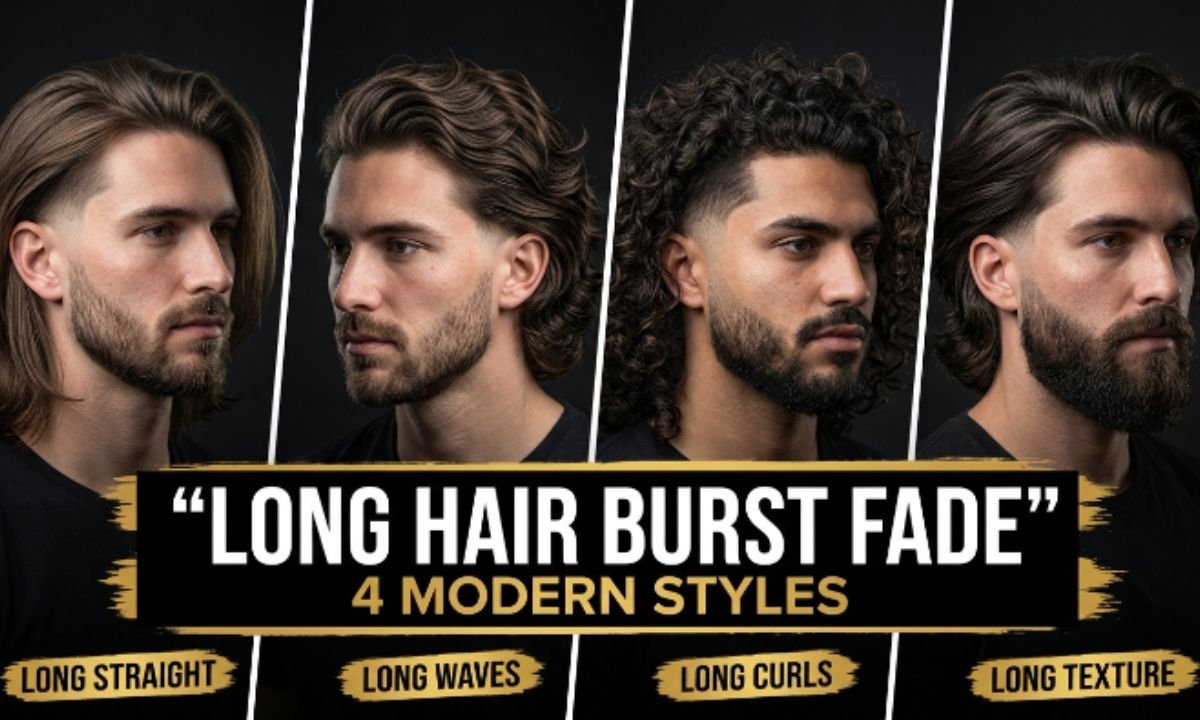
Burst Taper Fade Mullet
The burst taper fade mullet is one of the most recognizable burst taper combinations. The sides curve tightly around the ears while the back remains longer.
The curved fade separates the shorter sides from the extended back. This gives the traditional mullet shape a cleaner and more modern structure.
How to Style
Keep the back textured so it can move naturally.
Use a texturizing product to create separation.
Allow the longer back to keep some natural movement.
Shape the top to connect smoothly with the longer back.
Best For
Men who want a bold hairstyle.
Anyone who likes a retro influence with modern barbering detail.
People who want the mullet silhouette with a defined burst fade around the ears.
Face Shape
Can work with square faces.
Can work with oval faces.
Can work with round faces.
Can work with diamond-shaped faces.
Adjust the length and volume to match your facial proportions.
Hair Type
Thick hair can create a fuller back and stronger silhouette.
Wavy hair can hold the mullet shape particularly well.
Other hair textures can also be adapted to the style with the right length and styling approach.
Barber Instructions
Tell your barber exactly how much length you want to preserve at the back.
Specify how high you want the burst to rise.
Explain how tightly you want the curve to follow the ear.
A reference photo can help your barber match the desired mullet shape.
Hair Density & Volume
Thicker hair creates a fuller back.
Dense hair can produce a stronger mullet silhouette.
Finer hair may need texture products to add separation and shape.
Maintenance
The sides may need trimming every two to three weeks.
The back can continue growing longer.
Regular side cleanups keep the burst taper defined while allowing the mullet to develop.
Beard Integration
A defined beard can add structure to the face.
Facial hair can also balance the longer back.
Keep the beard shape controlled if you want a cleaner contrast between the face and mullet.
Hairline & Cowlicks
The longer back can shift attention away from minor front or crown irregularities.
Natural growth patterns can become part of the longer shape.
The top can be adjusted around stronger cowlicks.
Lifestyle & Profession
This style works well for casual environments.
It can also suit creative settings.
Music and fashion environments can accommodate its expressive shape.
It may be less suitable for workplaces with strict hairstyle standards.
Hair Products Needed
Use texture spray for movement and separation.
Use lightweight cream for a softer finish.
Use matte clay when you need stronger control.
Choose the product based on your natural texture and preferred finish.
Growth Cycle
The longer back can become part of the style as it grows.
The sides still require regular shaping.
Letting the back grow does not remove the need for burst taper maintenance around the ears.
Scalp Care
Follow normal scalp-care practices.
Wash the longer back thoroughly to remove product and buildup.
Use conditioner to keep the longer sections manageable and comfortable.
Burst Taper Fade With Afro
An afro combined with a burst taper fade creates a strong contrast between rounded volume on top and the clean curved area around the ears.
The afro keeps its natural volume and texture. The burst taper adds sharper definition around the sides.
This combination lets you preserve the natural afro shape while creating a cleaner outline around the ears.
How to Style
Shape the afro naturally with a hair pick.
Use a suitable styling product when you need extra control.
Keep the sides clean so the rounded top remains clearly defined.
Maintain the natural texture instead of forcing the hair into a completely different shape.
Best For
Men who want to preserve their natural afro texture.
Anyone who wants sharper definition around the ears.
People who want strong volume on top with a clean burst taper around the sides.
Face Shape
The top volume can be adjusted to complement the proportions of the face.
More height can create a taller silhouette.
A wider afro shape can add more visual width.
Your barber can adjust the overall shape based on your facial proportions.
Hair Type
Best suited to afro-textured hair.
Works particularly well with coily hair.
The natural density and texture help create the rounded afro silhouette.
Barber Instructions
Tell your barber to preserve your desired afro shape.
Ask for a clean burst around the ears.
Specify how much volume you want to keep on top.
Explain how low or high you want the burst taper to sit.
Hair Density & Volume
Dense hair creates the rounded silhouette associated with an afro.
Natural volume gives the haircut its strongest shape.
Your barber can control the outline without removing too much of the overall afro volume.
Maintenance
The burst fade may require regular cleanup.
The afro itself can continue growing between appointments.
Keeping the sides fresh helps maintain the contrast between the rounded top and curved burst area.
Beard Integration
A beard can complement the rounded volume on top.
Shape the beard to support the overall facial proportions.
A clean beard outline can add more structure to the hairstyle.
Hairline & Cowlicks
Natural texture can soften minor inconsistencies.
The afro shape can reduce the visual focus on small irregularities in the hairline.
Strong natural growth patterns can remain part of the hairstyle.
Lifestyle & Profession
The style can look polished or expressive.
The final appearance depends on the height of the burst and the shape of the afro.
A lower burst can create a more controlled appearance.
A higher burst can create stronger contrast and a more noticeable silhouette.
Hair Products Needed
Use moisturizing creams to support textured hair.
Use leave-in conditioners to maintain moisture.
Choose products designed for textured and coily hair.
Use styling products that define the afro without removing its natural volume.
Growth Cycle
The afro can continue growing while the burst gradually loses definition.
The sides may need cleanup before the top needs major trimming.
Regular touch-ups keep the curved burst shape clear while allowing the afro to grow.
Scalp Care
Moisture plays an important role in maintaining comfortable textured hair and scalp.
Use gentle cleansing to remove buildup without excessive dryness.
Keep the scalp moisturized when needed.
Maintain consistent scalp care while using styling products and allowing the afro to grow.
How to Choose the Right Burst Taper Fade
Choosing the right version comes down to more than copying a photo. Consider your hair texture, face shape, workplace, styling routine, and how often you are willing to visit a barber.
Choose a Low Burst for a Subtle Look
A low burst keeps the curved detail close to the ear. It is a practical choice if you want the style without extreme contrast.
Choose a Mid Burst for More Definition
A mid burst gives you a stronger transition and more visible shape.
Choose a High Burst for a Bold Look
A high burst creates a stronger contrast and requires more commitment to regular maintenance.
Choose a Mullet for Length in the Back
If you want to keep substantial length at the nape, the burst taper naturally complements a mullet.
Choose a Curly Top to Highlight Texture
Curly hair creates natural volume and makes the curved fade more noticeable.
Choose an Afro for Natural Volume
The rounded afro shape pairs naturally with the curved burst around the ears.
Choose a Beard for a Connected Look
A beard can extend the visual line from the haircut toward the jaw.
Burst Taper Fade for Different Face Shapes
Your face shape does not determine whether you can wear this haircut, but it can help you decide how much volume and height to keep.
Round Face
Keep some height on top rather than adding too much width at the sides. A low or mid burst can work well.
Square Face
The haircut can emphasize a strong jaw. A softer curve can create a balanced appearance.
Oval Face
Oval faces offer considerable flexibility. Short crops, curls, fringes, and longer tops can all be adapted.
Diamond Face
A fuller top can balance narrower areas around the forehead and jaw.
Heart-Shaped Face
Moderate top volume can help balance a broader forehead and narrower chin.
Oblong Face
Avoid excessive height if you do not want to visually lengthen the face further. A controlled top with a lower burst can create a balanced shape.
How to Ask Your Barber for a Burst Taper Fade
Clear communication is one of the most important parts of getting this haircut correctly.
Instead of simply saying “Give me a burst fade,” explain the placement, top length, and desired finish.
You can say:
“I want a burst taper fade that curves around the ear instead of running straight down the side. Keep the burst low, taper the neckline and sideburns, and leave enough length on top for my [curls/textured crop/mullet].”
Then show your barber one or two reference photos.
Choose photos that show the haircut from the side and back, not only the front. The burst curve is difficult to judge from a front-facing image.
Also tell your barber whether you want:
Low, mid, or high burst
Skin, very short, or softer fade
Short, medium, or long top
Natural, rounded, or blocked neckline
Connected or disconnected beard
Curly, textured, slick, or messy finish
Tools Needed for a Burst Taper Fade
If you are an experienced home barber, you will need the right tools.
Adjustable hair clippers
Appropriate clipper guards
Detail trimmer
Barber scissors
Cutting comb
Sectioning clips
Shaver for very close finishing
Hair dryer
Handheld mirror
Large front mirror
A burst fade requires careful control around the ear, so beginners may find it difficult to create a symmetrical result at home.
How to Cut a Burst Taper Fade
Professional barbering is recommended for this haircut, especially for your first attempt.
Step 1: Prepare the Hair
Start with clean, dry, detangled hair. Understand the natural growth direction before creating your guidelines.
Step 2: Establish the Burst Area
Determine where the curved fade will sit around each ear. The placement should remain consistent on both sides.
Step 3: Create the Guideline
Create a controlled curved guideline around the ear. This establishes the basic burst shape.
Step 4: Start the Fade
Work below the guideline and gradually blend upward. Use controlled flicking motions rather than pushing the clipper aggressively into the hair.
Step 5: Blend the Transition
Move through the appropriate guards to remove visible lines and create a smooth transition.
Step 6: Work Around the Ear
Follow the ear’s shape carefully. The curve should remain rounded rather than becoming a straight strip.
Step 7: Blend the Back
Make sure the area behind the ear connects naturally with the remaining length at the back.
Step 8: Shape the Top
Use scissors or appropriate clipper techniques to create the requested top length and texture.
Step 9: Clean the Edges
Finish the sideburns and neckline while preserving the natural shape requested by the client.
Step 10: Check Both Sides
Compare the left and right sides before finishing. Symmetry matters because the burst shape is highly visible.
Common Burst Taper Fade Mistakes
Making the Fade Too High
If you want a low burst but the fade rises too high, you lose the subtle appearance you originally wanted.
Removing Too Much Around the Ear
The curved shape depends on the remaining hair around the burst area. Removing too much can flatten the design.
Leaving Harsh Lines
A burst fade needs smooth transitions. Visible guidelines can make the haircut look unfinished.
Ignoring the Back
The area behind the ear needs to connect naturally with the crown and nape.
Cutting the Top Too Short
Always communicate your desired top length before the barber starts cutting.
Creating Uneven Curves
The burst should look balanced from both sides. Small differences become obvious around the ears.
Burst Taper Fade Maintenance
A burst taper fade needs regular maintenance because the curved section is one of its most visible features.
For a very sharp finish, schedule a cleanup around every two to three weeks. A softer version can often last closer to three to four weeks, depending on your growth rate and the contrast of the fade.
The original material recommends a two- to three-week touch-up for maintaining a clearly defined burst, while the additional reference gives a broader two- to four-week range depending on how tight the cut is.
The top may require less frequent cutting than the sides. This is especially true for curly, coily, or longer styles where natural texture can disguise some growth.
How to Style a Burst Taper Fade at Home
The styling routine depends on your hair texture.
For Curly Hair
Apply curl cream to damp hair. Scrunch the curls and allow them to dry naturally or use a diffuser on low heat.
For Straight Hair
Use a small amount of matte paste or clay. Blow-dry upward if you need additional volume.
For Wavy Hair
Use a lightweight texture cream and let the natural wave pattern show through.
For Coily Hair
Apply leave-in conditioner and a moisturizing styling product. Shape the hair without removing its natural texture.
For a Matte Finish
Choose matte clay, styling paste, or texture cream.
For a Natural Finish
Use a lightweight cream or low-shine pomade.
For a High-Volume Finish
Texture powder or a lightweight volumizing product can add lift, particularly to fine straight hair.
The original guide also recommends curl-defining products for textured hair, pomades for smoother finishes, and matte clay or texturizing products for low-shine styling.
How to Keep a Burst Taper Fade Fresh Between Barber Visits
A few simple habits can extend the polished appearance of the haircut.
Keep the top clean and conditioned.
Use a wide-tooth comb for curls and textured hair.
Avoid brushing curls aggressively when they are dry.
Keep the neckline and sideburns tidy.
Do not repeatedly shave into the burst shape yourself unless you know exactly how to maintain it.
Use styling products sparingly to prevent buildup.
Book your next appointment before the curve becomes heavily overgrown.
Is a Burst Taper Fade High Maintenance?
It depends on the version you choose.
A low burst with a short top requires less styling than a long curly top or mullet. However, the curved section still needs regular trimming if you want it to remain sharp.
A useful distinction is barber maintenance versus daily styling. Some burst taper fades need frequent barber visits but very little styling at home. A longer textured style may require more daily product and drying even if the haircut itself grows out reasonably well.
Is a Burst Taper Fade Good for School or Work?
The answer depends on the specific version and the dress code.
A low burst taper with a short or medium top can look relatively subtle. A high burst, dramatic mullet, shaved design, or very sharp contrast creates a more noticeable appearance.
If you work in a conservative environment, discuss the expected appearance with your barber and choose a lower, softer version.
Burst Taper Fade vs Blowout Taper
A burst taper and a blowout taper are not the same thing.
The burst taper is defined by the curved fade around the ear.
A blowout taper focuses more on styling the top outward and upward for additional volume.
You can combine elements of both, but the key distinction is that “burst” describes the side shape, while “blowout” mainly describes the styling and volume of the top.
Who Should Get a Burst Taper Fade?
A burst taper fade can be adapted to many hair textures and face shapes.
It may be a good option if you:
Want a curved alternative to a traditional fade
Like textured hairstyles
Want to preserve length at the back
Have curly, wavy, or coily hair
Want to combine a fade with a mullet
Like a connected beard
Want a modern haircut with adjustable contrast
Prefer a haircut that can be customized around your natural texture
The most important factor is choosing the right height, top length, and styling level rather than assuming one burst version works for everyone.
Frequently Asked Questions
Is a burst taper fade only for curly hair?
No. It works with curly, wavy, coily, afro-textured, and straight hair.
What is the difference between a burst fade and a taper?
A burst fade creates the curved shape around the ear, while a taper shortens the neckline and sideburns.
How long does a burst taper fade last?
Most people need a cleanup every two to four weeks, depending on hair growth and the sharpness they want.
Can you combine a burst taper fade with a beard?
Yes. Your barber can blend the sideburn and burst taper into the beard for a smooth transition.
Does a burst taper fade work with straight hair?
Yes. Straight hair can make the curved shape look sharp and defined, especially with added texture on top.
Is a low burst taper good for a professional setting?
A low burst with a controlled top looks more subtle, but school and workplace dress codes can vary.
Is a burst taper fade good for a round face?
Yes. Controlled height on top can add balance without making the sides look wider.
Can a burst taper fade work with a mullet?
Yes. The curved sides create a clean break between the shorter ear area and longer back.
What should I show my barber?
Bring side and back reference photos and explain the burst height, top length, neckline, and preferred style.
Is a burst taper fade difficult to maintain?
The curved area needs regular touch-ups, while daily styling depends on your top length and hair texture.
Final Thoughts
A burst taper fade combines the curved shape of a burst fade with the softer finish of a taper. This creates a flexible haircut with many styling options. Its semicircular shape around the ear sets it apart from traditional straight fades. The extra length at the back also supports curls, waves, afros, textured crops, fringes, and mullets.
The right version depends on your hair texture, face shape, preferred contrast, workplace, and maintenance routine. A low burst creates a softer look. Mid and high versions deliver stronger contrast. You can also change the character of the haircut by adding a beard, curly top, afro, or mullet.
Before your barber starts, decide how high you want the burst. Choose your preferred top length. Also decide whether you want a natural, rounded, or defined neckline.
Bring clear reference photos from the side and back. The curved section around the ear defines the haircut, so these angles help your barber match the shape. With the right placement and regular touch-ups, a burst taper fade can stay clean, balanced, and tailored to your style.
Hi, I’m Oliver Bennett. I’m passionate about men’s hairstyles and love exploring modern cuts that are easy to understand and easy to ask your barber for. On this website, I share simple guides on styles like burst fades, mullets, curtain cuts, tapers, and other trending men’s hairstyles. My goal is to help you find a haircut that matches your hair type, face shape, and personal style.

1 thought on “What Is a Burst Taper Fade? Variations, Styles & Complete Guide 2026”