Burst Fade GuideFresh Boys Haircuts Burst Fade Taper: 20 Styles Parents Actually Ask For
Fresh Boys Haircuts Burst Fade Taper: 20 Styles Parents Actually Ask For
August 22, 2026
/
1 Comment
/
Oliver Bennett
Your son wants a new haircut, and he’s shown you a photo you can’t quite name. The barber asks what “fade height” you want, and you freeze. This guide breaks down exactly what a burst fade taper is, which style fits his hair type, and the exact words to say in the chair.
A burst fade taper is a boys’ haircut where the sides blend in a rounded shape around the ear, almost like a sunburst. Instead of a straight vertical line, the fade curves.
The temple and neckline get a soft taper. This means the hair shortens gradually rather than dropping sharply to the skin.
Here’s what makes it different from a regular fade:
Regular fade: blends in a straight, vertical line down the side of the head
Burst fade: curves around the ear in a circular pattern
Taper: a gentler, less dramatic shortening that usually doesn’t reach bare skin
Because the burst shape only wraps the ear area, more length stays at the back of the head. That extra length is why this cut works so well with mullets, faux hawks, curls, and longer textured tops.
Burst Fade vs. Taper Fade vs. Skin Fade
Parents often mix these terms up, and barbers don’t always use them the same way. Here’s a quick comparison to keep things clear.
If your son’s school has a strict dress code, a skin fade is usually too extreme. A low-burst taper is the safer middle ground.
Choosing the Right Fade Height
Fade height is the single most important detail to get right. It controls how bold or subtle the final look is.
Low Burst Taper
The blend sits close to the ear with a subtle curve. This is the most school-friendly option and grows out naturally without looking messy.
Mid-burst taper
The circular burst is more visible here. It gives a balanced look that works well with faux hawks, curls, and short mullets.
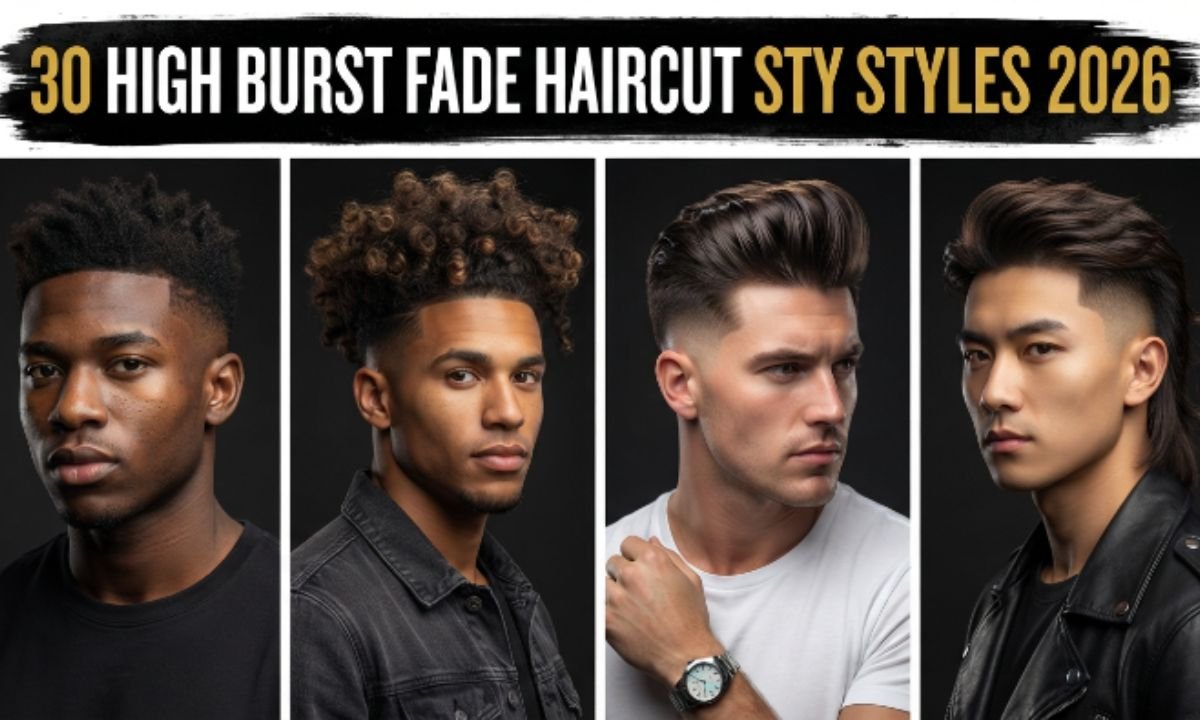
High Burst Fade
The fade climbs well above the ear for strong contrast. This suits mohawks, spiky tops, and other bold designs, but it needs more frequent upkeep to stay sharp.
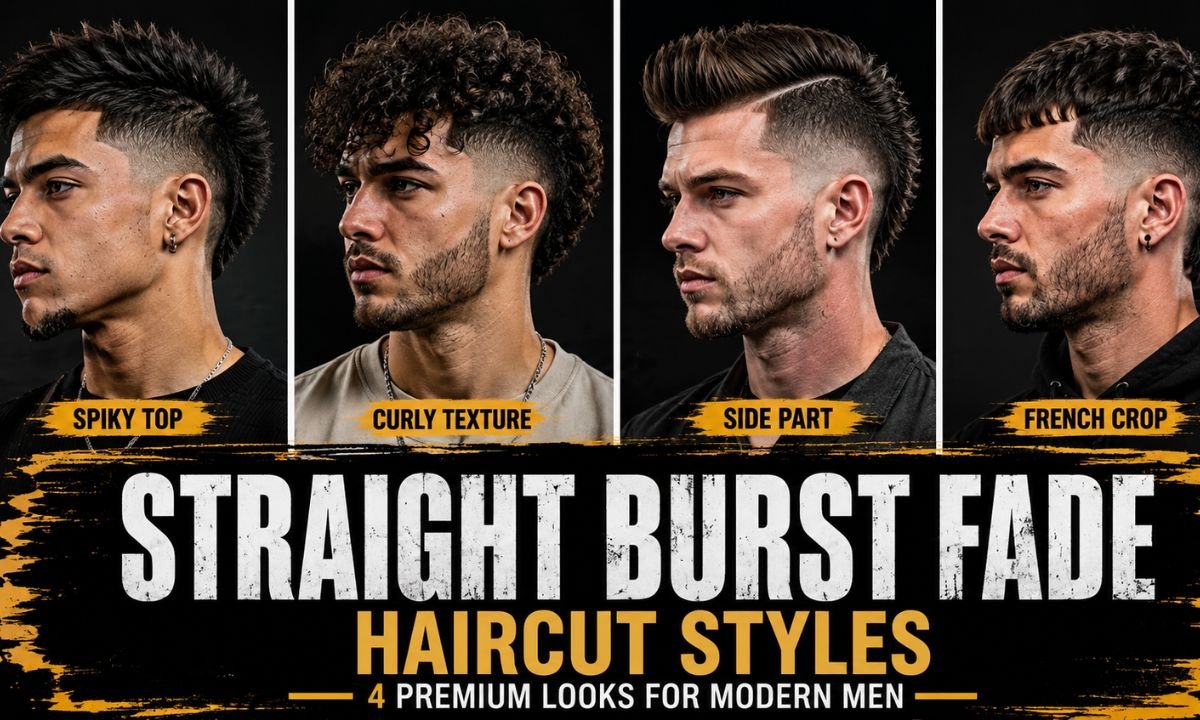
Best Styles for Straight Hair
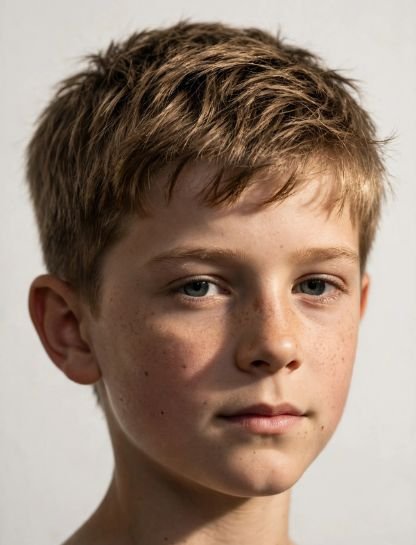
Classic Textured Crop
The classic textured crop keeps the top short, rounded, and choppy. Work a little matte clay through towel-dried hair, then separate the top with your fingers instead of smoothing it down. The low burst taper keeps the sides neat around the ears. Straight or slightly wavy hair works well, while thicker hair adds extra body to the crop.
Best For: Oval and square faces with thick, straight hair.
Tell Your Barber: “Keep 1.5 to 2 inches on top, add texture, and give me a low burst taper.”
Maintenance: Trim every 3 to 5 weeks.
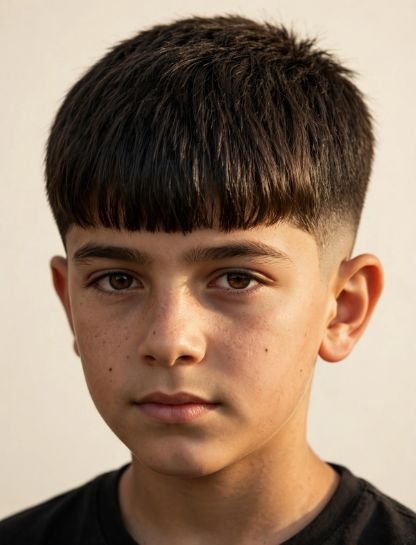
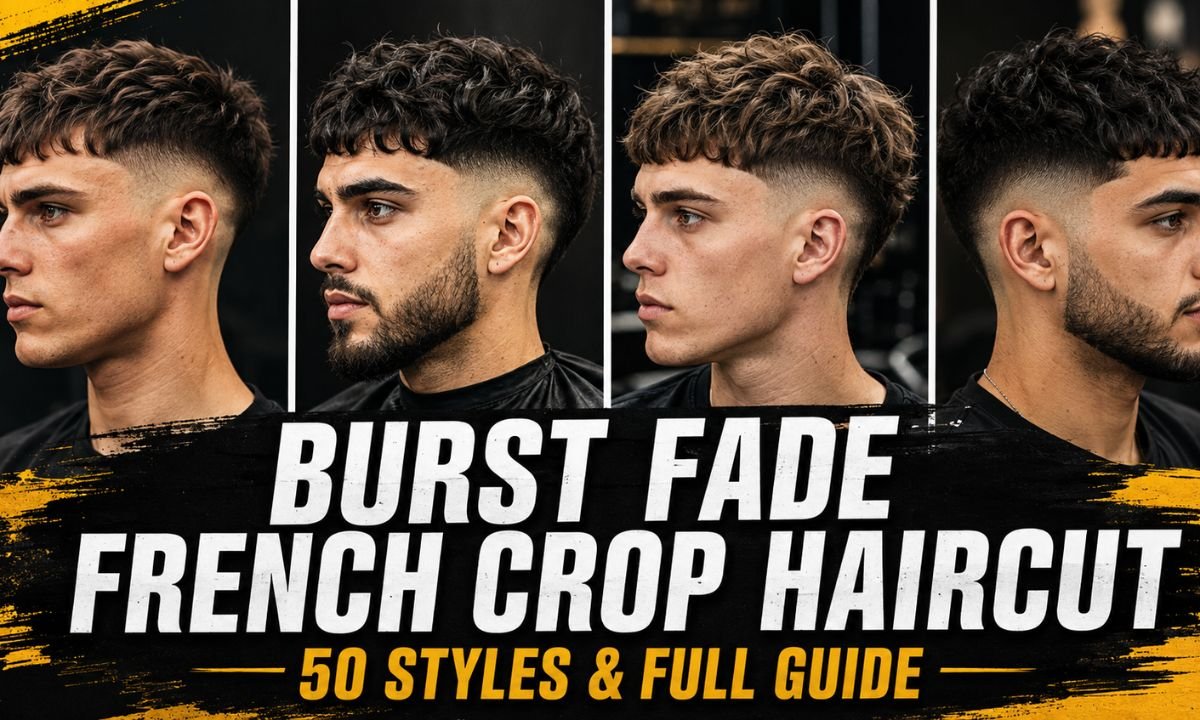
French Crop Burst Taper
The French crop burst taper uses a dense fringe that falls across the forehead, keeping styling simple. Use a small amount of matte paste to control loose hairs without making the front stiff. The burst taper adds shape around the ears while the blunt fringe stands out. Straight and medium-density hair can create a clean finish with little effort.
Best For: Oval and heart-shaped faces with straight hair.
Tell Your Barber: “Give me a French crop with a dense fringe and burst taper.”
Maintenance: Trim every 3 to 4 weeks.
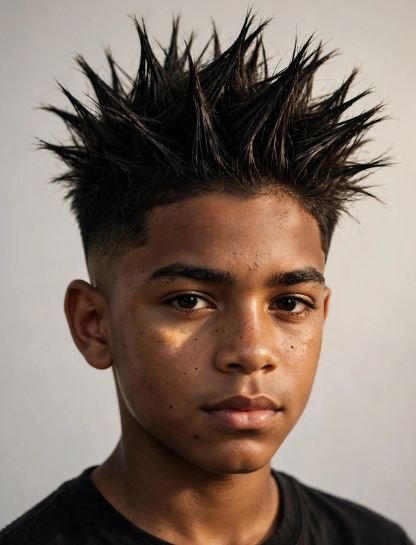
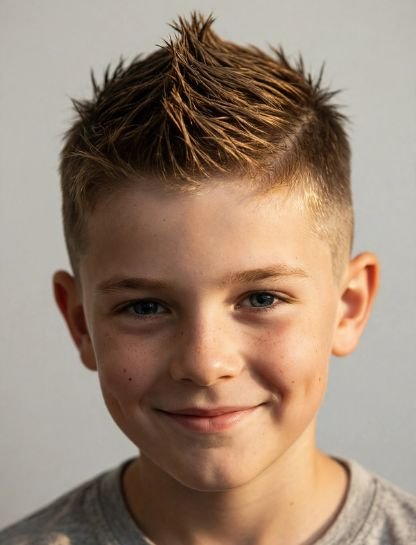
Straight-Hair Spiky Top
The straight-hair spiky top creates a sharper look by lifting sections vertically. Blow-dry the top upward with your fingers, then use light wax to hold the spikes while keeping them flexible. The high burst taper creates strong contrast. Straight, medium-density hair is ideal because it follows the upward direction. Keep the spikes slightly uneven for a relaxed finish.
Best For: Oval and rectangular faces with straight hair.
Tell Your Barber: “Leave length for spikes and make the burst taper high.”
Maintenance: Clean up the sides every 2 to 4 weeks.
Ivy League Side Part
The Ivy League side part looks tidy without feeling formal, making it easy for school or work. Leave enough length on top to sweep naturally to one side, then use lightweight cream for control and movement. A comb can sharpen the part, but some lift prevents a flat finish. Straight, wavy, and moderately thick hair can all carry this shape comfortably.
Best For: Oval and diamond faces with wavy hair.
Tell Your Barber: “Leave length for a soft side part and taper the sides.”
Maintenance: Clean up every 4 to 6 weeks.
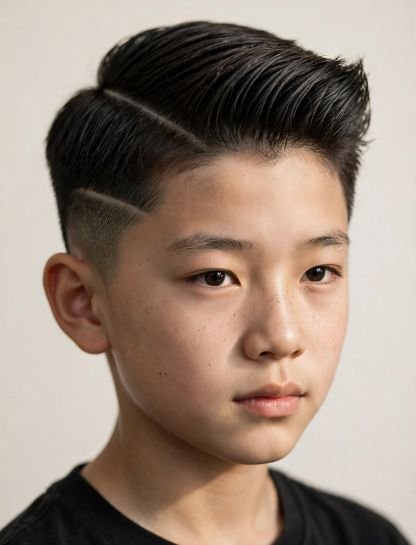
Hard-Part Comb-Over
The hard-part comb-over features a defined line separating the top from the shorter side. Apply a little pomade to damp hair, then comb the top diagonally away from the part. Leave some height at the front for a structured finish. The hard line gives this haircut its signature detail, while a taper keeps the edges modern. Straight, medium-to-thick hair is easiest to shape.
Best For: Square and oval faces with thick, straight hair.
Tell Your Barber: “Create a hard part, leave top length for a comb-over, and taper the sides.”
Maintenance: Recut the hard part every 2 to 3 weeks.
Best Styles for Wavy Hair
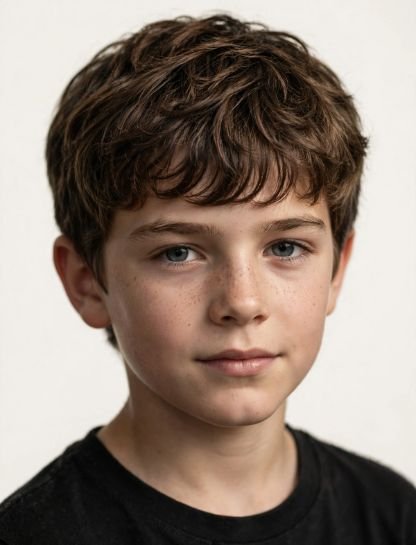
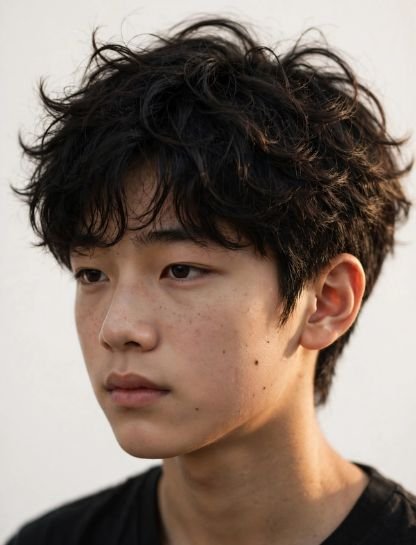
Textured Fringe
The textured fringe lets natural waves fall forward, creating a soft, piecey look across the forehead. Use a small amount of matte cream on damp hair, then shape the fringe with your fingers rather than a comb.
The low burst taper keeps the sides clean while leaving enough weight around the top to show the wave pattern. This style works especially well when your waves have some natural thickness and movement. Keep the texture slightly uneven for a relaxed finish, rather than making every strand look perfectly placed.
Best For: Round and oval faces with medium-to-thick wavy hair and a relaxed style.
Tell Your Barber: “Keep the fringe textured and forward, with a low burst taper around the sides.”
Maintenance: Trim every 3 to 5 weeks to keep the fringe and taper in shape.
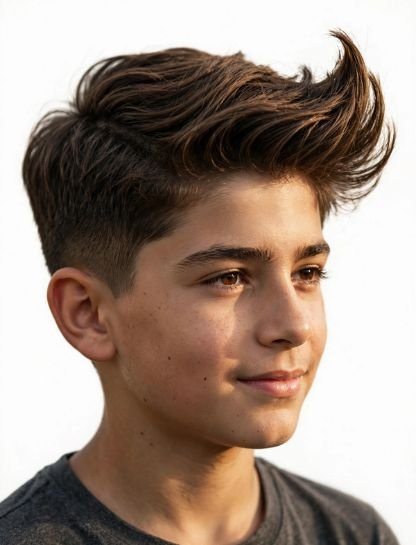
Side-Swept Quiff
The side-swept quiff uses your natural wave to create lift at the front without looking overly styled. Start with damp hair and blow-dry the front upward, directing it gently toward one side with your fingers.
A lightweight styling cream can add control while still allowing the waves to move naturally throughout the top. The raised front gives the haircut more height, while the side sweep keeps the overall shape neat and balanced. Medium-density wavy hair is ideal because it provides enough volume without needing heavy product.
Best For: Longer or narrow face shapes with medium-density wavy hair and a smart-casual look.
Tell Your Barber: “Leave extra length in the front for a side-swept quiff and keep the sides tapered.”
Maintenance: Refresh the shape every 4 to 6 weeks and reshape the front after washing.
Wavy Flow Burst Taper
The wavy flow burst taper keeps around 4 to 5 inches on top so your natural waves can develop a loose, flowing shape. Apply a lightweight curl cream to damp hair, then let it air-dry or use a diffuser on low heat to protect the wave pattern.
Sweep the longer top backward or diagonally rather than forcing it into a rigid style. The length creates movement around the crown, while the burst taper gives the haircut a cleaner outline near the ears. This is a great choice for thicker waves that look better when they have room to move.
Best For: Oval and rectangular faces with thick, naturally wavy hair and a longer appearance on top.
Tell Your Barber: “Leave 4 to 5 inches on top for a wavy flow and add a burst taper around the ears.”
Maintenance: Shape the longer top every 6 to 8 weeks, with occasional edge cleanups between cuts.
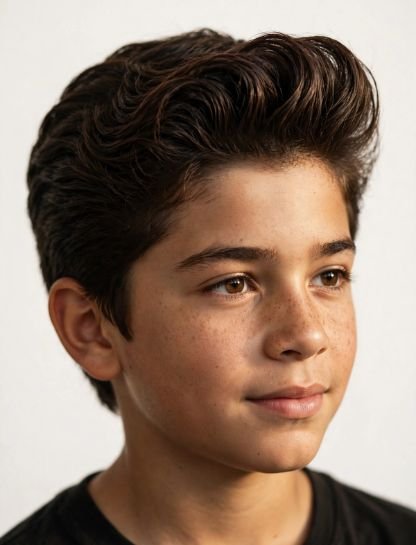
Short Pompadour
The short pompadour gives wavy hair a controlled lift at the front while keeping the overall haircut compact. Blow-dry the front upward and slightly backward, using a vent brush or your fingers to guide the shape.
Finish with a small amount of medium-hold styling cream or pomade to keep the front in place without flattening the waves. Unlike a loose wavy style, this haircut has a more polished shape and a clearly defined front profile. It works best when the hair has enough density to support the raised section without excessive product.
Best For: Heart and oval faces with dense, wavy hair and a polished, classic appearance.
Tell Your Barber: “Keep the front longer for a short pompadour and taper the sides without taking them too tight.”
Maintenance: Book a haircut every 3 to 5 weeks to maintain the lifted front and clean outline.
Messy Brush-Up
The messy brush-up uses natural waves to create broad, airy texture instead of perfectly separated strands. Work matte clay through mostly dry hair, then push the top upward and slightly back with your fingers.
Do not over-comb it, because a little unevenness helps the waves create that casual, lived-in finish. The added height makes the top look fuller, while the loose texture keeps the haircut from feeling too formal. Medium to thick wavy hair usually gives the best result, especially when the waves already have plenty of movement.
Best For: Square and oblong faces with medium-to-thick waves and an effortless everyday style.
Tell Your Barber: “Leave enough length on top for a messy brush-up and keep the sides clean with a soft taper.”
Maintenance: Trim every 4 to 5 weeks, using light product between cuts to control frizz and preserve texture.
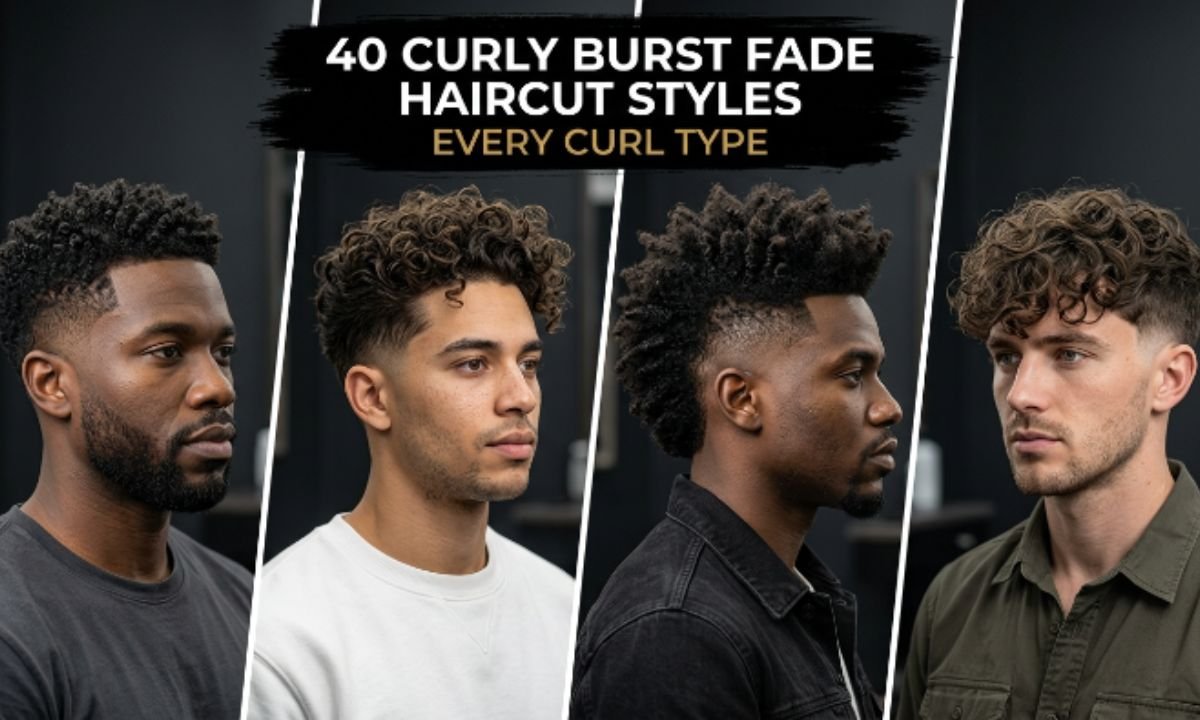
Best Styles for Curly Hair
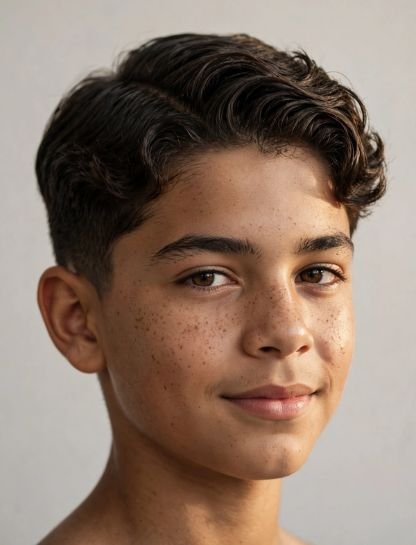
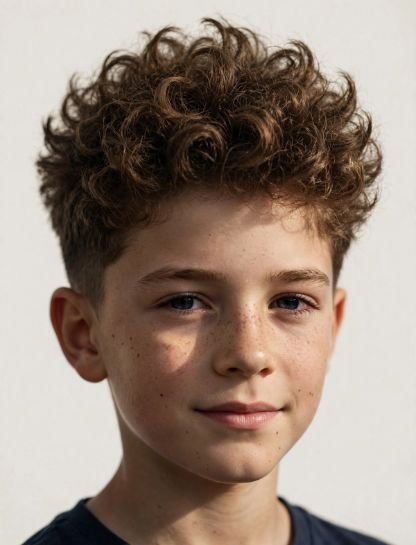
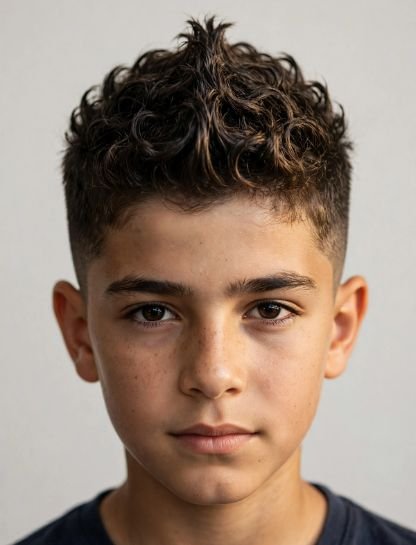
Curly Burst Taper
The curly burst taper keeps the crown soft, rounded, and full, letting your natural curls become the main feature of the haircut. Apply curl cream to damp hair, then gently scrunch the curls upward and forward to bring out their shape without creating stiffness.
The burst taper removes some bulk around the ears while keeping the crown noticeably fuller and more rounded. This makes the haircut feel clean on the sides but still relaxed and expressive through the top. Medium to thick curls usually give the best shape, especially when the hair has good natural bounce and definition.
Best For: Oval and round faces with medium-to-thick curls and a soft, youthful appearance.
Tell Your Barber: “Keep the curly crown rounded and full, then add a soft burst taper around the ears.”
Maintenance: Refresh the taper every 3 to 5 weeks and use curl cream between cuts to control dryness and frizz.
Short Curly Faux Hawk
The short curly faux hawk pushes the curls toward the center, creating a rounded ridge that adds height without looking too sharp. Work a small amount of curl cream through damp hair, then use your fingers or a curl sponge to guide the curls upward.
Keep the sides shorter so the raised center becomes the clear focus of the haircut. The natural curl pattern gives the faux hawk a softer finish than a straight, heavily sculpted version. It works particularly well with tight curls that naturally hold their shape when lifted.
Best For: Square and oval faces with tight curls and a bold, sporty appearance.
Tell Your Barber: “Keep the center longer so my curls can form a short faux hawk, with the sides tapered.”
Maintenance: Clean up the sides every 3 to 4 weeks and reshape the curly ridge as it grows.
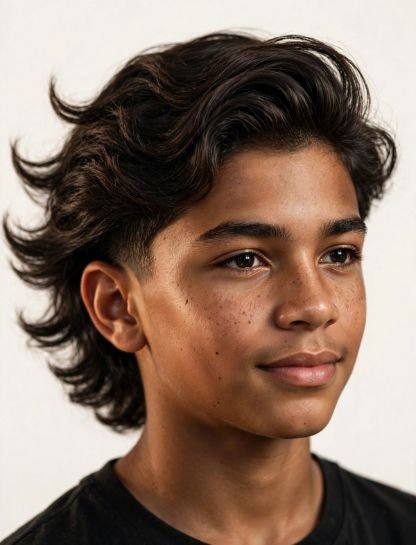
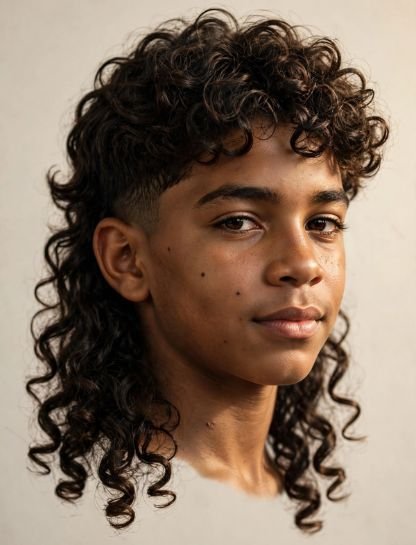
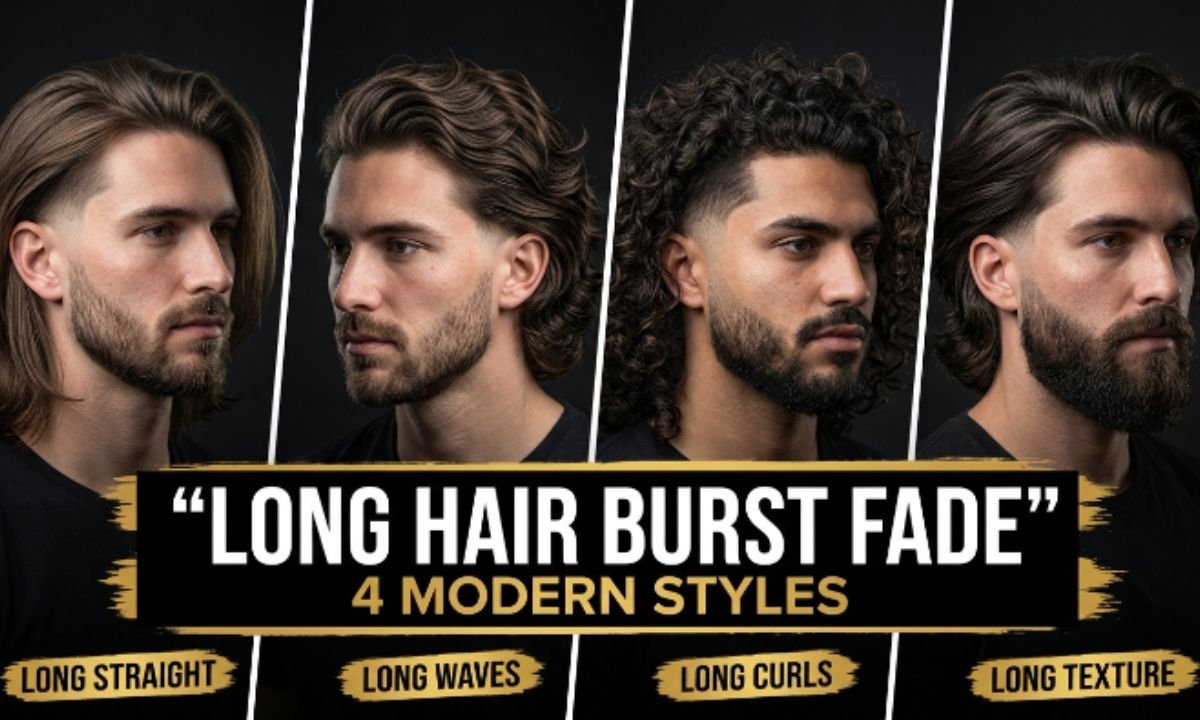
Long Curly Mullet
The long curly mullet leaves extra length at the back, allowing ringlets to fall naturally around the neckline while the sides stay controlled. Keep the curls hydrated with leave-in conditioner or curl cream, then let them air-dry so they retain their natural shape.
Around 3 to 4 inches of length at the back gives the curls enough room to spring up without looking overly bulky. The low burst taper adds separation around the ears, creating a noticeable contrast between the shorter sides and longer back. This haircut suits curls with plenty of movement and looks better slightly loose than heavily brushed.
Best For: Oblong and diamond faces with medium or loose curls and a longer, expressive style.
Tell Your Barber: “Leave 3 to 4 inches at the back for the curls, and use a low burst taper on the sides.”
Maintenance: Shape the back and taper every 5 to 7 weeks, depending on how quickly your curls grow.
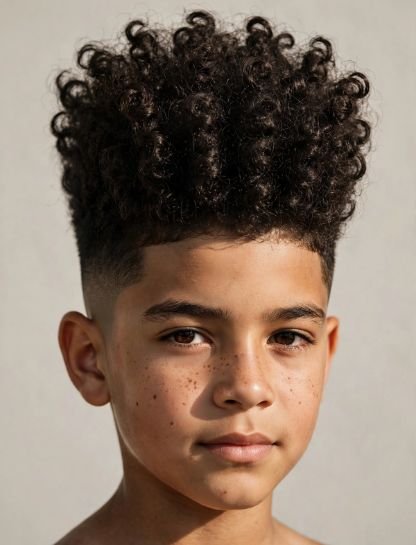
Curly High-Top Burst
The curly high-top burst keeps the curls lifted vertically, creating a strong, rounded silhouette above the forehead and crown. Use a lightweight curl sponge on damp or slightly moisturized hair, working upward in small circular motions to build definition and height.
Avoid weighing the curls down with heavy creams, since too much product can reduce the natural lift that gives this haircut its shape. The burst taper creates a clean transition around the ears while the high top stays bold and noticeably taller. Tight, dense curls are especially suited to this look because they can maintain vertical volume with less styling.
Best For: Round and shorter face shapes with dense, tight curls and a high-volume appearance.
Tell Your Barber: “Keep the curly top high and rounded, with a clean burst taper around the sides.”
Maintenance: Rebalance the high top every 3 to 4 weeks so the shape stays even and the taper remains defined.
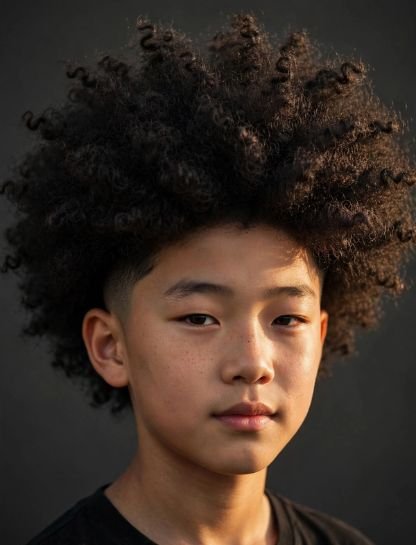
Afro Puff Burst Taper
The afro puff burst taper keeps the crown naturally rounded while allowing the curls to expand outward and slightly upward. Use a pick gently at the roots to add volume, then apply a little leave-in conditioner to keep the curls soft and reduce dryness.
Rather than forcing every curl into place, let the natural texture create the rounded puff that gives this style its character. The burst taper brings a cleaner outline around the ears without taking away the fullness of the crown.
Dense, tightly coiled hair works especially well because it can create strong volume while maintaining a defined rounded shape.
Best For: Heart and oval faces with dense coily hair and a natural, full-bodied appearance.
Tell Your Barber: “Keep the crown full and rounded, clean up the outline, and add a burst taper around the ears.”
Maintenance: Shape the crown and refresh the taper every 4 to 6 weeks while moisturizing regularly.
Mullets, Faux Hawks & Structured Designs
Mini Faux Hawk
The mini faux hawk creates a narrow raised strip through the center, giving the haircut a sharp look without the height of a full mohawk. Use a small amount of matte wax on dry hair, then pinch individual sections upward to create separated, slightly spiky pieces.
Keep the sides shorter so the center ridge stands out clearly while still blending naturally into the overall shape. Straight or slightly wavy hair makes the spikes easier to define, while thicker hair gives the center more natural volume. The result feels playful and structured without requiring a dramatic haircut.
Best For: Oval and square faces with straight, thick hair and a confident everyday style.
Tell Your Barber: “Keep a narrow strip longer through the center and taper the sides so the top can stand up.”
Maintenance: Shape the sides every 3 to 4 weeks and restyle the center with light wax as needed.
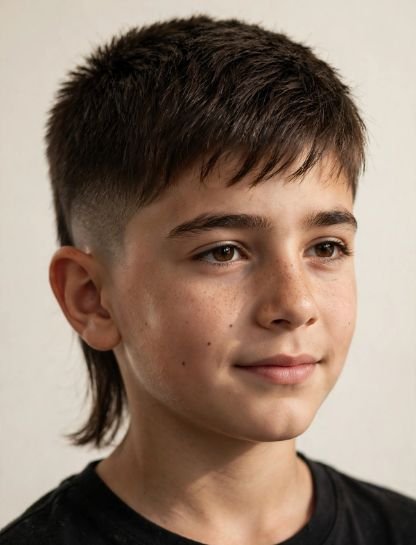
Mini Mullet Burst Fade
The mini mullet burst fade keeps the top relatively short while allowing a small tail to extend through the nape for a noticeable change in length. Brush the crown slightly forward with a lightweight styling cream, then let the back section follow its natural direction.
The burst fade creates a curved transition around the ears, giving the shorter sides a clean finish without removing the character of the mullet. This version is easier to wear than a long mullet because the back stays controlled and compact. Straight or lightly wavy hair works especially well for keeping the crown neat and the tail defined.
Best For: Long and oval faces with straight or lightly wavy hair and a modern casual look.
Tell Your Barber: “Keep the crown short, leave a small tail at the nape, and blend the sides with a burst fade.”
Maintenance: Trim every 3 to 5 weeks to keep the fade clean and prevent the nape from becoming too heavy.
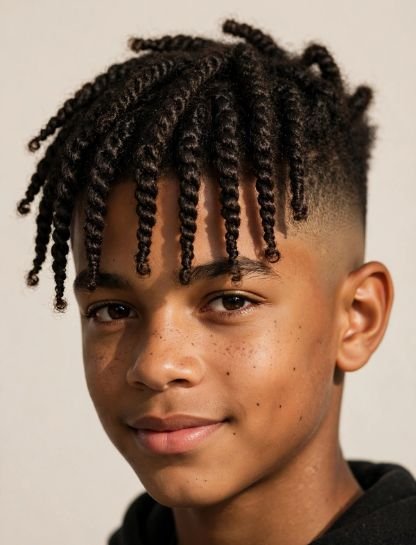
Twist Top With Burst Fade
The twist top adds strong texture by using two-strand twists that fall naturally toward the forehead, creating a defined but relaxed finish. Start with moisturized hair, separate small sections, and twist each one evenly before allowing the twists to settle forward.
The burst fade keeps the sides tidy while leaving enough length on top for the twists to maintain their shape and movement. Subtle caramel tips can add extra contrast, although natural dark ends also give the style plenty of depth. Coily and tightly curled hair holds the twists particularly well and can create a fuller appearance through the top.
Best For: Round and heart-shaped faces with coily hair and a textured, creative appearance.
Tell Your Barber: “Leave enough length on top for two-strand twists and finish the sides with a clean burst fade.”
Maintenance: Refresh the twists every 2 to 4 weeks and keep the scalp moisturized between appointments.
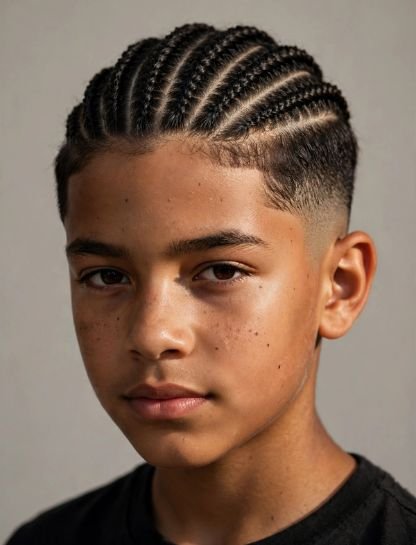
Braided Top + Burst Taper
The braided top uses cornrows or box braids running from the front toward the back, giving the haircut a clean pattern and strong visual structure. Use a light braid moisturizer before styling, then keep the sections neat so the braids sit close to the scalp without excessive tension.
The burst taper frames the ears and creates a smooth contrast between the detailed braided top and shorter sides. Colored beads can be added at the ends for personality, but simple braids keep the look more understated. This style works best with medium-to-long hair that has enough length for secure, even braiding.
Best For: Diamond and oval faces with textured hair and a detailed, statement-making style.
Tell Your Barber: “Keep the top long enough for front-to-back braids and taper around the ears with a burst finish.”
Maintenance: Redo or refresh the braids every 3 to 6 weeks and clean the tapered areas between braid sessions.
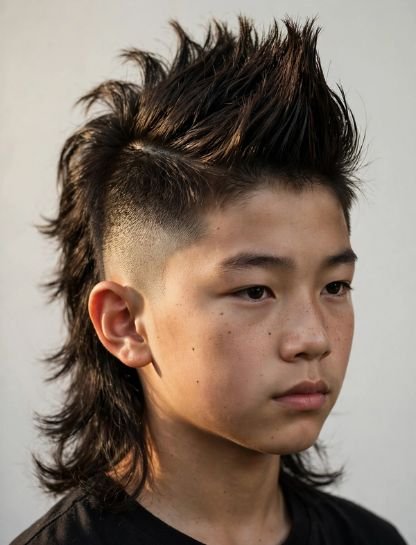
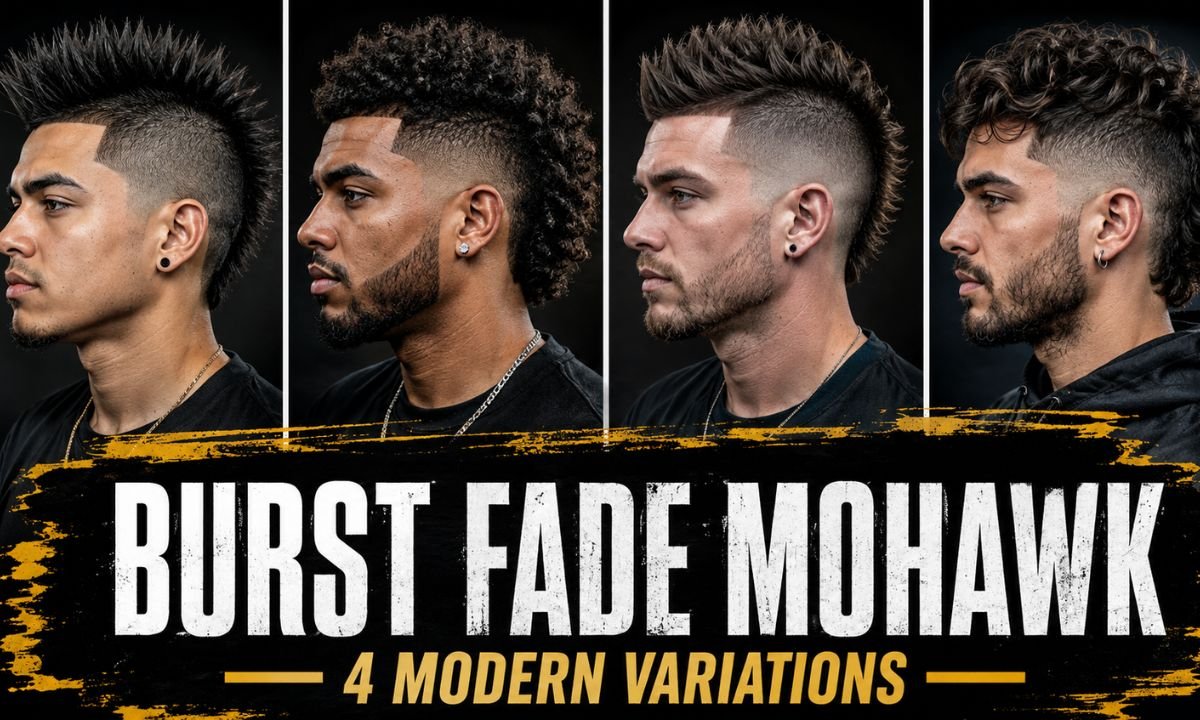
Mohawk Mullet
The mohawk-mullet combines a raised center ridge with a longer back, creating one of the boldest silhouettes in this group. Apply styling cream or matte clay to the center, then blow-dry upward while using your fingers to guide the ridge into place.
The high burst keeps the sides noticeably shorter, making the central strip and extended back section stand out from every angle. Thick straight or wavy hair provides enough body to support the raised shape without relying on excessive product.
Keep the center slightly textured rather than perfectly smooth for a modern finish that still shows the haircut’s strong structure.
Best For: Rectangular and oval faces with thick hair and a bold, edgy personality.
Tell Your Barber: “Leave a strong center ridge with extra length in the back, then give me a high burst fade.”
Maintenance: Clean up the burst fade every 2 to 3 weeks and reshape the mohawk section every 4 to 5 weeks.
Matching the Cut to Your Son’s Hair Texture
Not every style works for every hair type. Here’s a simple way to think about it:
Straight hair holds sharp lines well, so crops, comb-overs, and spiky tops look cleanest.
Wavy hair naturally has movement, so quiffs and brush-ups need less product to look intentional.
Curly and coily hair benefits from styles that work with the curl pattern instead of fighting it — think curly faux hawks, afro puffs, and curly mullets.
Twists and braids need a barber experienced in textured hair to get clean, even sections.
Ask your barber directly if they’re comfortable cutting your son’s hair type before committing to a detailed design. Not every shop specializes in coily or curly textures.
Color Ideas for Kids
Permanent dye isn’t necessary for a fun pop of color. Temporary or washable spray and chalk give the same effect without the commitment — and they wash out before Monday.
Before trying any color, check two things:
Your child’s school dress code
Whether their scalp is sensitive to dyes or sprays
Some pairings that work well:
Caramel or honey tips — soft contrast on curly tops, twists, and textured crops
Blue tips — a sporty, bold look on faux hawks and spiky tops
Silver or ash tips — high contrast on mohawks, mullets, and messy brush-ups
Red or burgundy front streak — stands out on side-swept quiffs and curly fringes
Green or purple accents — fun on braids, coily puffs, or line-design cuts
Natural chocolate highlights — a subtle option for wavy, longer layered styles
How to Talk to Your Barber
Saying “burst fade taper” alone isn’t enough. Different barbers interpret the term differently, so give more detail.
Try this script:
“Low/mid/high burst taper around the ears, clean temple and neckline taper, top [X] inches, [curly/textured/straight] finish, and [short/mini mullet/longer] length at the back.”
Bringing a reference photo removes almost all guesswork. A picture communicates length, texture, and shape far better than words alone.
Age Suitability: Which Boys Can Get This Cut?
A burst fade taper works across a wide age range, but the details should shift depending on your son’s age.
Toddlers (2–4 years): Stick to low-burst tapers with minimal styling. Scalps are sensitive, and toddlers rarely sit still for detailed designs.
Young kids (5–9 years): Mid-rise burst tapers with simple textured tops are easy to maintain for school mornings.
Tweens and teens (10+): This is where bolder choices — high bursts, mohawks, braided designs, and color accents — make the most sense, since older kids can handle more upkeep and styling routines.
Maintenance: How Often Should You Get a Touch-Up?
A crisp burst fade doesn’t stay sharp forever. Hair grows back into the blended area within a few weeks, softening the contrast.
Standard touch-up: every 3–4 weeks
Longer mullets or detailed line designs: every 2–3 weeks to keep lines defined
Low burst tapers: can stretch slightly longer between visits since the blend is subtler to begin with
Aftercare Between Barber Visits
Keeping the cut looking fresh at home doesn’t take much effort.
Use a lightweight styling product suited to the hair texture — curl cream for curls, matte clay for textured tops, light wax for spikes
Avoid heavy gels on younger kids, since they can irritate sensitive scalps
Rinse product out at night to prevent buildup
For curly or coily styles, a light leave-in conditioner keeps curls defined between washes
Frequently Asked Questions
What is the difference between a burst fade and a regular fade?
A burst fade curves around the ear in a circular shape, while a regular fade blends in a straight, vertical line down the side of the head.
Is a burst fade taper appropriate for school?
Yes, especially a low or mid burst taper, since it stays subtle and grows out neatly without looking unkempt.
How often does a burst fade taper need a touch-up?
Most boys need a touch-up every 3–4 weeks to keep the blend sharp and defined.
Can burst fade tapers work with curly or coily hair?
Yes, styles like the curly faux hawk, afro puff burst taper, and curly mullet are designed specifically to work with natural curl patterns.
What should I tell my barber to get the right cut?
Specify the fade height, top length, texture, and back shape, and bring a reference photo to avoid miscommunication.
Conclusion
A burst fade taper gives boys one of the most flexible haircut options available, adapting easily to straight, wavy, curly, and coily hair while working for everyone from toddlers to teens.
The key to getting it right isn’t picking a style from a photo alone — it’s understanding fade height, being specific with your barber, and choosing a texture-appropriate design that fits your son’s hair and lifestyle. With the right communication and a bit of regular maintenance, this cut stays sharp, low-fuss, and school-friendly for weeks at a time.
Hi, I’m Oliver Bennett. I’m passionate about men’s hairstyles and love exploring modern cuts that are easy to understand and easy to ask your barber for. On this website, I share simple guides on styles like burst fades, mullets, curtain cuts, tapers, and other trending men’s hairstyles. My goal is to help you find a haircut that matches your hair type, face shape, and personal style.


1 thought on “Fresh Boys Haircuts Burst Fade Taper: 20 Styles Parents Actually Ask For”