
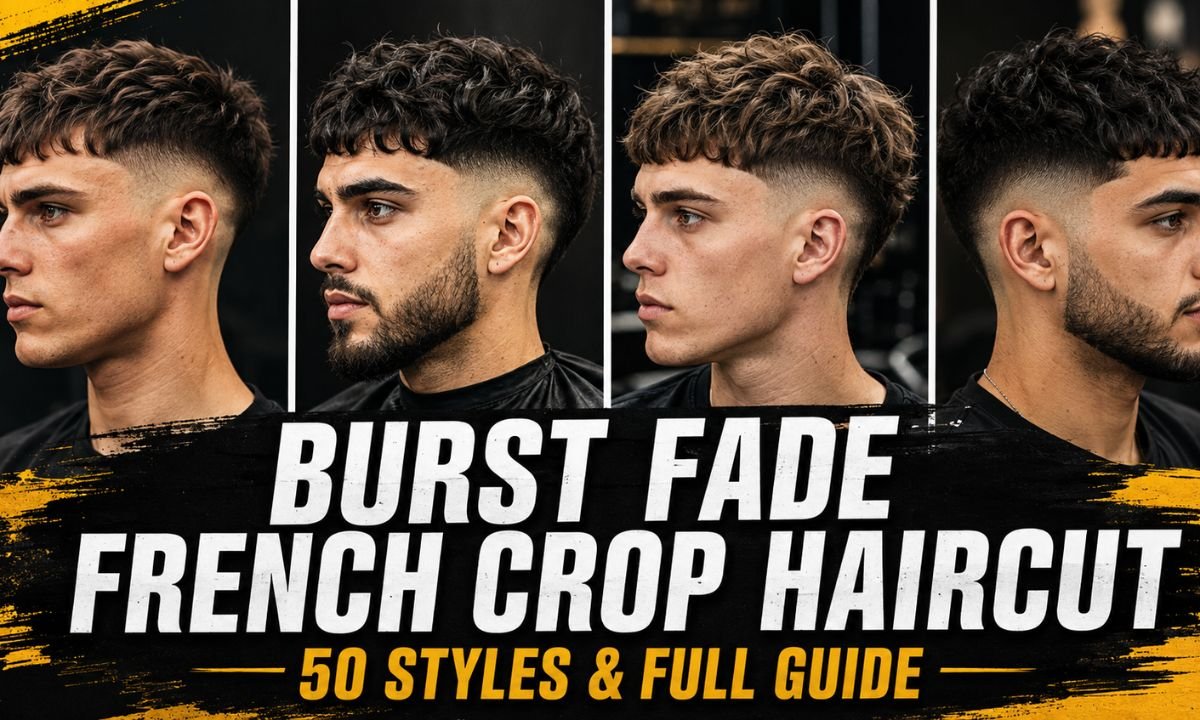
Ever wonder why some French crops look sharp for weeks while others go shapeless after a few days? The difference almost always comes down to the fade. Pair the right burst fade with the right crop, and you get a cut that holds its shape, flatters your face, and barely needs styling. Here’s everything you need to pick the right one.
What Is a Burst Fade French Crop?
A French crop is a short, textured haircut built around three things: faded or tapered sides, a short-to-medium textured top, and a forward-swept fringe. It’s clean, structured, and works with almost any hair type.
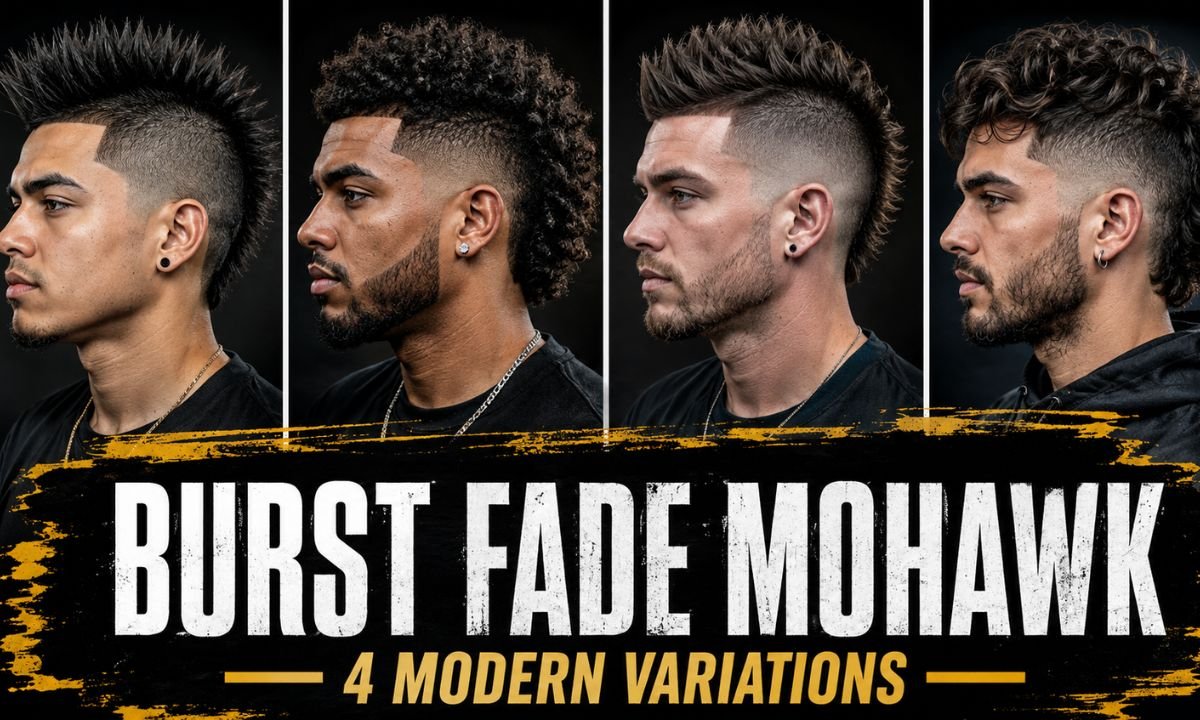
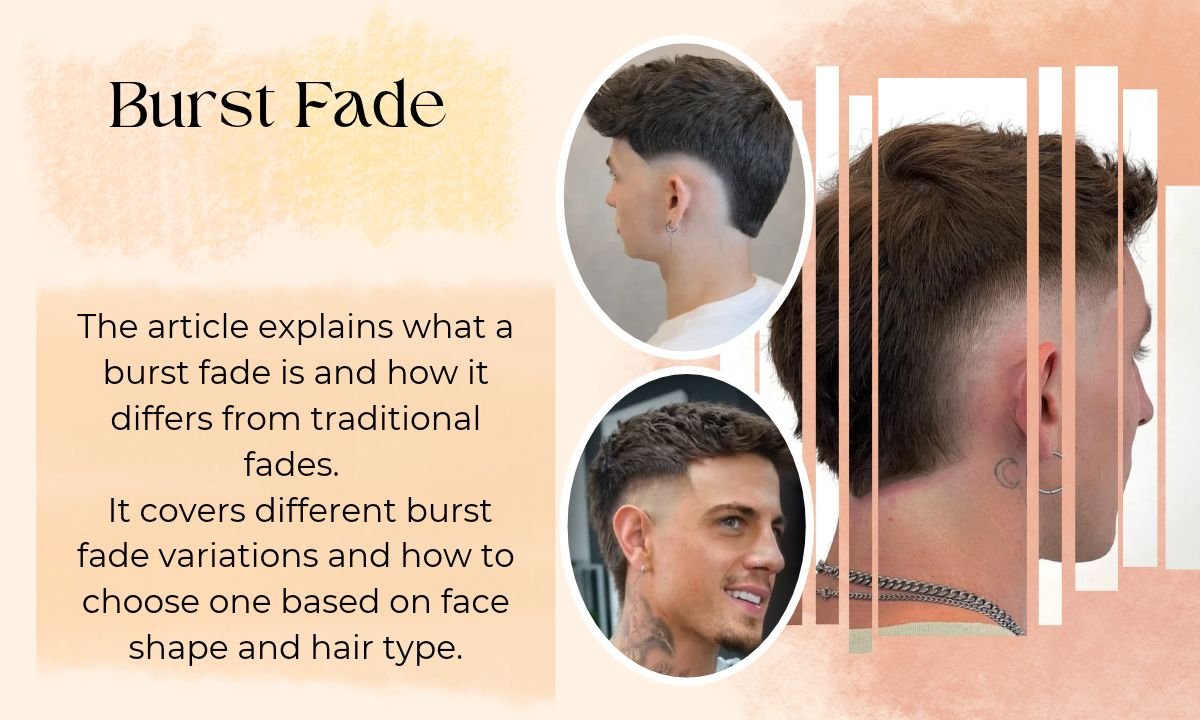
A burst fade is a specific fade shape. Instead of running in a straight vertical line down the side, it curves around the ear like a halo before dropping to skin or near-skin near the neckline. Some barbers call this a radial fade or halo taper.
Put the two together, and you get a burst fade French crop: a textured, fringe-forward top with a rounded, ear-hugging fade that adds contrast and shape without adding length. It’s become one of the most requested cuts in modern barbershops because it works on straight, wavy, curly, and coily hair alike.
French Crop vs. Other Haircuts
People often confuse the French crop with similar-looking cuts. Here’s how it stacks up.
| Haircut | Key Difference from French Crop |
| Crew Cut | No forward fringe; more uniformly short all over |
| Caesar Cut | Classic, evenly cropped fringe with less texture and less contrast in the fade |
| Regular Fringe Cut | Longer, looser fringe with a softer, more casual fade |
| Mullet | Retains length at the back; French crop typically keeps the back short |
| Edgar Cut | Squared-off, sharply defined fringe with a straighter hairline |
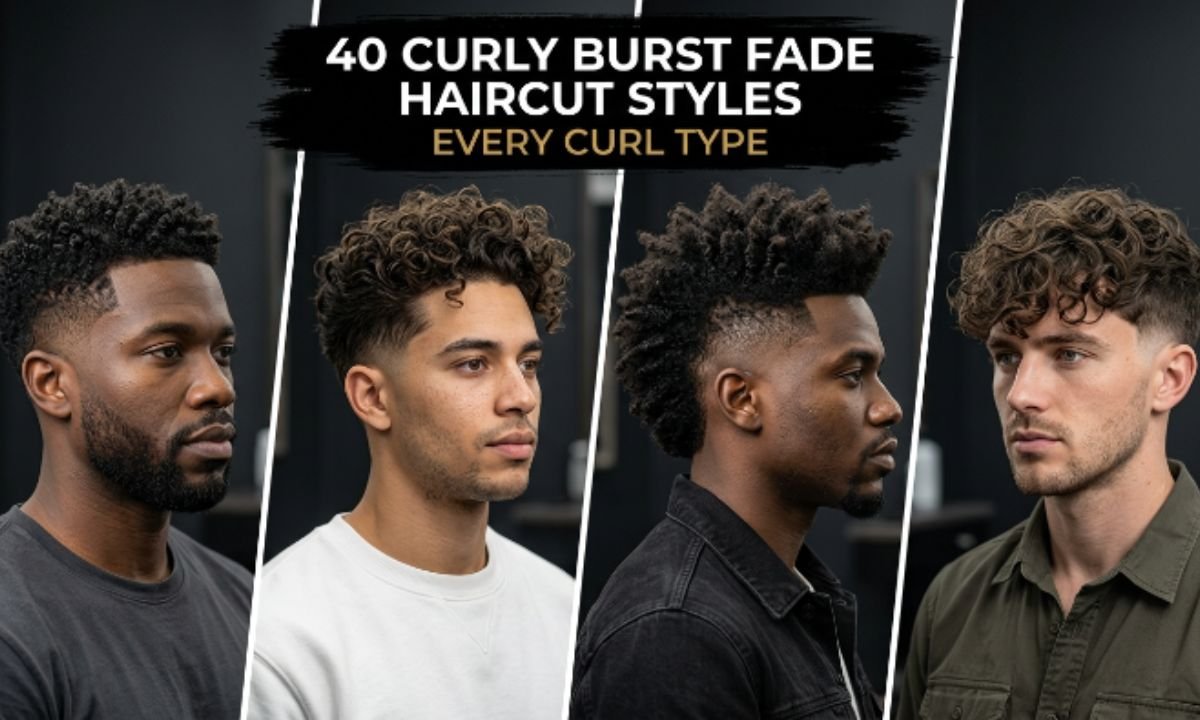
Burst Fade vs. Drop Fade
This comparison comes up constantly, so it’s worth settling early. A burst fade wraps around the ear in a rounded curve and stays relatively high at the back. A drop fade dips down behind the ear and continues lower toward the nape, creating a more sloped line. Both can pair with a French crop, but they change the side profile in different ways — burst fades look more compact and rounded, drop fades look longer and more angular.
How to Choose Your Version
Match It to Your Hair Type
Straight hair needs a defined fringe and some texturizing product to avoid looking flat.
Wavy hair shows natural movement well with a relaxed, forward-swept fringe.
Curly hair looks best with a slightly longer top so curls keep their shape.
Coily or thick hair benefits from a tighter, higher fade to reduce bulk.
Fine hair needs texture powder or light layering to fake extra density.
Match It to Your Face Shape
Oval faces can wear almost any version. Round faces do best with height and tighter sides to create length. Square faces soften with a longer, textured fringe. Heart-shaped faces benefit from volume near the crown. Diamond faces suit the rounded burst shape, which complements the cheekbones. Long faces should avoid excess height and stick to a mid fade with controlled texture.
Think About Hairline and Forehead
A forward fringe is one of the best tools for softening a receding hairline or covering a larger forehead. Keep the top short and textured rather than long and combed over — it should look styled, not hidden.
The 50 Best Burst Fade French Crop Styles
Fade Height Variations
1. Low Burst Fade French Crop
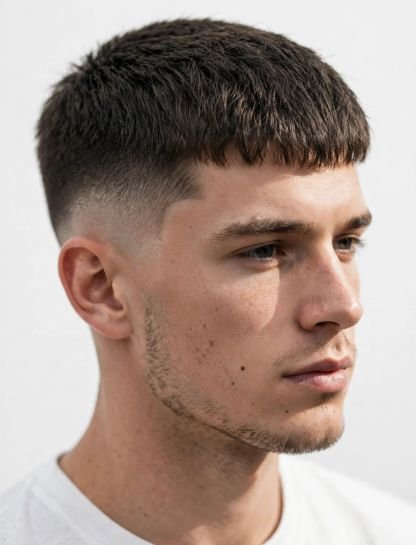
The fade sits close to the ear and barely climbs, keeping most of the side weight intact. This is the most subtle version on the list, giving a clean, professional look with soft contrast rather than a sharp visual break. It suits anyone easing into a fade for the first time.
- Best For: First-time fade wearers, conservative or office environments.
- Tell Your Barber: “Keep the fade low and soft, don’t take it above the ear.”
- Maintenance: Trim every 4 weeks; the low placement grows out gradually.
2. Mid Burst Fade French Crop
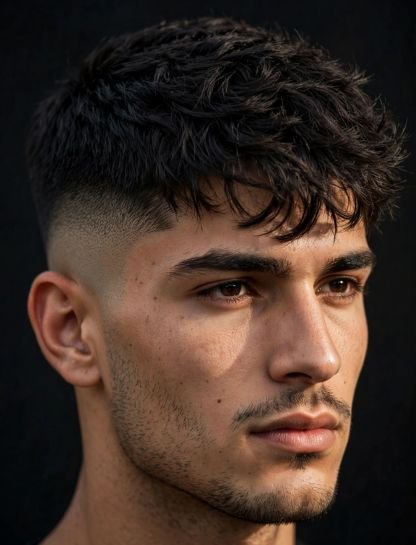
The fade climbs to the middle of the side, creating a noticeably sharper transition than the low version while still leaving enough length above for texture. This is the most balanced option, giving visible shape without looking overly dramatic. Most first-time burst fade clients settle here.
- Best For: Oval and square faces; anyone wanting a balanced, everyday look.
- Tell Your Barber: “Take the fade to mid-height with a clean curve around the ear.”
- Maintenance: Every 3 weeks to keep the curve defined.
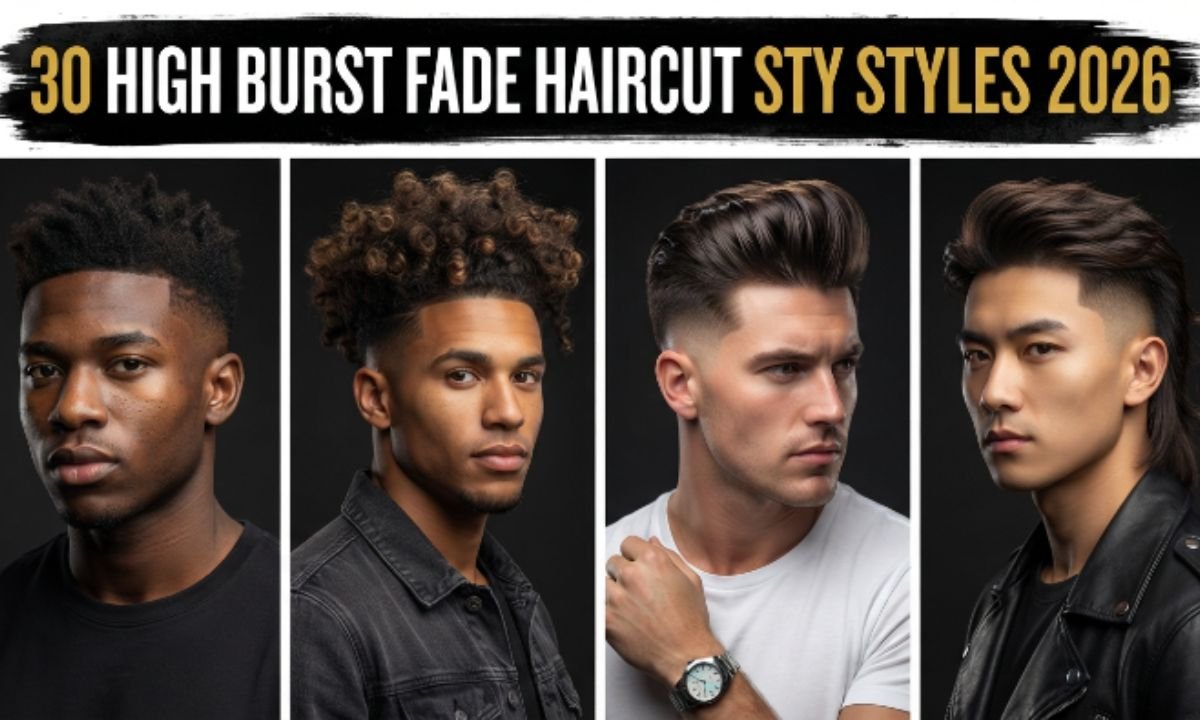
3. High Burst Fade French Crop
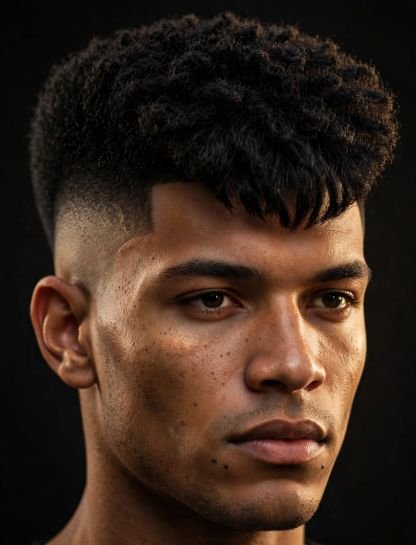
The fade pushes well above the ear, leaving a smaller, more concentrated area of length on top. This creates the strongest contrast on this list and gives the cut a bold, structured silhouette. It works especially well with thicker hair that needs bulk removed from the sides.
- Best For: Thick or dense hair, round faces needing extra height.
- Tell Your Barber: “Push the burst fade high, keep strong contrast against the top.”
- Maintenance: Every 2 weeks — high fades show regrowth fastest.
4. Skin Burst Fade French Crop
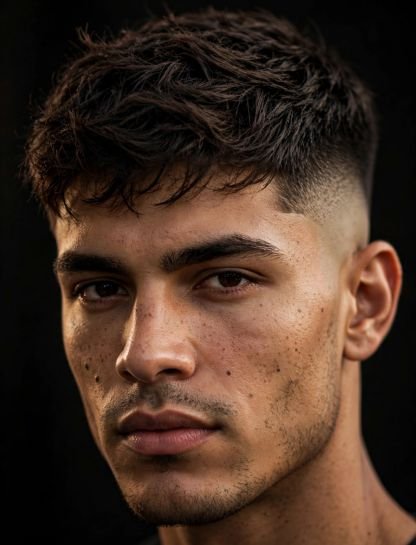
The sides fade all the way down to bare skin rather than stopping at a short guard length. This maximizes contrast against the top and makes the rounded burst shape the most visually striking part of the cut. It photographs well but demands the most frequent upkeep.
- Best For: Dark hair colors, anyone who wants maximum definition.
- Tell Your Barber: “Take the fade all the way to the skin, not just short — full skin burst.”
- Maintenance: Every 2 weeks; skin fades and grows out visibly fast.
5. Zero Burst Fade French Crop
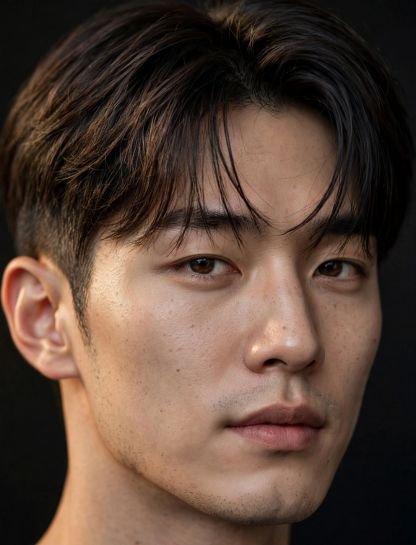
Similar to the skin fade but the barber leaves the natural hairline untouched instead of adding a sharp edge-up. The result feels more relaxed and natural, letting the fade curve do the work without a hard-edged finish. It’s a good middle ground between low-maintenance and high-contrast.
- Best For: Anyone who wants contrast without a “fresh-cut” edged look.
- Tell Your Barber: “Zero fade on the sides, but leave my natural front hairline alone.”
- Maintenance: Every 3 weeks; skipping the edge-up stretches out visits slightly.
Fringe Style Variations
6. Blunt Fringe Burst Fade Crop
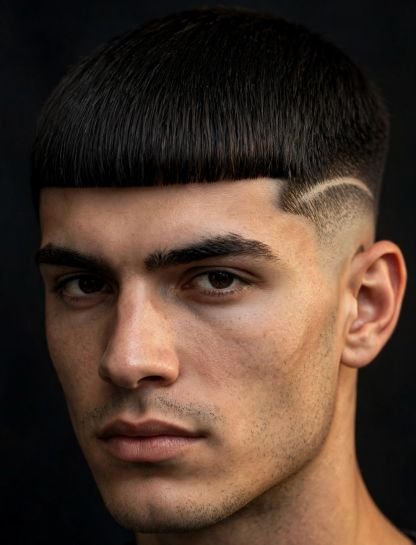
The fringe is cut in a straight, defined line across the forehead, giving the cut a sharp, deliberate finish. Paired with a burst fade, the straight fringe contrasts nicely against the rounded side shape. It’s a more polished, structured look than the choppy alternatives.
- Best For: Straight hair, anyone wanting a sharper, more formal finish.
- Tell Your Barber: “Blunt, straight fringe line — not choppy or textured at the ends.”
- Maintenance: Every 3 weeks; the fringe line needs regular trims to stay crisp.
7. Choppy Fringe Burst Fade Crop
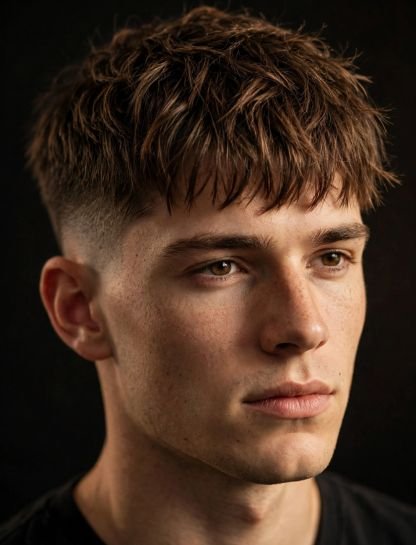
The fringe is cut with uneven, textured ends instead of a straight line, giving a more casual, lived-in look. This softens the overall silhouette and works well against the structured curve of a burst fade. It requires a bit of daily styling to keep the choppy texture visible.
- Best For: Wavy or medium-density hair; a relaxed, everyday look.
- Tell Your Barber: “Point-cut the fringe for a choppy, textured finish, not a blunt line.”
- Maintenance: Every 4 weeks; matte paste keeps the choppy pieces separated daily.
8. Messy Fringe Burst Fade Crop
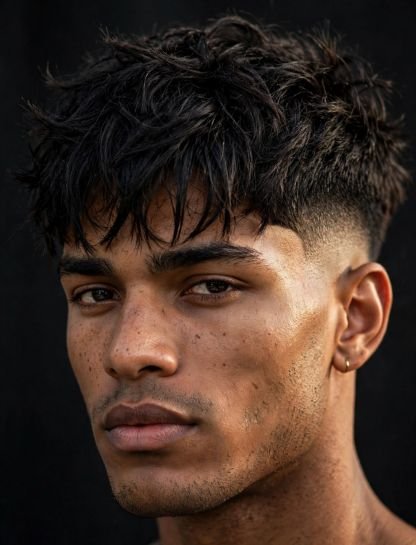
The top is left slightly longer and styled with intentional disorder, creating a tousled, undone look. It contrasts sharply with the clean lines of the burst fade underneath, giving the whole cut a lived-in, low-effort appearance despite the precise fade work. Great for those who don’t want to look overly groomed.
- Best For: Casual settings, thicker hair that holds texture well.
- Tell Your Barber: “Leave extra length on top for a messy fringe, but keep the fade precise.”
- Maintenance: Every 4 weeks; a light sea-salt spray keeps the messy texture intact.
9. Long Sweep Fringe Burst Fade Crop
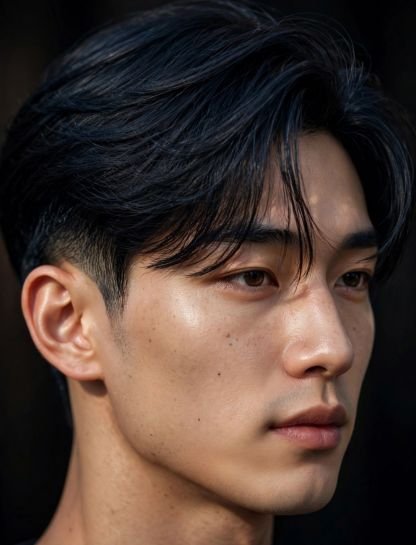
The fringe is grown out slightly longer than a typical crop and swept to one side or straight back off the forehead. This gives more styling flexibility than the shorter fringe versions and creates a longer visual line down the face. The burst fade keeps the sides from feeling overgrown.
- Best For: Long or oval faces wanting a softer, swept-back finish.
- Tell Your Barber: “Leave the fringe long enough to sweep to the side, keep the sides tightly faded.”
- Maintenance: Every 5 weeks on top; the fade needs a refresh every 3.
10. Micro Fringe Burst Fade Crop
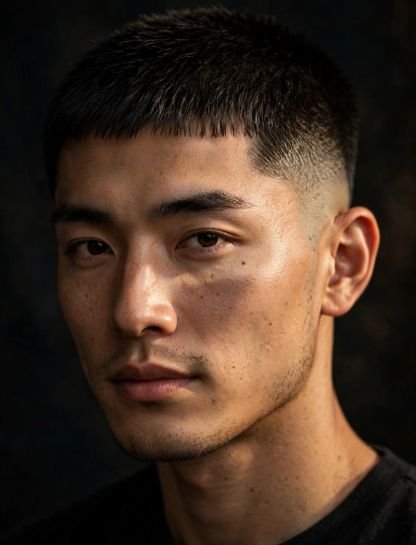
The fringe is cut extremely short — just enough to graze the forehead — creating a compact, minimal silhouette. This is the lowest-maintenance fringe option and puts almost all the visual interest into the burst fade itself. It suits guys who want a crop without daily styling.
- Best For: Low-maintenance routines, straight or fine hair.
- Tell Your Barber: “Keep the fringe very short, almost buzzed — let the fade carry the style.”
- Maintenance: Every 4 weeks; almost no daily styling needed.
Hair Texture Variations
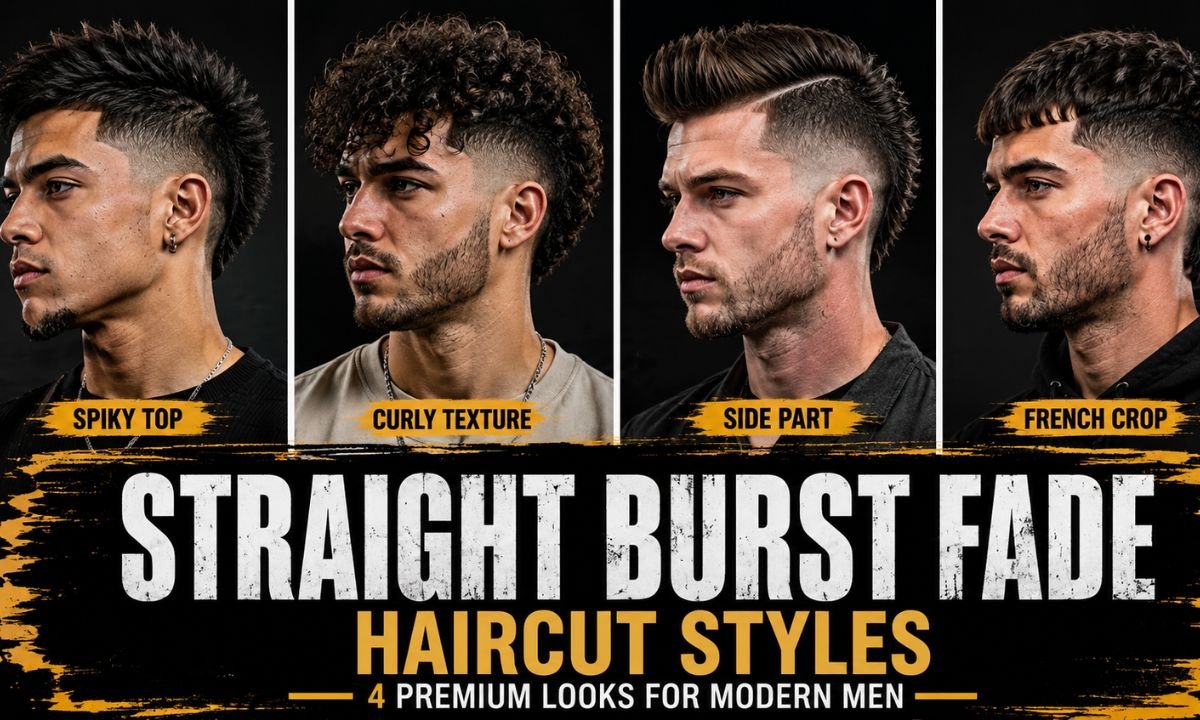
11. Straight Hair Burst Fade Crop
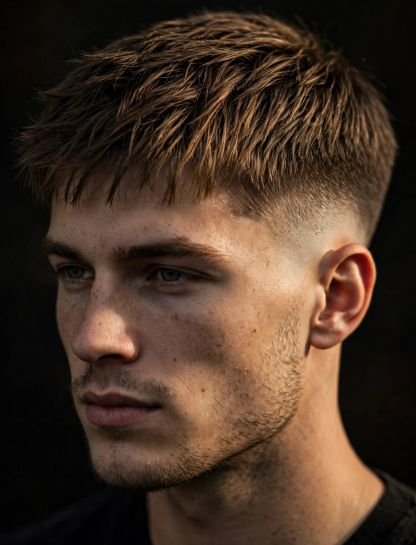
Straight hair shows the fade line with total clarity, so precision matters more here than with any other texture. The top is kept short with choppy layering to prevent the classic “flat crop” look. A small amount of texture powder or clay adds the volume straight hair naturally lacks.
- Best For: Fine-to-medium straight hair wanting definition.
- Tell Your Barber: “My hair is straight and can look flat — add texture with point-cutting on top.”
- Maintenance: Every 3 weeks; product is needed daily to avoid a flat finish.
12. Wavy Hair Burst Fade Crop
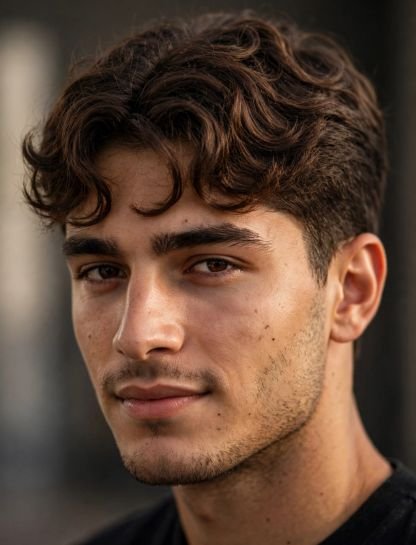
The natural wave pattern is left mostly untouched on top, styled forward with fingers rather than combed smooth. This lets the movement show through instead of forcing a rigid shape, while the burst fade keeps the perimeter controlled. It’s one of the easier textures to style day to day.
- Best For: Natural, effortless movement without heavy product.
- Tell Your Barber: “Don’t over-thin the top — I want the natural wave to show through.”
- Maintenance: Every 4 weeks; light mousse enhances the wave without weighing it down.
13. Curly Hair Burst Fade Crop
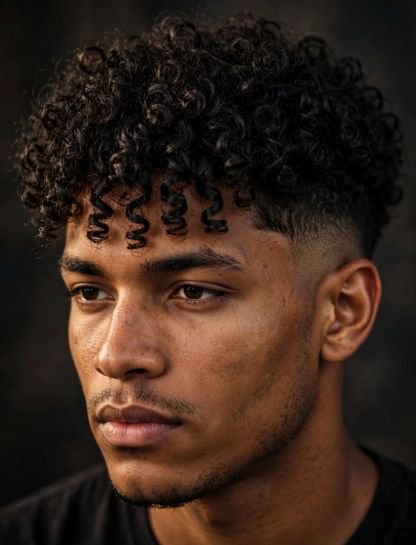
The top is left longer than other versions so the curls retain their natural shape rather than getting cut into a frizzy triangle. The burst fade shapes the sides tightly, putting the visual focus entirely on the curl pattern up top. Diffusing when drying helps keep curls defined.
- Best For: Naturally curly hair wanting to keep curl definition.
- Tell Your Barber: “Don’t cut the curls too short on top — just clean up the sides with the fade.”
- Maintenance: Every 4 weeks; curl cream daily keeps definition without frizz.
14. Coily or Afro-Textured Burst Fade Crop
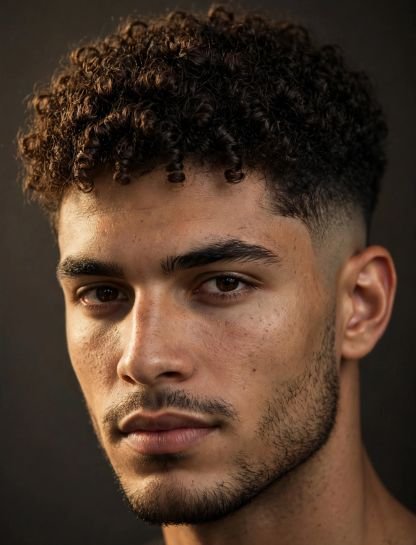
The sides fade tightly to reduce bulk, while the top is kept short enough to manage but long enough to show natural coil pattern. This texture holds shape exceptionally well, so the burst fade’s rounded curve stays crisp longer than on straighter hair types. A light oil keeps the top from drying out.
- Best For: Coily or Afro-textured hair wanting reduced bulk with defined shape.
- Tell Your Barber: “Keep the sides tight to reduce bulk, but don’t compress the coil pattern on top.”
- Maintenance: Every 3 weeks; the sharp curve holds well between visits.
15. Fine Hair Burst Fade Crop
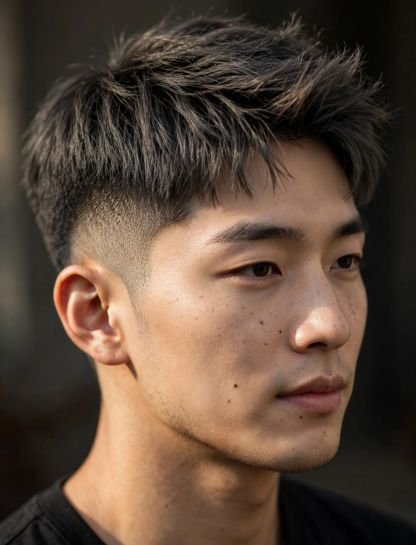
Because fine hair lacks natural volume, the top is layered with point-cutting to create the illusion of thickness. Texture powder at the root adds lift that fine hair can’t hold on its own. The burst fade adds visual weight to the sides so the whole cut doesn’t look thin.
- Best For: Fine or thinning hair wanting a fuller appearance.
- Tell Your Barber: “My hair is fine — point-cut the top for texture and use minimal thinning.”
- Maintenance: Every 3 weeks; texture powder is essential for daily styling.
16. Thick Hair Burst Fade Crop
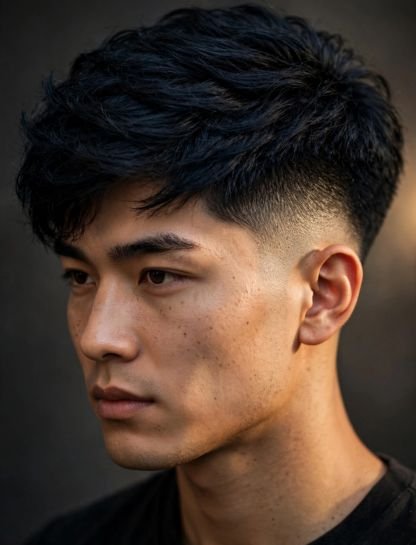
Thick hair holds a burst fade’s shape exceptionally well but needs bulk removed to avoid looking heavy. Heavy layering and thinning shears reduce weight on top while the fade removes density on the sides. This combination creates one of the cleanest, most defined silhouettes on the list.
- Best For: Dense or thick hair needing weight removal.
- Tell Your Barber: “My hair is thick — thin it out on top so it doesn’t sit too heavy.”
- Maintenance: Every 3 weeks; thick hair grows out more visibly around the fade line.
Hair Color Variations
17. Black Hair Burst Fade Crop
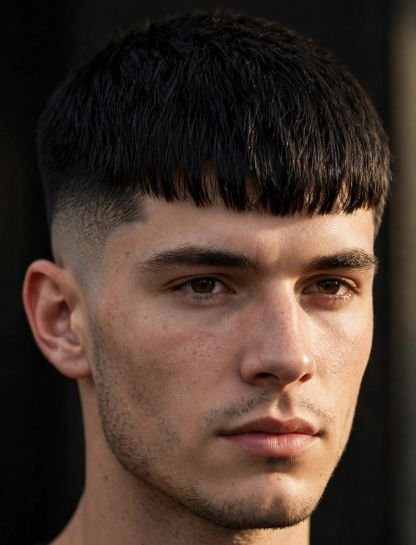
Black hair creates the sharpest possible contrast against the skin, making the burst fade’s curve highly visible even at lower fade heights. This means you don’t need to go as high or as close to skin to get a defined look. The fringe also reads more crisply against dark color.
- Best For: Black hair wanting strong contrast without an aggressive fade height.
- Tell Your Barber: “My hair is dark, so a low-to-mid fade should already give strong contrast.”
- Maintenance: Every 3 weeks; the contrast makes regrowth more noticeable.
18. Dark Brown Hair Burst Fade Crop
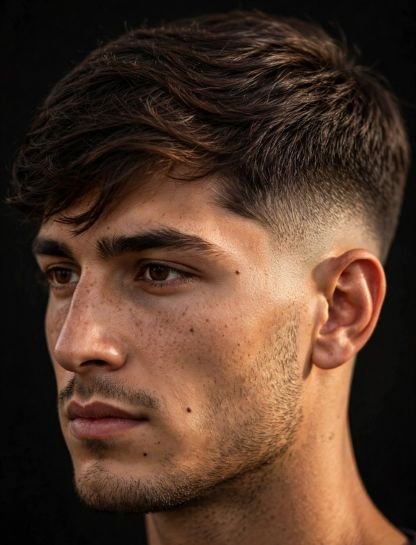
Similar to black hair but slightly softer in contrast, dark brown hair still shows the fade clearly without looking as stark. This is a versatile, everyday-friendly color pairing that works with nearly every fringe style on this list. It’s a popular choice for workplace-appropriate versions.
- Best For: A professional, versatile everyday look.
- Tell Your Barber: “Keep the fade clean but not overly sharp — my hair color gives enough contrast already.”
- Maintenance: Every 3–4 weeks.
19. Dark Blonde Burst Fade Crop
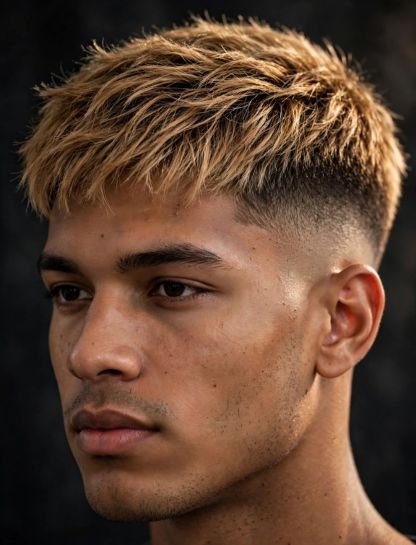
Lighter hair shows less contrast against the scalp, so the fade needs to go closer to skin to read as clearly as it does on darker hair. This version often uses a skin-level fade to compensate for the softer color contrast. The fringe stays the visual focal point instead of the fade line.
- Best For: Dark blonde or light brown hair needing extra fade depth.
- Tell Your Barber: “My hair color is lighter, so take the fade closer to skin for visible contrast.”
- Maintenance: Every 2–3 weeks to maintain the skin-level clarity.
20. Light Blonde Burst Fade Crop
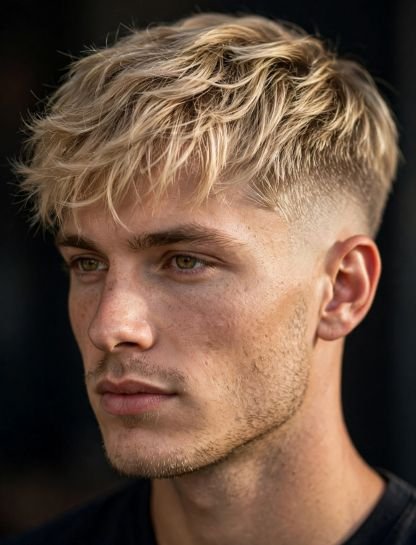
With light or bleached blonde hair, scalp visibility is high even at moderate fade heights, so the style leans on the fringe and top texture for its visual impact rather than the fade line alone. This creates an airy, lighter overall look compared to the darker color versions.
- Best For: Bleached or naturally light blonde hair.
- Tell Your Barber: “My hair is light — the fade won’t show much contrast, so focus detail on the fringe.”
- Maintenance: Every 3 weeks; regrowth is less visually obvious than with dark hair.
21. Copper or Red Burst Fade Crop
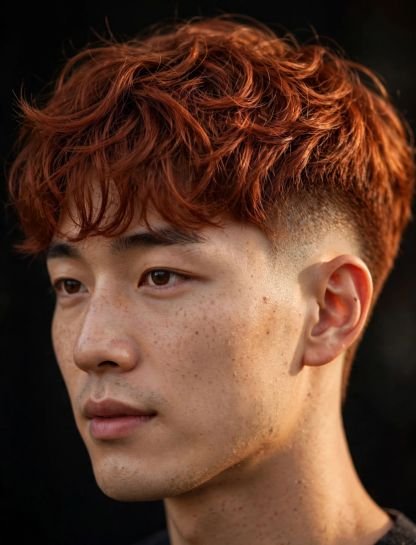
Copper and red tones sit in a middle ground of contrast, warmer and more distinct than blonde but softer than black. This color pairs well with a mid or high burst fade, since the warm tone still reads clearly against skin without needing to go fully skin-close. It stands out without looking harsh.
- Best For: Copper, auburn, or natural red hair wanting a warm, distinctive look.
- Tell Your Barber: “A mid-to-high fade should show up well with my hair color.”
- Maintenance: Every 3 weeks.
22. Platinum or Bleached Burst Fade Crop
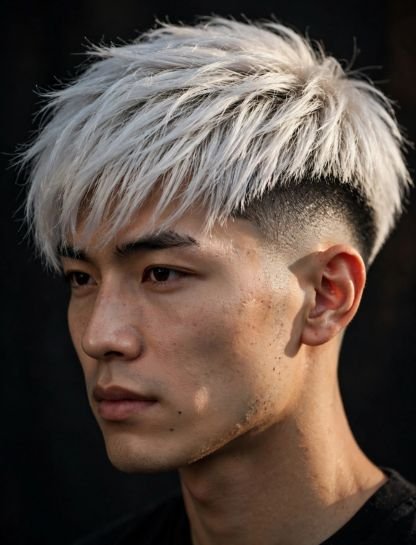
This is the boldest color option, often paired with a longer fringe or added length on top to balance the starkness of platinum against skin. The contrast here comes from the color itself rather than the fade depth, so even a low or mid fade looks dramatic. It’s a high-commitment, high-impact choice.
- Best For: Those wanting a striking, statement-making look.
- Tell Your Barber: “My color already stands out — a low-to-mid fade will be plenty dramatic.”
- Maintenance: Every 3 weeks for the cut; color touch-ups are a separate, more frequent commitment.
Hybrid French Crop Styles
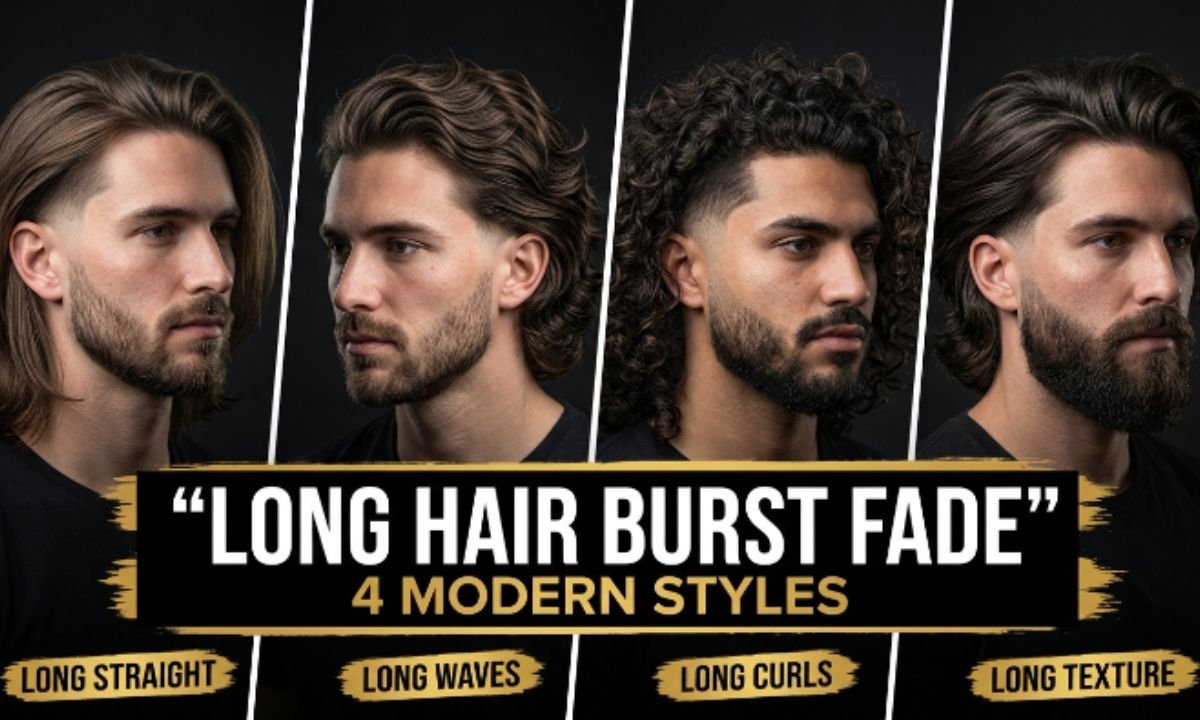
23. Burst Fade French Crop Mullet
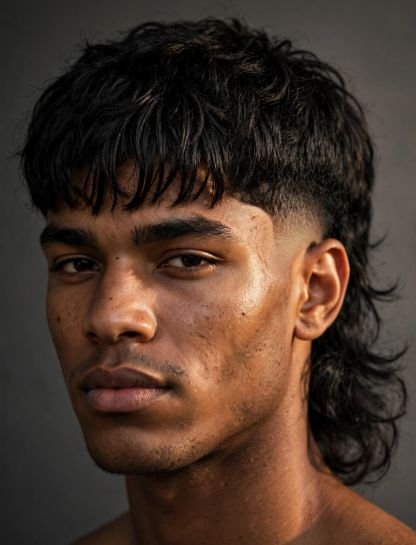
Length is retained at the back while the front keeps the classic crop fringe, and the sides fade in a rounded burst around the ear. This hybrid mixes the structured, textured front of a French crop with the retro rebellion of a mullet. It’s the boldest length-retention option on the list.
- Best For: Thick or medium hair, anyone wanting an unconventional silhouette.
- Tell Your Barber: “Keep the back longer, mullet-style, but fade the sides and keep the crop fringe up front.”
- Maintenance: Every 4 weeks on the back length; fade touch-ups every 2–3 weeks.
24. Buzz Crop Burst Fade
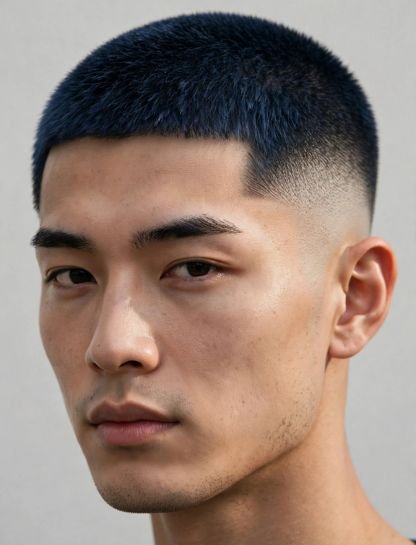
The top is buzzed down to a very short, uniform length instead of left textured, putting nearly all the visual detail into the burst fade’s curve. This is the lowest-maintenance hybrid on the list since there’s no fringe to style daily. It suits guys who want the fade’s shape without any top upkeep.
- Best For: Extremely low daily maintenance, active lifestyles.
- Tell Your Barber: “Buzz the top short with a two-guard, and give me a defined burst fade on the sides.”
- Maintenance: Every 3 weeks; virtually no daily styling required.
25. Taper Combo Burst Fade Crop
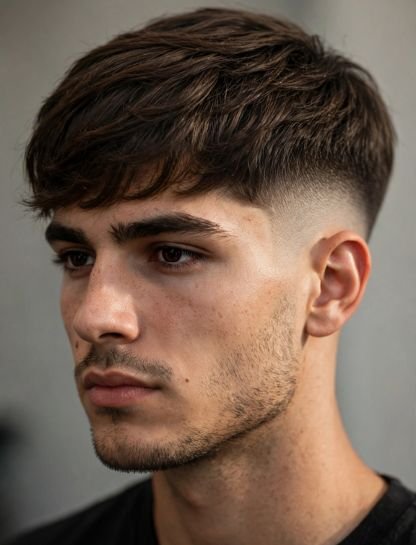
A soft taper blends the fade into the neckline and temples, avoiding the harder edges that a pure burst fade can create around the back. This softens the overall transition while keeping the ear-area curve intact. It’s a good option for those who want a burst fade that grows out more gracefully.
- Best For: Anyone wanting a softer grow-out with fewer harsh lines.
- Tell Your Barber: “Blend the burst fade into a soft taper at the neckline instead of a hard stop.”
- Maintenance: Every 4 weeks; the soft taper hides regrowth longer than a hard-edged fade.
26. Quiff Combo Burst Fade Crop
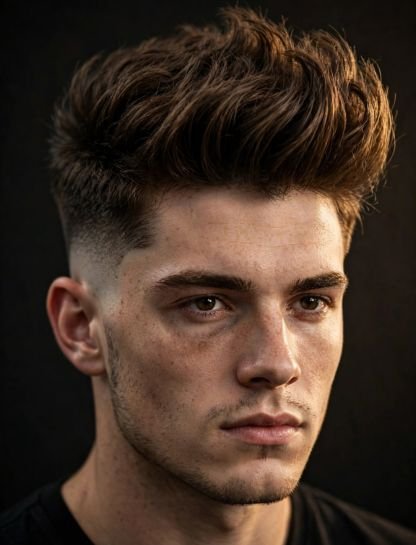
The top is styled upward and back into a quiff shape rather than swept forward like a typical crop fringe, adding height and volume. The burst fade underneath keeps the sides tight so the height on top reads clearly. This combination works especially well for round faces needing extra length.
- Best For: Round faces, anyone wanting added height.
- Tell Your Barber: “Keep enough length on top to style upward into a quiff, fade the sides in a burst pattern.”
- Maintenance: Every 4 weeks; daily blow-drying and a strong-hold product are required.
27. Slick Back Combo Burst Fade Crop
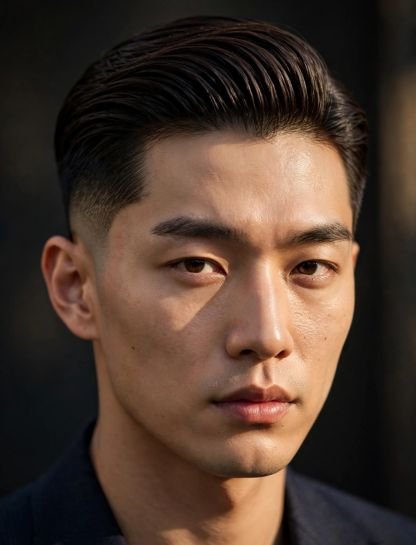
The top is grown slightly longer and combed straight back with a strong-hold product, creating a polished, formal finish. Paired with the rounded burst fade, this version feels more dressed-up than the typical forward-fringe crop. It’s a good option for business or formal settings.
- Best For: Formal or business settings, straight or wavy hair.
- Tell Your Barber: “Leave enough length to slick back, keep the sides in a tight burst fade.”
- Maintenance: Every 4 weeks; pomade needed daily for the slicked finish.
28. Faux Hawk Combo Burst Fade Crop
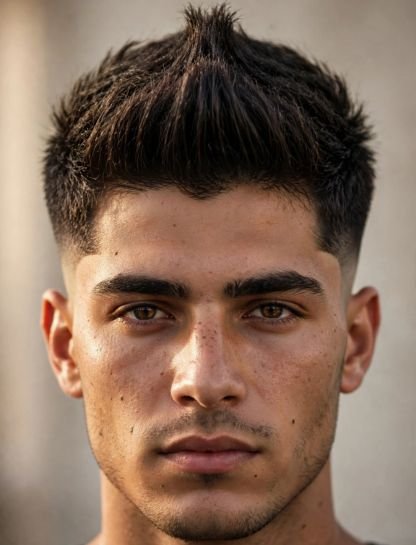
More length is retained in a central strip on top, styled upward, while the sides fade closely on both sides in a rounded burst pattern. This creates a more dramatic, narrower silhouette than a standard crop. It reads as edgier and works best for those comfortable with a bolder statement.
- Best For: Bold, edgier looks; thicker hair that holds an upward shape.
- Tell Your Barber: “Leave a center strip longer for a faux hawk, fade both sides in a burst pattern.”
- Maintenance: Every 3 weeks; strong-hold paste needed daily to keep the strip upright.
Face-Shape Focused Styles
29. Round Face Burst Fade Crop
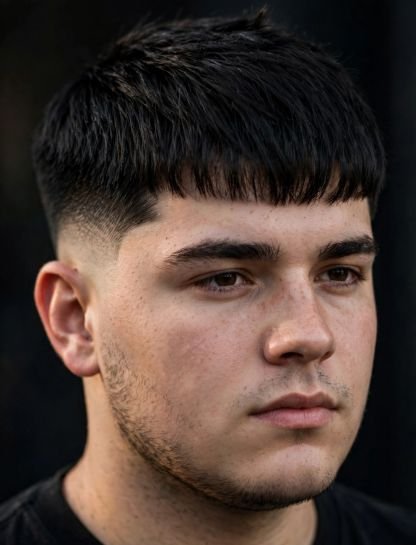
Extra height is added at the crown, and the fade is pushed slightly higher than usual to create a visually elongating effect. The fringe stays short and structured rather than wide, avoiding anything that adds width to the sides of the face. This combination is specifically built to counter roundness.
- Best For: Round faces wanting a longer, more angular appearance.
- Tell Your Barber: “I have a round face — add height on top and take the fade a bit higher than usual.”
- Maintenance: Every 3 weeks to maintain the elongating height.
30. Oval Face Burst Fade Crop
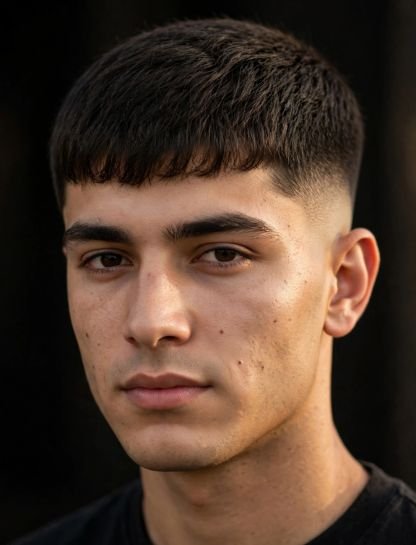
Because oval faces suit nearly any proportion, this version keeps things balanced: a mid-height fade, medium top length, and a standard forward fringe. It’s the most flexible style on the list and a safe starting point for anyone unsure which variation to choose. Nearly any hair type adapts well here.
- Best For: Oval faces; a balanced, adaptable everyday option.
- Tell Your Barber: “Keep it balanced — mid fade, standard fringe length, nothing extreme.”
- Maintenance: Every 3–4 weeks.
31. Square Face Burst Fade Crop
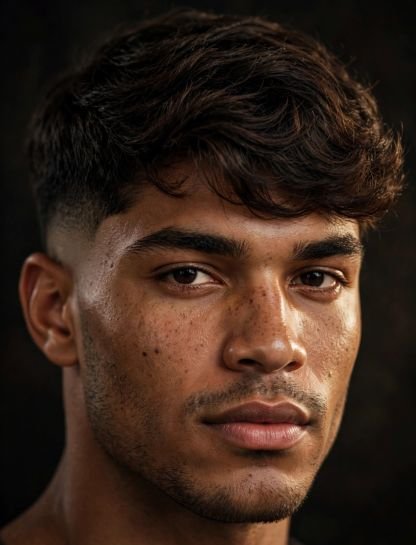
The fringe is left slightly longer and softer to reduce emphasis on a strong, angular jawline. The fade stays low-to-mid rather than high, avoiding additional sharpness that would compete with the face’s natural angles. This creates a more balanced, softened overall look.
- Best For: Square faces wanting to soften strong jaw angles.
- Tell Your Barber: “My jawline is strong — keep the fringe softer and the fade low-to-mid, not high.”
- Maintenance: Every 3–4 weeks.
32. Heart Face Burst Fade Crop
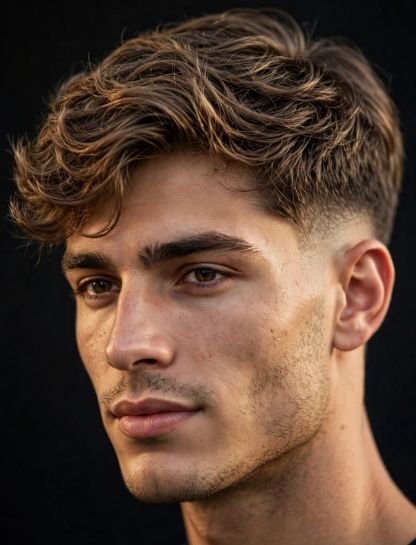
Volume is added near the temples and crown to balance a wider forehead against a narrower chin. The fade stays moderate rather than aggressive, since too much height can exaggerate the forehead-to-chin ratio. The fringe often sweeps slightly to the side rather than sitting flat.
- Best For: Heart-shaped faces with a wider forehead.
- Tell Your Barber: “I want more volume near my temples to balance a wider forehead — keep the fade moderate.”
- Maintenance: Every 4 weeks.
33. Diamond Face Burst Fade Crop
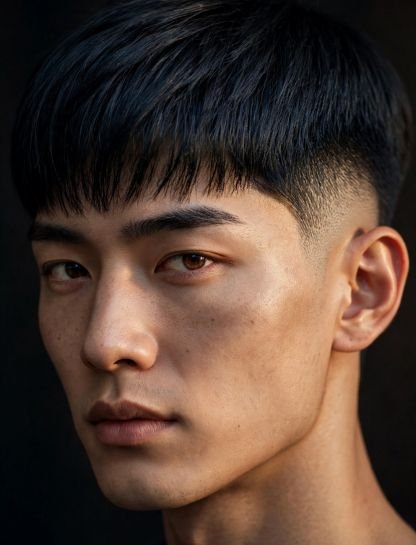
The rounded shape of the burst fade naturally complements diamond-shaped cheekbones, so this version leans into a mid-to-high fade to highlight that curve. The top stays textured but not overly voluminous, letting the cheekbones remain the focal point rather than competing with a heavy fringe.
- Best For: Diamond faces with prominent cheekbones.
- Tell Your Barber: “Take the fade mid-to-high to highlight the curve around my cheekbones.”
- Maintenance: Every 3 weeks.
34. Long Face Burst Fade Crop
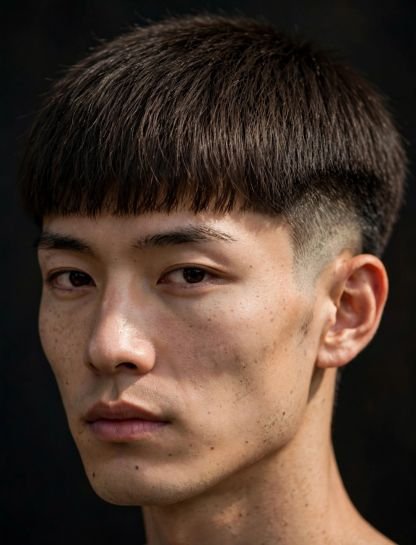
Height is deliberately minimized here, with a mid fade and a fuller, wider fringe to avoid adding extra visual length to the face. This is the opposite approach from the round-face version, prioritizing width and horizontal texture over vertical height. It keeps proportions balanced.
- Best For: Long faces wanting to avoid additional vertical length.
- Tell Your Barber: “My face is long — keep the top lower and fuller, avoid extra height.”
- Maintenance: Every 4 weeks.
Detail and Design Variations
35. Sharp Line-Up Burst Fade Crop
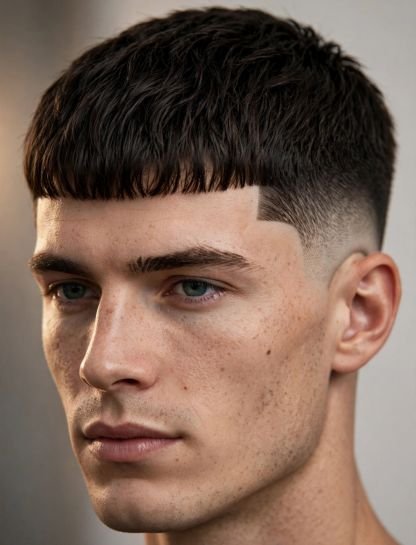
A crisp, straight line is cut across the front hairline, adding a hard edge that contrasts against the rounded burst fade behind it. This detail is what gives the cut its “fresh from the barber” finish and is one of the most requested add-ons for this style. It needs frequent upkeep to stay sharp.
- Best For: Anyone wanting a defined, polished front hairline.
- Tell Your Barber: “Give me a sharp, straight line-up at the front along with the burst fade.”
- Maintenance: Every 1–2 weeks for the line-up; the fade itself holds for 3.
36. Razor Design Burst Fade Crop
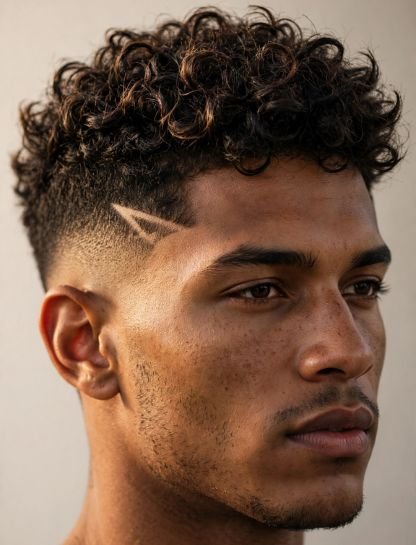
A shaved line or small geometric pattern is added into the faded section, usually near the temple, following the natural curve of the burst fade rather than cutting across it. This is a personalization option rather than a core style choice, and it shows up most clearly on darker hair.
- Best For: Anyone wanting a personalized, standout detail.
- Tell Your Barber: “Add a shaved design into the fade — here’s a reference photo for placement.”
- Maintenance: Every 1–2 weeks; designs fade out fastest of any detail.
37. Surgical Part Burst Fade Crop
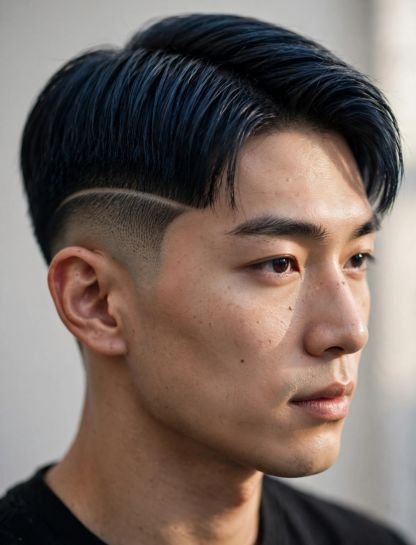
A thin, shaved part line separates the top hair into a defined section, adding a graphic detail that reads clearly against the buzzed sides. Paired with the rounded burst fade, it creates a more engineered, precise finish than a plain crop. It’s a strong choice for straight hair, where the line shows most clearly.
- Best For: Straight or fine hair where a hard part line is clearly visible.
- Tell Your Barber: “Add a thin surgical part on the side along with the burst fade underneath.”
- Maintenance: Every 1–2 weeks for the part line.
38. Disconnected Burst Fade Crop
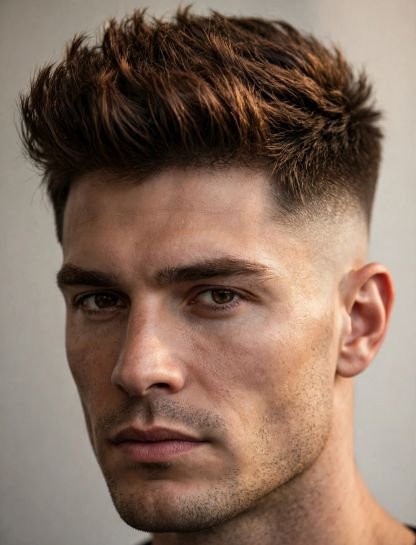
The top is left noticeably longer than the sides, with little to no blending between the two — creating a bold, deliberate break in length rather than a smooth transition. This exaggerates the contrast the burst fade is known for, making the style feel edgier and more graphic overall.
- Best For: Thicker hair, anyone wanting maximum visual contrast.
- Tell Your Barber: “Don’t blend the top into the sides — keep them clearly disconnected.”
- Maintenance: Every 3 weeks; the disconnection actually hides regrowth fairly well.
39. V-Shaped Neckline Burst Fade Crop
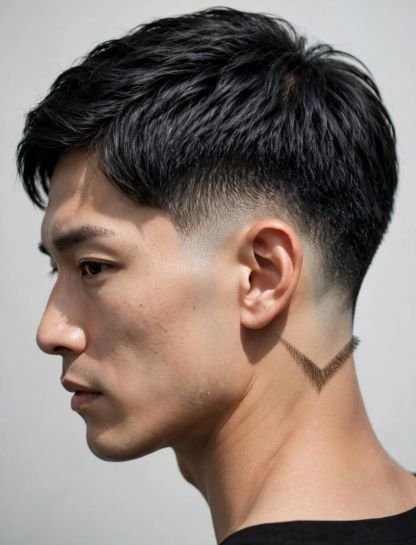
Instead of a rounded or straight back, the neckline is shaped into a distinct V-point, adding a graphic detail to the rear profile that most versions skip entirely. Combined with the burst fade around the ears, it gives the cut a more deliberate, structured look from every angle.
- Best For: Anyone wanting a distinctive back profile.
- Tell Your Barber: “Shape my neckline into a V-point, and keep the burst fade tight around the ears.”
- Maintenance: Every 2 weeks; V-shapes grow out fastest of any detail on this list.
40. Sideburn Blend Burst Fade Crop
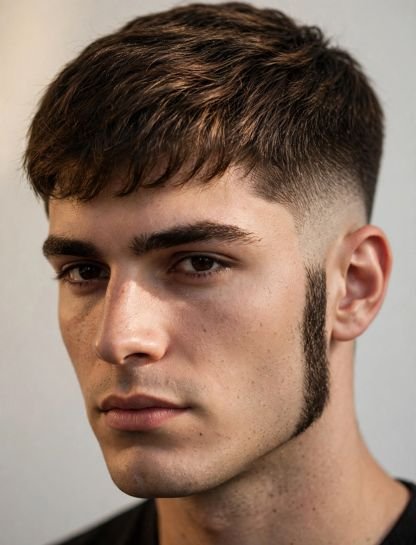
The fade transitions smoothly into longer, more defined sideburns instead of fading them out completely. This creates a continuous visual line from the temple down the side of the face, adding structure that complements a strong jawline or an intentional beard connection later on.
- Best For: Anyone wanting defined sideburns as a framing detail.
- Tell Your Barber: “Keep my sideburns defined and blend the fade into them; don’t fade them out.”
- Maintenance: Every 2–3 weeks to keep the sideburn shape clean.
Beard and Grooming Combinations
41. Full Beard Blend Burst Fade Crop
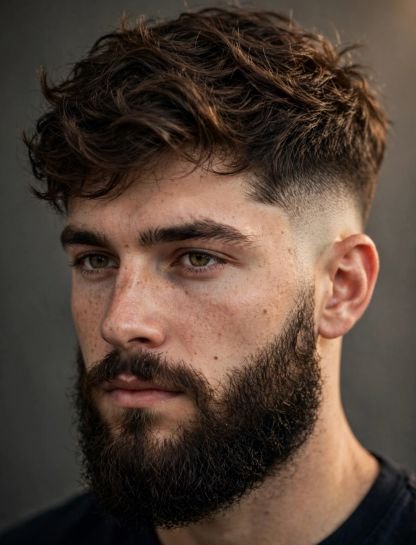
The fade connects directly into a full beard, creating one continuous line from the top of the head down through the jaw. This is the most cohesive grooming combination on the list, treating the head and facial hair as a single connected shape rather than two separate cuts.
- Best For: Full or medium beards wanting a unified, connected look.
- Tell Your Barber: “Connect the burst fade directly into my beard for one smooth line.”
- Maintenance: Beard lines need weekly touch-ups; the head fade holds for 3 weeks.
42. Stubble Blend Burst Fade Crop
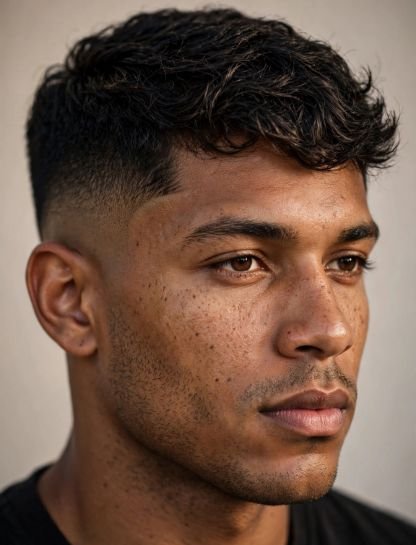
Light stubble is faded to match the gradient of the burst fade, creating a softer, more subtle connection than a full beard blend. This suits guys who don’t want to commit to a full beard but still want the fade to feel intentional rather than abruptly stopping at the jaw.
- Best For: Light stubble, a low-commitment grooming routine.
- Tell Your Barber: “Fade my stubble to match the burst fade gradient on the sides.”
- Maintenance: Every 4–5 days for stubble upkeep; fade every 3 weeks.
43. Goatee Blend Burst Fade Crop
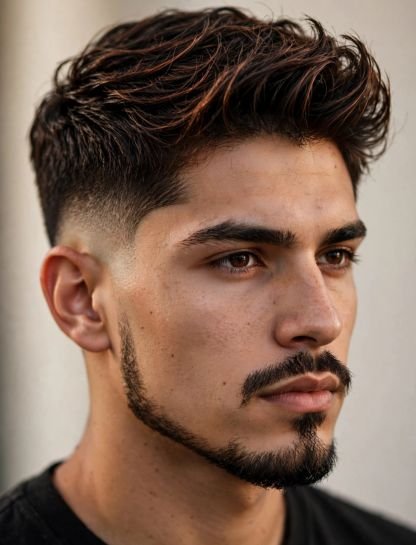
The sideburns fade down and connect specifically to a goatee, leaving the cheeks clean while the chin and jawline area stays defined. This targeted blend works well for guys who grow patchy cheek hair but want a fuller, more deliberate chin shape connected to the haircut.
- Best For: Patchy cheek growth, anyone preferring a goatee over a full beard.
- Tell Your Barber: “Blend my sideburns down to connect with my goatee, but keep my cheeks clean.”
- Maintenance: Every 1–2 weeks for goatee edges; fade every 3 weeks.
44. Clean Shave Contrast Burst Fade Crop
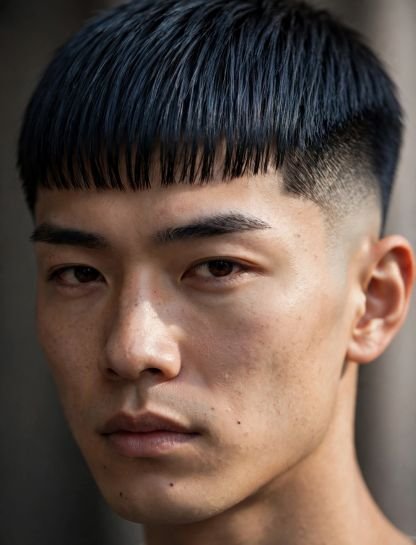
With no facial hair at all, the fade and fringe carry the entire visual weight of the look. This version usually leans on a sharper line-up and more defined fringe shape to compensate for the lack of beard framing, keeping the jawline visually structured through the haircut alone.
- Best For: Clean-shaven preference, younger or more youthful styling.
- Tell Your Barber: “I’m clean-shaven, so give the fringe and fade a bit more definition to frame my face.”
- Maintenance: Every 3 weeks; a sharp line-up helps compensate for the lack of beard structure.
Special and Trend-Inspired Styles
45. Edgar-Inspired Burst Fade Crop
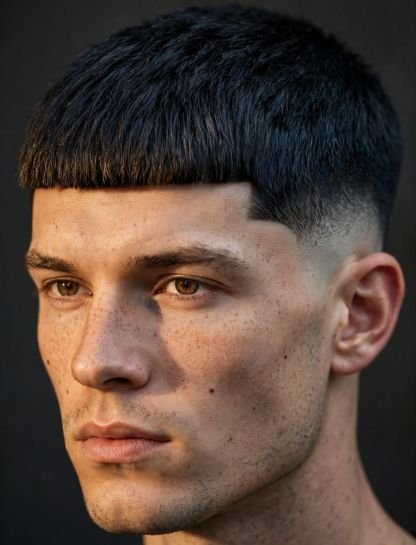
The fringe is cut into a squared, sharply defined shape with a straighter hairline than a typical crop fringe, borrowing from the popular Edgar cut trend. Paired with a burst fade, it creates a bolder, more graphic front profile than the softer, rounded fringe versions on this list.
- Best For: Trend-forward looks, straight hair that holds a squared line well.
- Tell Your Barber: “I want an Edgar-style squared fringe with a burst fade on the sides.”
- Maintenance: Every 2–3 weeks; the squared line needs regular upkeep to stay sharp.
46. Garnacha-Inspired Burst Fade Crop
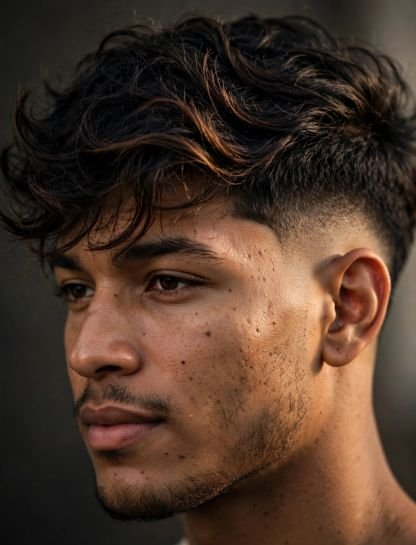
This informal, social-media-driven label generally describes a French crop with a tightly curved burst fade and a slightly longer, natural-looking fringe. It’s not a technically distinct cutting method — more a style label — so bringing a reference photo matters more here than with any other entry on this list.
- Best For: Anyone chasing a specific trending look; best explained with a photo.
- Tell Your Barber: “Here’s a reference photo — I want this exact fringe shape and fade curve.”
- Maintenance: Every 3 weeks, same as a standard mid burst fade crop.
47. Vintage-Inspired Burst Fade Crop
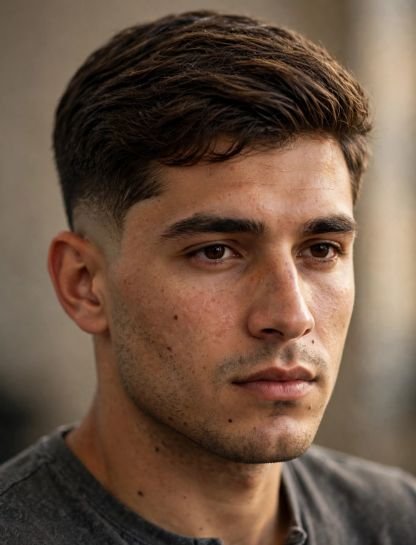
Drawing on the classic, military-rooted look often associated with period style icons, this version keeps the top short and neatly textured with a more restrained, lower fade. It trades boldness for a timeless, tailored appearance that works well in formal or old-school-inspired settings.
- Best For: Classic, timeless styling; formal environments.
- Tell Your Barber: “Keep it classic — short textured top, low fade, nothing too dramatic.”
- Maintenance: Every 4 weeks; this is one of the lower-maintenance options overall.
48. Modern Business Burst Fade Crop
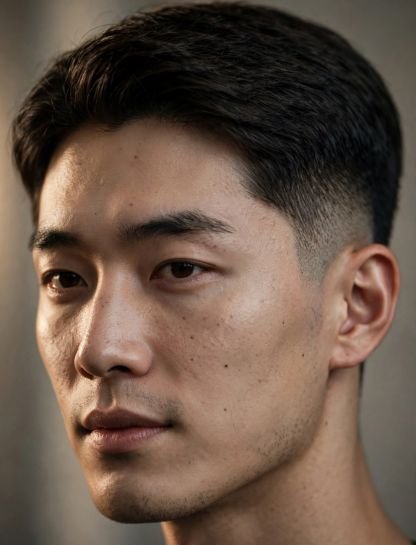
This version keeps the fade low and the fringe short and neat, prioritizing a polished, workplace-safe finish over dramatic contrast. It’s designed to look sharp in professional settings while still carrying the structure and texture that defines a French crop.
- Best For: Corporate or client-facing roles needing a polished look.
- Tell Your Barber: “Keep everything neat and low-contrast — professional, not flashy.”
- Maintenance: Every 3–4 weeks.
49. Textured Crown Volume Burst Fade Crop
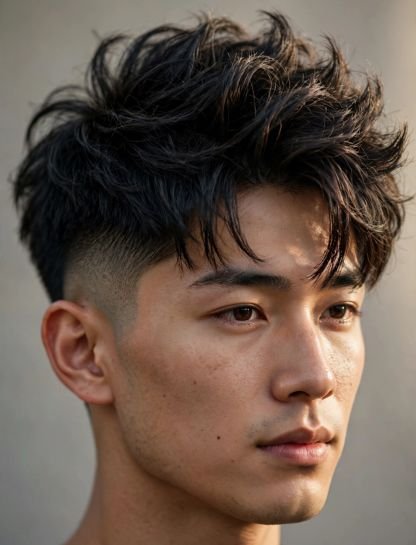
Extra layering is added specifically at the crown to build height and volume in that one area, rather than across the whole top. This targeted approach works well for hair that’s flat at the crown but has enough density elsewhere, giving the illusion of fuller, more balanced hair overall.
- Best For: Hair that’s flat specifically at the crown.
- Tell Your Barber: “Add extra layering just at my crown for volume — the rest can stay standard length.”
- Maintenance: Every 3–4 weeks; a root-lifting powder helps daily.
50. Low-Maintenance Everyday Burst Fade Crop
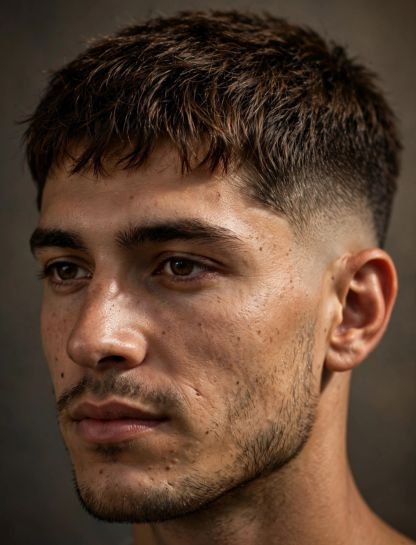
This is the practical, no-fuss version of the style: a low-to-mid fade, a short and simple fringe, and minimal daily product needed to look put-together. It sacrifices some of the drama of the bolder entries on this list in exchange for a cut that holds its shape with the least amount of effort.
- Best For: Busy schedules, anyone wanting the look without the daily routine.
- Tell Your Barber: “Keep it simple — low-to-mid fade, short fringe, nothing that needs daily styling.”
- Maintenance: Every 4–5 weeks; the lowest-upkeep option on this entire list.
What to Tell Your Barber
A vague request leads to an inconsistent result. Before your appointment, be ready to specify:
- “French crop with a burst fade” — the exact style name, not just “fade.”
- Fade height: low, mid, or high.
- How close: soft, short, or skin-close.
- Fringe style: blunt, choppy, messy, long, or micro.
- Back treatment: clean neckline, taper, V-point, or retained mullet length.
- Beard connection, if applicable.
- A reference photo from the front, side, and back.
How to Style It
- Start with clean, towel-damp hair — not soaking wet.
- Apply a lightweight pre-styler like sea salt spray or volumizing mousse.
- Blow-dry the fringe forward (or up, for quiff and faux hawk versions) using fingers or a vent brush.
- Add a small amount of clay, paste, pomade, or texture powder based on your hair type.
- Separate the top with fingers rather than combing it flat, unless you want a slicked finish.
Maintenance and Grow-Out Timeline
Fade sharpness fades faster than top length. Skin fades, line-ups, razor designs, and V-necklines all need touch-ups every 1–2 weeks. Standard low-to-mid fades hold for about 3 weeks. The top and fringe generally need a fresh cut every 4–6 weeks, depending on how much length and texture you’re maintaining. Beard-connected styles need the beard line kept up weekly, separate from the head fade schedule.
Frequently Asked Questions
What is a burst fade French crop?
It’s a French crop haircut — short textured top with a forward fringe — paired with a fade that curves around the ear instead of running in a straight line.
What’s the difference between a burst fade and a drop fade?
A burst fade curves around the ear and stays higher at the back; a drop fade dips lower behind the ear toward the nape.
Can curly or coily hair get a burst fade French crop?
Yes — curly and coily hair both work well, usually with a slightly longer top to preserve curl shape and a tighter fade to reduce bulk.
How often does a burst fade French crop need a trim?
Most versions need a fade touch-up every 2–3 weeks and a full top and fringe trim every 4–6 weeks.
Is a burst fade French crop good for a receding hairline?
Yes — a short, textured forward fringe is one of the more effective styles for softening a receding hairline or a larger forehead.
Conclusion
The burst fade French crop earns its popularity because it isn’t really one haircut — it’s a flexible framework that adapts to nearly any hair type, face shape, color, and personal style, from a subtle low fade for the office to a bold platinum faux hawk for a night out, and the right version for you comes down to matching fade height, fringe length, and detail work to your hair texture and daily maintenance tolerance rather than just picking whatever looks best in a photo.
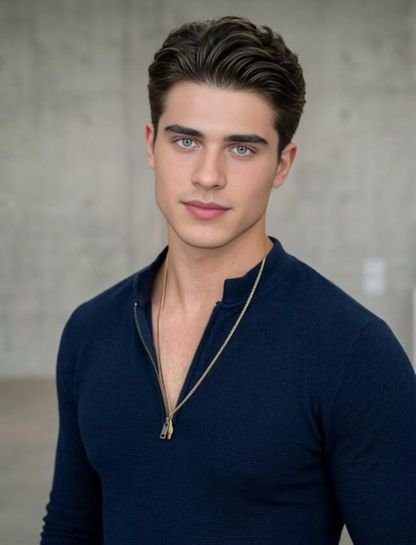
Hi, I’m Oliver Bennett. I’m passionate about men’s hairstyles and love exploring modern cuts that are easy to understand and easy to ask your barber for. On this website, I share simple guides on styles like burst fades, mullets, curtain cuts, tapers, and other trending men’s hairstyles. My goal is to help you find a haircut that matches your hair type, face shape, and personal style.
2 thought on “Burst Fade French Crop: 50 Styles, Ideas And Complete Guide”