Burst Fade GuideBest Burst Fade Hard Part Haircut: 25 Standout Styles
Best Burst Fade Hard Part Haircut: 25 Standout Styles
August 30, 2026
/
2 Comments
/
Oliver Bennett
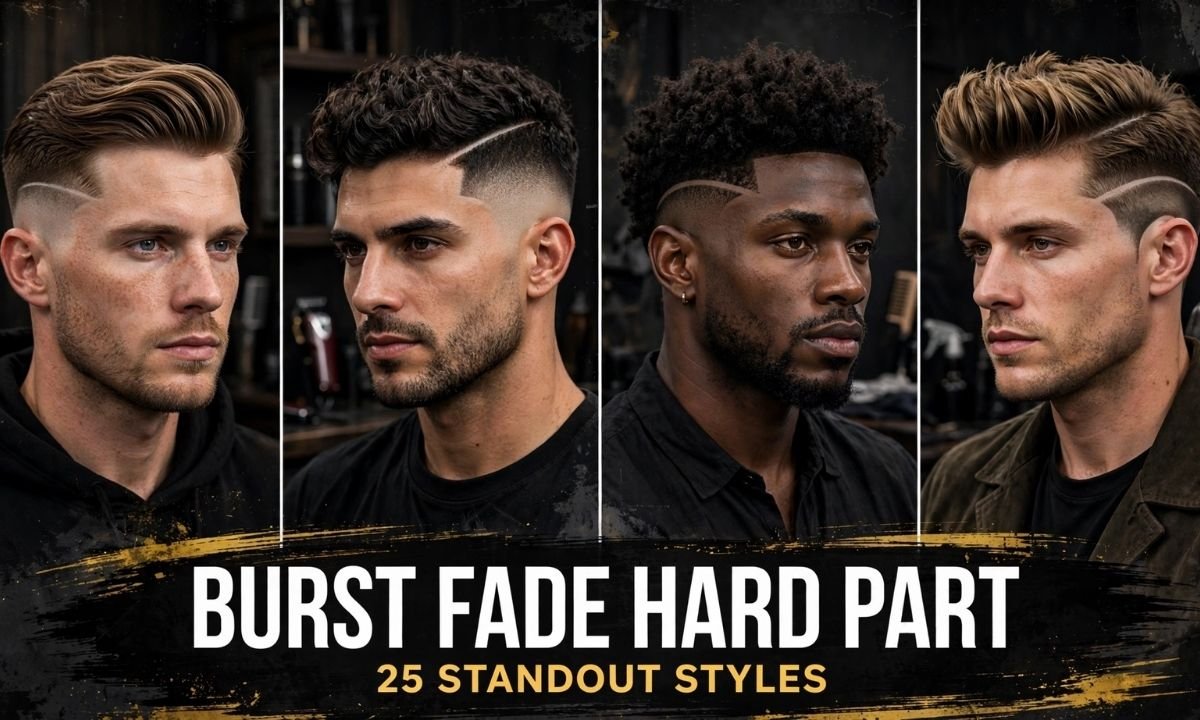
A clean shaved line. A smooth fade that curves neatly around the ear. Put those two details together, and you have a burst fade hard part haircut that instantly grabs attention. It has that fresh-from-the-barber look, but you can style it in plenty of ways to match your personality.
Keep the top short and textured, add some volume, or leave your natural curls on display. The hard part gives the style a sharp edge, while the burst fade keeps the sides modern and balanced. Below, you’ll find standout burst fade hard part styles worth showing your barber.
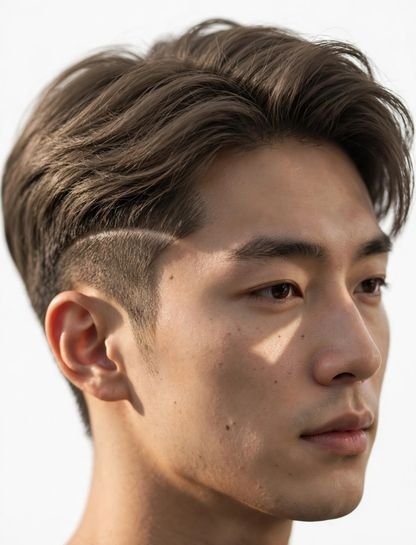
A burst fade hard part haircut brings two clean barbering details together: the rounded shape of a burst fade and the sharp definition of a shaved hard part. The combination gives the haircut a fresh, structured look without making the sides feel overly uniform. It can work with short, medium, or longer hair on top, so there is plenty of room to make the style your own.
How a Burst Fade Works
A burst fade is easy to spot because the fade curves around the ear instead of running straight down the side of the head. The barber gradually cuts the hair shorter as it gets closer to the ear, creating a rounded, half-moon effect.
This curved shape gives the haircut more character than a basic fade. The area around the ear looks tight and clean, while the hair farther up and toward the back keeps more length. That extra length can help maintain a natural shape around the head.
The fade can also be adjusted to suit your preference. A low burst fade keeps the transition subtle, while a higher fade creates stronger contrast. Your hair type matters too. Thick, straight hair can give the fade a bold appearance, while curls and waves can make the transition look softer and more textured.
What a Hard Part Adds
The hard part is the detail that makes this haircut stand out. Instead of simply combing the hair into a part, your barber creates a visible line by shaving or trimming a narrow section into the hair.
That line gives the top a clear starting point and makes the haircut look freshly defined. It works especially well when you style the top to one side, but you can pair it with many different looks.
A hard part can complement a pompadour, textured crop, quiff, or curly top. The key is keeping the line clean and suited to your natural hair growth.
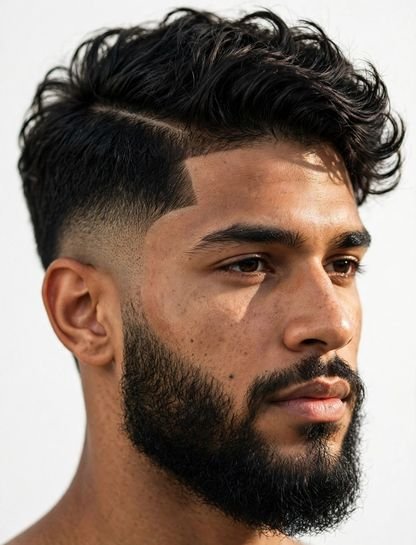
When combined with a burst fade, the contrast becomes even stronger. You get the curved fade around the ear, a crisp line through the side, and enough length on top to add personality. It is a haircut that looks polished when styled carefully, yet it can still feel relaxed enough for everyday wear.
25 Best Burst Fade Hard Part Styles
Each style below explains the shape, the texture it suits, and how to describe it to your barber. Pick the one that matches your hair type and daily routine, not just the photo you liked.
Classic & Office-Friendly Styles
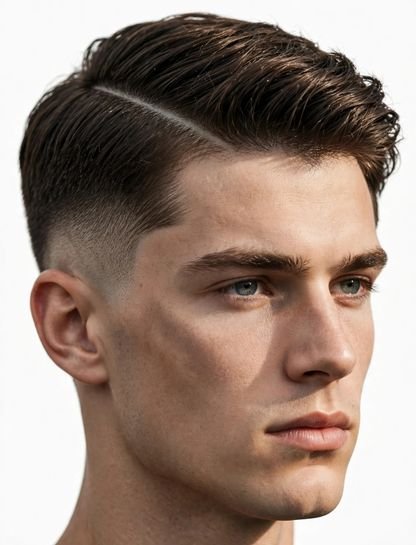
1. Classic Comb-Over Hard Part Burst Fade
Classic Comb-Over Hard Part Burst Fade
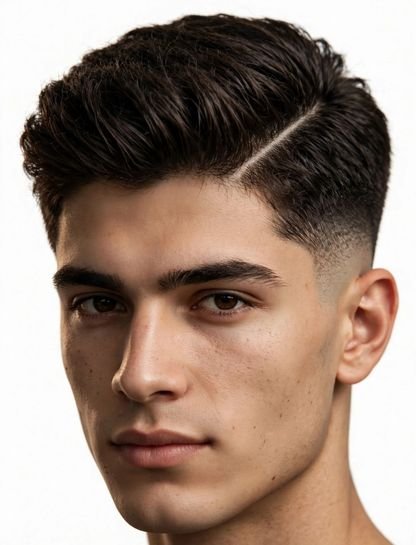
This is the safest entry point into the style. The top hair is combed to one side over a thin shaved line, while the sides curve into a gentle fade behind the ear. It reads as neat and deliberate rather than flashy, which is exactly why it works in almost any setting. Straight or slightly wavy hair holds the comb-over shape best without extra product.
Best For: Oval and square faces, first-time fade wearers, office settings
Tell Your Barber: “Mid burst fade around the ear, thin hard part on the left, top combed over at about three inches.”
Maintenance: Trim every three weeks; touch up the part line every 10 days if you shave it yourself.
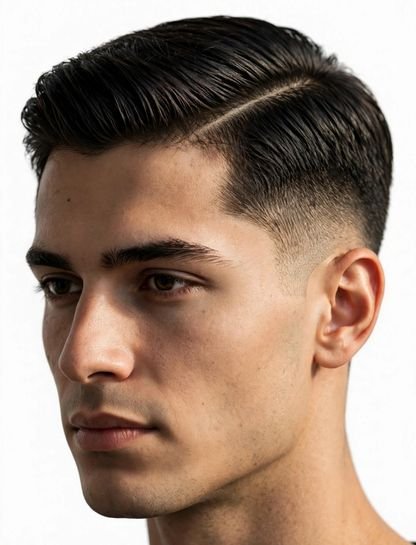
2. Low Burst Fade Hard Part
Low Burst Fade Hard Part
Keeping the fade low, close to the ear and neckline, gives you contrast without exposing much scalp. It’s the most conservative version of this cut, so it reads as polished rather than trendy. The hard part stays subtle here, more of a clean detail than a bold statement.
Best For: Longer or narrow face shapes, fine hair, conservative workplaces
Tell Your Barber: “Low burst fade, nothing above the temple, hard part kept thin and close to natural growth.”
Maintenance: A trim every four weeks holds this shape well since the fade sits low and grows out slowly.
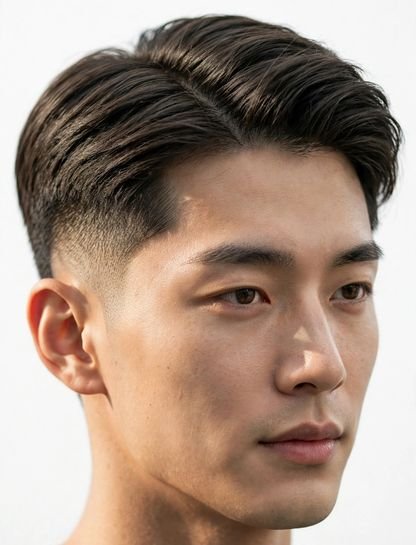
3. Mid Burst Fade Hard Part
Mid Burst Fade Hard Part
Sitting at temple height, the mid burst fade splits the difference between subtle and bold. It’s the version most barbers recommend when someone isn’t sure what fade height suits them. The hard part adds a crisp separation without competing with the fade for attention.
Best For: Round and diamond face shapes, most hair textures, everyday versatility
Tell Your Barber: “Mid burst fade to temple level, hard part on my natural side, top left around two and a half inches.”
Maintenance: Every two to three weeks keeps the temple line from blurring into the top hair.
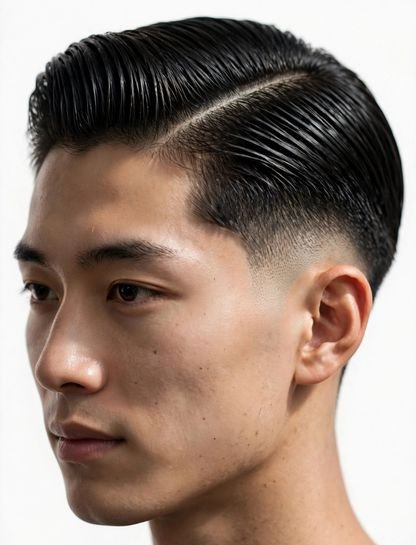
4. Slick Back Hard Part Burst Fade
Slick Back Hard Part Burst Fade
Hair is combed straight back with a water-based pomade, creating a smooth, glossy surface that catches light. The hard part sits at the front hairline, giving the slick-back a defined starting point instead of a soft, undefined edge. This one leans formal and works especially well with fine or medium straight hair.
Best For: Straight, fine-to-medium hair, formal events, angular face shapes
Tell Your Barber: “Mid burst fade, hard part just above the temple, leave the top four inches for a slick-back.”
Maintenance: Wash every other day to avoid pomade buildup; reshave the part every 10 to 14 days.
Volume & Height Styles
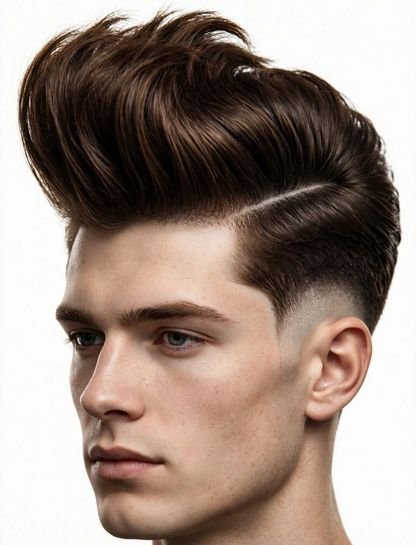
5. Pompadour Hard Part Burst Fade
Pompadour Hard Part Burst Fade
The front section is lifted and pushed back for real height, while the hard part becomes the main structural line separating pompadour from fade. This is a high-effort, high-reward style that demands a blow dryer and a strong-hold product most mornings. Thick, straight hair holds the volume longest.
Best For: Thick hair, men who want a bold, formal-leaning look
Tell Your Barber: “Mid to high burst fade, sharp hard part on one side, leave four to five inches on top for lift.”
Maintenance: Trim every two weeks to keep the shape from collapsing sideways as it grows.
6. Quiff Hard Part Burst Fade
Shorter and more relaxed than a pompadour, the quiff still lifts the front but doesn’t require the same height or product. The hard part guides where the lift begins, so the front section has a clean launch point instead of just flopping forward. It’s a lower-maintenance way to get volume without a full styling routine.
Best For: Wavy or straight medium-length hair, casual-to-smart settings
Tell Your Barber: “Mid burst fade, hard part at the front hairline, top around three inches for a soft quiff.”
Maintenance: A light texturizing cream daily; barber visit every three weeks.
7. High Burst Fade Hard Part
Removing more hair from the sides creates dramatic contrast, making everything on top, including the hard part, stand out more sharply. This version isn’t subtle, and it isn’t meant to be. It suits men who want their haircut to be part of their personal style rather than something that blends into the background.
Best For: Bold personalities, thicker top hair that can carry the contrast
Tell Your Barber: “High burst fade to skin, deep hard part, keep the top full at three to four inches.”
Maintenance: Every two weeks minimum, since high fades grow out visibly faster than low or mid versions.
8. Textured Crop Hard Part Burst Fade
Short, choppy layers on top create movement and texture, while the fade and hard part keep the sides and part line clean. This is the European-inspired crop shape that’s stayed popular for years because it works on nearly any face. It needs very little length to look finished.
Best For: Thick or medium hair, low-effort daily styling
Tell Your Barber: “Low burst fade, thin hard part just above the ear, textured crop on top around two inches.”
Maintenance: Trim every three to four weeks; the short length hides regrowth well between cuts.
Bold & Edgy Styles
9. Faux Hawk Hard Part Burst Fade
A raised center strip runs from front to back, tapering into the burst fade on both sides, with the hard part running parallel to sharpen the whole shape. It’s edgier than a standard crop but not as extreme as a full mohawk. Straight or wavy hair with some length holds the lifted center best.
Best For: Trend-forward men, oval or square faces
Tell Your Barber: “Burst fade tapering into a faux hawk, hard part running alongside the raised strip.”
Maintenance: Style daily with a strong clay; barber touch-up every two to three weeks.
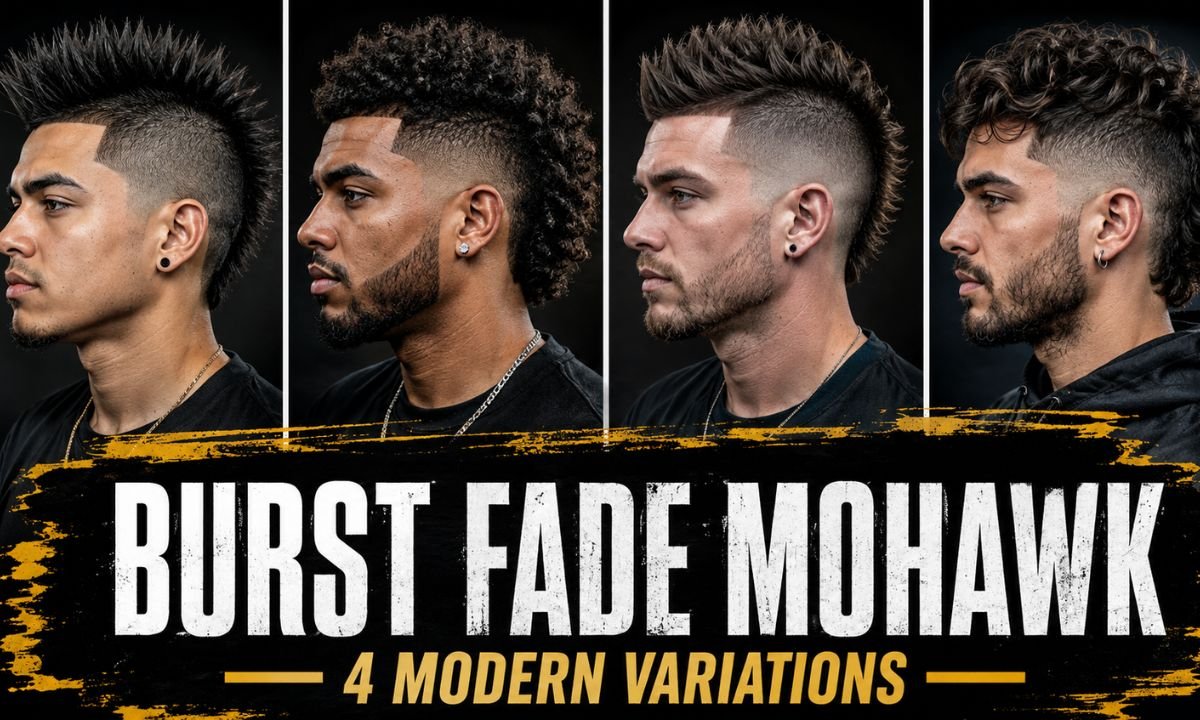
10. Mohawk Hard Part Burst Fade
A full central strip of length stays untouched while everything else fades away into a burst pattern around the ears. The hard part frames the strip on one or both sides, adding a graphic line that makes the whole shape feel intentional rather than accidental. This is the most attention-grabbing version on this list.
Best For: Confident, statement-making looks, coarser or curlier textures
Tell Your Barber: “High burst fade, full mohawk strip left at three to four inches, hard part tracing one edge.”
Maintenance: Requires daily styling product and a fade touch-up every 10 to 14 days.
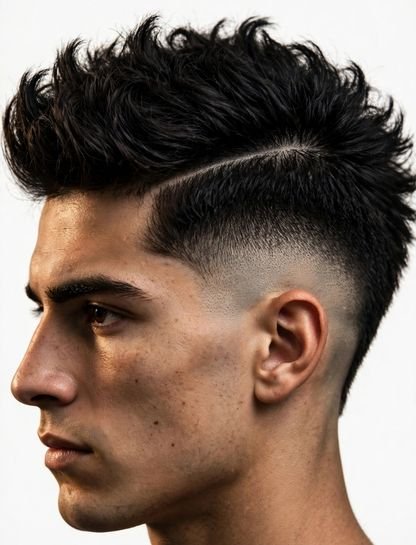
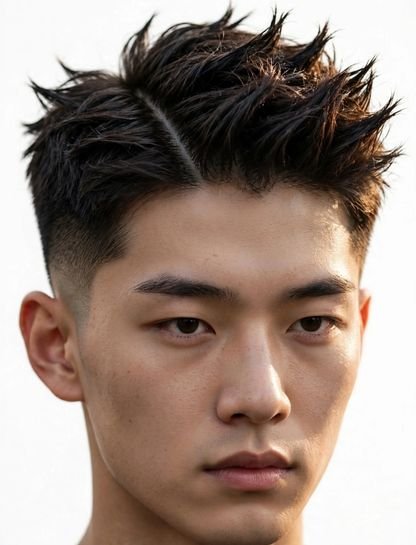
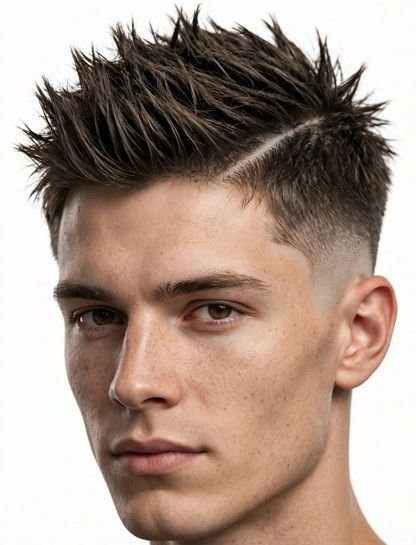
11. Spiky Top Hard Part Burst Fade
Short spikes across the top add energy and a slightly younger feel, while the fade and hard part keep everything else controlled. It’s an easy style to maintain because the spikes hide small amounts of regrowth, and the hard part still shows through clearly even at shorter lengths.
Best For: Teens and young adults, fine-to-medium straight hair
Tell Your Barber: “High burst fade, hard part on the side, top left short for spikes, around two inches.”
Maintenance: Trim every three weeks; a small amount of wax daily keeps spikes flexible, not stiff.
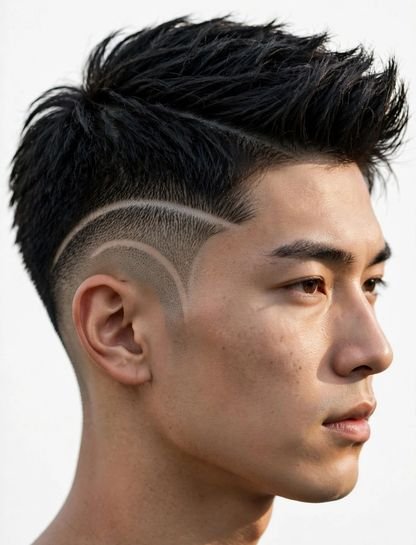
12. Razor Design Hard Part Burst Fade
This version adds a custom pattern, line, or shape carved into the fade area alongside the standard hard part. It’s the most personalized option here, since the design can be as simple as an extra line or as detailed as a barber wants to make it. It works best when discussed with your barber ahead of time using a reference photo.
Best For: Creative, individual styles, curly or coily hair that shows contrast well
Tell Your Barber: “Burst fade with hard part, plus a design line through the fade near the temple.”
Maintenance: Weekly touch-ups keep the design crisp, since fine lines grow out faster than the fade itself.
Curly, Wavy & Coily Styles
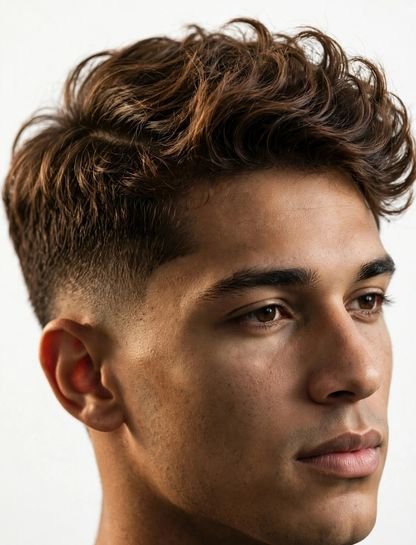
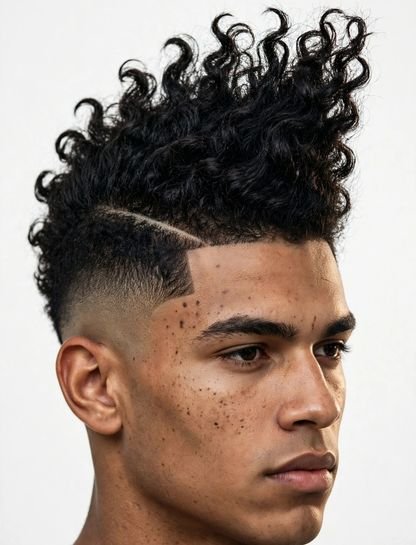
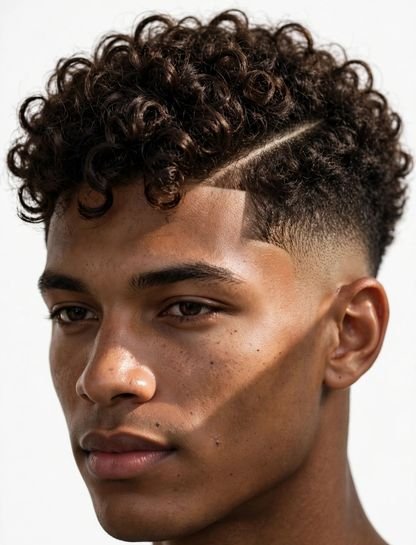
13. Curly Top Hard Part Burst Fade
Natural curls stay full and untouched on top while the sides curve into a tight burst fade. The hard part cuts a bold, unexpected line straight through the curl pattern, creating contrast that’s hard to get with any other combination. This style genuinely relies on natural texture, so no flat-ironing needed.
Best For: Naturally curly hair (3A–3C), round or oval faces
Tell Your Barber: “Low to mid burst fade, hard part shaved through the curls, leave three to four inches on top.”
Maintenance: Curl cream on damp hair daily; fade and part touch-up every two to three weeks.
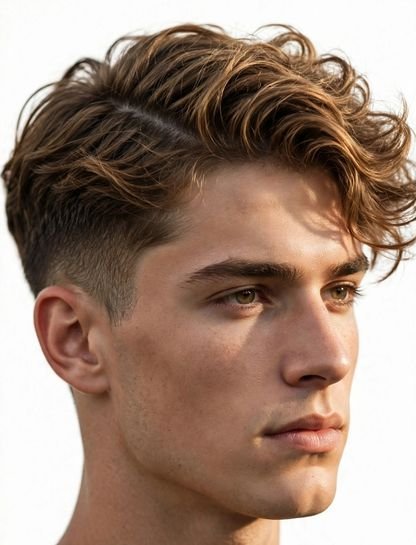
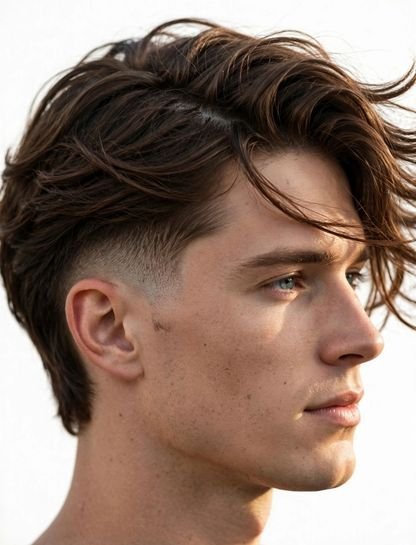
14. Wavy Flow Hard Part Burst Fade
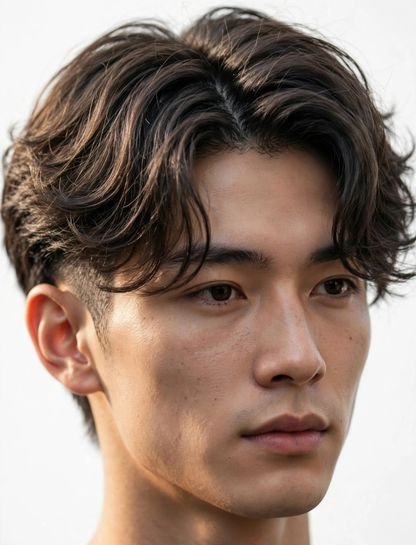
Waves are left long enough to move naturally, flowing back or to one side rather than being pushed into a rigid shape. The burst fade keeps the sides tidy while the hard part adds just enough structure so the style doesn’t look undone. Sea-salt spray brings out the wave pattern without weighing it down.
Best For: Wavy hair (2B–2C), relaxed everyday style
Tell Your Barber: “Mid burst fade, subtle hard part, leave the top four to five inches to flow naturally.”
Maintenance: Air-dry with light product; barber visit every three to four weeks since the length grows out gracefully.
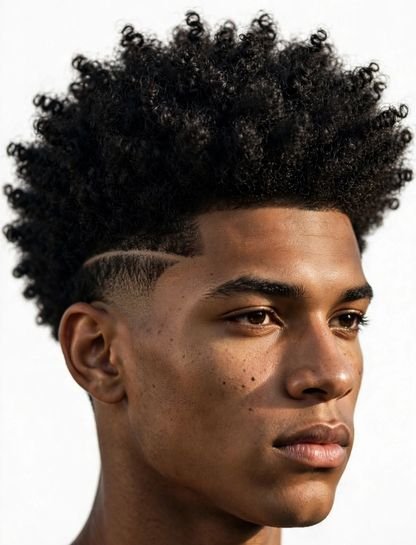
15. Afro Hard Part Burst Fade
A rounded, full afro shape sits on top while the sides taper into a burst fade around the ears. The hard part is shaved in cleanly at the side, standing out sharply against the density of the afro. This combination gives natural hair serious definition without changing its texture at all.
Best For: 4A–4B coily hair, men who want to keep natural texture prominent
Tell Your Barber: “Mid burst fade around the ears, hard part on one side, leave the afro shape untouched on top.”
Maintenance: Pick and shape every few days; fade touch-up every two weeks to keep the shape rounded.
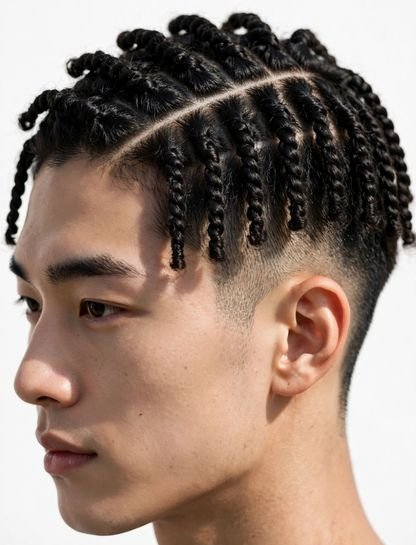
16. Coily Twist Hard Part Burst Fade
Small, defined twists replace a loose afro shape, giving the top a more compact, textured look. The burst fade tapers in around the ears while the hard part slices through the twists for a bold visual break. This version takes more time to style each twist but holds its shape longer between wash days.
Best For: 4B–4C hair, low daily styling once twists are set
Tell Your Barber: “Mid burst fade, hard part cut through the twist section, keep twists at three to four inches.”
Maintenance: Re-twist every one to two weeks; fade touch-up every two to three weeks.
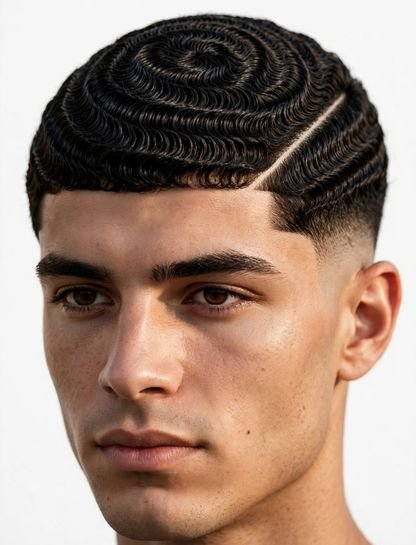
17. 360 Wave Hard Part Burst Fade
Short, brushed hair on top creates the signature wave pattern, while the burst fade and hard part frame it with clean structure. This style depends entirely on consistent brushing and a durag or wave cap, so it’s a bigger daily commitment than most cuts on this list.
Best For: Coarser, tightly curled hair cut short enough to brush into waves
Tell Your Barber: “Low burst fade, hard part on one side, top cut short and even for wave brushing.”
Maintenance: Brush two to three times daily; barber touch-up every two weeks to keep waves connecting into the fade.
Long & Flowing Styles
18. Long Flow Hard Part Burst Fade
The top is left noticeably longer, five to six inches, and finger-combed back into a relaxed, layered flow. The burst fade stays low so it doesn’t fight with all that length, and the hard part sits quietly near the front, mostly hidden once the hair falls over it. It suits men who want length without losing structure entirely.
Best For: Wavy or straight hair that holds length well, relaxed lifestyles
Tell Your Barber: “Low burst fade to a #2, hard part near the front hairline, leave five to six inches on top.”
Maintenance: Trim every five to six weeks; sea-salt spray keeps the flow from looking flat.
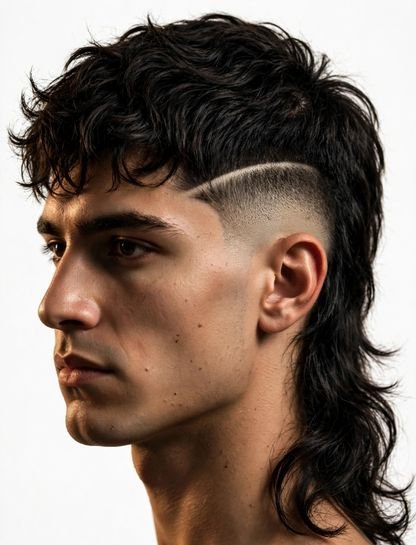
19. Burst Fade Mullet Hard Part
Short on the sides and top, longer at the back, this modern mullet gets a tailored edge from the added hard part. Instead of looking messy, the shaved line gives the whole silhouette a deliberate, styled feel. It’s a strong choice for anyone who wants a retro shape without the retro sloppiness.
Best For: Wavy-to-straight hair, men wanting a distinct silhouette
Tell Your Barber: “Mid burst fade around the ears, hard part on one side, keep three to four inches of length at the back.”
Maintenance: Trim the sides every three weeks; let the back grow out for six to eight weeks before shaping it.
20. Curtain Fringe Hard Part Burst Fade
A center part sends hair falling toward both sides of the face, curtain-style, while a hard part sits on one edge to keep half the look sharp and defined. The other side stays soft and natural. It’s a nice middle ground between a fully structured cut and something more effortless.
Best For: Wavy hair, square or angular faces that benefit from softened framing
Tell Your Barber: “Low burst fade, hard part on one side of a center part, leave four to five inches for a curtain fringe.”
Maintenance: Light mousse when styling; trim every four weeks to keep the fringe length even.
21. Messy Fringe Hard Part Burst Fade
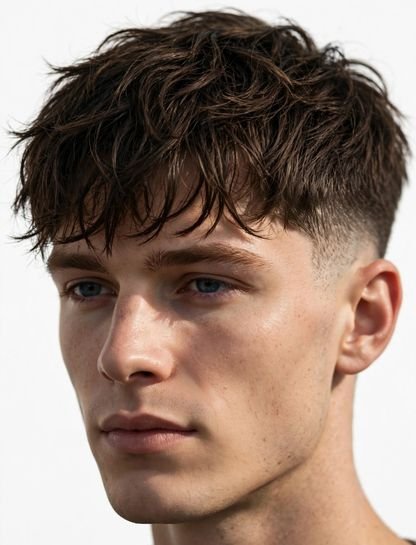
Texture and movement define this one, with a slightly undone fringe falling forward over the forehead. The hard part and burst fade underneath keep the whole thing from tipping into total disarray. It’s genuinely one of the fastest styles to get ready in the morning.
Best For: Straight-to-wavy hair, casual daily wear
Tell Your Barber: “Low burst fade, thin hard part, textured fringe on top around three inches, cut for movement not precision.”
Maintenance: Finger-style with texture paste daily; trim every three to four weeks.
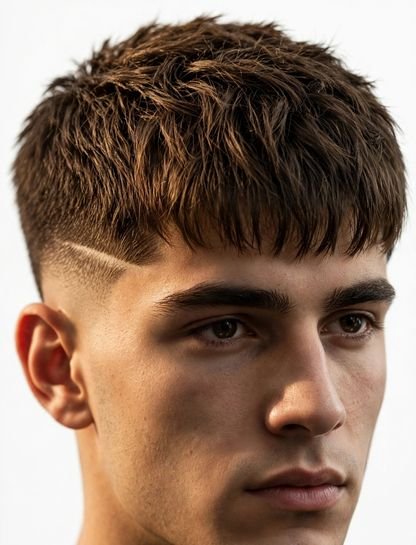
22. French Crop Hard Part Burst Fade
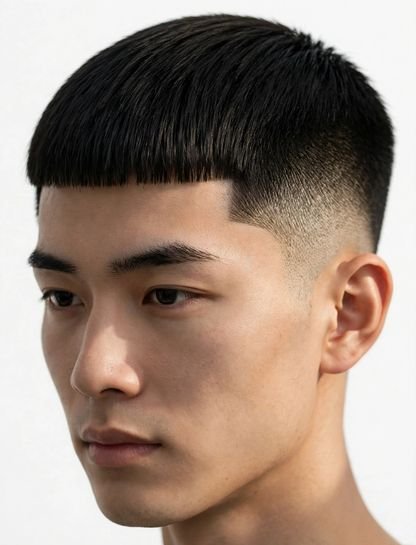
A short, blunt fringe sits above the brow line, paired with a tight burst fade and a crisp hard part running through the crop. It’s structured, low-fuss, and reads as fashion-forward without needing daily styling effort. Straight hair gives the cleanest fringe line here.
Best For: Straight or slightly textured hair, minimalist styling routines
Tell Your Barber: “Low burst fade, hard part above the temple, French crop fringe cut blunt around one and a half inches.”
Maintenance: Trim every two to three weeks to keep the fringe from growing past the brow.
Specialty & Hair-Type Focused Styles
23. Thick Hair Hard Part Burst Fade
Dense, heavy hair gets real relief here. The burst fade strips bulk from the sides, while the hard part visually breaks up the density on top so the whole cut looks intentional rather than overgrown. This is less about a specific silhouette and more about making thick hair genuinely manageable day to day.
Best For: Thick, dense hair of any texture, men tired of daily bulk
Tell Your Barber: “Mid burst fade to remove weight from the sides, hard part cut in, leave the top full but thinned out.”
Maintenance: Trim every three weeks; lightweight cream prevents the top from feeling heavy by midday.
24. Fine Hair Hard Part Burst Fade
Fine or thinning hair needs a different approach than thick hair, and this version accounts for that. The fade stays low to avoid exposing too much scalp, while the hard part adds visual structure that fine hair often lacks on its own. Texture powder at the roots does most of the heavy lifting here.
Best For: Fine or thinning hair, men wanting a fuller-looking finish
Tell Your Barber: “Low burst fade only, hard part kept thin, don’t take too much length off the top.”
Maintenance: Texture powder daily at the roots; trim every four weeks since fine hair shows growth less obviously.
25. Beard Blend Hard Part Burst Fade
This one connects the haircut directly into a full beard, with the burst fade tapering seamlessly down into the beard line instead of stopping at the jaw. The hard part becomes a focal point up top that balances all that fullness below. It only works if the beard is kept trimmed and well-maintained alongside the haircut.
Best For: Men with full or medium beards, any hair texture
Tell Your Barber: “Burst fade blended straight into my beard line, hard part on top, keep the transition seamless at the jaw.”
Maintenance: Beard oil daily; get the fade-to-beard blend refreshed every two weeks so the line doesn’t grow uneven.
How to Ask Your Barber for This Cut
Vague requests lead to disappointing results. Instead of showing up and saying “burst fade with a hard part,” give your barber three specific details: fade height (low, mid, or high), top length in inches, and which side you want the hard part on. Bring a reference photo if you have one, and mention your hair type up front — curly, wavy, straight, coily — since that changes how the barber approaches blending.
If you’ve never had a hard part before, ask the barber to keep it thin on the first visit. A wide shaved line is much harder to grow out gracefully than a narrow one.
Maintenance & Aftercare Basics
The fade and the hard part don’t grow out at the same rate, and treating them the same way is the most common upkeep mistake.
Task
Frequency
Why It Matters
Barber touch-up (fade)
Every 2–3 weeks
Fades lose their sharp transition first
Hard part refresh
Every 1–2 weeks
The shaved line grows in fastest of all
Washing
2–3 times per week
Over-washing dries out both scalp and top hair
Product on top
Daily
Keeps texture and hold consistent
Product on faded sides
Avoid
Product buildup makes short hair look dull and clogged
A few home habits go a long way between visits. Keep a small pair of detail clippers around if you’re comfortable using them — a light pass along the hard part every few days keeps it from blurring into stubble. Moisturize the faded areas with a light, alcohol-free balm rather than heavy oils, which tend to sit on short hair and look greasy instead of healthy.
Choosing by Face Shape and Hair Type
Not every version on this list suits every head shape. As a general rule:
Round faces benefit from higher fades and lifted tops, since both add visual length.
Square faces look better with lower or mid fades and softer top styles that round off strong angles.
Oval faces can wear almost anything on this list without issue.
Long or rectangular faces do best with fuller tops and lower fades, avoiding extra height.
For hair type, straight hair shows the sharpest lines and works well with almost every style here. Curly and coily hair adds natural texture that makes the hard part contrast even more dramatically. Thick hair benefits most from styles that remove bulk, while fine hair needs styles that add the appearance of volume rather than take more length away.
Frequently Asked Questions
What is a burst fade hard part haircut?
It’s a haircut combining a curved, ear-hugging fade with a thin, razor-shaved part line for extra definition.
How often does the hard part need to be touched up?
Most men need the hard part refreshed every one to two weeks, faster than the fade itself.
Can curly or coily hair get a hard part?
Yes — a hard part actually shows up more dramatically against curly or coily texture than against straight hair.
Is a burst fade hard part appropriate for work?
Low and mid fade versions with a thin hard part read as professional and are appropriate for most offices.
Can I maintain the hard part myself at home?
Light touch-ups with detail clippers are doable at home, but a barber should handle the initial line and any reshaping.
Conclusion
The burst fade hard part earns its popularity honestly — it adapts to nearly any hair type, face shape, and lifestyle without losing its sharp, put-together edge. Whether you want something office-safe like a low fade with a subtle part, or something bolder like a mohawk with a razor design, there’s a version on this list built for you.
Pick the style that matches your hair texture and maintenance tolerance, describe it clearly to your barber using the details above, and commit to the touch-up schedule that keeps it looking as fresh as day one.
Hi, I’m Oliver Bennett. I’m passionate about men’s hairstyles and love exploring modern cuts that are easy to understand and easy to ask your barber for. On this website, I share simple guides on styles like burst fades, mullets, curtain cuts, tapers, and other trending men’s hairstyles. My goal is to help you find a haircut that matches your hair type, face shape, and personal style.

2 thought on “Best Burst Fade Hard Part Haircut: 25 Standout Styles”