HairTop 15 Modern Curtain Mullet Styles to Try in 2026
Top 15 Modern Curtain Mullet Styles to Try in 2026
August 31, 2026
/
3 Comments
/
Oliver Bennett
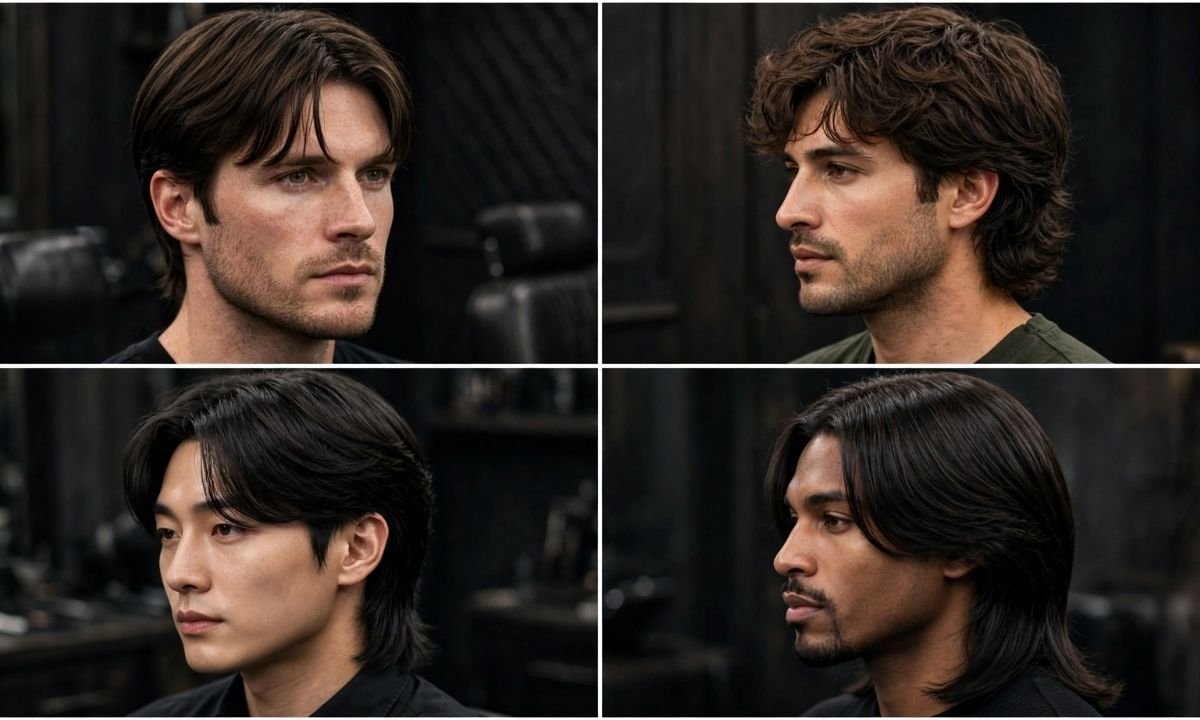
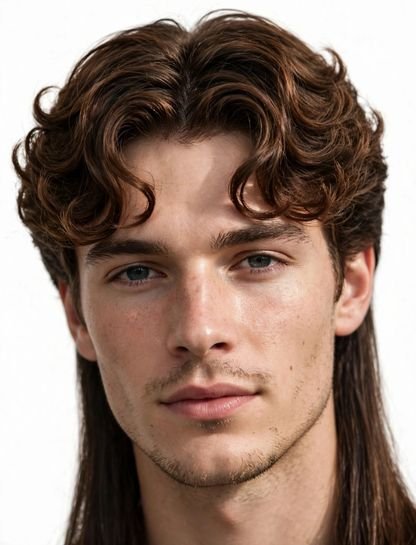
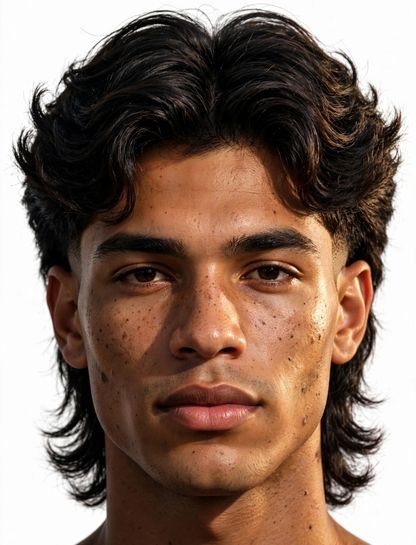
Ever wondered why one haircut keeps showing up on every K-pop stage and street-style feed? The modern curtain mullet isn’t a trend anymore — it’s the default. One cut, dozens of versions, and almost every face shape can wear it. Here’s the full breakdown, style by style.
A modern curtain mullet blends three things: soft curtain bangs at the front, heavy texture through the crown, and length left in the back. The sides can be faded, scissored, or undercut depending on the version.
Unlike the boxy 80s mullet, this one has no hard lines. Every section blends into the next, which is why it reads as polished rather than retro. That soft transition is the whole point of the “modern” label.
The style became a global reference point largely because of K-pop idols, especially BTS’s V, who popularized the off-center curtain fringe paired with a tapered back. From there, barbers built dozens of spin-offs — some sharper, some shaggier, some fully undercut.
Below are the 15 most requested variations, what makes each one different, and exactly how to ask for it in the chair.
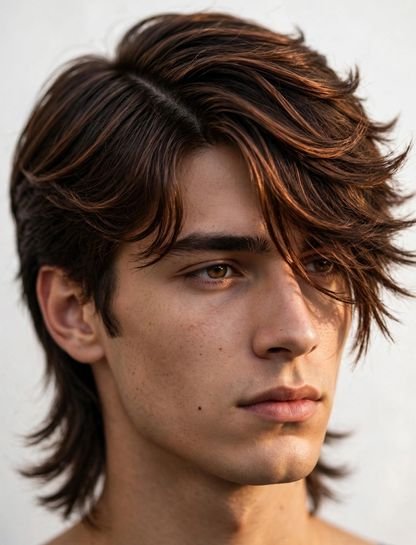
1. Low Taper Fade Curtain Mullet
Low Taper Fade Curtain Mullet
This is the most barber-friendly version of the cut. The sides taper gradually from the ear down, never hitting bare skin, while the crown stays long and heavily layered. The front falls as a soft curtain that sits just above or at the eyebrows.
Because the fade is subtle, this version reads as office-appropriate rather than edgy. It works well on straight or slightly wavy hair, and the tapered back keeps the whole silhouette clean instead of bulky.
Best For: Round or square faces that want softness without a bold undercut.
Tell Your Barber: “Low taper fade starting above the ear, keep the crown long and layered, and curtain fringe at brow level.”
Maintenance: Fade touch-up every 3–4 weeks; bangs trimmed every 2–3 weeks.
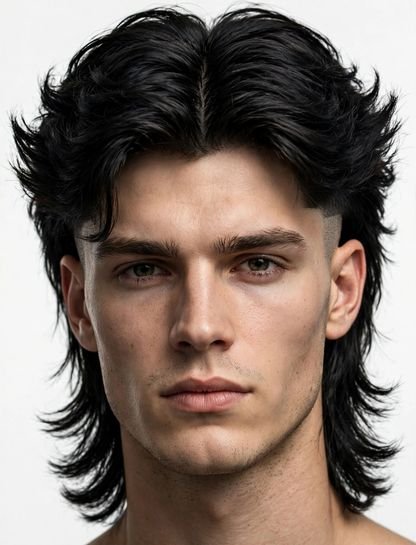
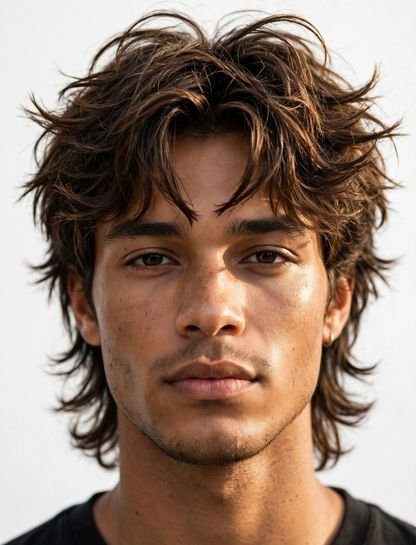
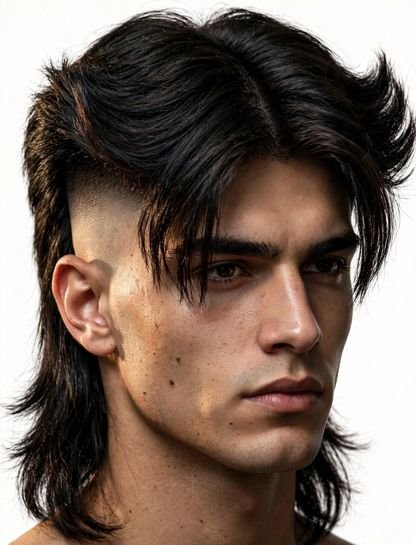
2. Curtain Undercut Mullet
Curtain Undercut Mullet
This one goes for contrast instead of blend. The sides and back are shaved close with a single-guard clipper cut, disconnected sharply from a long top section that can run four to five inches. There’s no gradual fade — it’s a hard stop.
The drama comes from that contrast: short, tight sides against a heavy, flowing fringe. It suits thicker hair that can hold volume on top without going flat, and it’s the boldest option on this list for someone who wants people to notice the cut.
Best For: Thick or coarse hair and anyone who wants a bold, high-contrast look.
Tell Your Barber: “Disconnected undercut, one guard on the sides, no fade, and leave the top long for a curtain part.”
Maintenance: Sides need a refresh every 2–3 weeks to keep the disconnection crisp.
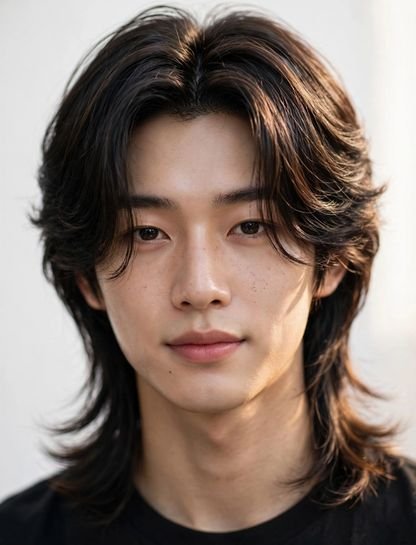
3. Two-Block Curtain Mullet
Two-Block Curtain Mullet
Borrowed from Korean barbershop terminology, the two-block cut hides an undercut underneath a longer top layer. From the outside, you only see flowing hair — the shaved section is tucked beneath it, invisible until the top is lifted.
This makes it a stealth option: it looks soft and full day to day, but underneath it’s actually quite short and low-maintenance on the sides. The front usually falls in a center or 60/40 part that grazes the cheekbones.
Best For: People who want the volume of long hair but the ease of short sides underneath.
Tell Your Barber: “Two-block cut, hidden undercut with a two-guard underneath, keep the top long enough to cover it.”
Maintenance: Hidden sides can go 4–5 weeks between trims since they’re not visible.
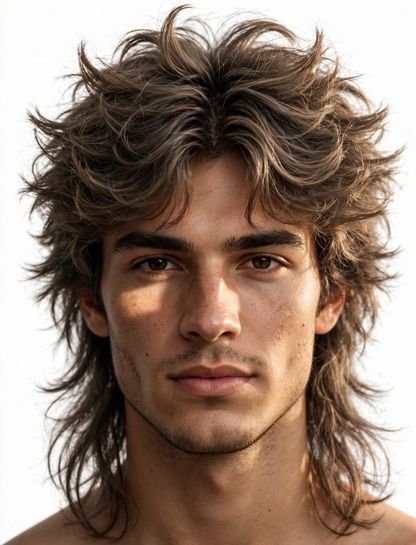
4. Asymmetric Leaf Cut Mullet
Asymmetric Leaf Cut Mullet
Named for its leaf-shaped fringe, this style uses a 60/40 off-center part instead of a straight middle split. The bangs graduate in a U-shape — shortest near the part, longer as they move toward the temples — which creates a natural side-swept flow.
It’s one of the more face-flattering options because the asymmetry breaks up a wide forehead or square jaw. Point-cutting is essential here, especially on straight Asian hair, to avoid a blunt, helmet-like edge.
Best For: Wide foreheads or angular jawlines that benefit from asymmetric framing.
Tell Your Barber: “60/40 part, U-shaped graduated fringe, and point-cut the ends so nothing looks blunt.”
Maintenance: Trim the fringe every 2–3 weeks to keep the graduation clean as it grows.
5. Textured Fringe Curtain Mullet
Textured Fringe Curtain Mullet
This version leans entirely on texture rather than length or fade drama. The fringe sits shorter — around two inches at the front — and is razored or point-cut so it feathers instead of hanging in one solid piece.
The crown gets the same treatment: heavy internal layering that removes bulk and creates a piecey, almost windswept look. It’s a low-commitment way to try the curtain mullet without a dramatic length change.
Best For: First-timers who want the look without a big commitment to length.
Tell Your Barber: “Short textured fringe, about two inches, point-cut throughout for a piecey finish.”
Maintenance: Trim every 3 weeks; texture grows out fast and can look shapeless past that.
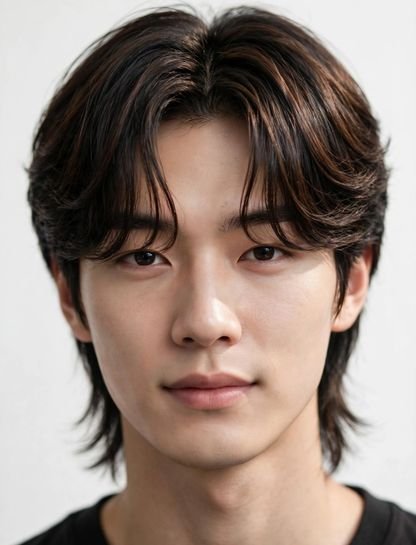
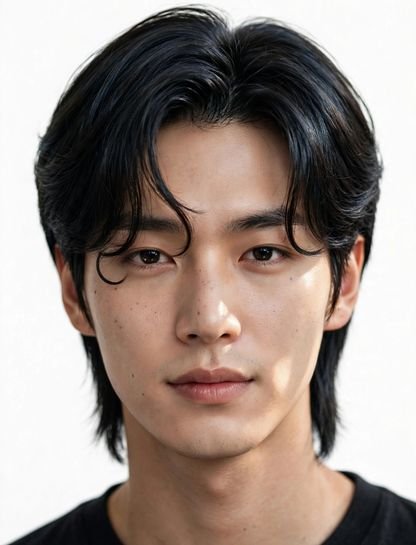
6. Classic Korean Curtain Mullet
Classic Korean Curtain Mullet
This is the original template most other versions riff on. Sides are scissor-cut, not clippered, so they hug the ears with soft length instead of a sharp fade. The back runs past the collar, and the fringe sits at cheekbone length.
Because everything is scissor-cut, the transitions are naturally soft — there’s no clipper line to blend at all. It suits straight hair particularly well and gives a rounder, gentler silhouette than the fade-based versions.
Best For: Straight hair and anyone who prefers a softer, non-fade silhouette.
Tell Your Barber: “Scissor-cut sides only, no clippers, back past the collar, curtain fringe to the cheekbones.”
Maintenance: Back trim every 6–8 weeks; fringe every 3–4 weeks.
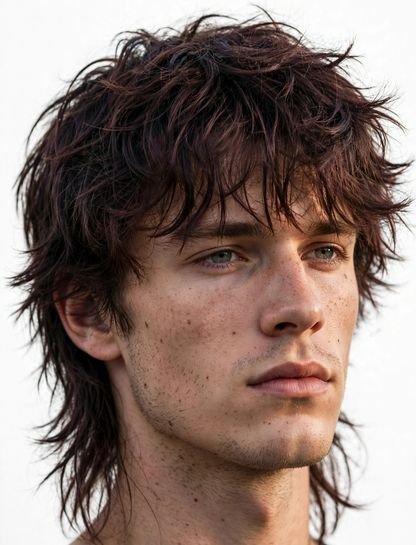
The wolf mullet borrows heavy shag-style layering and grafts it onto mullet length. Volume gets distributed in a triangular shape from the crown outward, rather than sitting flat, and the ends are point-cut for a shaggy, undone finish.
Sides stay low taper or scissored — never a hard fade — because the whole point is softness and movement. It works best on wavy or curly textures, which naturally support the tousled, “just rolled out of bed” effect this cut is going for.
Best For: Wavy or curly hair that already has natural volume to work with.
Tell Your Barber: “Wolf mullet, heavy internal layers for shag volume, curtain fringe, feathered ends at the back.”
Maintenance: Loose shape means trims can stretch to 6 weeks without losing the look.
8. Curtain Bang Perm Mullet
Curtain Bang Perm Mullet
For straight hair that won’t hold movement on its own, a light perm solves the problem. The crown and fringe get a soft S-curl or C-curl perm, while the back stays straight and long, creating contrast between the wavy top and sleek length.
This version needs almost no daily styling — the perm does the work. It’s a strong option for anyone tired of blow-drying every morning to fake volume that falls flat by noon.
Best For: Fine or straight hair that struggles to hold curtain-bang shape naturally.
Tell Your Barber: “Light wolf perm on the crown and fringe only; keep the back straight and uncurled.”
Maintenance: Perm lasts 3–5 months; trim fringe every 3 weeks to maintain shape between perms.
9. Burst Fade Curtain Mullet
Burst Fade Curtain Mullet
A burst fade curves around the ear instead of running in a straight line down the sideburn, which gives it a rounder, more contained look than a full taper. The rest of the sides stay untouched, so the fade appears only in that pocket around the ear.
Paired with a long, disconnected top, this creates sharp contrast in one specific spot rather than across the whole head. It’s a good middle ground between the subtlety of a low taper and the boldness of a full undercut.
Best For: Anyone who wants localized contrast without committing to a full fade.
Tell Your Barber: “Burst fade around the ears only, leave the rest of the sides longer, and have a long, disconnected top.”
Maintenance: The burst area needs refreshing every 2–3 weeks to stay sharp.
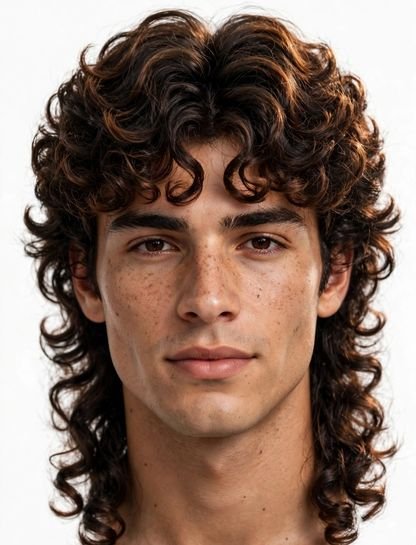
10. Curly Wolf Mullet
Curly Wolf Mullet
Built specifically for curl patterns in the 3A–3C range, this version skips clippers almost entirely. Sides are scissored to blend with the curl, the crown holds rounded, bouncy volume, and the back is left long enough to show natural curl definition.
Diffusing and scrunching replace blow-drying here, since brushing curly hair kills the curl pattern the whole cut depends on. The result is full, springy, and noticeably different from every straight-hair version on this list.
Best For: Naturally curly hair, types 3A through 3C.
Tell Your Barber: “Curly wolf mullet, scissor-only sides to preserve curl, cut it dry so you can see the curl fall.”
Maintenance: Trim every 6–8 weeks; curls hide growth longer than straight hair does.
11. Comma Hair Curtain Mullet
Comma Hair Curtain Mullet
This one gets its name from the comma-shaped curl at the temples — the fringe pieces curl inward toward the eyes instead of falling straight down or sweeping outward. It’s a distinctly Korean styling technique, usually finished with a round brush.
The rest of the cut stays fairly standard: low taper or scissored sides, length to the collar in back. The comma shape is really a styling detail more than a cutting one, so it can be added to several other versions on this list.
Best For: Oval or heart-shaped faces that suit inward-curling fringe.
Tell Your Barber: “Standard curtain mullet, five inches on top, but leave enough fringe length for a comma curl at the temples.”
Maintenance: Needs a round brush and blow-dryer most mornings to reset the curl.
12. Grunge Curtain Mullet (90s Revival)
Grunge Curtain Mullet (90s Revival)
This version deliberately roughs up the polish. Layers are choppy and uneven on purpose, the back is left long and wispy, and the sides are simply grown out and scissored rather than tightly cut. Nothing about it looks freshly barbered.
Styling leans into that messiness — sea salt spray, air-drying, finger-styling instead of a brush. It’s the least structured cut on this list, which makes it forgiving of slightly overgrown length between trims.
Best For: Low-maintenance routines and anyone drawn to a lived-in, undone look.
Tell Your Barber: “Choppy layers throughout, don’t over-clean the sides, back long and wispy — nothing too polished.”
Maintenance: Very forgiving; a trim every 8 weeks won’t hurt the look.
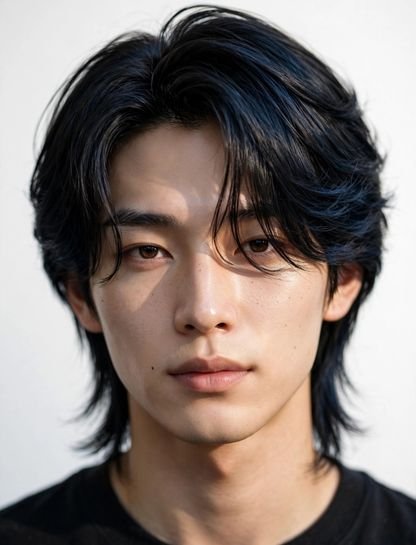
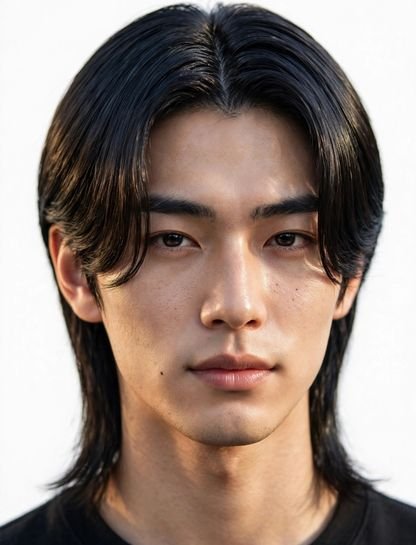
13. Glossy Sleek Curtain Mullet
Glossy Sleek Curtain Mullet
Where the grunge version rejects polish, this one is built entirely around it. Hair is cut smooth and layered minimally, then styled with a finishing oil or cream and blow-dried flat for a glassy, reflective finish — closer to a K-drama lead than a stage performer.
It needs healthy, low-porosity hair to really shine, since the whole effect depends on light bouncing off smooth strands. Curly or very dry hair will need extra smoothing products to pull this one off convincingly.
Best For: Straight, healthy hair with good natural shine.
Tell Your Barber: “Smooth curtain mullet, minimal layering, sleek finish — I’ll style it glossy, not textured.”
Maintenance: Trim every 4 weeks; use a smoothing serum to maintain the glass-like finish between cuts.
14. Skin Fade Curtain Mullet
Skin Fade Curtain Mullet
The boldest fade option here, this version takes the sides all the way down to bare skin before blending into a long, heavy top. It’s the modern-mullet answer to a barbershop skin fade — sharp, high-contrast, and unmistakably intentional.
Because there’s zero length on the sides to fall back on, this one demands regular upkeep, or the fade line grows out fast and looks messy. It pairs especially well with the disconnected or two-block top styles for maximum contrast.
Best For: Anyone confident with a high-maintenance, high-impact fade.
Tell Your Barber: “Skin fade on the sides, blend up to a long, heavy top — keep the fade line sharp.”
Maintenance: Needs a fade refresh every 2 weeks to stay clean.
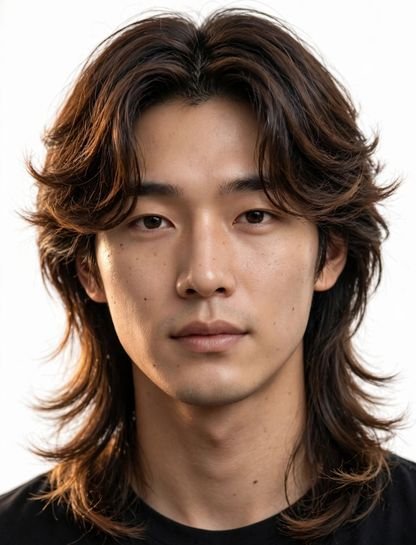
15. Long Layered Curtain Mullet
Long Layered Curtain Mullet
This is the softest, most grown-out version of the cut — closer to long hair with mullet structure than a short style with length added. The back can run well past the collar, the crown is layered lightly rather than heavily, and the fringe sits long enough to tuck behind the ears.
It suits anyone growing out a shorter curtain mullet who doesn’t want to lose the shape along the way. Styling is minimal — mostly air-drying with a light texturizing spray to keep it from looking flat.
Best For: Growing out a shorter cut, or anyone who prefers longer hair overall.
Tell Your Barber: “Keep the length long throughout, light layering only, curtain fringe long enough to tuck behind the ears.”
Maintenance: Minimal — a trim every 8–10 weeks just to clean up split ends.
How to Pick the Right Version for You
Not every curtain mullet suits every face or hair type. A few quick rules of thumb make the choice easier:
Your Situation
Best-Fit Styles
Straight, thick hair
Two-Block, Skin Fade, Glossy Sleek
Wavy or curly hair
Wolf Cut Hybrid, Curly Wolf Mullet
Round or square face
Low Taper Fade, Asymmetric Leaf Cut
Low styling time available
Grunge, Long Layered, Wolf Cut Hybrid
First time trying the cut
Textured Fringe, Low Taper Fade
Wants maximum drama
Curtain Undercut, Skin Fade
Styling Tips That Apply Across Every Version
A few habits make almost any curtain mullet look better, regardless of which variation you choose.
Always style on damp, not soaking, hair. Too much water weighs the fringe down and kills the volume every version of this cut depends on. A light mist is enough for most textures.
Apply product to your palms first, then work it through — never straight from the tube onto hair. This avoids the greasy, clumped look that ruins an otherwise clean cut, especially on lighter clays and pomades.
Keep products off your roots if you’re trying to hold volume. Root-level product weighs hair down; apply it mid-shaft to ends instead and let the roots stay light and lifted.
Frequently Asked Questions
What is a modern curtain mullet?
It’s a haircut that combines curtain bangs at the front, a textured or layered crown, and length left in the back, with sides that range from faded to scissored depending on the version.
Is a curtain mullet good for straight Asian hair?
Yes, but point-cutting is essential — a blunt cut on straight hair looks blocky, while point-cutting removes weight and adds natural movement.
How often do I need to trim a curtain mullet?
Fringe usually needs a trim every 2–4 weeks, while the back and sides can typically go 4–8 weeks depending on the style.
Can I get a curtain mullet without a perm?
Absolutely — a perm only helps if your hair is very straight and won’t hold curtain-bang movement on its own; most versions work fine without one.
What’s the difference between a curtain mullet and a wolf cut?
A curtain mullet is defined mainly by its fringe, while a wolf cut is defined by heavy, shaggy layering throughout — the wolf mullet hybrid on this list combines both.
Final Thoughts
The modern curtain mullet has stuck around because it isn’t really one haircut — it’s a framework that adapts to almost any face shape, hair texture, or maintenance schedule. Whether you want the subtlety of a low taper fade, the drama of a full undercut, or the low-effort charm of a grown-out grunge version, there’s a variation on this list built for you.
Bring a reference photo, use the exact barber language above, and you’ll walk out with a cut that actually matches what you asked for.
Hi, I’m Oliver Bennett. I’m passionate about men’s hairstyles and love exploring modern cuts that are easy to understand and easy to ask your barber for. On this website, I share simple guides on styles like burst fades, mullets, curtain cuts, tapers, and other trending men’s hairstyles. My goal is to help you find a haircut that matches your hair type, face shape, and personal style.

3 thought on “Top 15 Modern Curtain Mullet Styles to Try in 2026”