Long on top, short at the sides, and blended so smoothly you barely notice the transition. This one Korean-born haircut has quietly taken over barbershops everywhere. Here’s every version worth screenshotting before your next appointment.
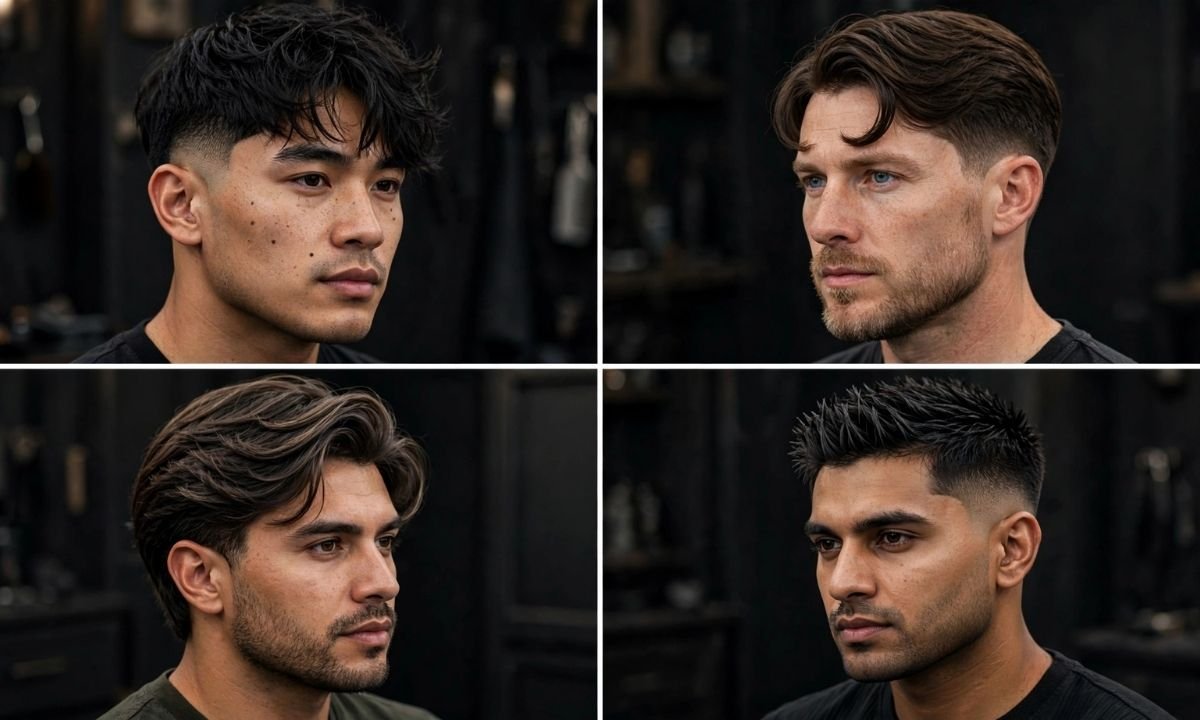
The two block haircut started as a strict two-length style: a full, heavy top and a buzzed underneath, with almost no blending between them. The taper fade version softens that contrast, turning a hard line into a gradual gradient that still keeps the signature “block” of length on top.
Two Block vs Two Block Fade
The original two block relies on a sharp disconnect — you can see exactly where the long top ends and the short sides begin. A two block taper fade replaces that hard edge with a blended gradient, so the length rolls down gradually instead of stopping abruptly.
Most men now ask for the faded version because it grows out more gracefully and looks intentional at every stage between trims.
Why It’s Trending Worldwide
K-pop idols and K-drama leads popularized this cut outside Korea, but barbers everywhere have since adapted it to different hair textures and color trends. It photographs well, styles quickly once you know the routine, and works on straight, wavy, curly, and permed hair alike.
That combination of low daily effort and high visual payoff is why it keeps showing up across style boards and short-form video trends.
How the Two Block Taper Fade Is Structured
Three variables define every version of this cut: top length, fade height, and fringe shape. Understanding these makes it much easier to pick a style and describe it accurately.
Top Length Options
Short (2–3 inches): Easiest to maintain, works for spiky or textured crops.
Medium (3–4 inches): The most common length, flexible enough for several fringe styles.
Long (4–6+ inches): Needed for comma hair, curtain bangs, or a wolf-cut shape.
Fade Height Options
Low fade: Starts just above the ear, subtle and office-friendly.
Mid fade: Starts around the temple, the most balanced and popular choice.
High fade: Climbs toward the crown, bold and high-contrast.
Fringe Styles That Define the Look
The fringe is what makes each version feel different from the last. A straight fringe reads clean and simple. A comma fringe curls into a soft C-shape at one side, the signature Korean idol look. Curtain bangs part in the middle and frame both sides of the face. Textured or messy fringes stay piecey and undone on purpose.
Top 15 Two Block Taper Fade Styles
Each style below explains the shape, color, and texture that define it, plus what to actually say in the chair. No two entries repeat the same length, fade height, or finish.
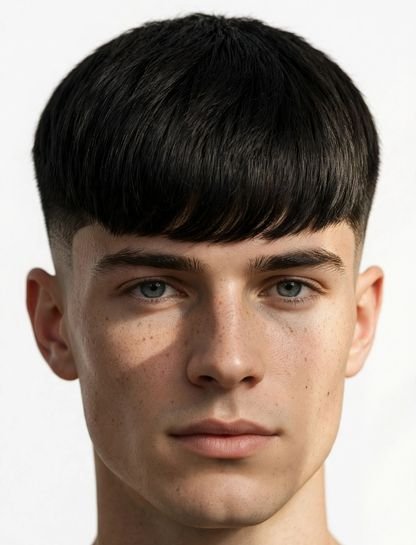
1. Jet-Black Classic Two Block Taper Fade
Jet-Black Classic Two Block Taper Fade
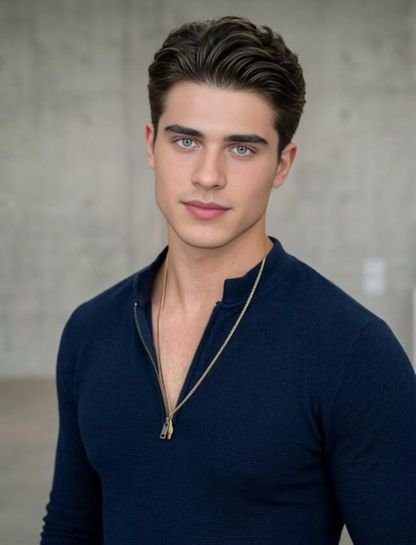
This is the benchmark version most people picture when they hear “two block.” The top sits full and rounded, combed forward with just enough length to soften the hairline, while the sides fade low and clean. Solid jet-black color keeps the whole shape reading as sharp and uniform rather than broken up by tone. It’s the easiest two-block style to maintain because there’s no color upkeep involved, just the cut itself.
Best For: Straight hair, oval faces, first-time two block wearers
Tell Your Barber: “Two block taper fade, low fade starting above the ear, top left full at four inches, comb it forward.”
Maintenance: Trim every four weeks; the low fade grows out slowly and forgivingly.
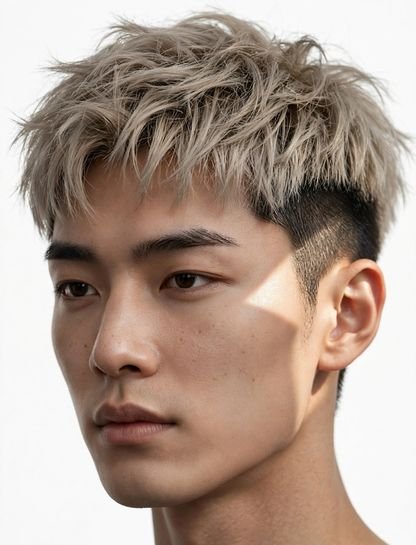
2. Ash-Blonde Textured Two Block Crop
Ash-Blonde Textured Two Block Crop
Short, choppy layers replace the smooth classic top here, giving the whole style a piecey, lived-in look. Lightening the top to ash-blonde while keeping the sides their natural dark shade creates real separation between the two block sections. Texture is the whole point — this isn’t a cut you comb flat; it’s one you rough up with your fingers. Wavy or straight hair with some natural body handles the crop shape best.
Best For: Round faces, wavy or straight hair, anyone wanting a bolder color statement
Tell Your Barber: “Two block with a mid fade, top textured and cropped short around two and a half inches, lighten it to ash-blonde.”
Maintenance: Trim every three weeks; book a root touch-up every five to six weeks to manage regrowth.
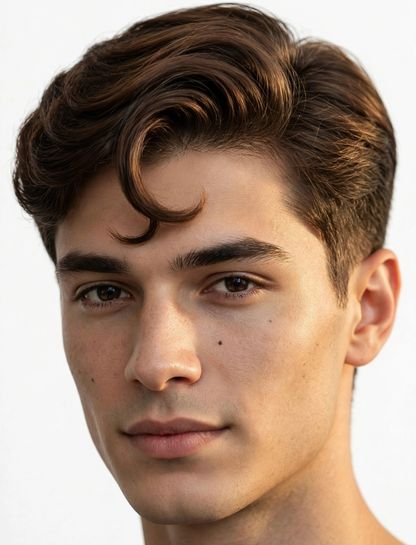
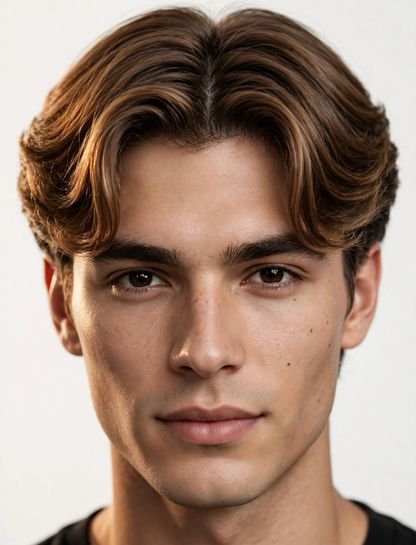
3. Chocolate-Brown Comma Two Block
Chocolate-Brown Comma Two Block
The comma fringe is arguably the most recognizable two block variation — a soft, C-shaped curve that sweeps across the forehead instead of falling straight down. Keeping the color in a warm chocolate-brown range gives the curve extra depth without looking artificial. This style needs real length up front, more than most two-block cuts, so the fringe has enough weight to hold its curl. It leans soft and romantic rather than sharp.
Best For: Straight to slightly wavy hair, square or angular faces that benefit from a softer frame
Tell Your Barber: “Two block taper fade, low fade, leave five to six inches in the front for a comma-style fringe.”
Maintenance: Blow-dry the fringe into shape daily; trim every four to five weeks to keep the curve consistent.
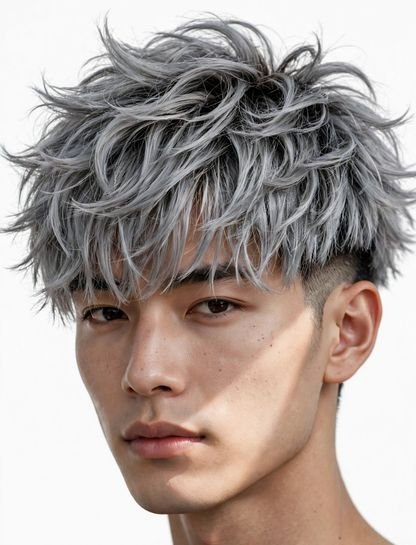
4. Silver-Grey Wolf-Cut Two Block
Silver-Grey Wolf-Cut Two Block
This is the shaggiest, most layered entry on the list. Heavy layering through the crown and fringe gives it a triangular, undone silhouette that moves a lot more than a standard two block top. Silver-grey color, whether natural or dyed, plays up all that movement and catches light differently than a flat, single-tone top would. It needs the most length of any style here and rewards hair with natural wave or body.
Best For: Thick or wavy hair, men who want a bold, textured statement look
Tell Your Barber: “Two block with a mid fade, heavily layered wolf cut on top around six inches, color it silver-grey with darker roots.”
Maintenance: Trim every five to six weeks to preserve the layering; scrunch in texture spray daily.
5. Caramel Curtain-Bang Two Block
Caramel Curtain-Bang Two Block
A center part sends hair falling toward both sides of the face in a soft, symmetrical curtain shape. Caramel-brown coloring warms up the whole look and adds dimension to the fringe where the light hits it. The two-block base underneath keeps the sides tidy so the curtain fringe stays the clear focal point instead of competing with bulk at the sides. It’s a retro-leaning style that’s found new life on younger faces.
Best For: Wavy hair, heart or square face shapes wanting softer framing
Tell Your Barber: “Two block taper fade, mid fade on the sides, center-parted curtain fringe around five inches, add caramel highlights.”
Maintenance: Style with a center part daily using light cream; trim every four weeks to keep both sides even.
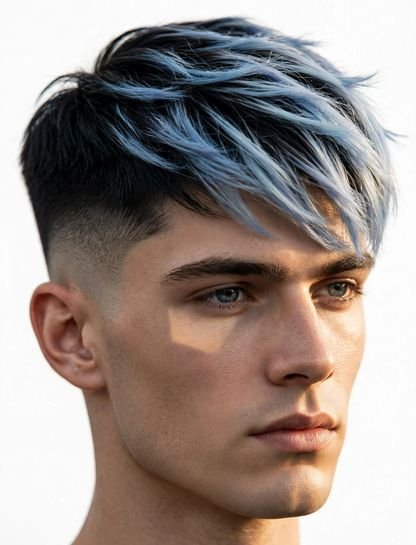
6. Pastel Blue-Tip Two Block
Pastel Blue-Tip Two Block
Color placement does most of the work in this style. A dark base stays natural or black on the sides and underneath the top, while the visible top section gets dyed pastel blue, creating a striking two-tone effect only visible from certain angles. The cut itself stays fairly standard — a two-block taper fade with a forward-swept top — but the color makes it read as far more creative and streetwear-inspired.
Best For: Straight or wavy hair, anyone wanting a statement color without committing their whole head
Tell Your Barber: “Two block with a mid-to-high fade, top left at four inches, dye just the top section pastel blue.”
Maintenance: Use color-safe shampoo to slow fading; trim every three weeks and expect a color refresh every six to eight weeks.
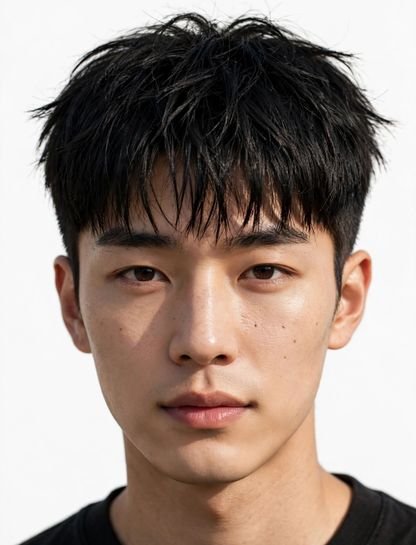
7. Natural-Black Textured Fringe Two Block
Natural-Black Textured Fringe Two Block
This version skips color entirely and leans on texture and cut work to stand out. The fringe is cut with irregular, piecey ends rather than a blunt line, giving it a casual, slightly undone finish even right after a fresh cut. Keeping the natural black color intact makes this the lowest-commitment style on the list — no touch-ups, no bleaching, just a clean two-block shape with personality built into the scissor work.
Best For: Any hair type, men who want texture without color maintenance
Tell Your Barber: “Two block taper fade, low fade, point-cut the fringe for texture, keep my natural color.”
Maintenance: Trim every three to four weeks; a small amount of texture paste daily keeps the piecey ends defined.
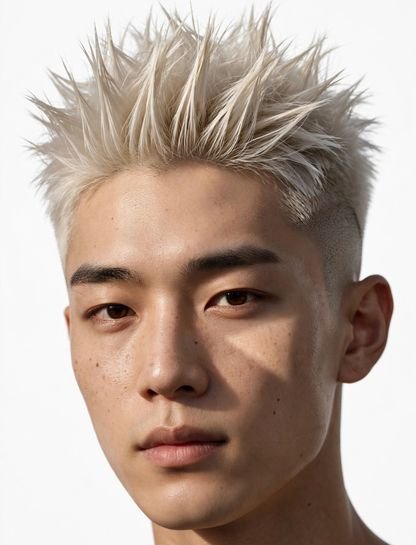
8. Platinum Spiky Two Block
Platinum Spiky Two Block
Short spikes stand up across the top instead of falling forward, giving this style noticeably more height and energy than the softer two-block variations. Full platinum-blonde coloring makes the spikes impossible to miss, especially against a tight, high-contrast fade underneath. It’s a shorter-on-top cut overall, which keeps daily styling fast even though the color needs regular attention.
Best For: Fine-to-medium straight hair, younger or trend-forward looks
Tell Your Barber: “Two block with a high fade, top short at two inches for spiking, bleach it to full platinum.”
Maintenance: Purple shampoo weekly to keep brassiness down; trim every two to three weeks since short spikes show growth fast.
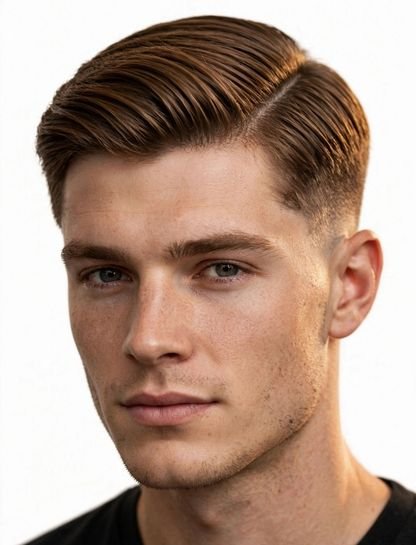
9. Warm-Brown Side-Part Two Block
Warm-Brown Side-Part Two Block
A defined side part replaces the usual forward-swept fringe, giving this cut a more polished, put-together edge. Warm brown coloring keeps things natural-looking while still adding a touch more richness than plain black. The top sits at a medium length, long enough to comb into a clean part but not so long that it loses shape by midday. It reads as the most office-appropriate style on this list.
Best For: Straight hair, oval or diamond face shapes, professional settings
Tell Your Barber: “Two block taper fade, low fade, top around three and a half inches, cut a defined side part.”
Maintenance: Comb into place each morning with a light pomade; trim every three to four weeks.
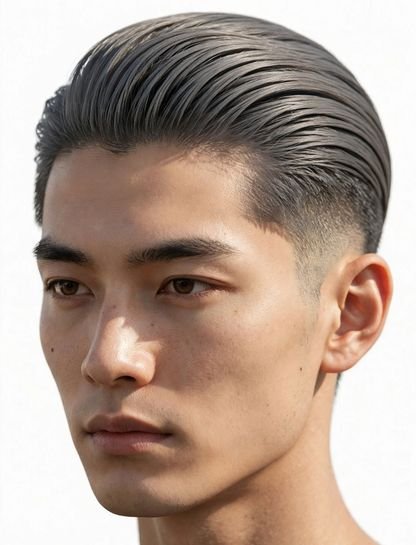
10. Ash-Grey Slick-Back Two Block
Ash-Grey Slick-Back Two Block
Hair is combed straight back here instead of forward, creating a sleek, glossy surface that’s a clear departure from the typical forward-leaning two block silhouette. Ash-grey color adds a cool, modern edge that plain black or brown slick-backs don’t have. This style needs enough length on top to actually slick back cleanly, and it depends heavily on a water-based pomade to hold the shape through the day.
Best For: Straight, fine-to-medium hair, angular or square faces
Tell Your Barber: “Two block with a mid fade, top left at four inches for a slick-back, tone the top ash-grey.”
Maintenance: Reapply pomade if hair falls forward; trim every four weeks and refresh toner color every six weeks.
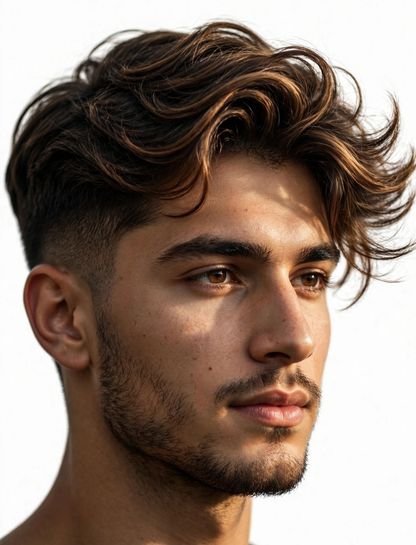
11. Caramel-Highlight Flow Two Block
Caramel-Highlight Flow Two Block
Instead of a single flat color, this style uses caramel highlights woven through a darker brown base, so the top shows dimension as it moves. The cut is left long enough to flow back naturally rather than being styled into a fixed shape, giving it a relaxed, effortless quality. The two-block sides stay tapered close but not skin-tight, keeping the overall look softer than the high-contrast styles on this list.
Best For: Wavy hair, men who prefer natural movement over structured styling
Tell Your Barber: “Two block taper fade, low-to-mid fade, top left at five inches to flow back, add caramel highlights through the top.”
Maintenance: Air-dry with a light sea-salt spray; trim every five weeks and refresh highlights every eight to ten weeks.
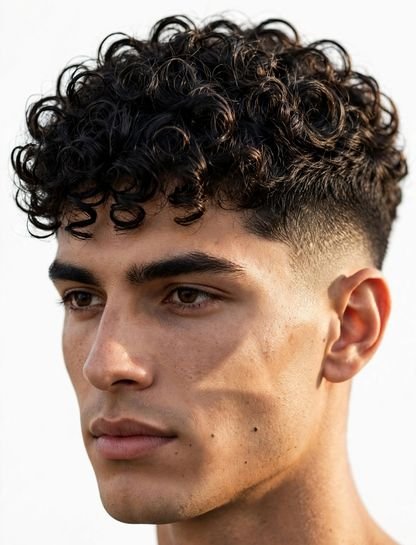
12. Jet-Black Curly Two Block
Jet-Black Curly Two Block
Natural curls stay completely untouched on top, left to do their own thing, while the sides taper down into a clean two-block fade. Jet-black color keeps the focus entirely on the curl pattern and the contrast against the faded sides, rather than adding another visual element through color. This is one of the only styles on the list that genuinely depends on natural texture — flat-ironing it would undo the entire look.
Best For: Naturally curly hair (3A–3C), round or oval faces
Tell Your Barber: “Two block with a low fade, leave the curls natural on top at three to four inches, don’t thin them out too much.”
Maintenance: Curl cream on damp hair daily; trim every four weeks to keep curl shape from getting bulky.
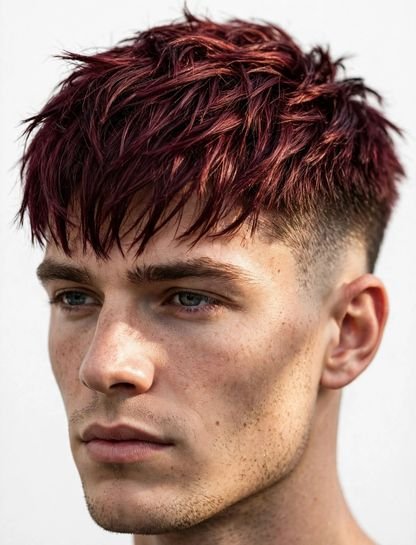
13. Burgundy Textured Crop Two Block
Burgundy Textured Crop Two Block
Deep burgundy coloring gives this cropped two block a rich, almost jewel-toned finish that looks different in daylight versus indoor lighting. The top is cut short and heavily textured, similar to the ash-blonde crop earlier but with a completely different color mood — moodier, warmer, more dramatic. It suits straight or lightly wavy hair that can hold a choppy, directional shape without extra product weighing it down.
Best For: Straight or slightly wavy hair, men wanting a darker, edgier color choice
Tell Your Barber: “Two block taper fade, mid fade, crop the top short and textured around two and a half inches, dye it deep burgundy.”
Maintenance: Trim every three weeks; use color-depositing conditioner monthly to keep the burgundy tone from fading to brown.
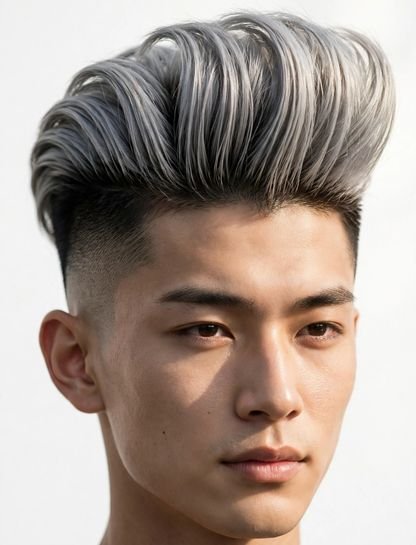
14. Silver-Grey Pompadour Two Block
Silver-Grey Pompadour Two Block
Real height at the front separates this from every other style on the list — the top is lifted and pushed back rather than left to fall forward or flow naturally. Silver-grey coloring makes that height even more noticeable, since light catches the raised section differently than it would on darker hair. This is the highest-maintenance styling routine here, requiring a blow dryer and strong-hold product most mornings to keep the pompadour standing.
Best For: Thick, straight hair, men wanting a bold, formal-leaning look
Tell Your Barber: “Two block with a high fade, leave five inches at the front for lift, color the top silver-grey.”
Maintenance: Blow-dry with a round brush daily; trim every three weeks to stop the shape from leaning to one side.
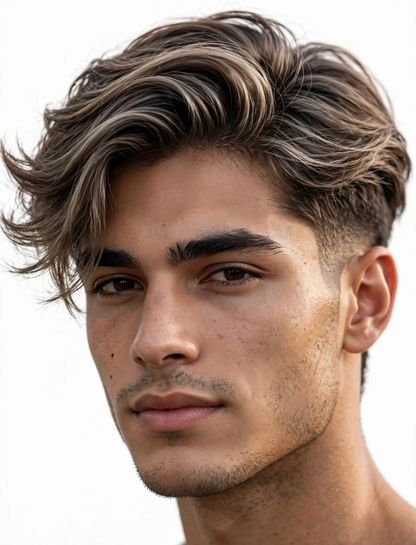
15. Cool-Toned Balayage Flow Two Block
Cool-Toned Balayage Flow Two Block
This closing style blends soft, hand-painted balayage highlights into a longer, flowing top, giving it a sun-kissed, dimensional finish rather than the harder color-blocking seen in the platinum or pastel styles above. The length is left loose enough to move freely, brushed back or slightly to one side depending on the day. Cool-toned balayage, using ash and beige tones rather than warm gold, keeps the whole look modern instead of veering into a beachy, overly warm finish.
Best For: Wavy to straight hair, men who want dimension without a single, flat color
Tell Your Barber: “Two-block taper fade, low fade, leave four to five inches on top for flow, add cool-toned balayage through the front sections.”
Maintenance: Trim every four to five weeks; balayage grows out more gently than highlights, so color touch-ups can stretch to every ten to twelve weeks.
How to Ask Your Barber for a Two Block Taper Fade
Clarity gets you a better result than a single reference photo ever will. Give your barber four specific details every time: whether you want a hard disconnect or a blended taper fade, the fade height (low, mid, or high), the exact top length in inches, and the fringe style you’re picturing — straight, comma, curtain, or textured. If color is involved, mention whether you want it applied to the whole top, just the tips, or as highlights through specific sections.
For a soft, easy-to-grow-out version, say: “two block taper fade, low fade, blend it so there’s no hard line.” For the sharper, more traditional look, say: “two block, hard disconnect at the sides, keep the top full.”
Styling Guide for Two Block Taper Fade
Most two block styles follow the same basic routine, even though the finished shape varies a lot from style to style.
Wash and towel-dry to damp, not soaking wet — fully wet hair is harder to direct while styling.
Apply a pre-styler like sea-salt spray or a light volumizing tonic before blow-drying, especially for textured or flowing styles.
Blow-dry with direction, pushing hair forward and down for comma or cap silhouettes, or lifting at the roots for pompadour and wolf-cut versions.
Finish with the right product — matte clay or paste for texture and hold, a light pomade or cream for shine and flow, curl cream for natural curl definition.
Shape the fringe last, since this is what defines whether the style reads as a comma, curtain, spiky crop, or straight sweep.
Finish You Want
Best Product
Matte texture, strong hold
Clay or texture paste
Natural shine, soft flow
Light pomade or cream
Defined natural curls
Curl cream or mousse
Extra volume, fine hair
Volumizing tonic or root spray
Choosing by Face Shape and Hair Type
Not every two block variation flatters every face equally.
Round faces do best with more height at the front and shorter sides — the pompadour and wolf-cut styles both work well here.
Long faces should avoid extra height and instead let a fringe, like the comma or curtain style, sit lower to visually shorten the face.
Square faces benefit from softer, rounded fringe styles that take some edge off strong jaw angles.
Oval faces can wear nearly any version on this list without issue.
Hair type matters just as much as face shape. Fine hair usually needs added texture through a light perm or consistent use of volumizing tonic to hold the cap silhouette without looking flat. Thick hair often needs extra thinning and tapering on top so the style doesn’t feel heavy by midday. Curly hair holds its own shape naturally and rarely needs added texture products, just consistent moisture.
Maintenance and Trim Schedule
The fade and the top length don’t grow out at the same speed, so treat them as two separate maintenance tasks.
Fade upkeep: Every 3 to 4 weeks for low and mid fades; every 2 to 3 weeks for high fades, which show regrowth faster.
Top length trims: Every 3 to 5 weeks for shorter, cropped styles; every 5 to 6 weeks for longer comma, curtain, or wolf-cut versions.
Color touch-ups: Every 4 to 6 weeks for bold or bleached colors like platinum or pastel; every 8 to 12 weeks for softer techniques like balayage or highlights.
Perm maintenance: A texture or volume perm typically lasts 3 to 6 months before it needs redoing, depending on hair growth speed.
Frequent bleaching, especially for platinum or pastel styles, puts real stress on hair over time. A weekly deep-conditioning treatment goes a long way toward keeping color-treated tops from becoming dry or brittle between salon visits.
Frequently Asked Questions
What is a two block taper fade haircut?
It’s a Korean-inspired style that keeps a long, full section on top while the sides fade gradually into short length instead of a hard disconnect.
How long should the top be for a two block haircut?
Anywhere from 2 inches for a cropped style to 6 inches or more for a comma, curtain, or wolf-cut fringe.
Is a two block taper fade good for curly hair?
Yes — curly hair actually holds the top shape well without extra product, though it needs regular moisture to stay defined.
How often do I need to trim a two block fade?
Every 3 to 4 weeks for the fade itself, with top-length trims spaced slightly further apart depending on the style.
Can I add highlights or bold color to a two block cut?
Yes — highlights, balayage, and full color changes are all common, though brighter colors need more frequent touch-ups than natural tones.
Final Words
A two-block taper fade earns its popularity because it bends toward almost any hair type, face shape, and personal style without losing its signature long-top, short-side silhouette. Whether you want the low-maintenance jet-black classic, a bold platinum spike, or a soft caramel curtain fringe, there’s a version on this list built around your exact hair texture and daily styling tolerance.
Bring the specific details from this guide to your next barber visit, commit to the trim and color schedule that fits the style you pick, and you’ll get a cut that looks as sharp in week three as it did on day one.
Hi, I’m Oliver Bennett. I’m passionate about men’s hairstyles and love exploring modern cuts that are easy to understand and easy to ask your barber for. On this website, I share simple guides on styles like burst fades, mullets, curtain cuts, tapers, and other trending men’s hairstyles. My goal is to help you find a haircut that matches your hair type, face shape, and personal style.

1 thought on “Top 15 Two Block Taper Fade Haircuts for Men”