Burst Fade GuideTop 15 Burst Fade Buzz Cut Styles for Every Hair Type
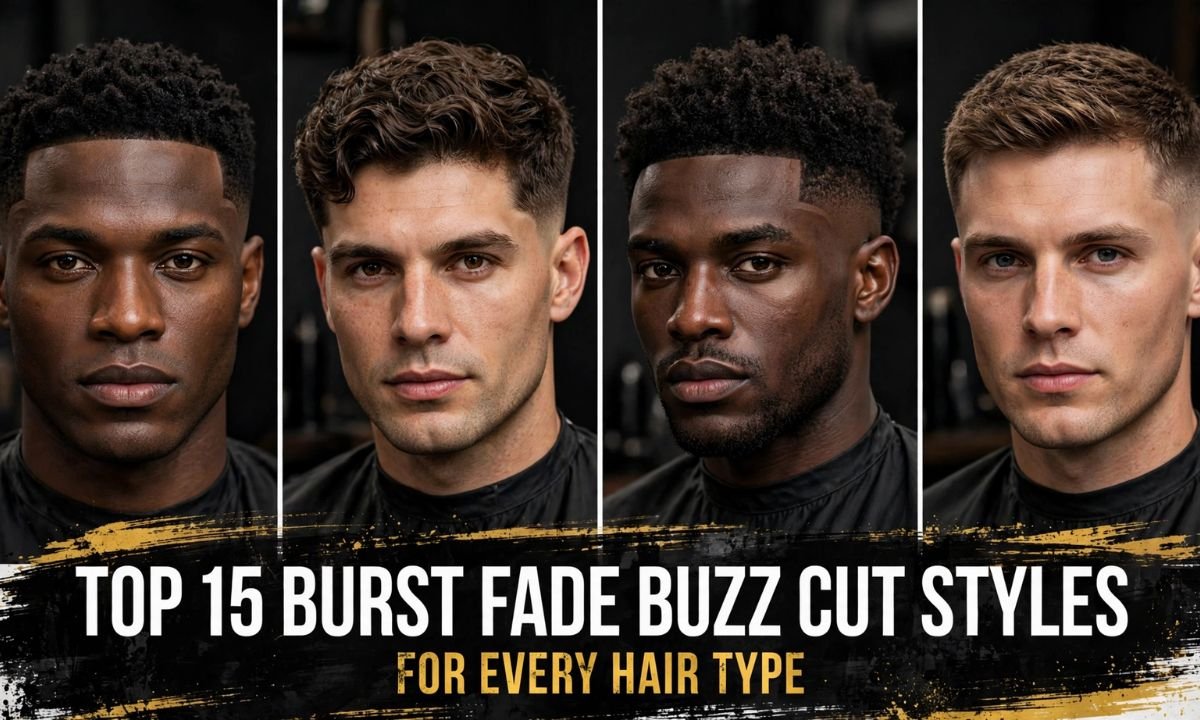
Top 15 Burst Fade Buzz Cut Styles for Every Hair Type
August 26, 2026
/
1 Comment
/
Oliver Bennett
Ever notice how some buzz cuts look sharp from every angle, while others go flat the second you turn your head? The secret is usually a burst fade. It’s the small detail barbers use to turn a basic buzz into a cut with real shape and contrast.
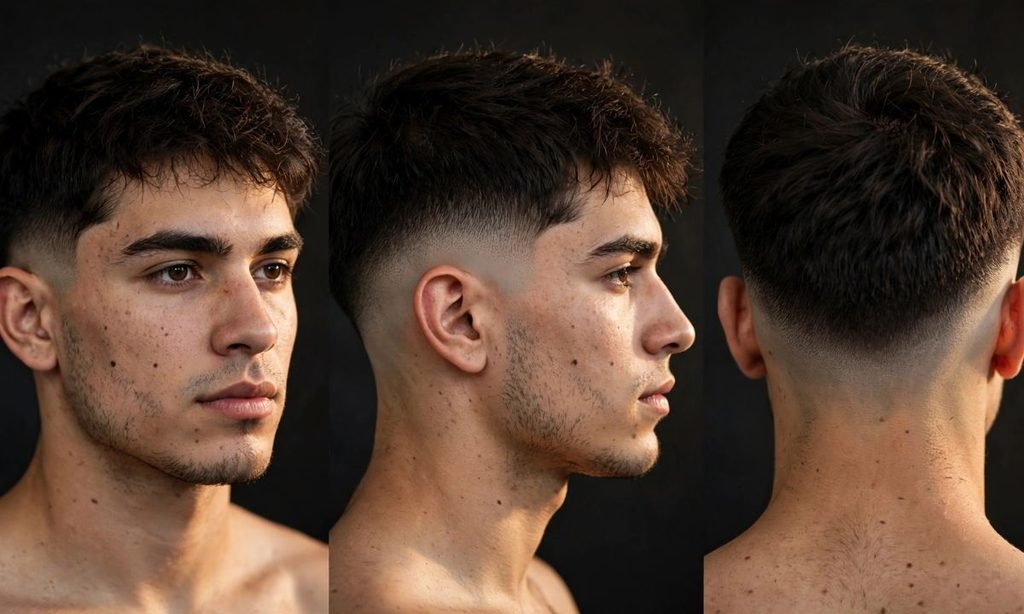
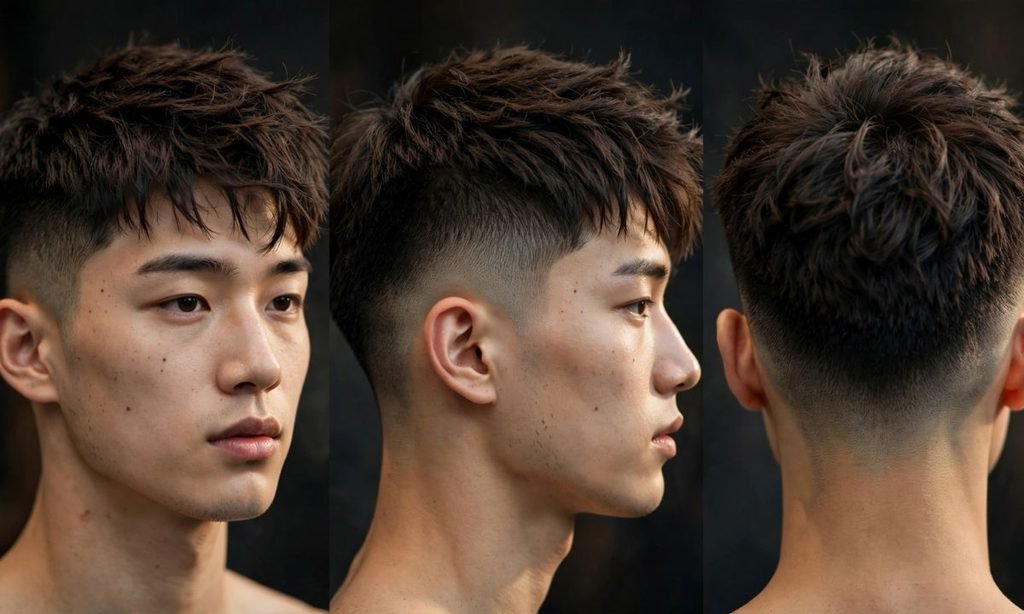
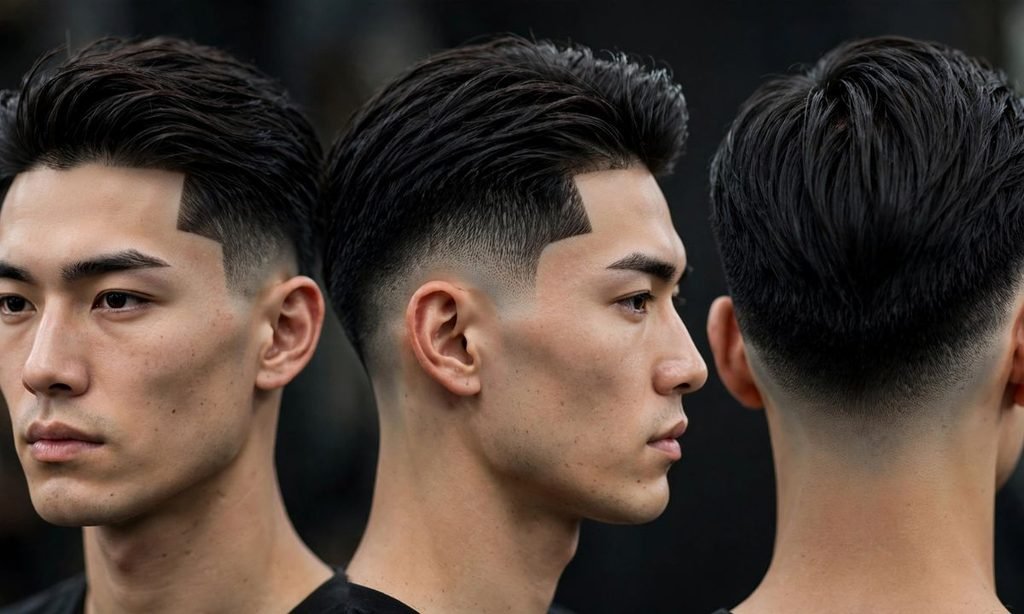
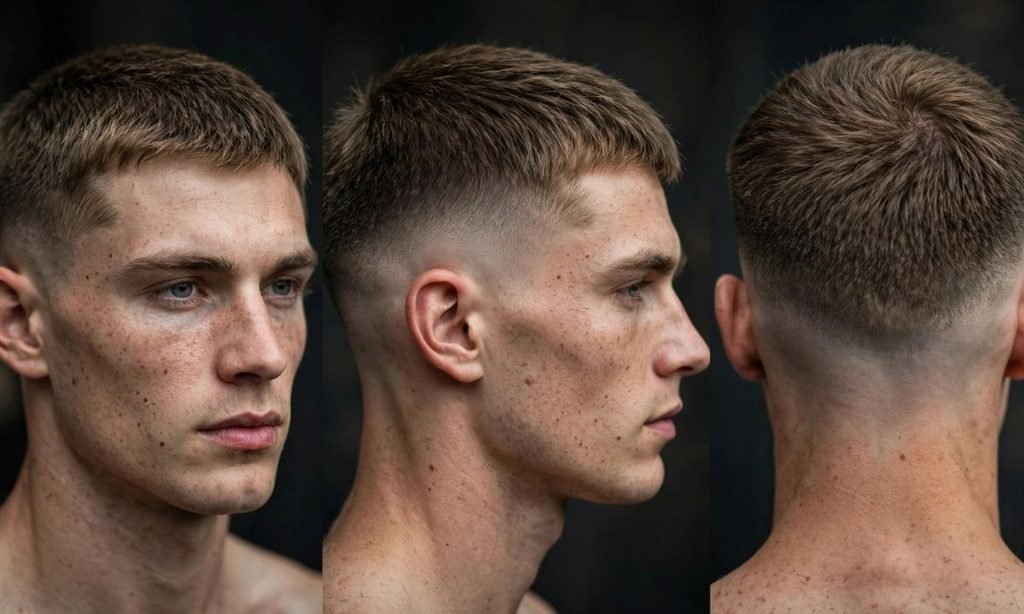
A burst fade buzz cut pairs a very short, evenly clipped top with a fade that curves around the ear instead of running in a straight line down the side. That curve is what separates it from a standard fade.
The rounded shape is often called a “halo” or “sunburst” because it fans out from the ear rather than cutting straight across the head. Combined with a buzzed top, it gives an otherwise simple cut a sense of movement and edge without adding length anywhere.
Barbers like it because it works on almost any hair type. Straight, wavy, curly, coily, and Afro-textured hair all take the burst shape differently, but the core technique stays the same: clip the top down close, then blend a curved taper around the ear that fades to skin or near-skin at the edge.
Burst Fade vs. Regular Fade vs. Drop Fade
These three get mixed up constantly, so here’s the quick breakdown.
Fade Type
Shape
Where It’s Lowest
Regular (Vertical) Fade
Straight-line taper down the side
Consistent line from temple to nape
Burst Fade
Rounded, curves around the ear
Directly behind and around the ear
Drop Fade
Curves downward behind the ear toward the nape
Lower at the back of the head
A burst fade circles the ear like a halo. A drop fade dips down behind the ear and continues lower toward the neck. A regular fade just runs straight. Knowing the difference matters because asking for the wrong one can change your whole silhouette.
How to Choose Your Version
Choose the Fade Height: Low, Mid, or High
Fade height changes how much contrast you get. A low burst fade sits close to the ear and keeps things subtle — good for office settings or a first-time fade. A mid burst fade climbs a bit higher and gives more visible shape. A high burst fade pushes well above the ear, creating the boldest, most dramatic transition. Higher fades also tend to need trims sooner since regrowth shows faster near the top.
Choose the Top Length and Guard
Most burst fade buzz cuts use a #1 to #3 guard on top, with #2 being the most common middle ground. Shorter guards (#1) give a cleaner, more uniform buzz. Slightly longer guards (#3) leave enough length to add texture or light styling. Treat any guard number as a starting point — hair density and how fast your hair grows will change what actually looks best.
Match the Cut to Your Hair Texture
Straight hair shows the fade line very cleanly, so precision matters more here.
Wavy hair adds natural movement on top without extra product.
Curly hair benefits from a slightly longer guard so curls keep some shape.
Coily or Afro-textured hair often looks best with a higher fade to reduce bulk and highlight definition.
Consider Hair Color and Scalp Contrast
Dark hair — black or dark brown — creates the sharpest, most visible line between skin and hair, which is why so many reference photos feature dark hair. Lighter shades like dark blonde or platinum let more scalp show through, which can make the fade look shorter than it actually is. If you have lighter hair, ask your barber to fade slightly higher than you think you need to compensate for the reduced contrast.
Match the Shape to Your Face and Beard
Oval and square face shapes have the most flexibility with burst fades. Round faces benefit from added height to elongate the face. A connected beard fade can also reshape a jawline, softening square angles or sharpening a rounder one.
The 15 Best Burst Fade Buzz Cut Styles
1. Classic Low Burst Fade Buzz Cut
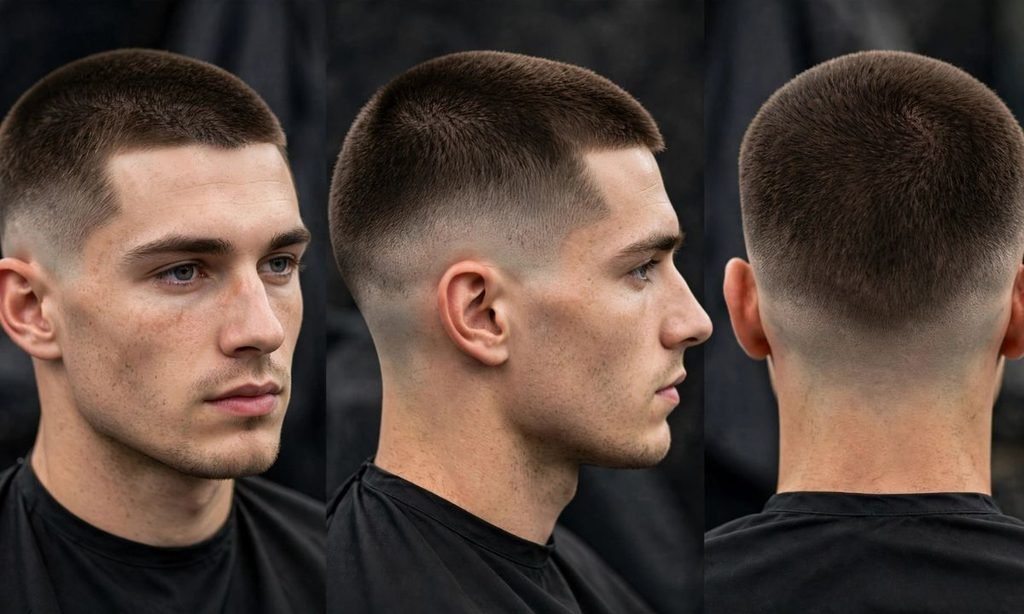
This is the entry point for anyone new to burst fades. The top stays buzzed to a uniform length, usually a #2, while the fade curves gently around the ear and fades to skin just below it. There’s minimal contrast up top, which keeps the overall look understated and easy to wear daily.
Best For: First-timers, oval and square face shapes, workplaces with a conservative dress code.
Tell Your Barber: “Keep it low around the ears, buzz the top with a two guard, no heavy contrast.”
Maintenance: Trim every 3–4 weeks; the low placement grows out gradually without looking messy.
2. Mid Skin Burst Fade with Sharp Line-Up
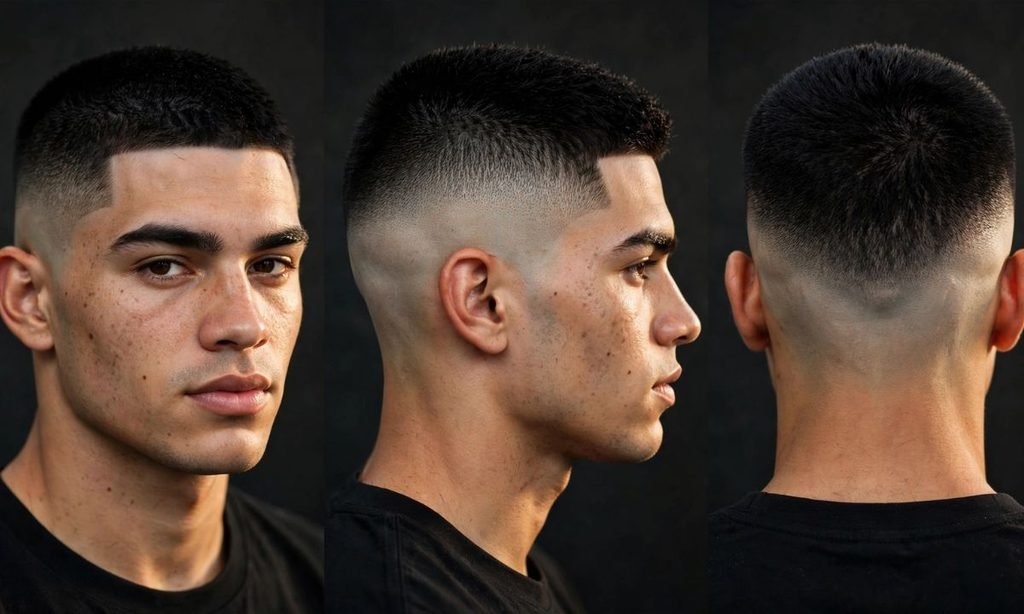
The fade climbs to mid-height here and finishes at bare skin, paired with a crisp, straight hairline at the front. The sharp lineup is the star of this style — it frames the face and adds structure that a soft fade alone can’t give.
Best For: Straight or fine hair that needs extra definition.
Tell Your Barber: “Take the fade to skin at mid-height and give me a sharp, straight lineup at the front.”
Maintenance: Line-ups need refreshing every 1–2 weeks to stay crisp; the fade itself can wait 3 weeks.
3. High-and-Tight Burst Fade Buzz
This one pushes the fade noticeably higher, leaving a small, defined patch of length on top that stands out against very short sides. The height creates the most dramatic contrast on this list and gives the cut a more disciplined, structured appearance.
Best For: Anyone wanting maximum contrast and a bold, no-nonsense look.
Tell Your Barber: “Take the fade high and tight; keep the top short and even.”
Maintenance: High fades show regrowth fastest — plan on trims every 2 weeks.
4. Zero Burst Fade with Natural Edge-Up
Instead of a razor-sharp hairline, this version keeps the natural front edge intact while the sides fade to true zero (skin). The contrast comes entirely from the fade itself rather than any added linework, giving it a more relaxed, natural finish.
Best For: Guys who want a clean fade without a “just left the barber” edge-up look.
Tell Your Barber: “Fade to zero on the sides, but leave my natural hairline untouched.”
Maintenance: Every 3 weeks; skipping the sharp edge-up means less upkeep between visits.
5. Textured Crop Burst Fade Buzz
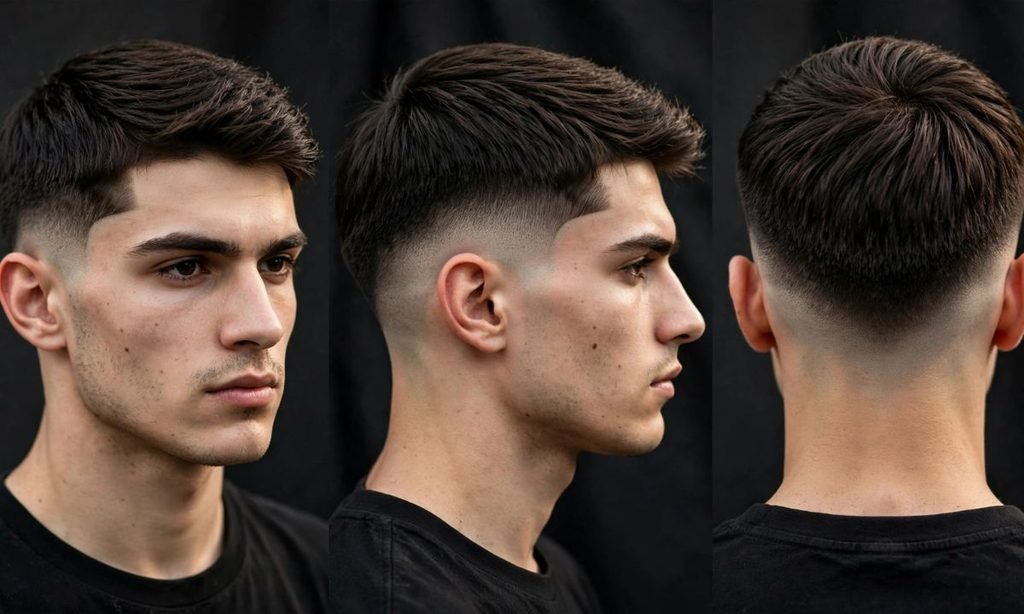
The top is left slightly longer than a standard buzz — enough to add texture with a light styling product — while the sides curve into a mid burst fade. This gives a bit more personality on top compared to a flat buzz, without moving away from the low-maintenance category.
Best For: Straight or slightly wavy hair; those who want a touch of styling without commitment.
Tell Your Barber: “Leave the top a bit longer for texture; keep the sides a mid burst fade.”
Maintenance: Trim every 4 weeks; a small amount of matte paste keeps the texture defined day to day.
6. Dark-Hair Burst Fade with Crisp Line-Up
Dark hair naturally creates the strongest contrast against skin, and this style leans into that. The fade is kept tight and precise, paired with a defined line-up, so the dark color does the visual work without needing extra styling tricks.
Best For: Black or dark brown hair, anyone who wants a bold look with minimal product.
Tell Your Barber: “Keep the fade tight and precise — my hair color already gives good contrast.”
Maintenance: Every 2–3 weeks to keep the sharp edges from softening.
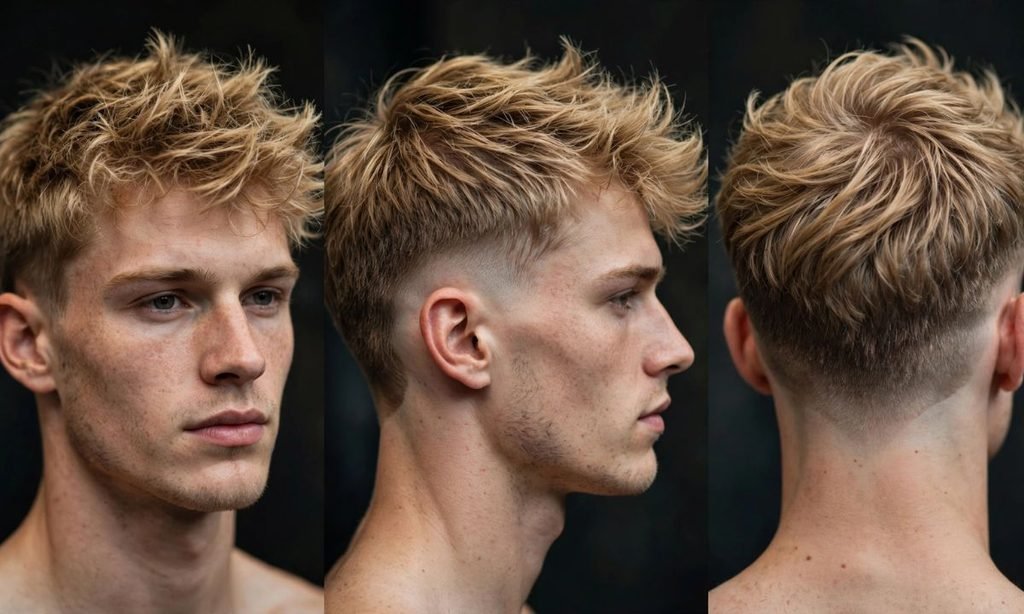
7. Dark-Blonde Skin Burst Buzz Cut
Because lighter hair shows less contrast against the scalp, this style uses a low skin fade to compensate — taking the sides all the way to bare skin so the shape still reads clearly even with less color difference. The result looks minimal and rounded rather than sharply lined.
Best For: Dark blonde or light brown hair where contrast is naturally softer.
Tell Your Barber: “Take it to the skin around the ears since my hair color won’t show much contrast otherwise.”
Maintenance: Every 2–3 weeks; light hair regrowth is less noticeable, so this can stretch slightly longer than dark-hair versions.
8. Blonde Tousled Burst Buzz Cut
This style keeps the top a touch longer and finger-styled into a loose, tousled texture, while the fade stays mid-height for balance. It reads lighter and more relaxed than the darker, sharper styles on this list, giving an airy contrast against the tighter sides.
Best For: Light or bleached blonde hair with natural wave.
Tell Your Barber: “Keep enough length on top to tousle it, mid burst fade on the sides.”
Maintenance: Trim every 4 weeks; a light sea-salt spray keeps the tousled texture without weighing it down.
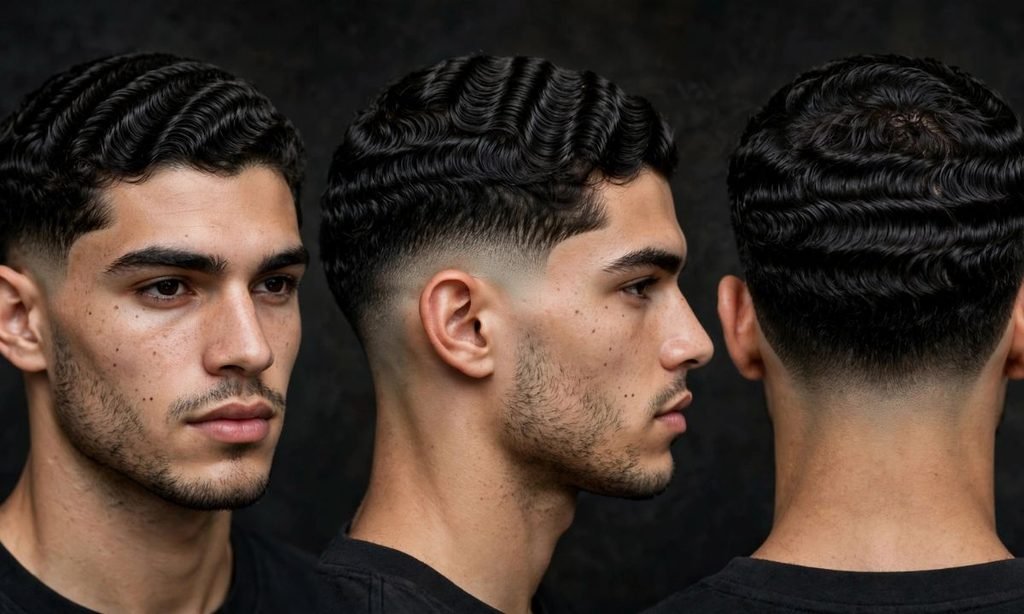
9. Coily Wave Burst Fade Buzz Cut
Coily or Afro-textured hair is trained into waves on top and brushed consistently in one direction, while the sides fade to skin in a rounded burst shape. The wave pattern adds visible texture that a plain buzz wouldn’t have, and the skin fade keeps the sides from competing with it.
Best For: Coily and Afro-textured hair aiming for a “360 waves” look.
Tell Your Barber: “Skin burst fade on the sides, and I want the top brushed and trained into waves.”
Maintenance: Brush daily to maintain wave direction; trim the fade every 2–3 weeks.
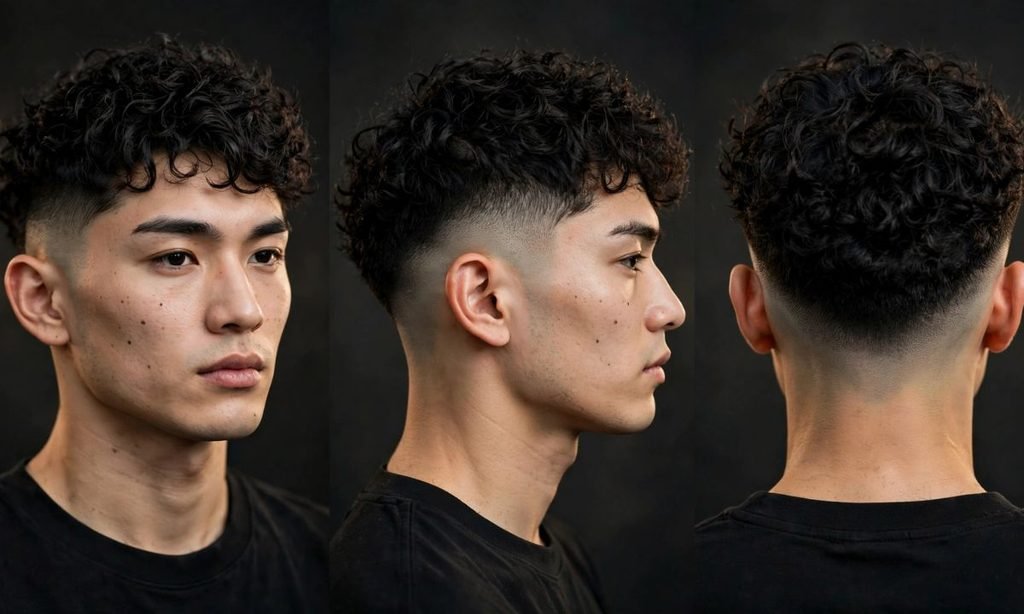
10. Short Black Curl Burst Fade
Natural curls are kept short and left untouched on top for volume, contrasted against sides faded close to the skin. Unlike the wave-trained style above, this one celebrates the curl pattern as-is rather than brushing it into a specific direction.
Best For: Naturally curly or coily hair that holds shape well when kept short.
Tell Your Barber: “Don’t flatten the curls on top — just fade the sides close and let the curl pattern show.”
Maintenance: Every 2–4 weeks; a light curl cream helps define without adding shine.
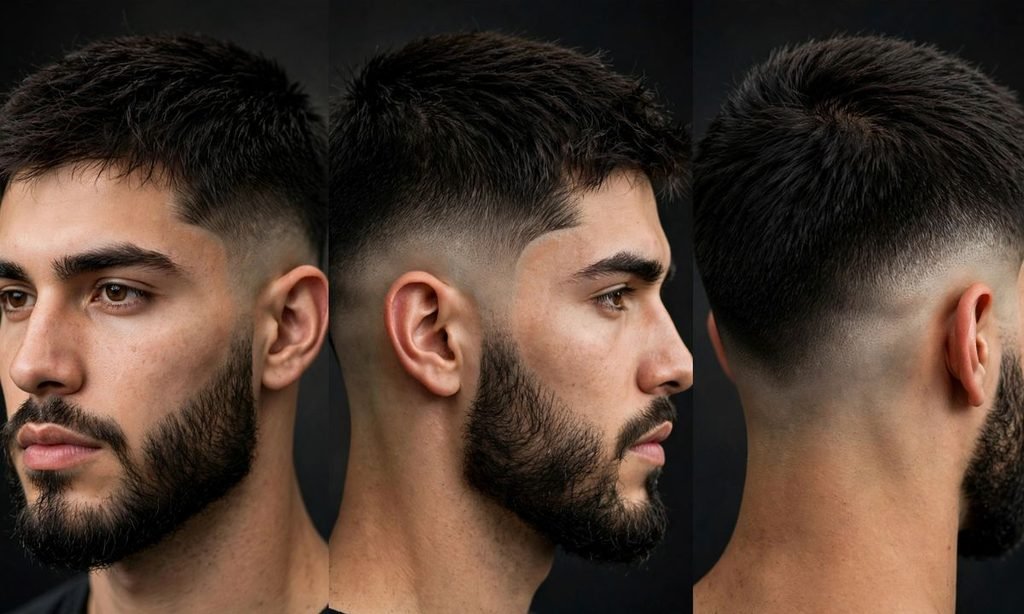
11. Burst Fade Buzz Cut with Beard Blend
The fade doesn’t stop at the jawline here — it connects directly into a trimmed beard, creating one continuous line from the top of the head down through the facial hair. This blend is what gives the style its finished, intentional look rather than treating hair and beard as separate.
Best For: Anyone with a full or medium beard wanting a cohesive, connected look.
Tell Your Barber: “Connect the fade to my beard — I want one smooth line, not two separate cuts.”
Maintenance: Beard lines need touch-ups weekly; the fade itself holds for about 3 weeks.
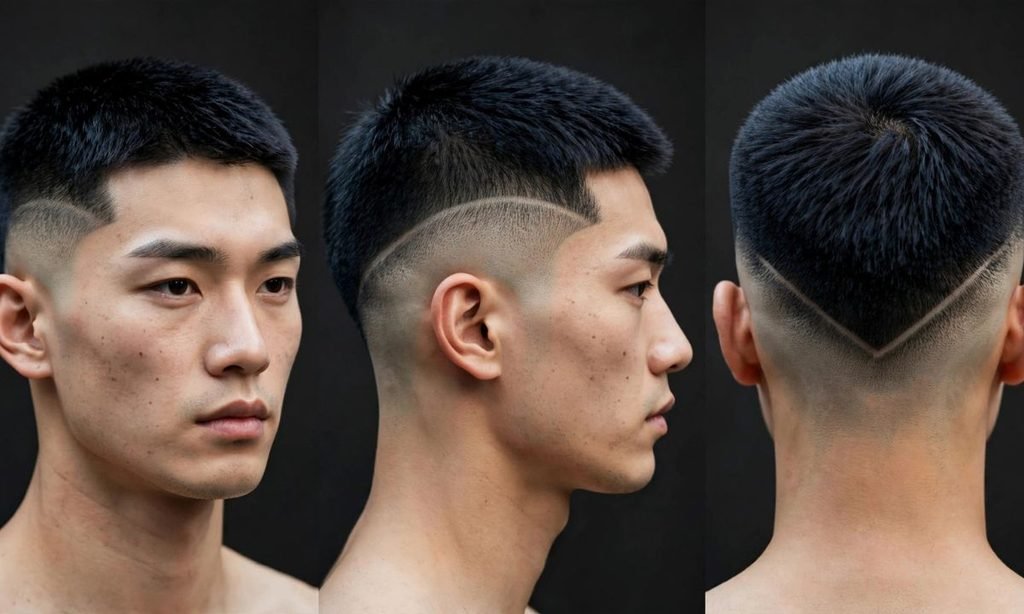
12. V-Shaped Nape Burst Fade Buzz
Instead of a rounded or straight neckline, the back is shaped into a distinct V-point at the nape. Paired with a burst fade around the ears, this creates a more graphic, deliberate silhouette from the back — a detail most people won’t try but that stands out immediately.
Best For: Those who want a distinctive back profile and don’t mind extra detail work.
Tell Your Barber: “Shape the nape into a V-point, and keep the burst fade tight around the ears.”
Maintenance: V-shapes grow out faster than any style here — expect trims every 2 weeks to keep the point sharp.
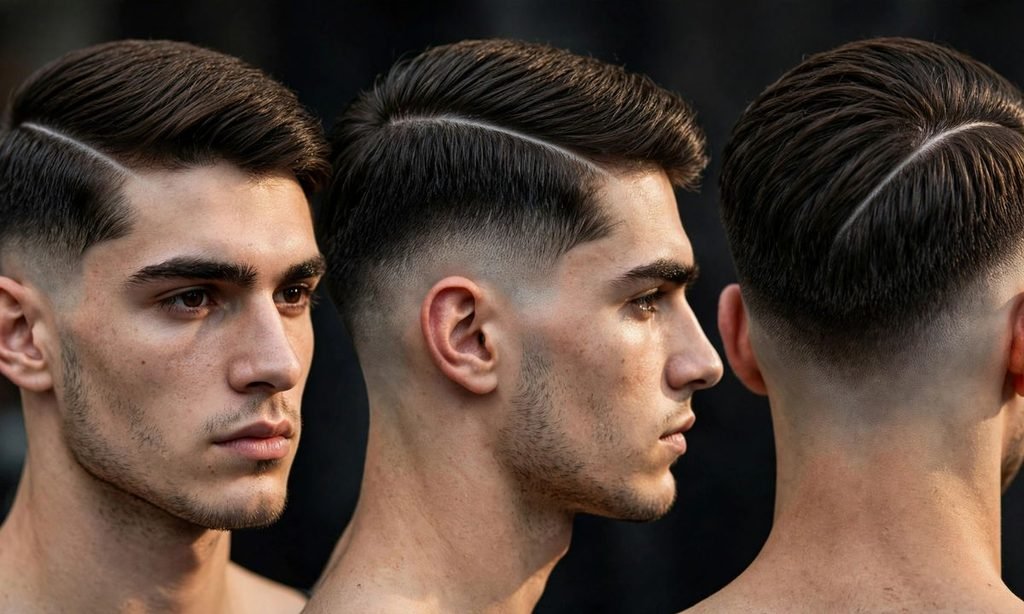
13. Surgical-Part Burst Buzz
A thin, hard part is shaved into the side of the buzzed top, adding a graphic line that separates the hair into a defined section. Combined with a tight burst fade, it gives the cut a more engineered, detail-focused finish than a plain buzz.
Best For: Straight or fine hair where a hard part shows up clearly.
Tell Your Barber: “Add a thin surgical part on the side; keep the burst fade tight underneath it.”
Maintenance: The part line needs refreshing every 1–2 weeks; the base fade holds for 3.
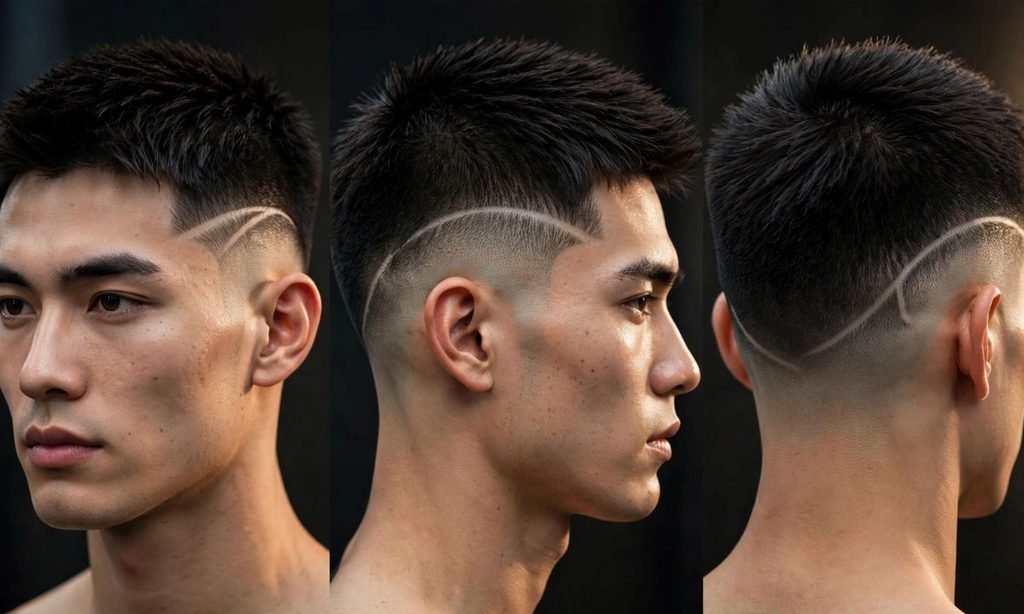
14. Razor-Design Burst Fade Buzz
This style adds a shaved design — a line, geometric shape, or pattern — into the faded section, usually placed near the temple or the back of the head. The design works best when it follows the natural curve of the burst fade rather than cutting across it.
Best For: Anyone wanting a personalized, standout detail; works on any hair color, though dark hair makes the design pop most.
Tell Your Barber: “I’d like a shaved design in the fade — here’s a reference photo of the placement I want.”
Maintenance: Designs fade out fastest of any detail — plan on a touch-up every 1–2 weeks.
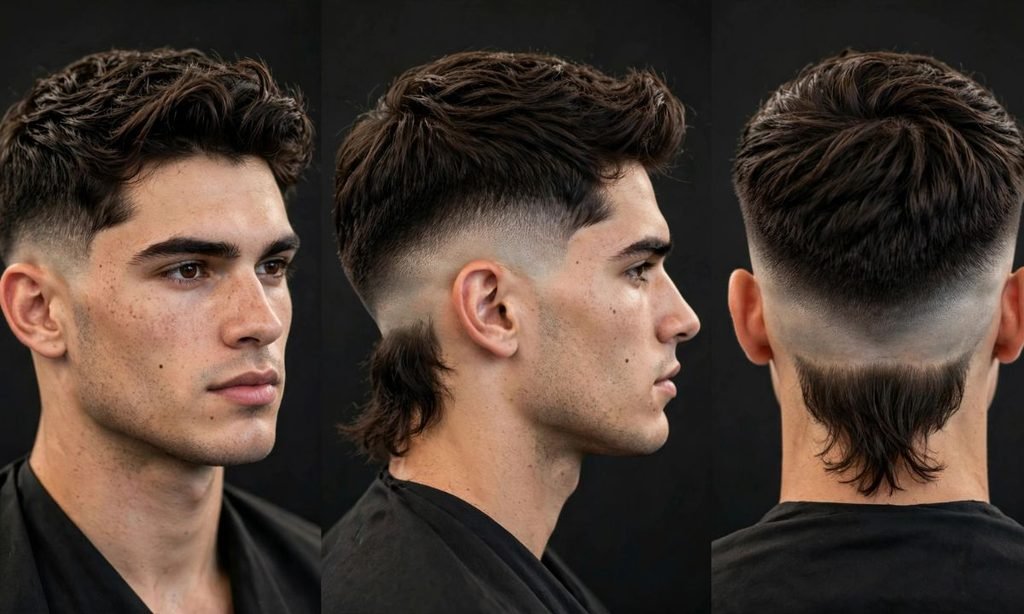
15. Disconnected Burst Fade Buzz with Short Mullet Tail
The sides fade tightly while a small amount of length is left at the back, creating a short mullet-style tail that stays disconnected from the fade rather than blending into it. It’s the most unconventional style on this list, mixing a clean fade with a bit of retro length in the back.
Best For: Thick or medium-density hair; those wanting a bolder, less conventional shape.
Tell Your Barber: “Keep the sides burst-faded, but leave extra length at the back for a short tail — don’t blend the two.”
Maintenance: Every 4 weeks for the tail length; the fade portion needs a refresh every 2–3 weeks to stay disconnected.
What to Tell Your Barber
Vague instructions lead to inconsistent results. Before your appointment:
Bring a reference photo showing the front, side, and back of the cut you want.
Say “burst fade,” not just “fade” — the rounded ear shape is a specific technique, not a general term.
Specify the top guard number and the fade height (low, mid, or high).
Mention your hair type and color so the barber can adjust for contrast or texture.
How to Style a Burst Fade Buzz Cut
Start with clean, towel-dried hair — not soaking wet.
Apply a small amount of product suited to your hair type: matte paste for texture, cream for softness, or sea-salt spray for waves.
Work the product through with your fingers, pushing hair in the direction you want it to sit.
Let it air dry or use a blow dryer on low heat to set the shape.
Maintenance and Regrowth Timeline
Daily upkeep is minimal — that’s the whole appeal of a buzz cut. The real maintenance happens at the barber. Higher fades, sharp line-ups, and shaved designs all grow out faster and need trims every 1–2 weeks. Lower, softer fades without added detail can often stretch to 3–4 weeks. Beard-connected styles need the beard line kept up weekly, even if the head fade itself doesn’t.
Frequently Asked Questions
What is a burst fade haircut?
It’s a fade that curves around the ear in a rounded, halo-like shape instead of running in a straight vertical line.
How is a burst fade different from a drop fade?
A burst fade circles the ear, while a drop fade dips down and continues lower toward the back of the neck.
How often should a burst fade be trimmed?
Most people need a trim every 2–3 weeks, though higher fades and sharp line-ups may need touch-ups every 1–2 weeks.
Can a burst fade work with curly or coily hair?
Yes — burst fades adapt well to curly, coily, and Afro-textured hair, often paired with a higher fade to reduce bulk.
Is a burst fade suitable for a professional workplace?
A low, subtle burst fade with minimal contrast is generally office-appropriate, though bolder or higher versions may look too dramatic for conservative settings.
Conclusion
A burst fade buzz cut isn’t just a short haircut — it’s a short haircut with intention, using the rounded curve around the ear to add shape, contrast, and personality that a plain buzz can’t offer on its own. Whether you go low and subtle or high with a razor design, the key to getting it right is clear communication with your barber and realistic expectations about upkeep, since the sharper the style, the more often it needs a refresh.
Hi, I’m Oliver Bennett. I’m passionate about men’s hairstyles and love exploring modern cuts that are easy to understand and easy to ask your barber for. On this website, I share simple guides on styles like burst fades, mullets, curtain cuts, tapers, and other trending men’s hairstyles. My goal is to help you find a haircut that matches your hair type, face shape, and personal style.

1 thought on “Top 15 Burst Fade Buzz Cut Styles for Every Hair Type”