Burst Fade Mullet: 18 Styles, Face Shapes & Barber Tips
August 25, 2026
/
2 Comments
/
Oliver Bennett
Ever notice how the best mullets don’t look like accidents anymore? There’s a shape doing the work behind the scenes. That shape is the burst fade, and once you see it, you can’t unsee it. Here’s everything you need to pick your version and describe it correctly in the chair.
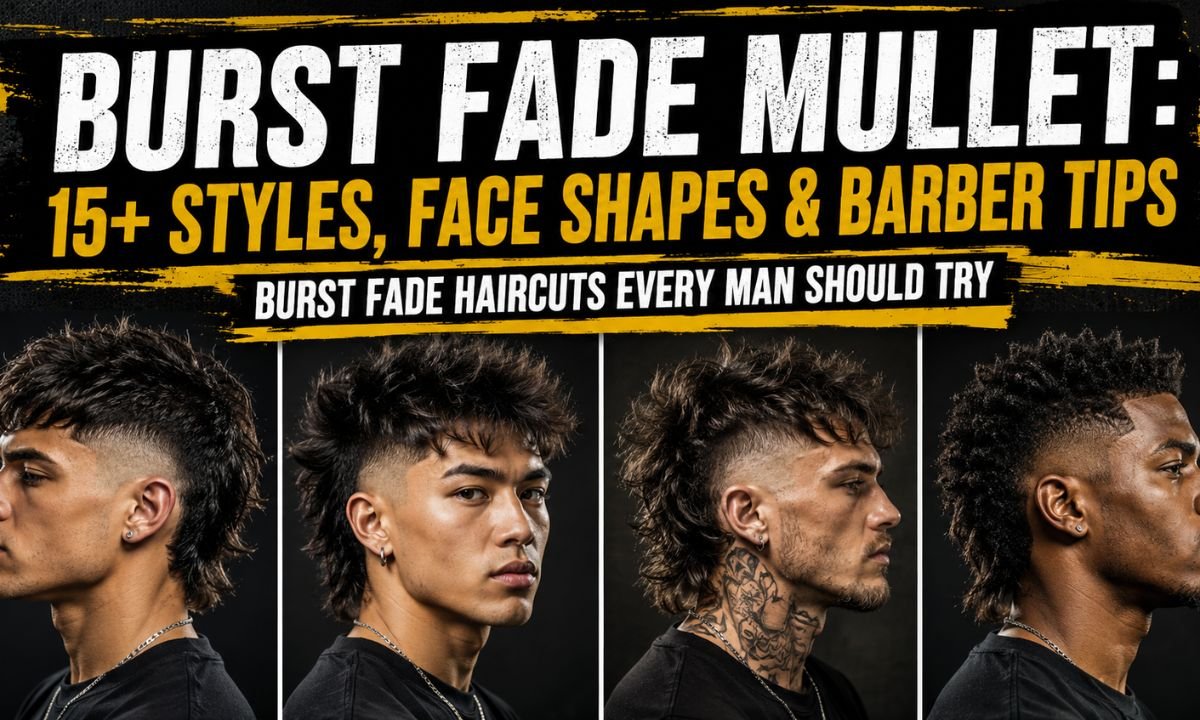
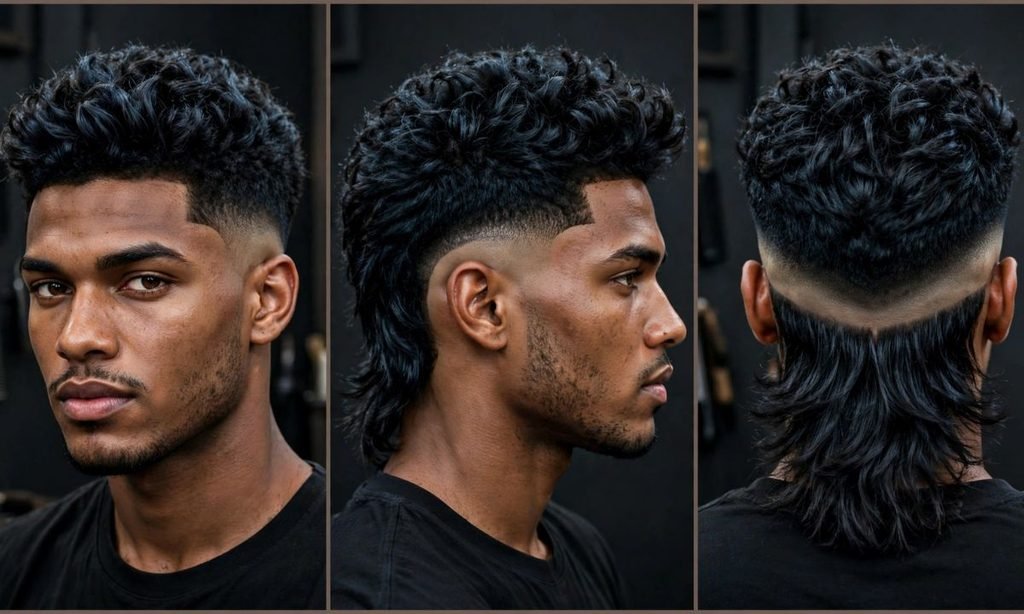
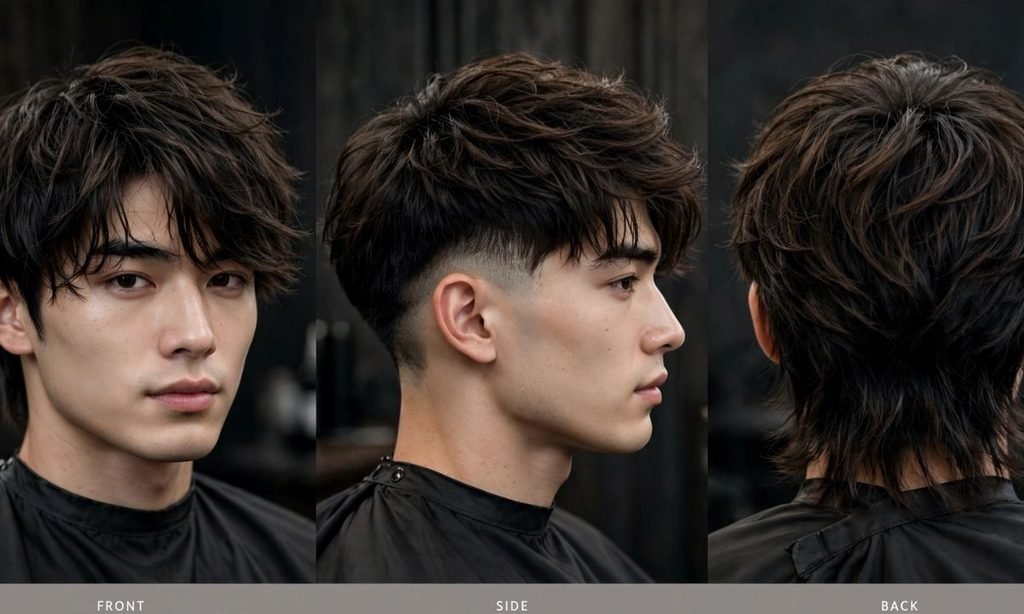
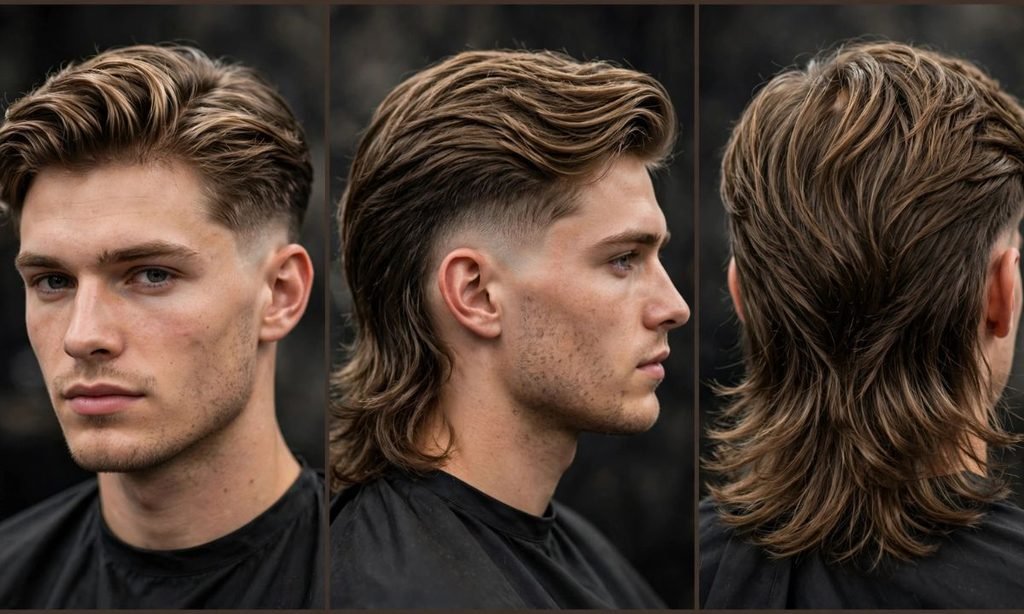
A burst-fade mullet pairs two separate ideas into one haircut. The burst fade handles the sides: a curved fade that wraps around the ear like a half-moon, shortest right behind the earlobe and growing longer as it moves away in every direction. The mullet handles length and shape: short on top and sides, noticeably longer in the back.
Put together, you get a cut that looks intentional from every angle. The curve around the ear is what separates this from a plain taper mullet. It’s not just short-to-long. It’s short-to-long with a deliberate arc built into the transition.
This combination has been a top request at barbershops since around 2022, and it’s shown no sign of slowing down heading into 2026. Musicians, athletes, and everyday guys wearing it as a low-key statement cut have all kept it in rotation.
Burst Fade vs Taper Fade vs Drop Fade Mullet
People mix these up constantly, so here’s the quick breakdown before you book anything.
If you ask for “a faded mullet” without specifying, you might walk out with a taper. The word “burst” is doing important work in that sentence. Don’t skip it.
Who Should Get a Burst Fade Mullet?
This cut isn’t one-size-fits-all, but it adapts well once you know your starting point.
Face Shape Basics
Oval faces can wear almost any version. Round faces do better with a higher arc and more length up top, since that adds vertical lines instead of width. Square faces look good with a mid-height burst and some texture at the crown. Long or narrow faces should keep the arc lower and the back shorter, so the cut doesn’t stretch the face further.
Hair Type Basics
Straight hair holds a crisp arc and shows off contrast clearly. Wavy and curly hair fill in the back naturally, giving it body without much styling effort. Coily and afro-textured hair usually looks best with a skin-level burst and a scissor-cut top, which keeps the coil pattern intact while still showing that sharp side shape.
Lifestyle Fit
If your workplace has a conservative dress code, a two-inch back and a low burst will fly under the radar. If you’ve got more freedom, a longer back and higher arc turn this into a genuine statement piece.
15+ Burst Fade Mullet Styles to Try
Low Burst Fade Mullet
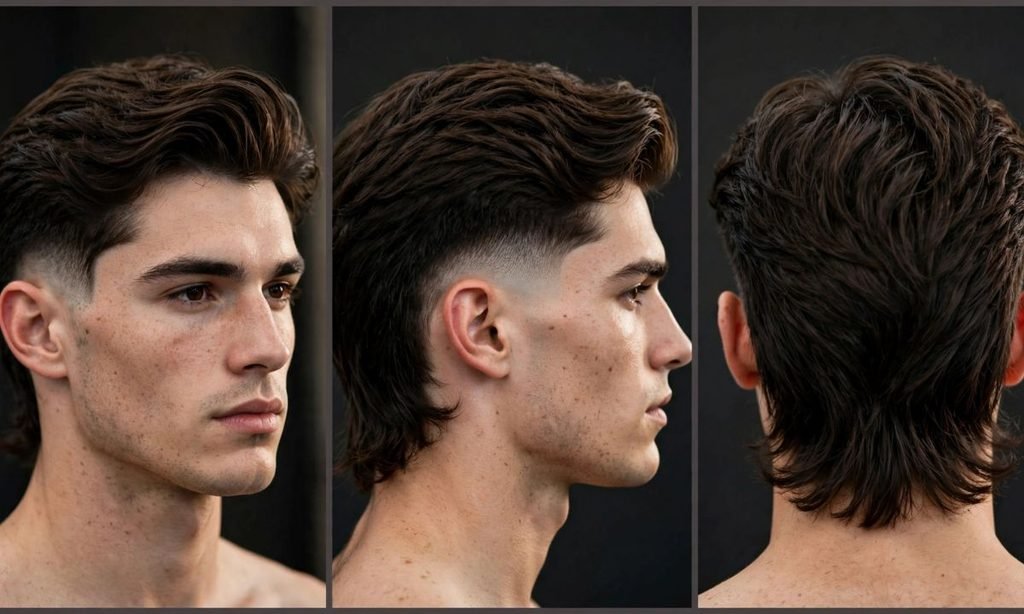
The arc sits close to the natural hairline, right around the ear, keeping the contrast subtle. It’s the most understated version of the cut and reads more like “nice haircut” than “bold statement.” Great starting point if you’re new to fades in general. The back can be any length since the sides stay quiet and don’t compete for attention.
Best For: First-timers, conservative workplaces, oval and long face shapes.
Tell Your Barber: “Low burst fade, arc right at the hairline, keep it subtle.”
Maintenance: Fade touch-up every 3 to 4 weeks since the contrast is soft and grows out gracefully.
Mid Burst Fade Mullet
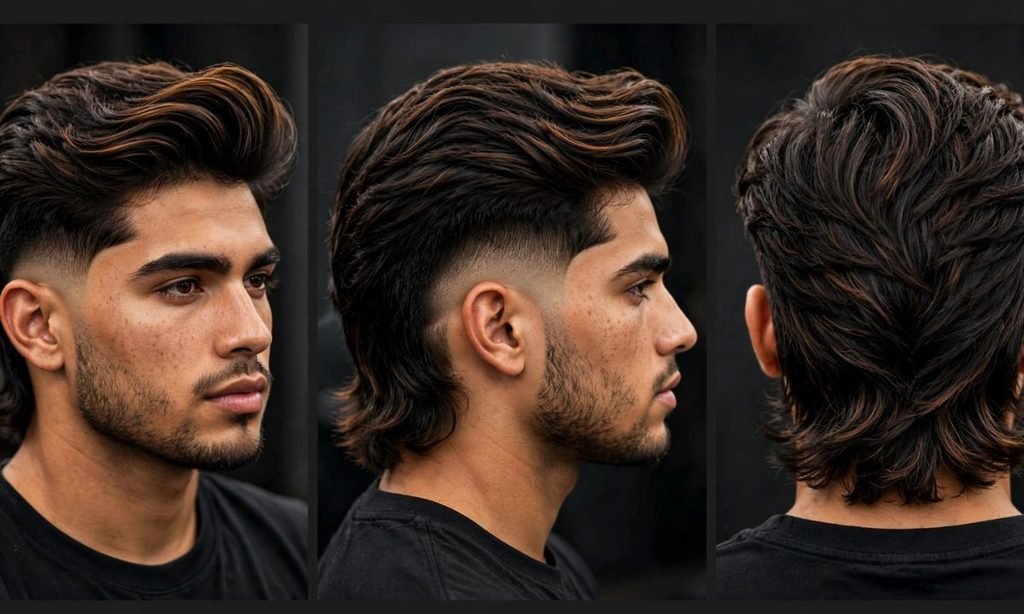
This is the default most barbers picture when you say “burst fade mullet.” The arc sits at temple level, giving a clear but balanced amount of contrast. It works across nearly every face shape and hair texture, which is exactly why it’s the most requested version. The top and back can go in almost any direction from here.
Best For: Most face shapes, straight or wavy hair, anyone wanting a safe-but-sharp look.
Tell Your Barber: “Mid burst fade, arc at the temple, standard contrast.”
Maintenance: Re-edge every 2 to 3 weeks to keep that temple line crisp.
High Burst Fade Mullet
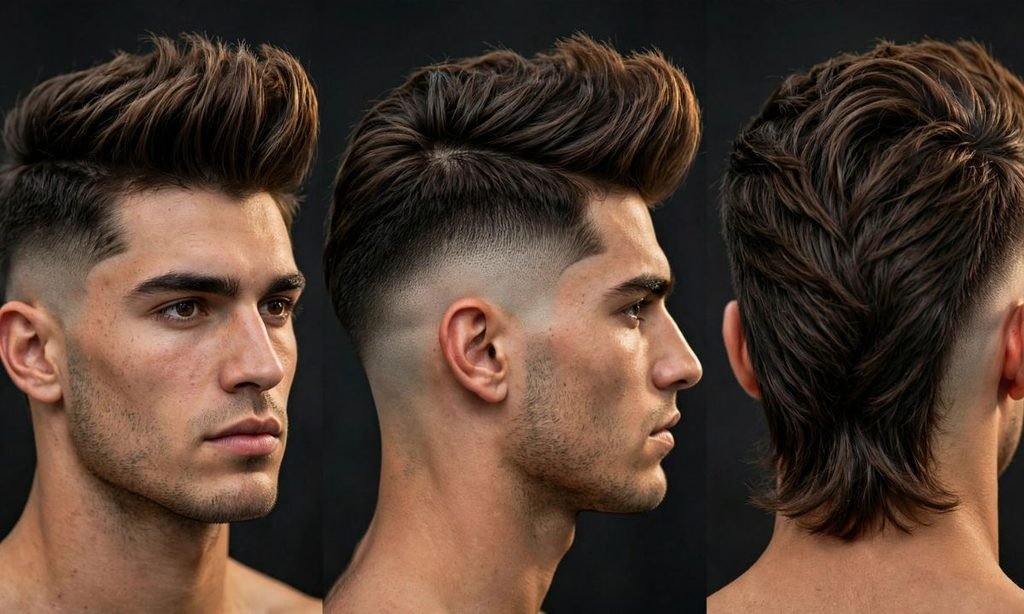
The arc starts well above the ear, closer to the temple’s peak, creating a much bigger gap between short and long. This is a bold, high-contrast look that draws the eye upward, which flatters rounder faces nicely. It pairs especially well with some height or volume on top to balance the sharpness on the sides.
Best For: Round and square faces, guys who want a noticeable, edgy cut.
Tell Your Barber: “High burst fade, arc starting near the temple, strong contrast.”
Maintenance: Visit every 2 weeks since high-fades grow out and lose their line fastest.
Skin Burst Fade Mullet
Here the shortest point of the arc fades all the way down to bare skin before curving back out. It’s the sharpest, most dramatic version of the burst shape and demands the most upkeep of the bunch. Paired with a longer back, the contrast between “shaved” and “shoulder-length” makes a strong visual statement.
Best For: Guys who don’t mind frequent barber visits and want maximum contrast.
Tell Your Barber: “Skin fade at the bottom of the burst, blending up to a guard on top.”
Maintenance: Book every 10 to 14 days, since skin fades show grow-out almost immediately.
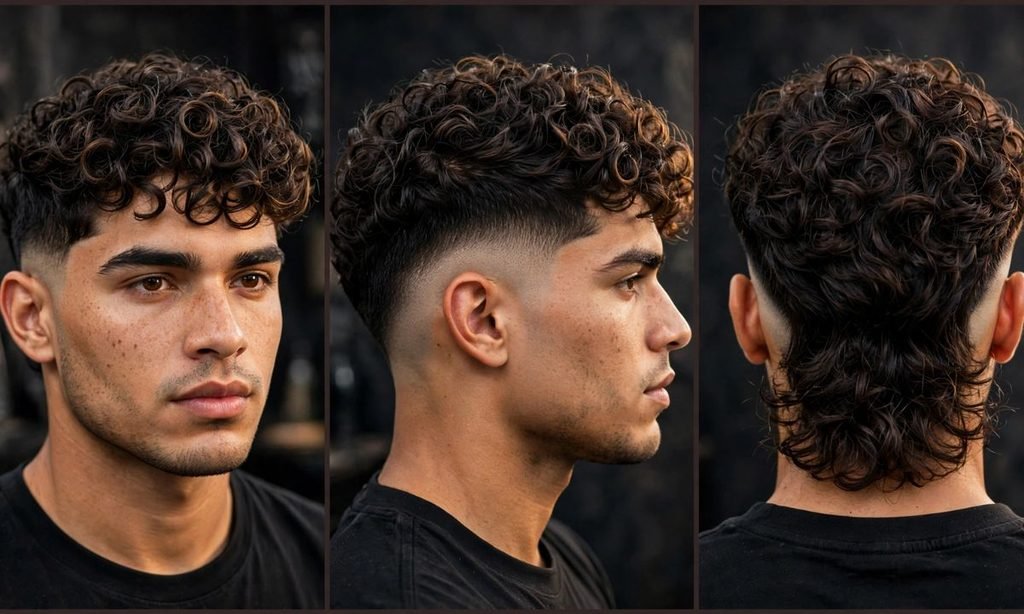
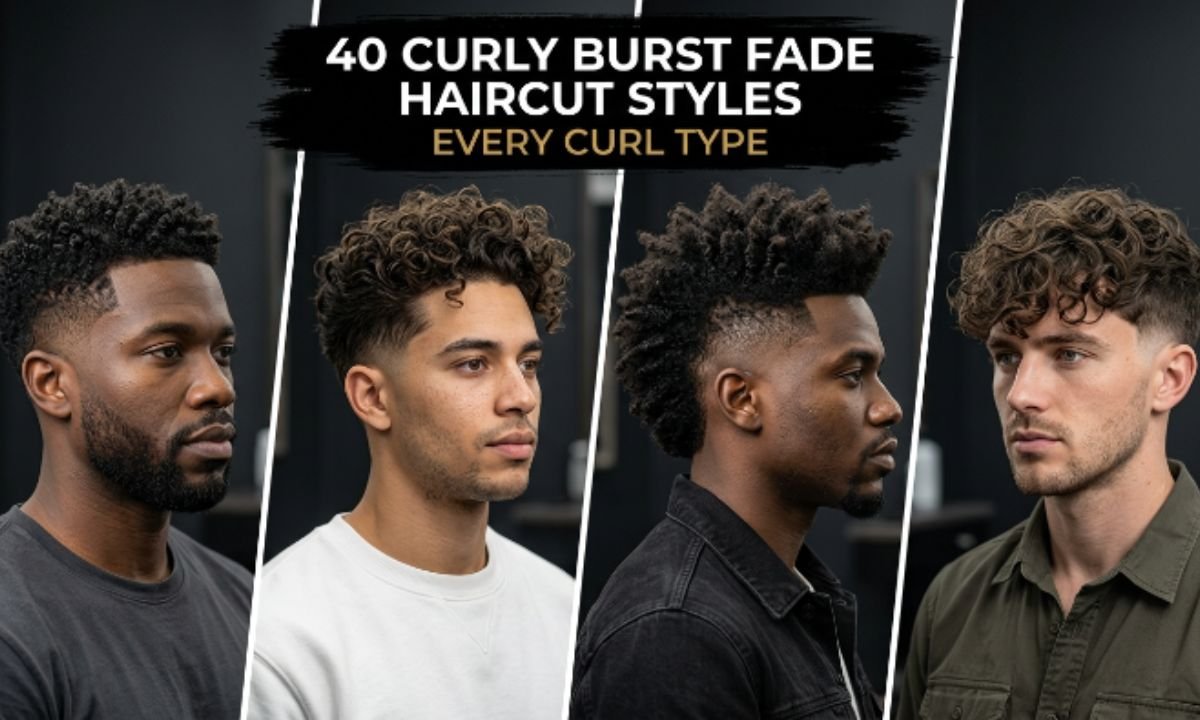
Curly Burst Fade Mullet
Natural curl pattern stays intact through the top and back, while the sides get the clean arc treatment. The curls do a lot of the visual heavy lifting here, adding volume and texture that a straight-haired version simply can’t replicate. Air-drying or diffusing keeps the curl definition instead of flattening it.
Best For: Naturally curly hair, guys wanting texture without much daily styling.
Tell Your Barber: “Cut the curls dry, low or mid burst; don’t over-thin the back.”
Maintenance: Fade every 3 to 4 weeks; curls disguise regrowth longer than straight hair does.
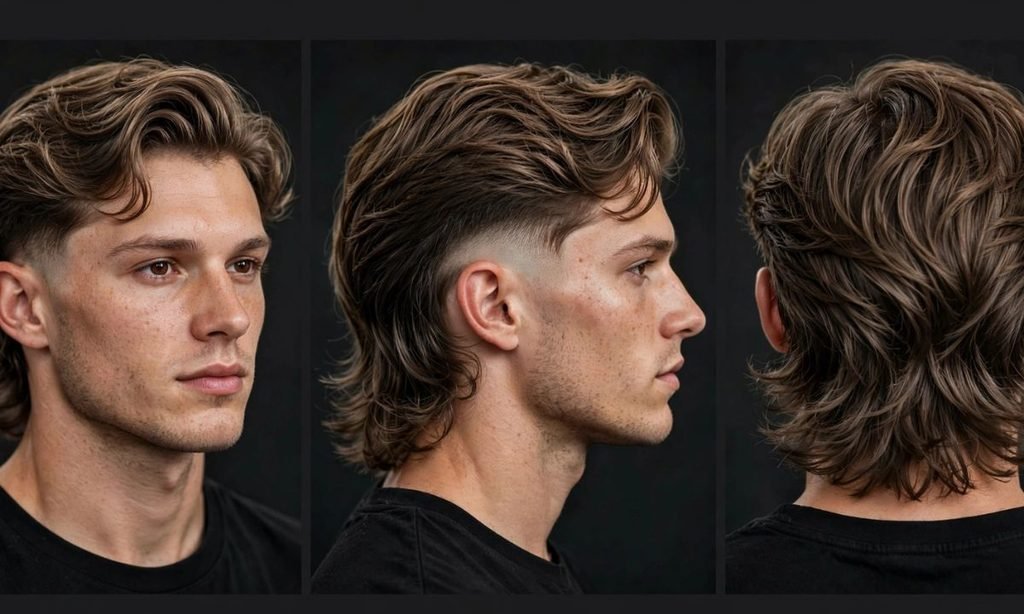
Wavy Burst Fade Mullet
Soft, natural waves give the back a relaxed, feathered movement instead of a blunt, heavy line. This version leans casual and low-effort, since the wave pattern does most of the styling work on its own. A light sea-salt spray brings out the texture without weighing the hair down.
Best For: Naturally wavy hair, anyone wanting an effortless, beachy finish.
Tell Your Barber: “Mid burst, feather the back layers so it moves naturally.”
Maintenance: Every 3 weeks for the fade; back trims every 6 to 8 weeks.
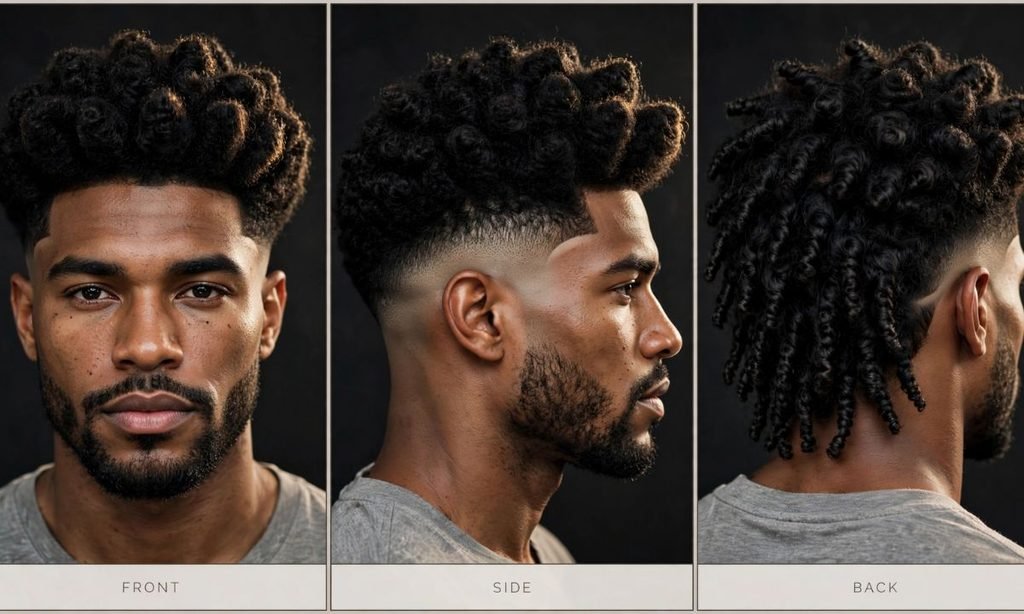
Coily or Afro-Textured Burst Fade Mullet
Dense coils create serious volume on top and in the back, while a skin-level burst keeps the sides razor-sharp for contrast. Scissor work, not clippers, shapes the length so the coil pattern stays springy rather than getting chopped flat. This version tends to look fuller and more sculptural than any other on this list.
Best For: Type 4 hair, guys wanting maximum volume with defined sides.
Tell Your Barber: “Skin burst on the sides, scissor-cut top and back to preserve the coils.”
Maintenance: Fade every 2 weeks; a detail-trimmer pass keeps the arc line sharp between cuts.
Textured Top Burst Fade Mullet
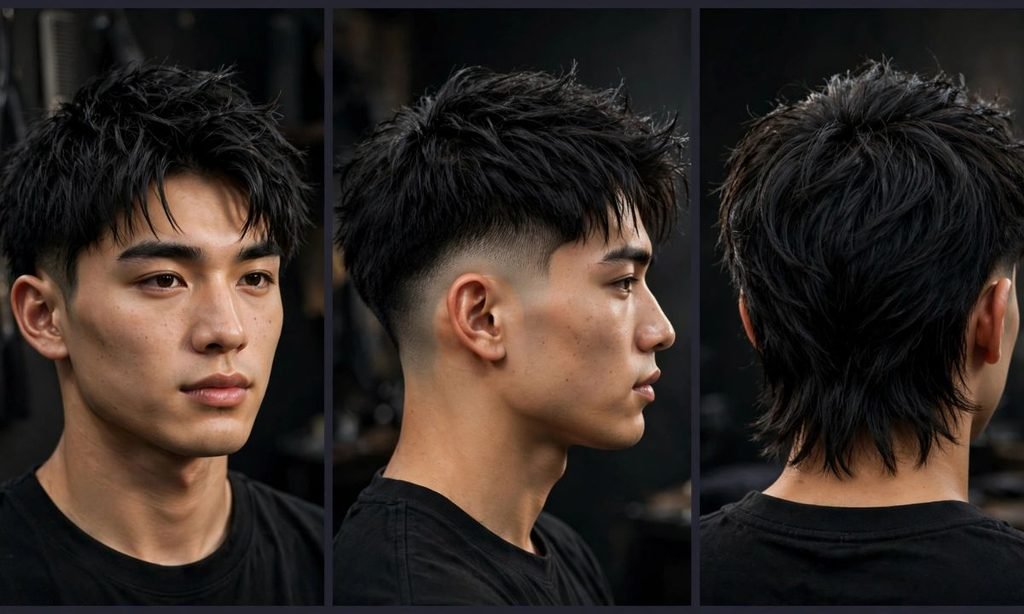
The top gets a piecey, point-cut finish that looks intentionally undone rather than neat. Matte clay or a light paste separates the strands and kills shine, giving it a grungy, modern edge. It’s a strong match for the mid or high burst since the messy top contrasts nicely against a clean, curved side.
Best For: Straight to wavy hair, guys who want a low-shine, textured finish.
Tell Your Barber: “Point-cut the top for texture, mid burst on the sides.”
Maintenance: Fade every 3 weeks; top trims every 6 weeks to keep the texture from getting shaggy.
Slicked-Back Burst Fade Mullet
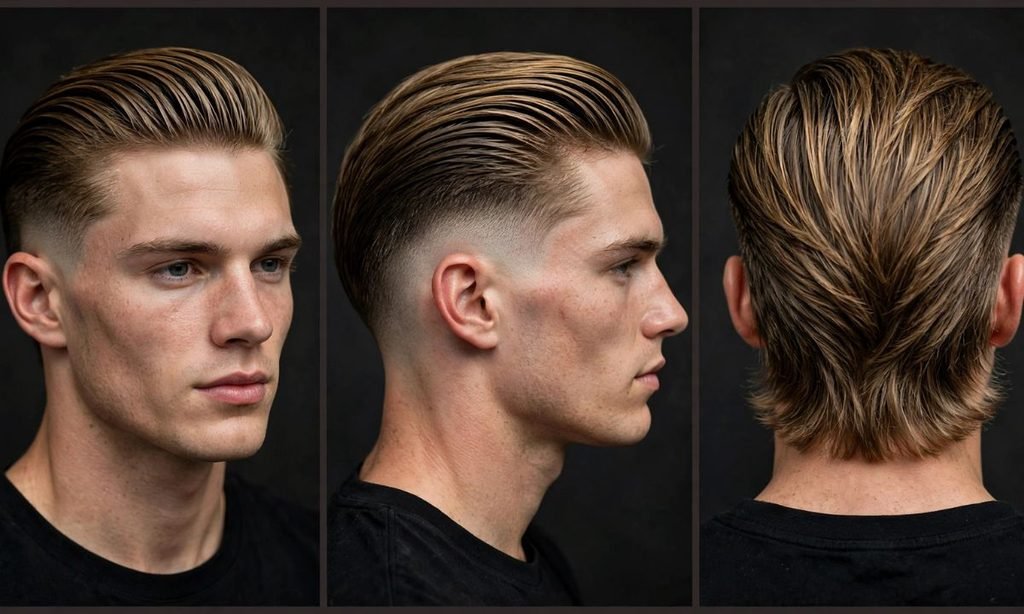
Length on top gets brushed straight back with pomade, creating a sleek, polished contrast against the sharp burst on the sides. This is the dressiest option here, closer to smart-casual. look than a rebellious one. It photographs well and works nicely for guys who want the mullet’s edge without looking unkempt.
Best For: Straight, thicker hair; guys wanting a polished, event-ready style.
Tell Your Barber: “Leave more length on top for slick-back styling and a mid burst on the sides.”
Maintenance: Fade every 3 weeks; daily pomade application to maintain the slick finish.
Fringe Burst Fade Mullet
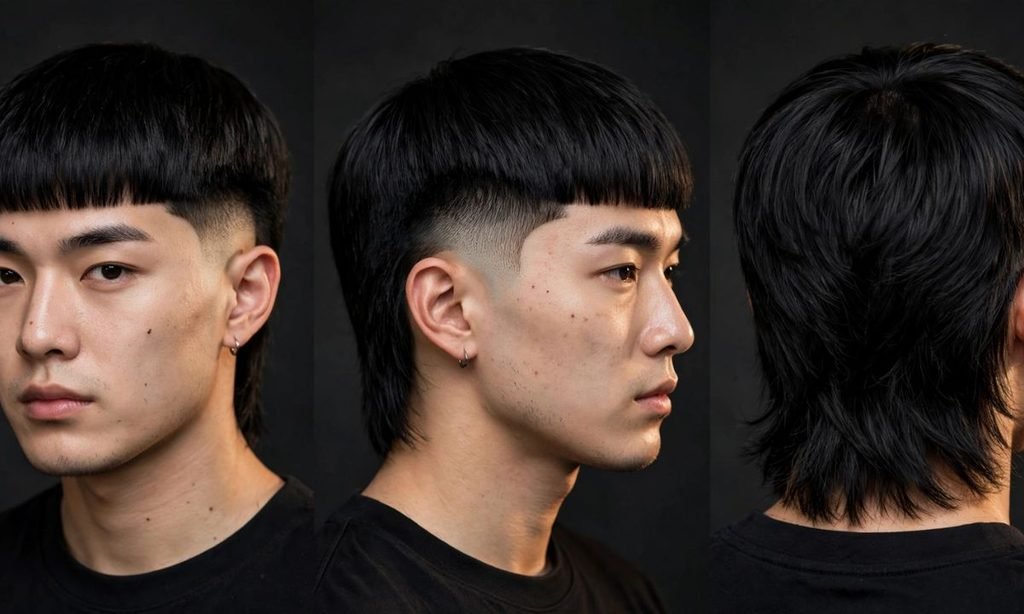
A straight-across fringe sits low on the forehead, often called an Edgar-style front, paired with the curved burst on the sides. It’s a distinctive, youthful look that’s especially popular among guys with thick, straight hair. The contrast between the blunt front line and the curved side arc gives the whole cut a sharp geometric feel.
Best For: Thick straight hair, younger guys wanting a bold, trend-forward look.
Tell Your Barber: “Blunt fringe across the front, burst fade on the sides, and keep the back full.”
Maintenance: Fringe trims every 2 to 3 weeks to keep the line crisp; fade every 3 weeks.
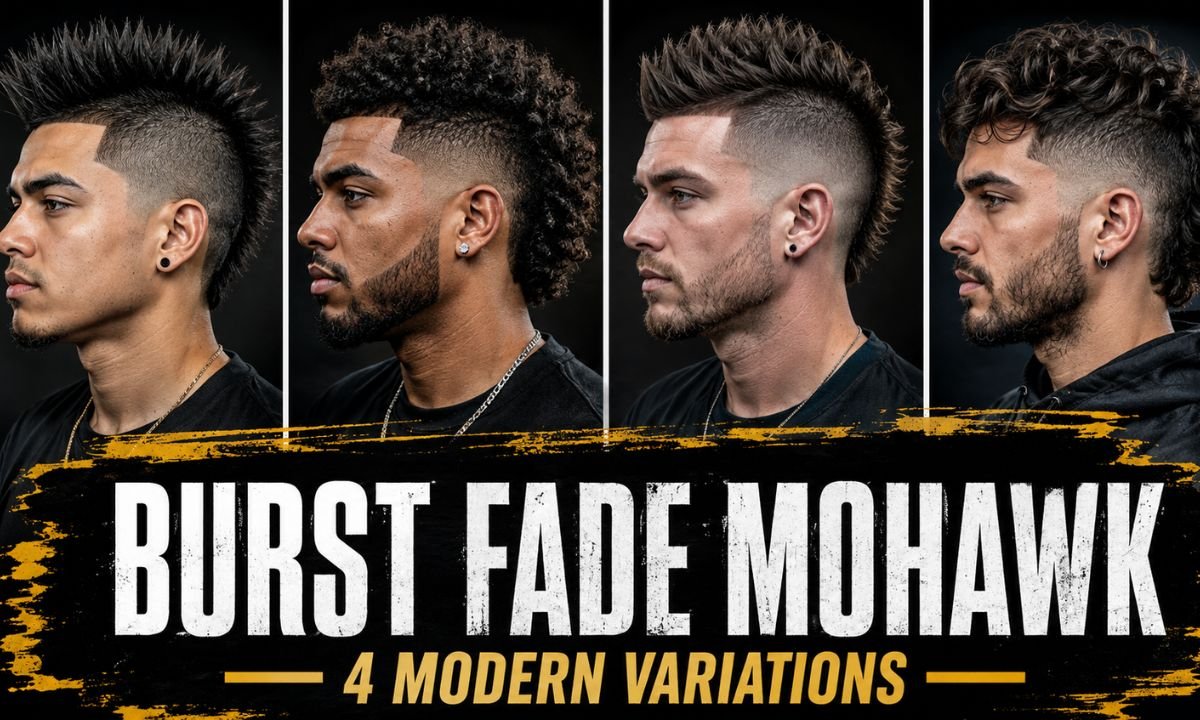
Mohawk Burst Fade Mullet
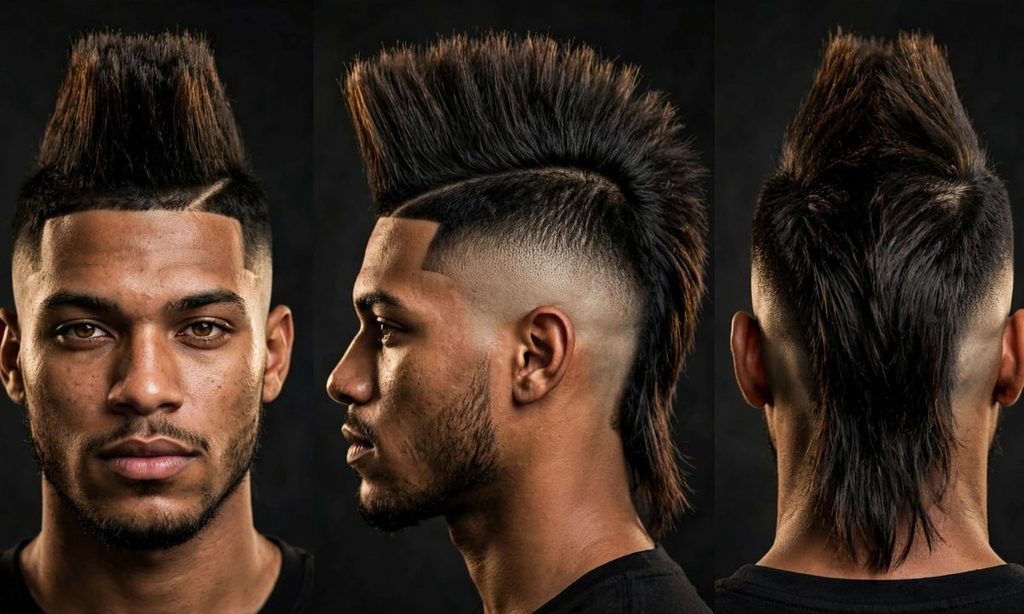
A narrow strip of longer hair runs down the center of the head, while both sides get shaved or faded into a burst shape. It’s the most attention-grabbing version on this list and works best styled upward with a strong-hold product for definition. The long back still hangs loose, keeping the mullet identity even with the dramatic top.
Best For: Confident, statement-seeking guys; thick hair that holds height well.
Tell Your Barber: “Mohawk strip on top, skin burst on both sides, keep the mullet length in back.”
Maintenance: Sides need a fade touch-up every 2 weeks to keep the strip looking sharp.
Wolf Cut Burst Fade Mullet
Heavy, choppy layers frame the face and add shag-like texture through the crown, blending into a burst fade at the sides. This hybrid softens the traditional mullet shape into something shaggier and more lived-in. It works especially well on medium to thick hair that can support all those layers without looking thin.
Best For: Medium to thick hair, guys wanting a shaggy, face-framing silhouette.
Tell Your Barber: “Heavy layers through the crown, wolf-cut shag, mid burst on the sides.”
Maintenance: Layer trims every 6 weeks; fade touch-ups every 3 weeks.
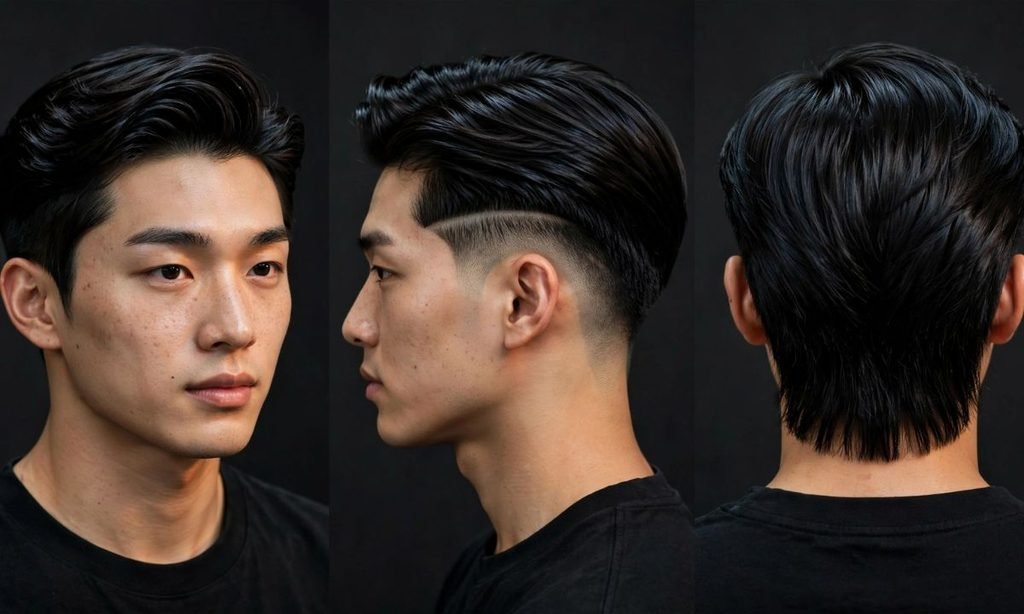
Two-Block Burst Fade Mullet
Borrowed from Korean styling, the top sits as a separate, disconnected mass over a faded undercut, creating a clear visual “block” between short and long. The burst shape rounds out the undercut portion instead of leaving a hard, straight line. It gives a clean, glossy finish that’s popular in K-pop-influenced looks.
Best For: Straight, dense hair; guys wanting a polished, glossy silhouette.
Tell Your Barber: “Two-block cut, disconnected top, burst fade, shaping the undercut sides.”
Maintenance: Undercut touch-up every 3 weeks; top trims every 8 weeks to maintain length.
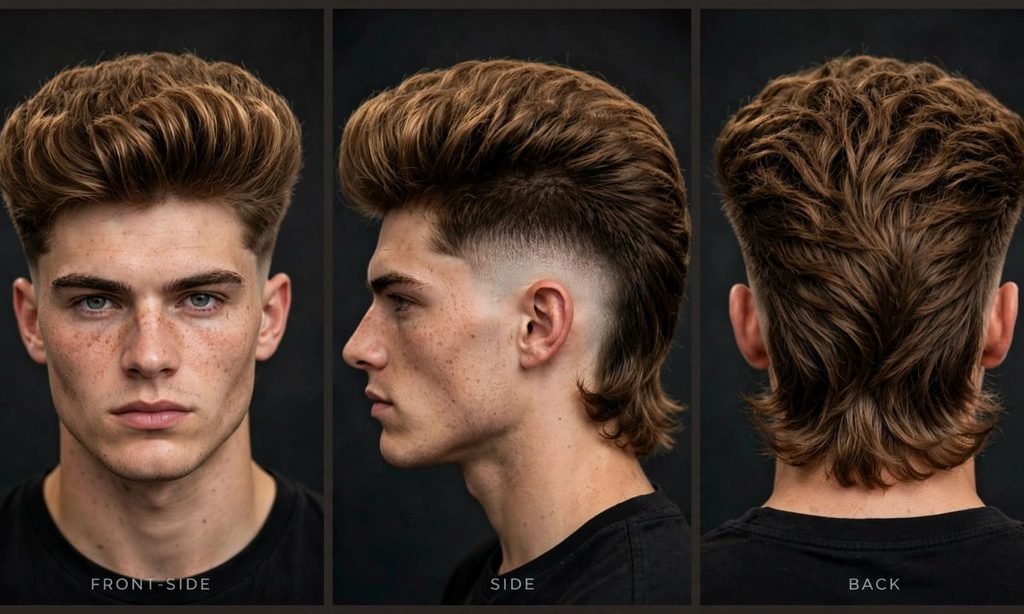
Blowout Burst Fade Mullet
The top gets blow-dried and round-brushed into a rounded, voluminous dome, creating serious height contrast against the tight burst below. It’s a bolder, more retro-leaning look that takes daily styling effort to maintain. Strong-hold clay locks the volume in place once it’s shaped.
Best For: Thick, straight to wavy hair; guys willing to style daily for volume.
Tell Your Barber: “Leave extra length on top for a blowout, skin, or high burst on the sides.”
Maintenance: Fade every 2 weeks; daily blow-dry routine to keep the volume standing.
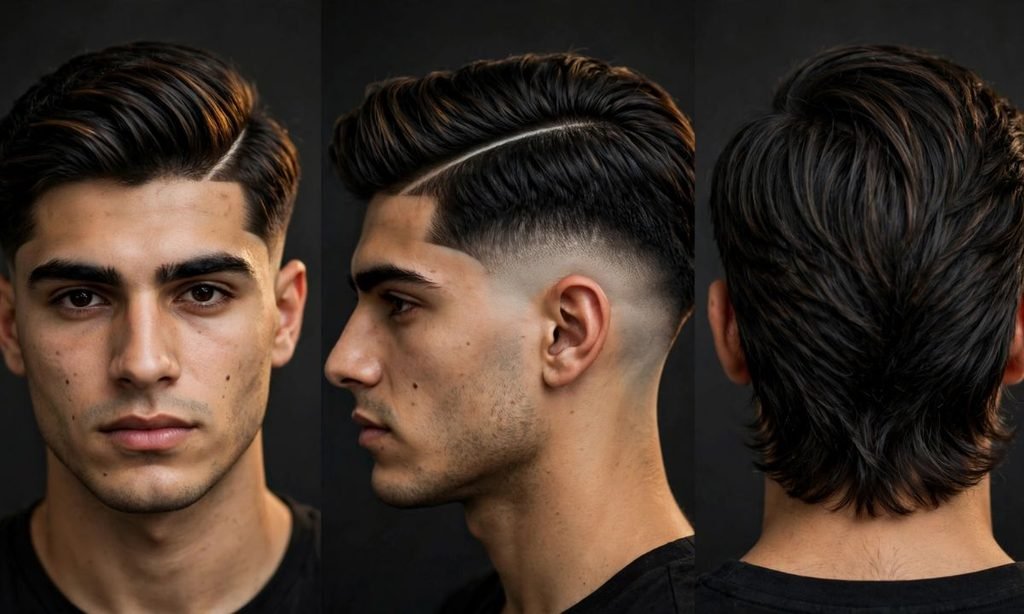
Hard Part Burst Fade Mullet
A razor-thin line gets shaved into one side, adding a graphic detail to an otherwise standard burst fade mullet. It’s a small addition that makes a noticeable difference, especially on shorter tops styled with a side part. This works well for guys who want extra definition without changing the overall shape much.
Best For: Any face shape, straight hair that holds a side part cleanly.
Tell Your Barber: “Add a hard part line on the left side, a standard mid burst fade.”
Maintenance: The part line needs a refresh every 2 weeks alongside the regular fade appointment.
Hockey Burst Fade Mullet
Named for its popularity among hockey players, this version keeps the back long, often five to seven inches, and heavily feathered so it flows out from under a helmet without looking like a solid curtain. The sides stay tight with a mid burst for contrast. It’s the boldest back-length option on this list.
Best For: Guys fully committed to length, athletes, and anyone wanting maximum drama in the back.
Tell Your Barber: “Mid burst on the sides, keep the back long and feathered, and no blunt ends.”
Maintenance: Fade every 3 weeks; back trims every 8 to 10 weeks to maintain feathering.
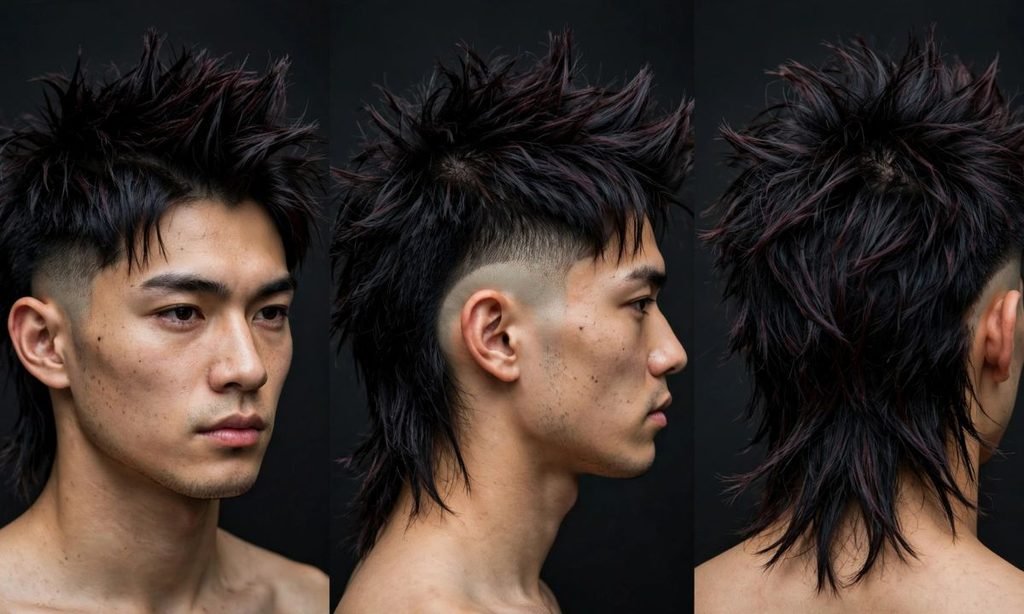
Punk Burst Fade Mullet
Spiky or deliberately ragged top hair pairs with a skin-level burst and an asymmetric, uneven back for a rougher, rebellious finish. This version leans into imperfection on purpose, so clean lines aren’t really the goal. Strong-hold gel or clay keeps the top standing up throughout the day.
Best For: Guys wanting an edgy, non-conformist look; thick or coarse hair.
Tell Your Barber: “Skin burst on the sides, spiky uneven top, keep the back asymmetric.”
Maintenance: Fade every 2 weeks; the back gets trimmed irregularly to preserve the rough edges.
How to Ask Your Barber for a Burst Fade Mullet
Walking in and saying “give me a mullet” leaves way too much up to chance. Be specific about four things:
Arc height — low, mid, or high.
Fade depth — skin, shadow, or a guard number.
Top length — in inches.
Back length and neckline — collar-length or longer, soft taper, or a blocked tail.
A script that works well: “Burst fade mullet, mid-height arc, fade to skin at the bottom of the arc, about two to three inches on top, back at collar length with a soft neckline, no squared tail.”
Bring a side-profile photo along with a front-facing one. Front-only references are the number one reason people end up with the wrong arc height or the wrong amount of back length.
Styling a Burst Fade Mullet at Home
Start with damp, not soaking wet, hair. Wet hair stretches products too thin and makes it hard to judge how much volume you’re actually building.
Use sea-salt spray for grip and texture, mousse for volume, or a leave-in cream if you want softness instead of hold.
Blow-dry using your fingers rather than a brush, unless you’re going for a slick or blowout finish that needs more structure.
Finish with the product that matches your goal: matte clay for texture, molding paste for light shine and structure, pomade for a slick back, or curl cream for wavy and curly textures.
Wash three to four times a week if you’re using a lot of product, and condition every time to keep the longer back section from drying out. A silk or satin pillowcase overnight helps preserve texture and cuts down on morning frizz.
Maintenance & Upkeep Timeline
Fade Depth
Touch-Up Frequency
Back Trim Frequency
Skin fade
Every 10–14 days
Every 6–8 weeks
Shadow/guard fade
Every 3–4 weeks
Every 6–8 weeks
Curly/coily textures
Every 3–4 weeks
Every 8–10 weeks
The fade is what needs the frequent attention. The back barely needs touching for months at a time, which is part of what makes this cut manageable once it’s established.
Common Mistakes & Who Should Avoid This Cut
A few situations where this haircut tends to disappoint:
Round faces paired with a low burst and short back. That combination adds width right where you don’t want it.
Fine, low-density straight hair with a very short back. It can lie flat and look like uneven growth instead of a styled mullet.
Strict workplace dress codes. Mid and high bursts read as statement cuts, not conservative ones.
No existing length in back. You need at least collar-length hair before the mullet shape is even visible, so this isn’t a same-day transformation for guys coming from a buzz cut.
Frequently Asked Questions
Is the burst fade mullet still trending in 2026?
Yes, it remains one of the most requested combination cuts at barbershops heading into 2026.
What’s the real difference between a burst fade and a regular fade mullet?
A burst fade curves around the ear in an arc, while a standard fade blends in a straight line.
How long does my hair need to be before I can get this cut?
Your back section needs to reach at least collar length for the mullet shape to actually show.
Does a burst fade mullet work well on curly or coily hair?
Yes, and many barbers consider it an ideal texture for this cut since curls add natural volume to the back.
How much should I expect to pay for this haircut?
Most shops charge between $35 and $85 for a 45- to 60-minute appointment, depending on your area and the barber’s experience.
Final Thoughts
The burst fade mullet works because it takes two simple ideas, a curved fade and a long back, and lets you customize every variable in between: arc height, fade depth, top texture, and how far you’re willing to let the back grow.
Whether you want something office-safe and subtle or a full hockey-length statement, there’s a version on this list built for your hair type and face shape. Bring the right photos, use the right words with your barber, and keep up with the fade schedule, and this cut will look intentional at every single stage of growth.
Hi, I’m Oliver Bennett. I’m passionate about men’s hairstyles and love exploring modern cuts that are easy to understand and easy to ask your barber for. On this website, I share simple guides on styles like burst fades, mullets, curtain cuts, tapers, and other trending men’s hairstyles. My goal is to help you find a haircut that matches your hair type, face shape, and personal style.

2 thought on “Burst Fade Mullet: 18 Styles, Face Shapes & Barber Tips”