Burst Fade GuideLong Hair Burst Fade: 30 Best Styles Every Man Should Try in 2026 Right Now
Long Hair Burst Fade: 30 Best Styles Every Man Should Try in 2026 Right Now
August 18, 2026
/
1 Comment
/
Oliver Bennett
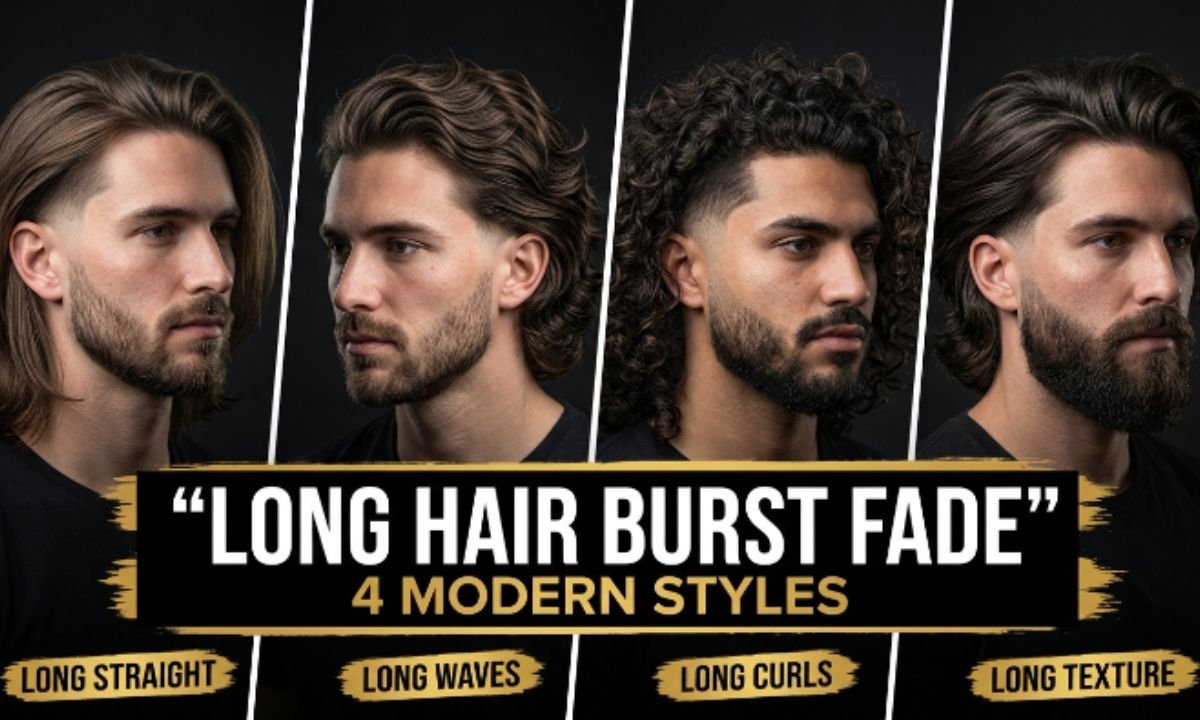
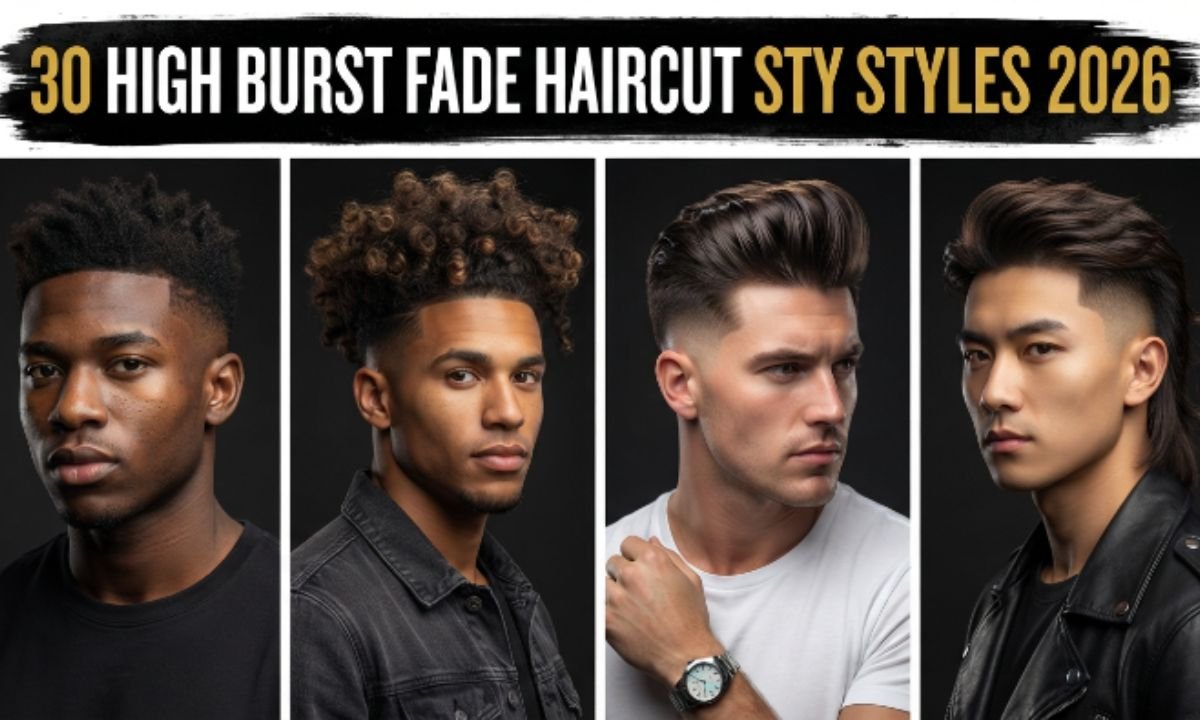
A long hair burst fade pairs a curved, sunburst-shaped fade around the ear with real length left on top and in the back. This guide breaks down what defines the cut, why it keeps growing in popularity, and thirty distinct ways to wear it based on hair type, shape, and lifestyle. Whether you want something sleek for the office or wild for the weekend, there’s a version built for you.
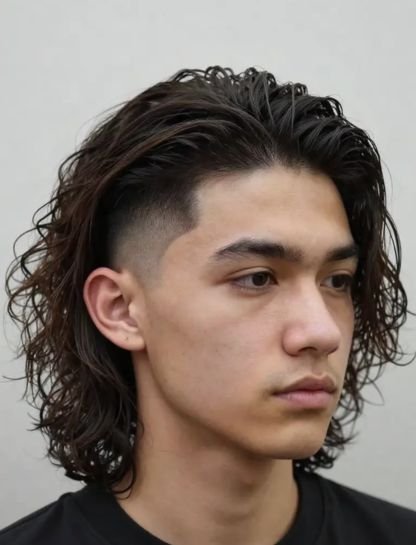
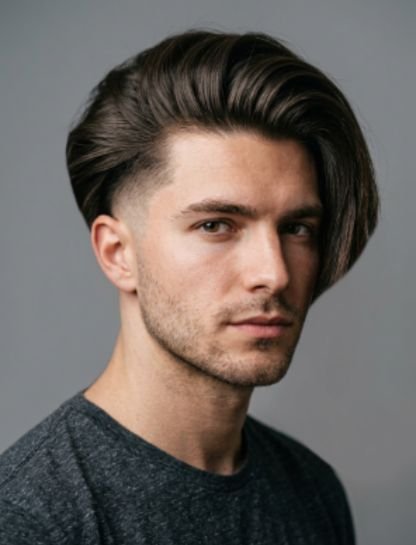
A long hair burst fade is a haircut where the sides fade in a rounded, semi-circular sweep that curves tightly around the ear instead of running in a straight diagonal line. This curved shape is what separates a burst fade from a standard skin or taper fade, and it’s what gives the style its name.
The top and back stay noticeably longer than the sides, so the length becomes the main feature of the haircut rather than an afterthought. Barbers usually blend the fade upward into the longer section so there’s no harsh line where the two textures meet, just a smooth transition from skin-close to full length.
Because the fade wraps around the ear rather than across the whole side of the head, it reads as more detailed and intentional than a plain fade. It also tends to look sharper for longer between visits, since the curved edge doesn’t grow out as visibly as a straight line does.
Key Features of a Long Hair Burst Fade
Curved fade line: The defining trait — a rounded burst shape hugging the ear rather than a flat diagonal cut.
Length retention: Enough hair left on top (usually 5 inches or more) to style in several different ways.
Adjustable fade height: Can start low near the ear, in the middle of the side, or high up near the temple.
Texture-forward top: Most versions rely on layering or point-cutting so the long hair moves instead of sitting flat.
Blendable with facial hair: The rounded fade line connects naturally into a beard without needing a hard stop.
Why Men Choose This Hairstyle
Men gravitate toward this cut because it solves a common problem: wanting long hair without the shapeless, overgrown look that comes with skipping the barber for months. The fade keeps the sides sharp even as the top grows, so the haircut still looks deliberate rather than neglected.
It also photographs and styles differently depending on the day. A guy can wear it slicked back for a client meeting, then rough it up with clay for a night out, all from the same cut. That kind of range is rare in a single haircut, and it’s a major reason barbers report this as one of their most requested combinations right now.
There’s also a confidence factor. The visible contrast between the tight fade and the flowing top draws the eye and signals grooming effort without requiring hours in front of a mirror.
Benefits of a Long Hair Burst Fade
Grows out gracefully—since most of the length lives on top, a faded touch-up every few weeks keeps the whole cut sharp without a full re-cut.
Works across nearly every hair type, from pin-straight to tightly coiled, with only the top length and product choice changing.
Reduces bulk and weight around the ears and neckline, which helps thick or coarse hair sit lighter.
Gives styling flexibility — the same haircut can be worn tied up, brushed down, or left loose depending on the occasion.
Flatters a wider range of face shapes than a uniform-length haircut because the barber can shift volume with the top length and fade height.
30 Modern Long Hair Burst Fade Styles
1. Classic Long Hair Burst Fade
This is the baseline version most guys start with — a smooth, mid-height burst fade with 6 to 8 inches left on top, brushed backward with light natural movement. It doesn’t chase a specific trend, which is exactly why it works in almost any setting, from a client pitch to a weekend cookout. The finish stays soft rather than glossy, so it reads as groomed without looking overly done.
Best For: Guys who want one dependable cut that works for both work and casual wear.
Tell Your Barber: “Mid-burst fade, keep the top around 6 to 8 inches with soft layers.”
Maintenance: Fade refresh every 3 weeks; trim ends every 8 to 10 weeks.
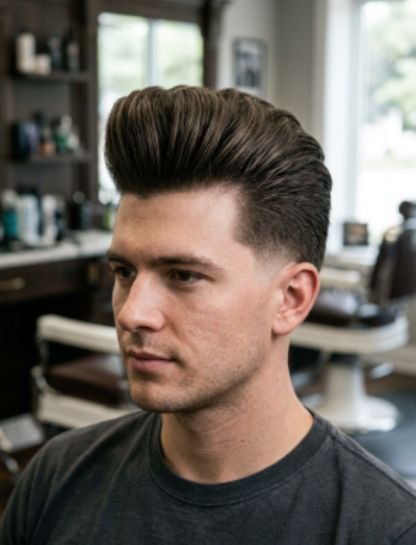
2. Long Burst Fade Pompadour
The front section is lifted high and pushed back to create real height, while the fade underneath stays tight and rounded around the ear. Because the top is dense and combed rather than left loose, this version leans more formal than most others on this list. It needs a strong-hold product to survive a full day without collapsing.
Best For: Thick or medium-density hair on oval and round face shapes that benefit from added height.
Tell Your Barber: “High-volume pompadour on top, mid-burst fade, and leave enough length at the crown to lift.”
Maintenance: Trim every 6 weeks; fade refresh every 2 to 3 weeks since the high contrast shows growth fast.
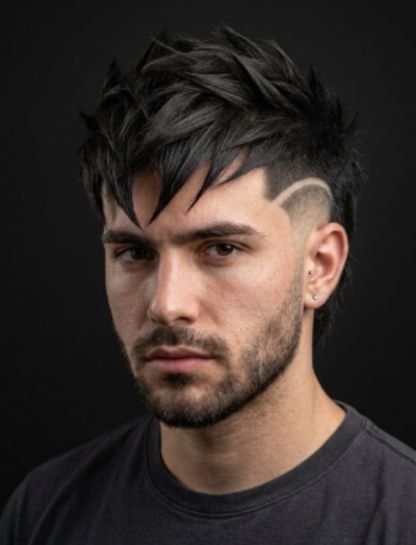
3. Razor-Textured Burst Fade
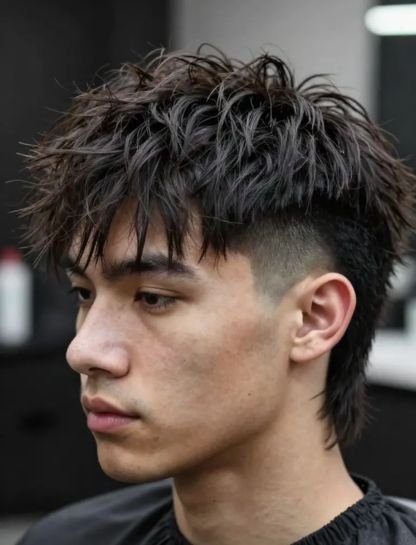
Instead of scissor-cut edges, this style uses a razor to create a choppy, slightly frayed texture through the top, paired with a high burst fade for maximum contrast. The result looks intentionally undone, almost like the ends were cut in motion rather than measured out. It’s shorter on top than most entries here, sitting around 5 to 7 inches.
Best For: Straight or wavy hair that holds a razored edge well without frizzing.
Tell Your Barber: “Razor the top for texture, don’t blunt-cut the ends, and do a high burst fade on the sides.”
Maintenance: Trim every 5 to 6 weeks; razored edges soften faster than blunt cuts, so don’t stretch it too long.
4. Long Curved Burst Fade
This variation keeps the top wide and loosely waved, letting it fall outward rather than straight back, with a low burst fade that barely touches above the ear. The overall silhouette is rounder and softer than most burst fade styles, almost bell-shaped when styled. It suits guys who want length without a strong directional style.
Best For: Loose, wavy hair on square or diamond face shapes needing softness at the sides.
Tell Your Barber: “Low burst fade, keep the top wide and unstructured, and don’t force it into one direction.”
Maintenance: Trim every 8 weeks; low fades grow out subtly, so visits can stretch a little longer.
5. Layered Wolf Burst Fade
Heavy layering throughout the top creates a shaggy, separated look that moves strand by strand, paired with a mid-low burst fade for contrast without being loud. Unlike a standard wolf cut, the fade keeps this version from looking overgrown at the sides. It’s one of the messier entries here, built for guys who like visible texture.
Best For: Thick or coarse hair that needs weight removed to avoid looking heavy.
Tell Your Barber: “Heavy layers throughout the top like a wolf cut and a mid-low burst fade underneath.”
Maintenance: Trim every 6 to 7 weeks to keep layers from growing into one flat mass.
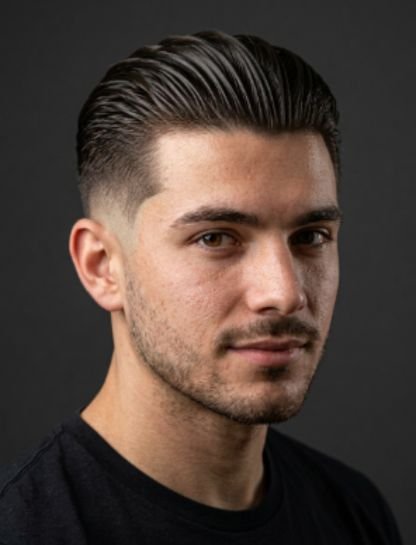
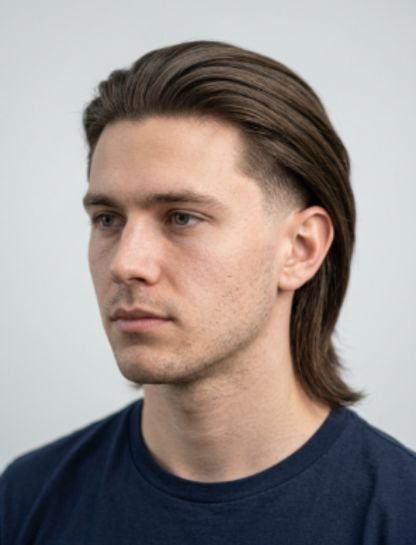
6. Long Slick Burst Fade
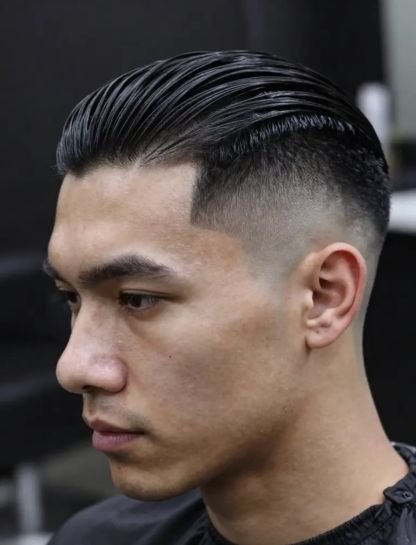
Hair is combed straight back with a wet or gel-based finish, creating a narrow, streamlined silhouette that pairs with a high, sharp burst fade for maximum contrast. This is the most polished, least casual version on the list — closer to a formal look than a street style. The top usually needs to be at least 6 inches to hold the slick direction without flipping up.
Best For: Straight, fine-to-medium hair on guys who want a boardroom-ready finish.
Tell Your Barber: “High burst fade; keep the top smooth enough to slick straight back.”
Maintenance: Fade touch-up every 2 weeks since high fades show regrowth fastest.
7. Feathered Burst Flow
The top is cut with feathered, airy layers that taper toward the ends, giving the hair a light, almost weightless movement instead of dense volume. Paired with a low burst fade, this style leans soft and natural rather than sharp or structured. It works especially well on hair that’s slightly thinning, since the feathering creates the illusion of fullness.
Best For: Fine or thinning hair that needs the appearance of extra volume.
Tell Your Barber: “Feather the layers on top so it’s light, not heavy — low burst fade around the ear.”
Maintenance: Trim every 6 weeks to keep the feathered tips from splitting.
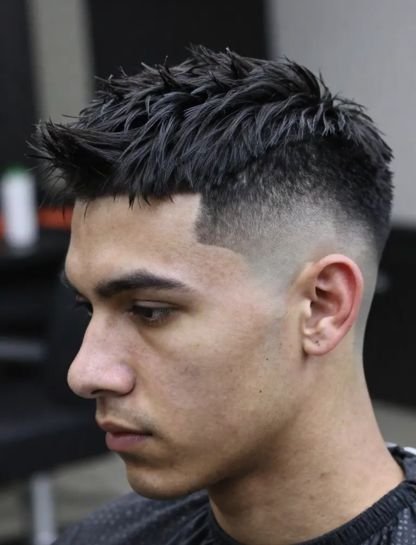
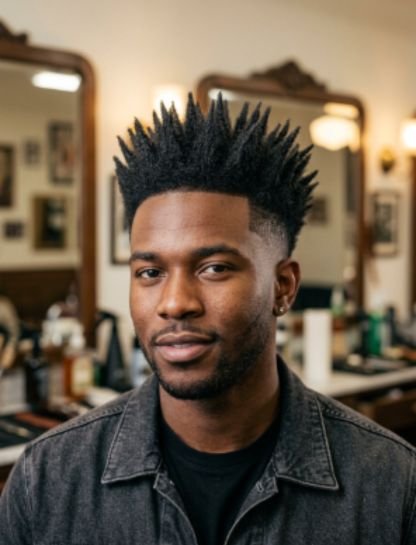
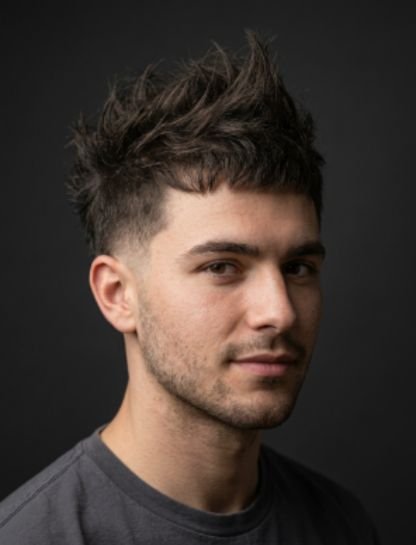
8. Long Spiked Burst Fade
The top is styled straight upward into defined, separated spikes using a strong matte product, contrasted against a high burst fade for a sharp, aggressive look. This is one of the boldest styles here and reads as edgy rather than professional. It requires a shorter top length than most long burst fades—around 5 to 7 inches—so the spikes hold their shape.
Best For: Coarse or thick hair on guys who want a statement look for nights out or events.
Tell Your Barber: “Keep the top short enough to spike upward, a high burst fade for contrast.”
Maintenance: Trim every 5 weeks; high fades on this style need refreshing every 2 weeks.
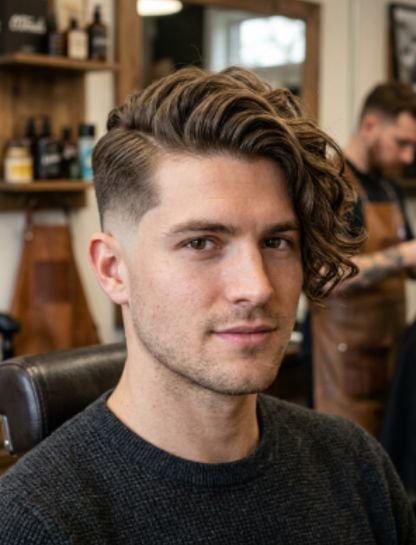
9. Wavy Side-Sweep Burst
Hair is directed in a deep side sweep rather than straight back, creating an asymmetric shape that pairs naturally with loose waves. The mid-height burst fade on the shorter side balances the visual weight of the swept-over length. This style photographs particularly well from an angle because of the clear directional flow.
Best For: Naturally wavy hair on diamond or heart face shapes needing width balance.
Tell Your Barber: “Deep side part with a sweep, mid-burst fade on the shorter side.”
Maintenance: Trim every 7 weeks; re-establish the part line at each visit.
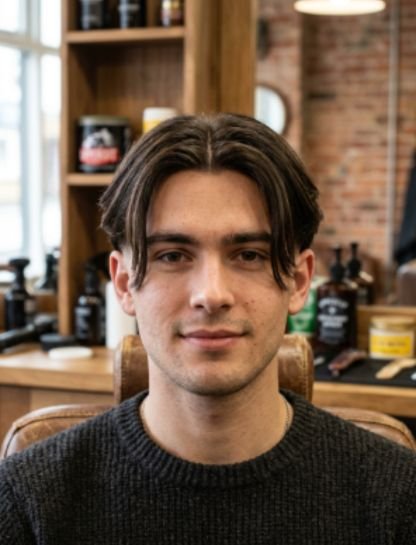
10. Long Curtain Burst Fade
A center part divides the top into two even sections that fall forward and frame the face, while a low burst fade keeps the sides from adding unwanted width. This differs from a standard curtain cut by removing bulk at the sides entirely, so the framing effect on the face reads cleaner. It works best with hair long enough to actually curtain past the eyebrows.
Best For: Straight or slightly wavy hair on oval and oblong faces wanting face-framing length.
Tell Your Barber: “Center part, curtain the front sections forward, low burst fade at the sides.”
Maintenance: Trim every 8 weeks, focusing only on the front curtain sections to maintain length.
11. Textured Long Quiff Burst
A relaxed lift at the front creates a soft quiff shape without the rigid height of a pompadour, finished with a matte, non-shiny texture and a mid-high burst fade. It sits in between the classic and pompadour versions—more casual than the pompadour and more structured than a plain, messy top. Dry styling products work better here than wet ones.
Best For: Medium to thick hair on guys who want volume without a formal finish.
Tell your barber: “Soft quiff at the front, no heavy gel, and a mid-high burst fade.”
Maintenance: Trim every 6 weeks; refresh the fade every 3 weeks.
12. Long Shag Burst Fade
Wide, messy layering throughout the top creates volume in every direction rather than one controlled shape, paired with a low burst fade that keeps the sides from competing with the top’s width. This is the widest, loosest silhouette on the list, built entirely around a lived-in, unstyled appearance. It requires the longest top length in the layered category, often past 8 inches.
Best For: Wavy or curly hair on round or square faces that can handle extra width up top.
Tell Your Barber: “Full shag layering across the top, keep it wide and messy, low burst fade.”
Maintenance: Trim every 8 to 9 weeks to preserve the shaggy shape without losing length.
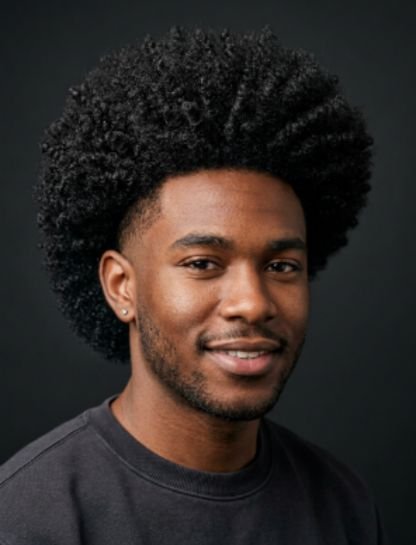
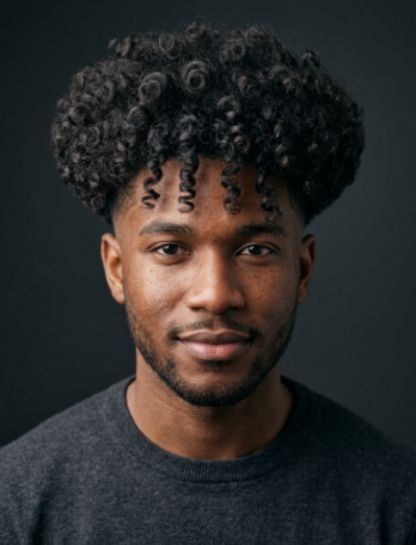
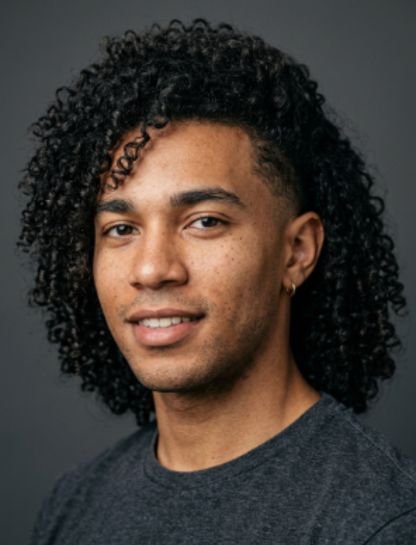
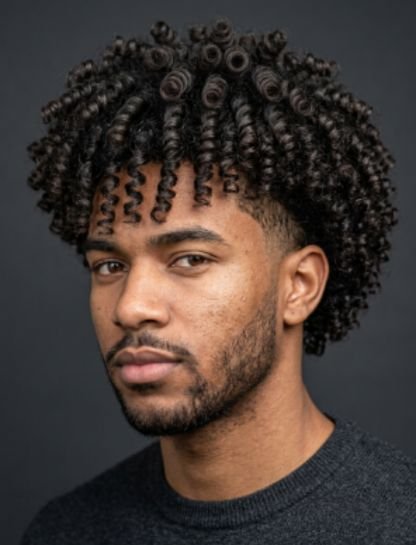
13. Coiled Long Burst Fade
Natural coils are left to form their own rounded shape on top, with minimal thinning so the coil pattern stays full and defined, paired with a mid-burst fade for a clean border. Unlike curly or wavy versions, this style specifically preserves tight coil structure rather than loosening it with layers. Product choice matters more here than cutting technique.
Best For: Coily or Type 4 hair textures wanting definition without heavy shrinkage.
Tell Your Barber: “Don’t thin the coils too much; keep the pattern intact. Mid-burst fade on the sides.”
Maintenance: Trim every 8 to 10 weeks; moisturize the scalp weekly to prevent dryness at the fade line.
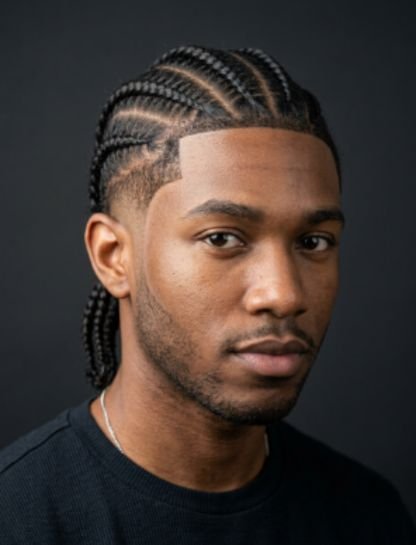
14. Long Braided Burst Fade
The top is sectioned into cornrows or box braids that run back or in a custom pattern, bordered by a high burst fade that makes the braid pattern stand out sharply against skin. This is a protective style first and a haircut second—the braids themselves dictate the shape rather than cutting technique. It holds its look far longer between barber visits than any other style on this list.
Best For: Coarse or textured hair looking for a protective style with a modern edge.
Tell Your Barber: “High burst fade around the braid pattern; keep the border crisp when you retouch it.”
Maintenance: Re-braid every 3 to 4 weeks; refresh the fade border every 2 weeks.
15. Wet-Flow Burst Fade
This style is built specifically for a wet, glossy finish rather than a dry matte one, with the top flattened and directed backward in defined, glass-like strands. A mid-low burst fade keeps the sides in proportion to the sleek top. It’s a distinct look from the slick-back version because the strands stay separated rather than merging into one smooth sheet.
Best For: Straight to slightly wavy hair on guys comfortable with a daily gel routine.
Tell Your Barber: “Cut for a wet-styled finish with separated strands, mid-low burst fade.”
Maintenance: Fade refresh every 3 weeks; wash out gel nightly to protect scalp health.
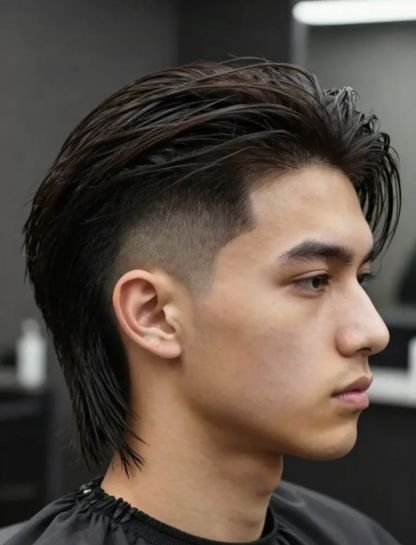
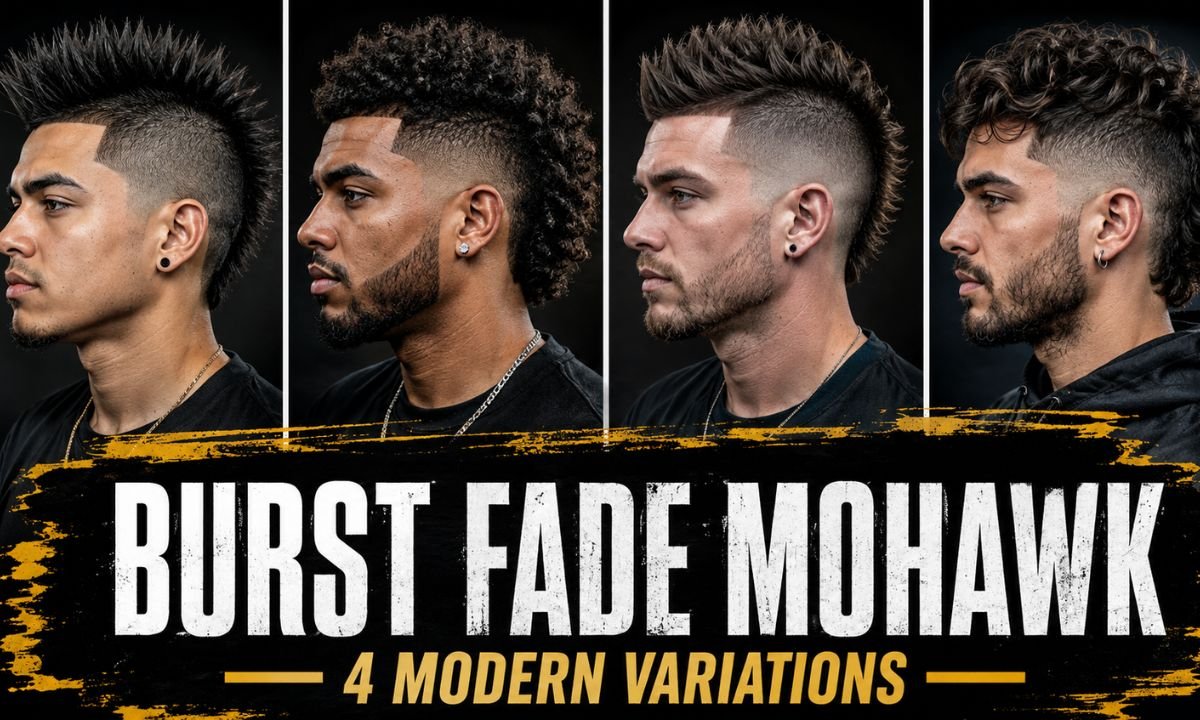
16. Long Mohawk Flow Burst
Hair through the center stays long while both sides taper into a high burst fade, creating a mohawk silhouette that’s softened by the curved fade line instead of a shaved edge. Because the fade blends rather than shaves to skin at the border, this version is more wearable day-to-day than a traditional mohawk. The center strip needs regular shaping to keep its ridge visible.
Best For: Guys with a bold personal style who still want office-appropriate wearability.
Tell Your Barber: “Mohawk shape through the center, blend into a high burst fade, and don’t shave the sides completely.”
Maintenance: Fade refresh every 2 weeks; trim the center strip every 6 weeks.
17. Loose Curl Burst Fade
Curls are left long and full without heavy layering, creating a rounded, voluminous shape that falls naturally rather than being directed into a specific style. A low burst fade removes bulk at the sides so the curls don’t look overwhelming. This differs from the coiled version by working with looser, larger curl patterns rather than tight coils.
Best For: Type 2 or 3 curls on guys who want a relaxed, natural finish.
Tell Your Barber: “Keep the curls full on top, minimal thinning, and a low burst fade.”
Maintenance: Trim every 8 weeks; avoid brushing dry curls to prevent frizz.
18. Angular Long Burst
Sharp, geometric layering creates defined points and edges through the top rather than soft, rounded movement, paired with a mid-high burst fade for a matching sharpness at the sides. This is a more architectural take on the long burst fade, built around clean lines rather than natural flow. It suits guys who prefer a structured look over a relaxed one.
Best For: Straight, coarse hair on angular or square face shapes.
Tell Your Barber: “Cut sharp, defined layers, not soft ones, mid-high burst fade to match.”
Maintenance: Trim every 6 weeks to keep the angular lines from softening.
19. Long Bro Flow Burst
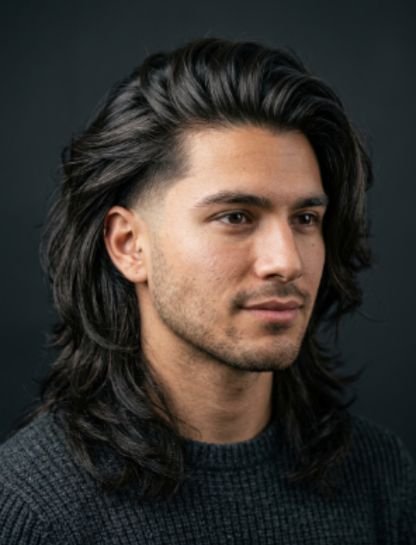
A relaxed, all-back flow with minimal product and natural movement, this style keeps the top notably longer than most entries here, often 9 to 12 inches, paired with a low burst fade that stays understated. It’s built for guys who want maximum length with the least amount of daily effort. The fade is there mainly to keep the sides from looking bulky, not to make a statement.
Best For: Straight or wavy hair on guys prioritizing low daily maintenance.
Tell Your Barber: “Keep the top as long as possible, natural flow, and low burst fade just to clean up the sides.”
Maintenance: Trim ends every 10 to 12 weeks; refresh the fade every 4 weeks since it’s subtle.
20. Messy Crown Burst Fade
Extra volume and rougher texture are concentrated at the crown, giving the top a lifted, disheveled look without any single styling direction, bordered by a mid-burst fade. This style stands apart from other messy options by deliberately building height at the crown rather than keeping volume even throughout. It photographs well from a three-quarter angle because of that lift.
Best For: Guys with a flat crown area wanting extra volume without a formal pompadour.
Tell Your Barber: “Build extra volume and texture at the crown specifically, mid-burst fade.”
Maintenance: Trim every 7 weeks; use a volumizing product at the roots daily.
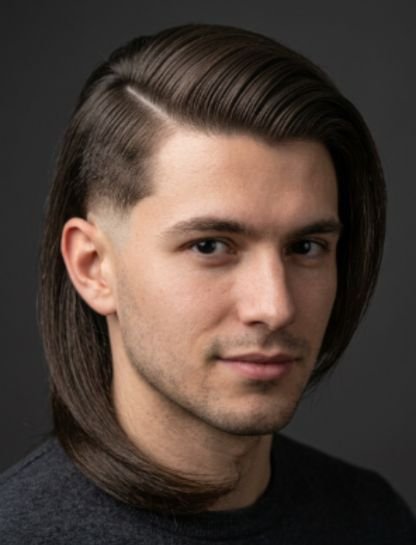
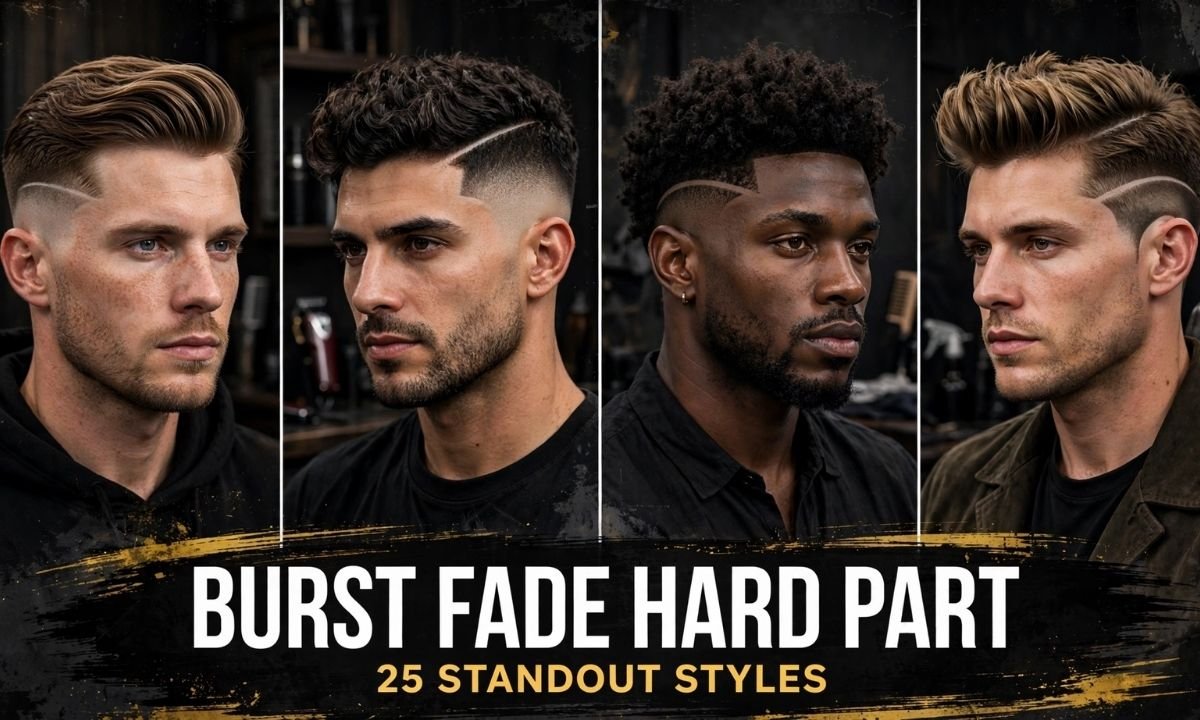
21. Long Side-Part Burst Fade
A defined, comb-created part separates the top into two clearly unequal sections, giving the style a controlled, classic structure that reads more formal than a loose side-sweep. A mid-low burst fade keeps the sides from distracting from the crisp part line. Fine, straight hair holds this part the longest without needing touch-ups during the day.
Best For: Fine to medium straight hair on guys wanting a traditional, tidy look.
Tell Your Barber: “Hard side part, comb it in clean, mid-low burst fade.”
Maintenance: Trim every 7 weeks; re-cut the part line at each barber visit.
22. Layered Curl Cascade Burst
Long layers cut into curly hair create a cascading effect, where each layer falls slightly past the one above it rather than all curls sitting at one uniform length. A low burst fade at the sides keeps the cascading top from looking too heavy near the ears. This is the longest curly variation on the list, often reaching past 9 inches.
Best For: Long, curly hair on guys who’ve been growing out their hair for a while.
Tell Your Barber: “Cut cascading layers through the curls; don’t cut one uniform length, low burst, or fade.”
Maintenance: Trim every 9 weeks; deep-condition weekly since longer curls dry out faster.
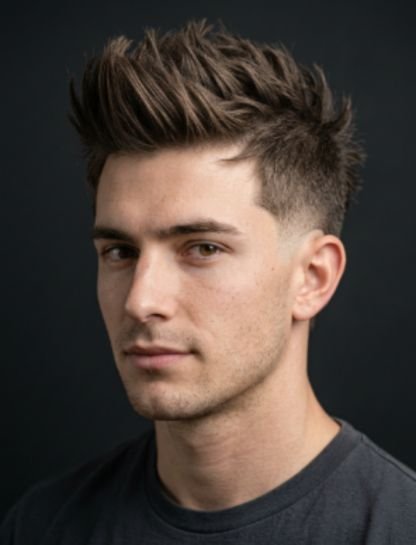
23. Long Faux Hawk Burst Fade
Unlike the full mohawk flow version, this style keeps a subtler central point using dry, spiky texture rather than a fully raised ridge, paired with a high burst fade. It reads as edgy but more restrained, closer to a textured spike than a true mohawk. The center section needs to be noticeably shorter than the sides of the top to create the pointed effect.
Best For: Guys wanting an edgier look without a fully committed mohawk shape.
Tell Your Barber: “Slight center point with dry texture, not a full mohawk, high burst fade.”
Maintenance: Fade refresh every 2 weeks; restyle daily with a strong matte product.
24. Straight Razor Flow Burst
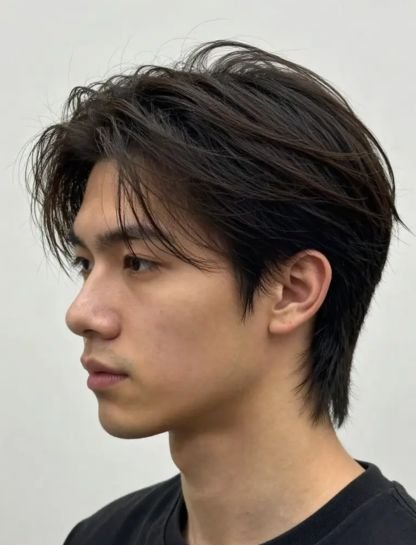
A razor is used across the entire top to create fine, feathered separation in straight hair, resulting in a long, tapered silhouette that flows backward naturally. Paired with a mid-burst fade, this style is smoother and less choppy than the razor-textured version earlier on the list, since the technique here is refinement rather than roughness. It’s one of the sleeker long-top options available.
Best For: Straight, fine-to-medium hair wanting subtle texture without added volume.
Tell Your Barber: “Razor the top for fine separation, keep it smooth and flowing, and mid-burst fade.”
Maintenance: Trim every 6 to 7 weeks to maintain the fine, tapered edges.
25. Long Flip-Out Burst Fade
The ends of the top are cut and styled to flip outward rather than lying flat or sweeping straight back, creating a distinct silhouette with flared tips. A low burst fade grounds the style so the flipped ends don’t look disconnected from the rest of the cut. This works best on hair with natural body, since dead-straight hair needs more product to hold the flip.
Best For: Hair with some natural bend or wave that flips easily.
Tell Your Barber: “Cut the ends so they flip outward when blow-dried; low burst fade underneath.”
Maintenance: Trim every 7 weeks; blow-dry with a round brush to reinforce the flip.
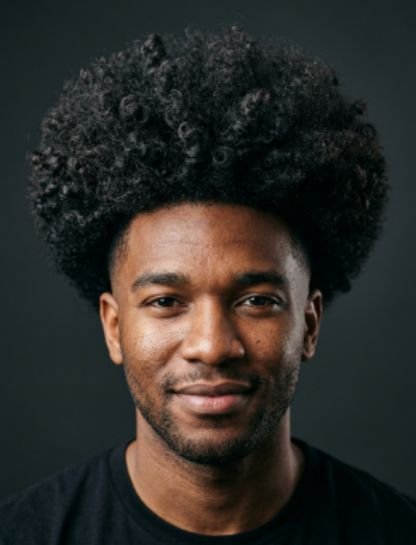
26. Voluminous Curly Burst Fade
This style maximizes curl volume across the entire top rather than concentrating it at the crown, creating the largest, roundest silhouette in the curly category. A mid-high burst fade is needed here specifically to keep the proportions balanced against that much volume up top. It’s the boldest curly option on the list and draws the most attention.
Best For: Very thick, curly hair on guys who want their curls to be the focal point.
Tell Your Barber: “Maximize volume across the whole top; don’t thin it out. Mid-high burst fade to balance it.”
Maintenance: Trim every 9 weeks; use a curl-defining cream rather than gel to avoid crunch.
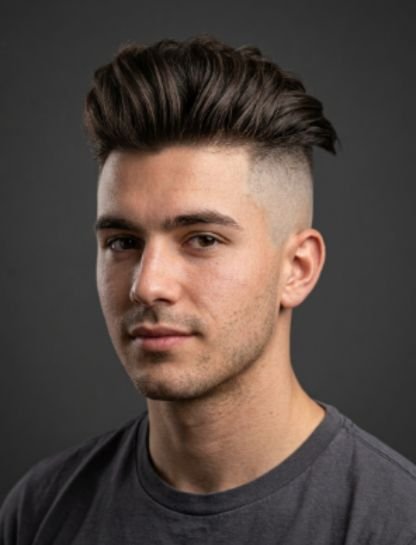
27. Long Undercut Burst Flow
A stronger, more defined undercut sits beneath a smooth, layered top that flows backward, with a high burst fade creating one of the sharpest contrasts on this list. This differs from other high-fade options by keeping the top exceptionally long, up to 12 inches, so the contrast feels even more dramatic. It’s a striking combination of a hard undercut edge with soft, flowing length.
Best For: Guys who want maximum visual contrast between short and long sections.
Tell Your Barber: “Strong undercut feel at the sides, keep the top long and flowing, high burst fade.”
Maintenance: Fade refresh every 2 weeks given the high contrast; trim ends every 10 weeks.
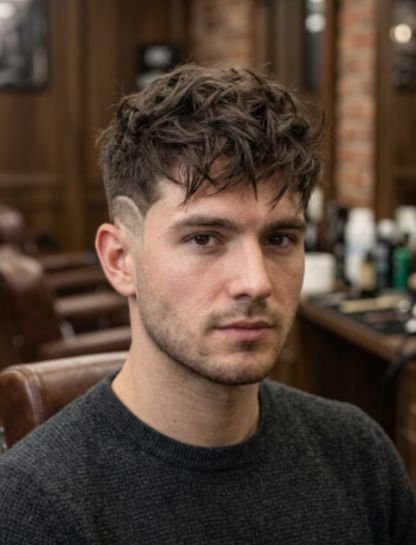
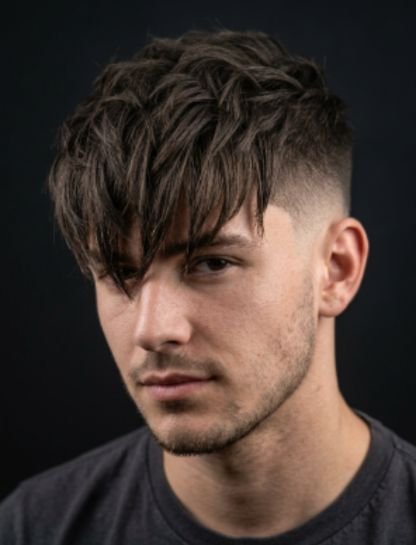
28. Piecey Fringe Burst Fade
The front section is cut shorter and separated into distinct pieces that fall across the forehead, giving the style a forward-focused, textured fringe rather than length pushed backward. A mid-burst fade keeps the sides tidy without competing with the fringe detail. This is a shorter-top option, generally 6 to 8 inches, built around the fringe as the focal point.
Best For: Straight to wavy hair on guys who want a youthful, forward-styled fringe.
Tell Your Barber: “Piecey fringe at the front, separated, not blunt, mid-burst fade.”
Maintenance: Trim every 6 weeks to keep the fringe from growing into the eyes.
29. Long Spiral Burst Fade
Pronounced spiral curls or deep waves are left long and full, creating a rounded, springy silhouette that moves distinctly with every step. A low burst fade sweeps diagonally rather than following a strict horizontal line, echoing the spiral motion of the curls above it. This is one of the most texture-heavy styles on the list and needs curl-specific products to maintain its shape.
Best For: Naturally spiraled or deep-wave curl patterns wanting maximum definition.
Tell Your Barber: “Keep the spiral pattern intact, minimal cutting on top, and a low diagonal burst fade.”
Maintenance: Trim every 9 to 10 weeks; use a diffuser when blow-drying to protect the spiral shape.
30. Signature Long Burst Cascade
This is the most elaborate style on the list, combining fine and chunky layers across a very long top, styled to fall back, sideways, and downward all at once for a multi-directional cascading effect. A mid-low burst fade supports the complexity above it without adding competing detail. It requires the most skill to cut correctly and the most length to commit to, generally 10 inches or more.
Best For: Guys with significant length already grown out who want a show-stopping finish.
Tell Your Barber: “Mix fine and chunky layers for a cascading effect, mid-low burst fade; don’t rush the layering.”
Maintenance: Trim every 9 weeks; schedule a full reshape every 6 months to keep the cascade balanced.
How to Get a Long Hair Burst Fade
Getting the right result starts before you even sit in the chair. A few clear steps make the difference between a haircut that matches what you pictured and one that needs fixing next visit.
Bring reference photos from multiple angles, not just one straight-on shot, so your barber sees the fade curve and top length clearly.
State the fade height first — low, mid, or high — since this decision shapes everything else about the cut.
Confirm the top length in inches rather than vague terms like “medium,” since “medium” means something different to every barber.
Mention your hair type and how you plan to style it, since a barber will layer curly hair very differently than straight hair even at the same length.
Ask about beard blending upfront if you have facial hair, so the fade line connects smoothly instead of looking like two separate cuts.
Common Mistakes to Avoid
Picking a fade height that doesn’t suit your face shape. A high burst fade on a narrow face can look too severe; ask your barber for a recommendation based on your proportions, not just what looks trendy online.
Overloading the top with products. Long hair holds product differently than short hair, and too much clay or pomade turns movement into a stiff, greasy mass. Start with a small amount and add more only if needed.
Letting the fade grow out too long between visits. The curved burst line blurs faster than a straight taper, so stretching past 4 weeks often means the whole cut starts looking undefined.
Skipping heat protection on styled tops. Longer hair sees more blow-drying and hot tool use, which means more exposure to damage if you skip a protectant spray.
Not communicating hair type to your barber. A cut designed for straight hair often falls flat or loses shape entirely on curly or coily hair, so make sure the plan accounts for how your hair actually behaves.
Best Hair Products for a Long Hair Burst Fade
Matte clay — best for thick or coarse hair that needs strong hold with zero shine, ideal for textured or messy top styles.
Sea salt spray — adds grit and natural-looking texture to wavy or straight hair without weighing it down.
Curl cream — designed for curly and coily textures, defining curl pattern without the crunch that gels can cause.
Pomade — the go-to for slicked-back or side-part styles that need shine and long-lasting control.
Volumizing mousse — useful for pompadour or crown-focused styles that need root lift before drying.
Light-hold hairspray — locks a finished style in place without turning it stiff, best used as a final step rather than throughout styling.
Frequently Asked Questions
What is a long hair burst fade?
It’s a haircut with a curved fade around the ear paired with noticeably longer hair left on top and in the back.
Does it work with curly hair?
Yes, curly and coily hair take a burst fade well since the fade reduces bulk while the curls stay the focal point on top.
How often should the fade be trimmed?
Most guys need a fade refresh every 2 to 3 weeks depending on how high the fade sits.
Can I pair it with a beard?
Yes, a well-blended beard connects naturally into the curved fade line for a unified look.
Is it appropriate for office jobs?
Yes, versions like the classic, side-part, or slick-back styles read as professional and polished.
Which product works best for thick hair?
Matte clay is generally the best choice since it controls bulk without adding shine or stiffness.
How long should I let the top grow before this cut works?
Most versions need at least 5 to 6 inches on top to have enough length for real styling options.
Is this haircut high maintenance?
Fade maintenance is regular, but overall it’s lower-effort than a full long hairstyle, since the top can grow between trims.
Final Thoughts
A long hair burst fade gives you the sharp, groomed edge of a fade without asking you to sacrifice length or personality on top. With thirty distinct versions to choose from, there’s a realistic option here for straight, wavy, curly, or coily hair and for lifestyles ranging from strict office dress codes to full creative freedom.
Bring clear reference photos, be specific about fade height and top length, and keep up with regular trims to keep the whole cut looking sharp. The right version comes down to matching the style to your hair’s natural behavior and how much daily styling time you’re actually willing to spend.
Hi, I’m Oliver Bennett. I’m passionate about men’s hairstyles and love exploring modern cuts that are easy to understand and easy to ask your barber for. On this website, I share simple guides on styles like burst fades, mullets, curtain cuts, tapers, and other trending men’s hairstyles. My goal is to help you find a haircut that matches your hair type, face shape, and personal style.




1 thought on “Long Hair Burst Fade: 30 Best Styles Every Man Should Try in 2026 Right Now”