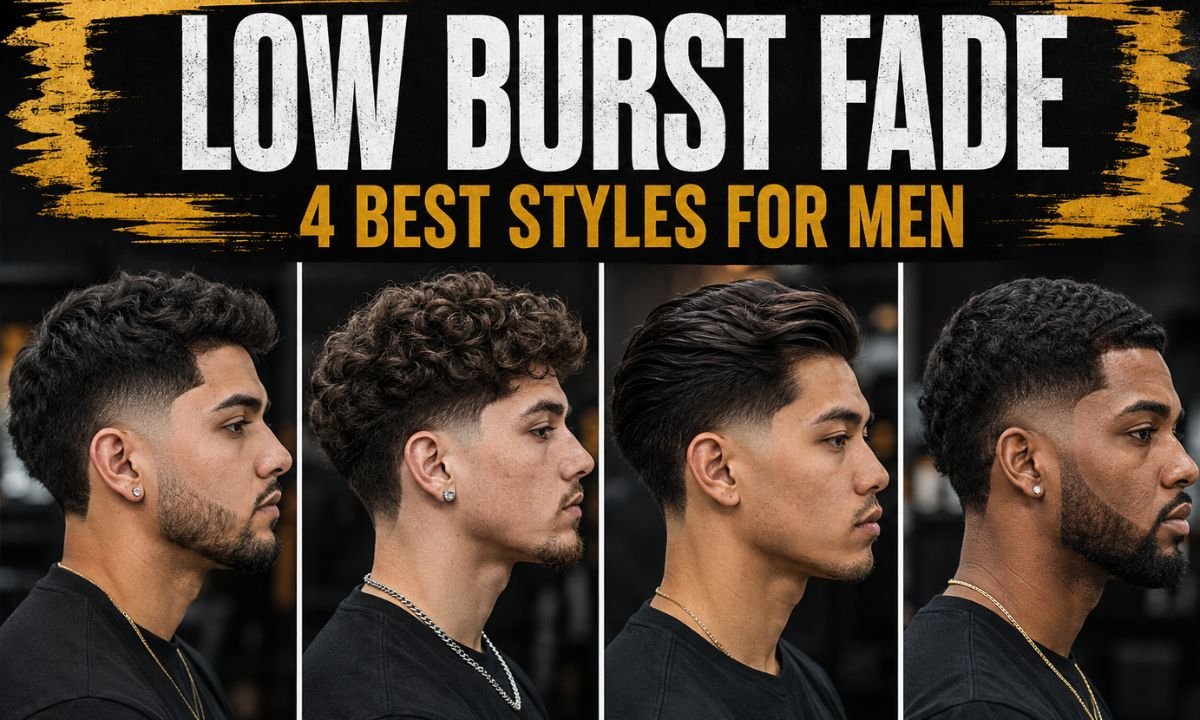
Ever wondered why barbers keep asking “burst or regular fade?” before they even touch the clippers? The answer sits right around your ear. A low burst fade shapes a soft curve behind the earlobe instead of climbing straight up the side of your head. Get the arc wrong, and the whole haircut looks off. Get it right, and it’s one of the cleanest, most adaptable cuts a barber can give you.
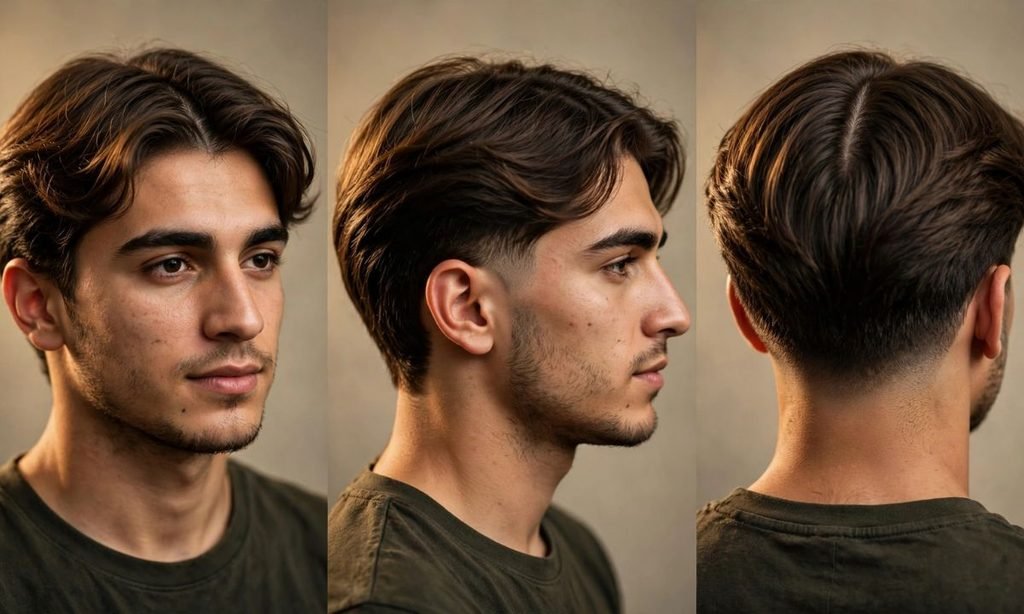
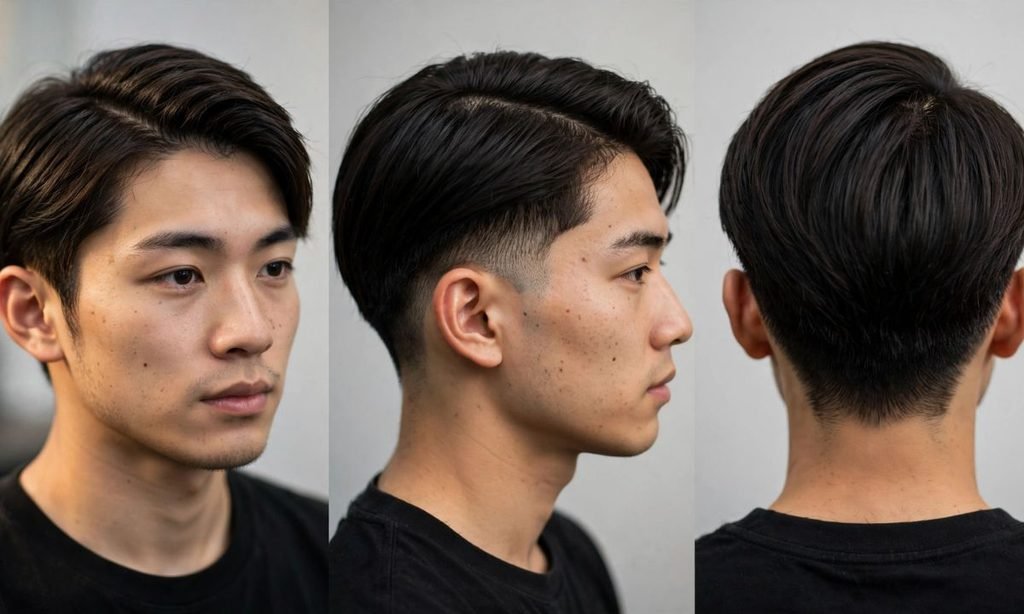
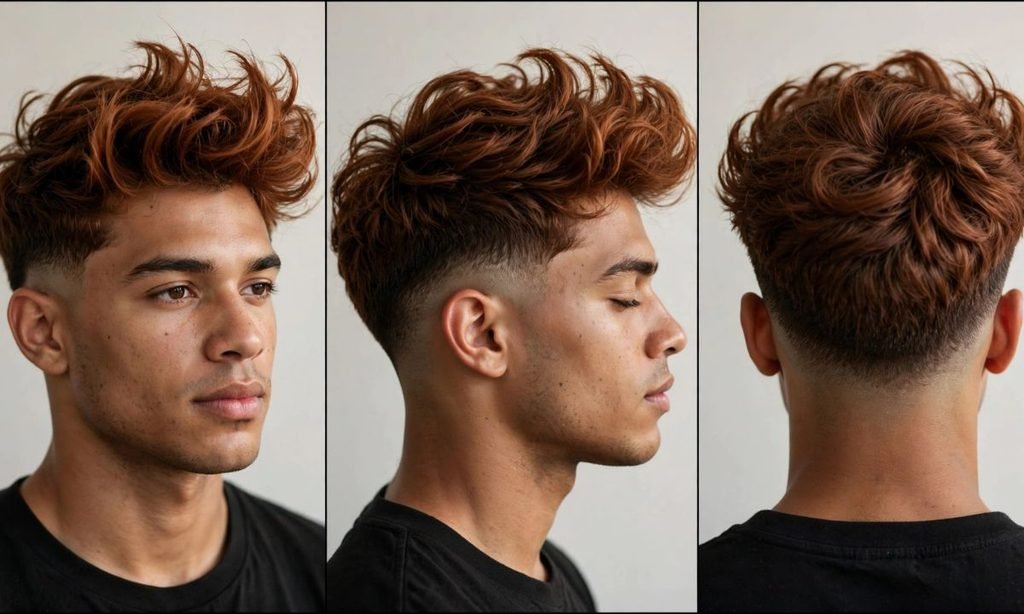
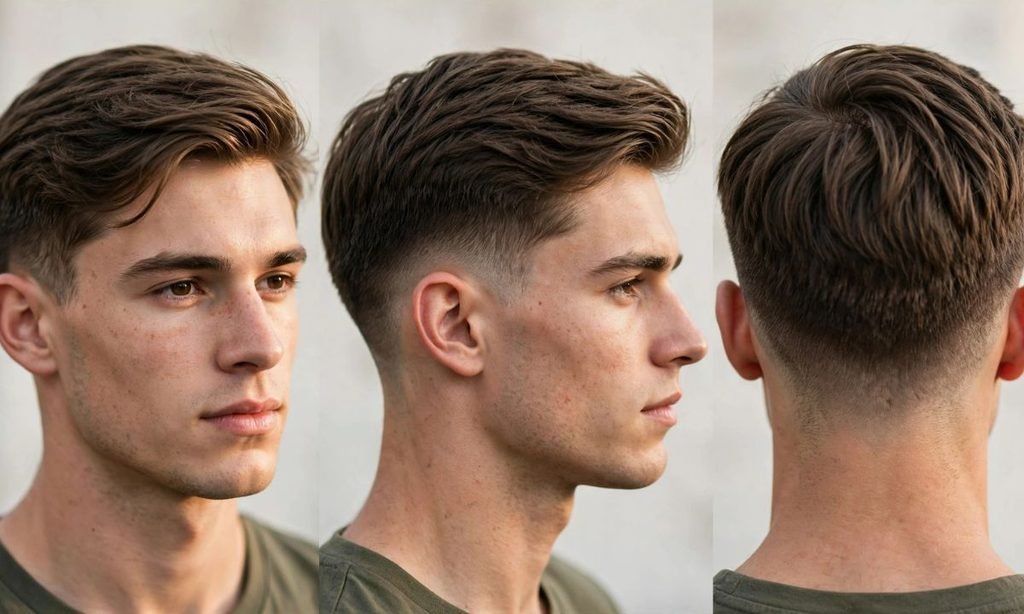
A low burst fade is a haircut where the shortest hair forms a rounded arc around and behind the ear, then blends down toward the nape. Instead of running vertically up the side like a standard fade, the burst wraps sideways, following the natural curve of the ear.
The word “low” tells the barber where that arc sits. A low burst stays close to the sideburn and never climbs past the temple. That’s different from a mid burst, which rises higher on the head, or a high burst, which reaches toward the crown.
A low burst fade also isn’t the same as a plain low fade. A low fade tapers upward in a straight line along the side. A burst fade curves, and that curve is what gives it a rounder, softer silhouette.
Why the Low Burst Fade Works So Well
This cut earns its popularity because it does two things at once: it looks sharp, and it stays wearable almost anywhere.
It suits school, office, and casual settings without drawing unwanted attention.
It keeps more hair at the temples than a mid or high burst, so it doesn’t strip volume from the sides.
It pairs with nearly every hair texture, from pin-straight to tightly coiled.
It leaves the top completely open for creative styling, since the fade only affects a small area near the ear.
How to Choose the Right Low Burst Fade
By Face Shape
Round faces benefit from added height on top to create length.
Long faces usually look better with a shorter top so the face doesn’t appear stretched.
Square and oval faces can wear almost any variation without adjustment.
Heart-shaped faces often pair well with fuller fringe to balance a narrower jaw.
Diamond faces tend to suit textured or curled tops that soften angular cheekbones.
By Hair Texture
Straight and wavy hair usually looks cleanest with a 0.5 or number 1 guard at the shortest points. Curly and coily hair can handle a skin-level burst for sharper contrast or a number 1 if you’d rather keep a softer transition. Fine hair often looks better avoiding a full skin fade, since the scalp can show through more easily. Thick, dense hair holds a crisp arc longer between trims.
By Fade Intensity
Skin burst: sharpest contrast, needs the most upkeep.
0.5 guard: close but not bare, a middle-ground option.
Number 1 burst: softer edge, common for everyday wear.
Number 2 burst: subtle transition, best for conservative settings.
20 Low Burst Fade Haircut Ideas
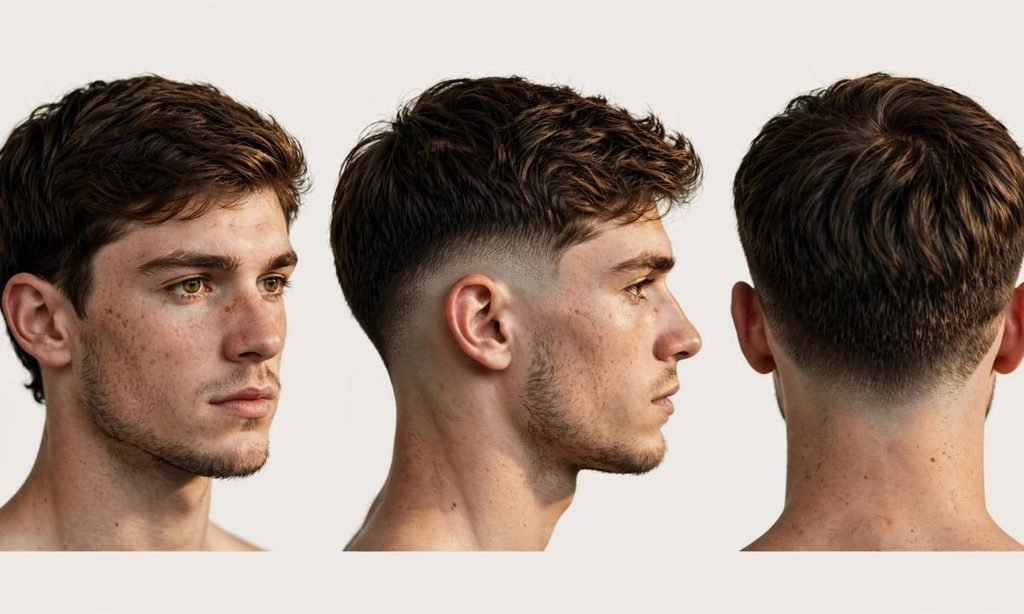
1. Classic Clean Low Burst Fade
This is the baseline version everyone pictures when they hear “low burst fade.” The arc sits tight behind the ear, and the top runs about two to three inches, styled forward with light texture. It’s simple, balanced, and doesn’t rely on any extra detailing to look finished. The appeal is in how understated it is — clean lines, no exaggerated volume, and easy to maintain daily.
Best For: Straight or wavy hair, oval and square faces, first-time burst fade wearers.
Tell Your Barber: “Low burst fade, number 1 at the shortest point, two to three inches on top, styled forward.”
Maintenance: Trim every three to four weeks; the soft arc grows out gradually.
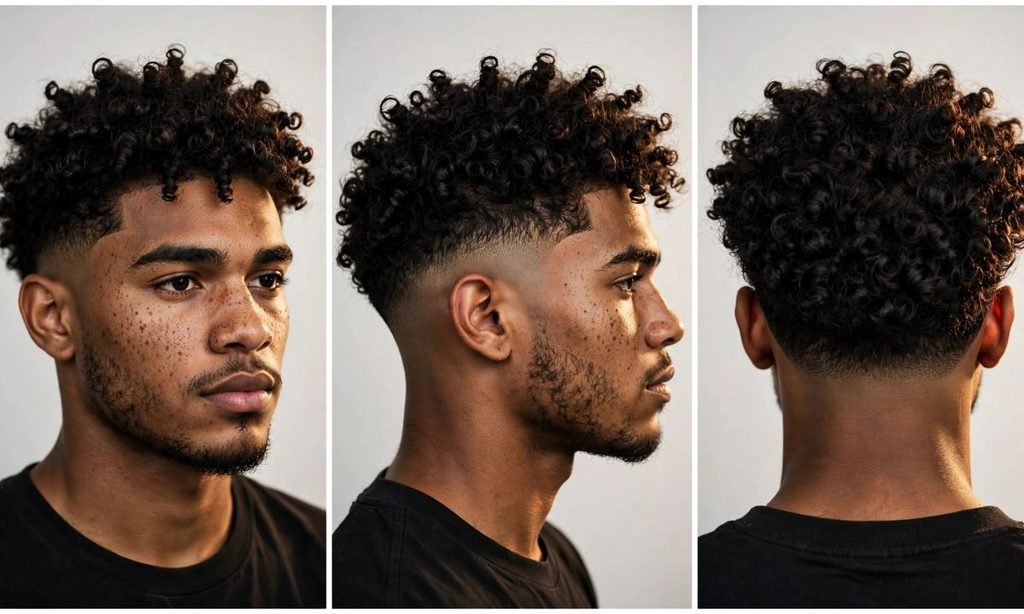
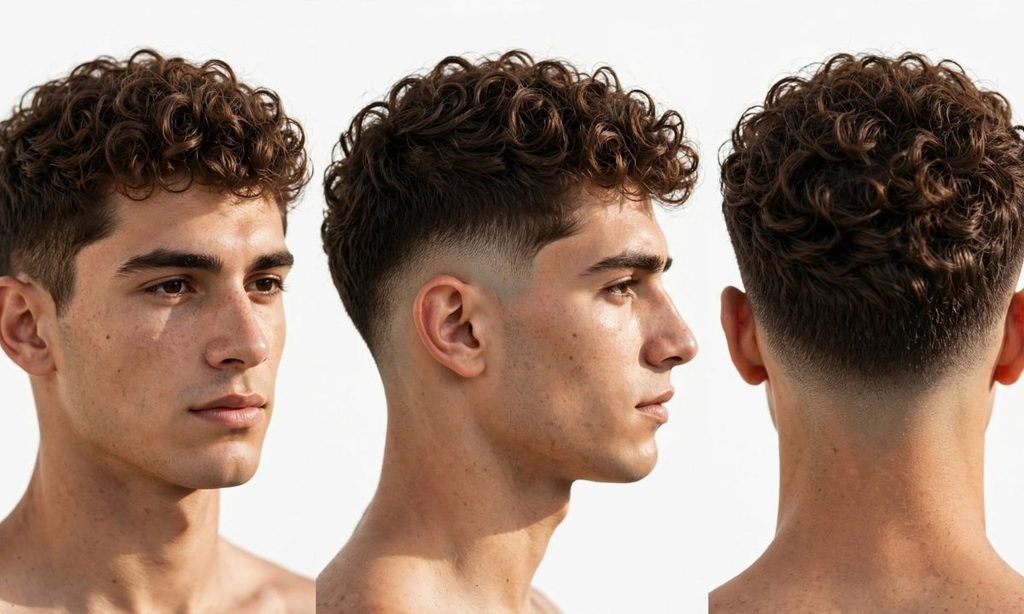
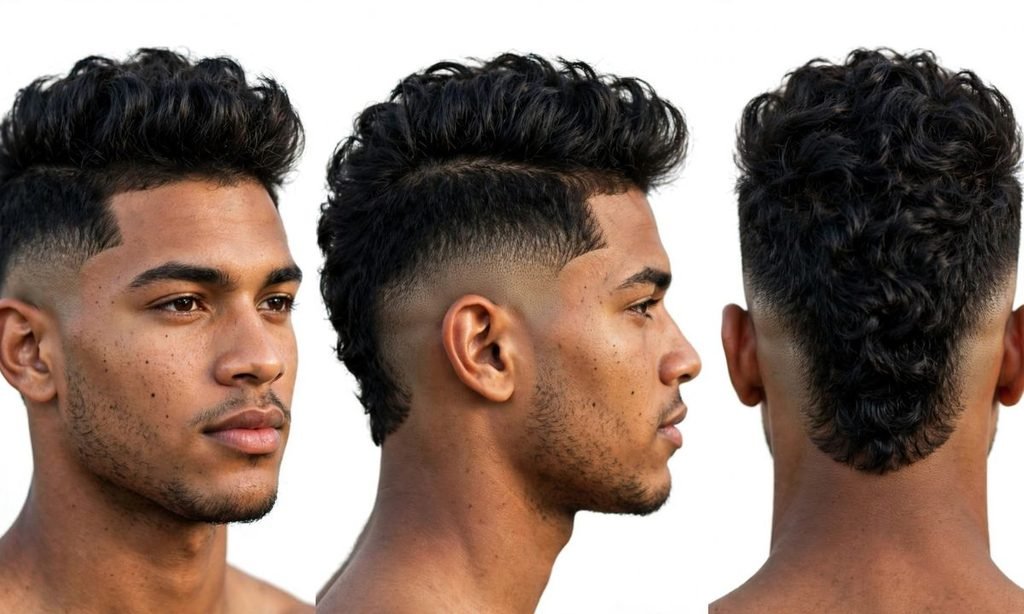
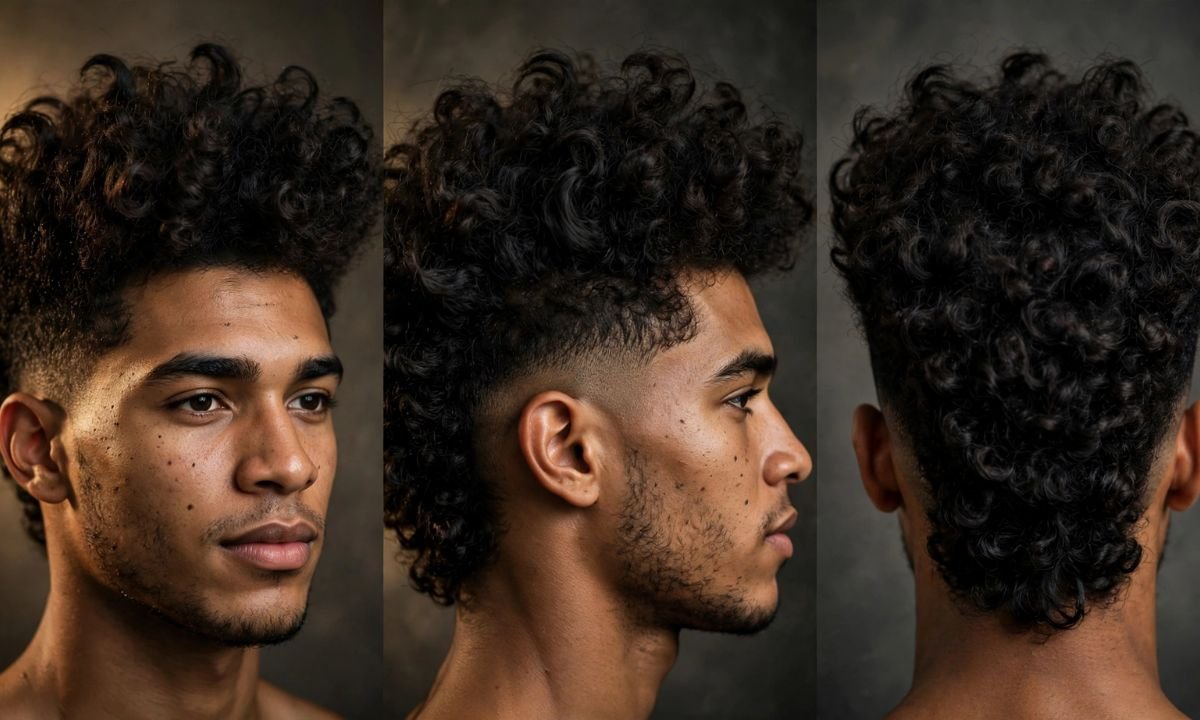
2. Low Burst Skin Fade with Curls
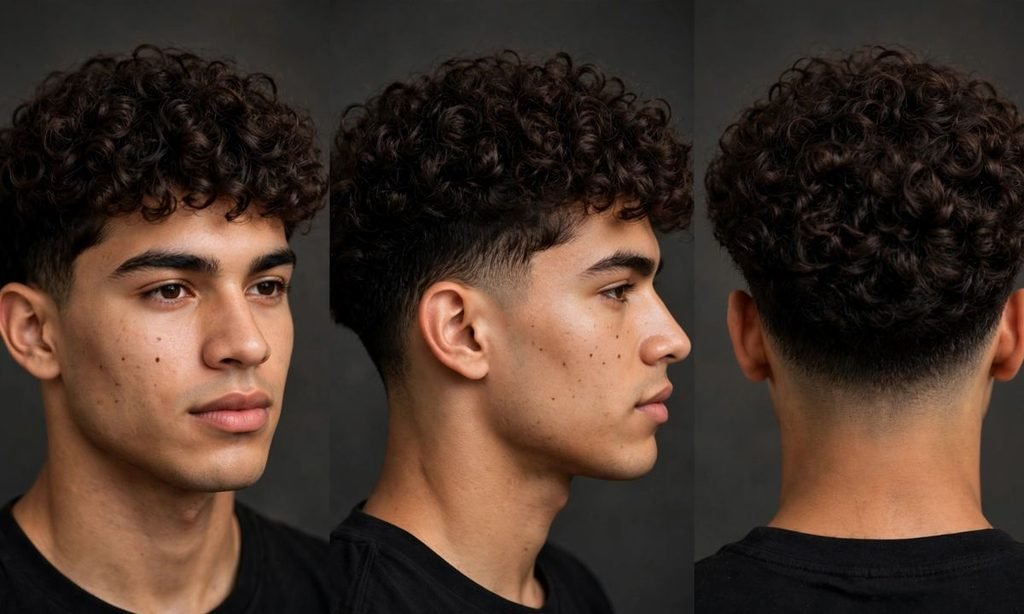
Here the fade drops all the way to skin while the top stays full of natural curl. The contrast is the whole point — tight, bare skin near the ear against a rounded curl mass on top. It photographs well and gives curly hair a defined shape instead of letting it sprawl outward. Diffusing on low heat keeps the curl pattern intact without frizzing it out.
Best For: Curly or coily hair, heart and round face shapes.
Tell Your Barber: “Skin-level low burst, leave three to five inches of curl on top, and don’t thin the crown.”
Maintenance: Refresh every two weeks since skin fades and grows out fastest.
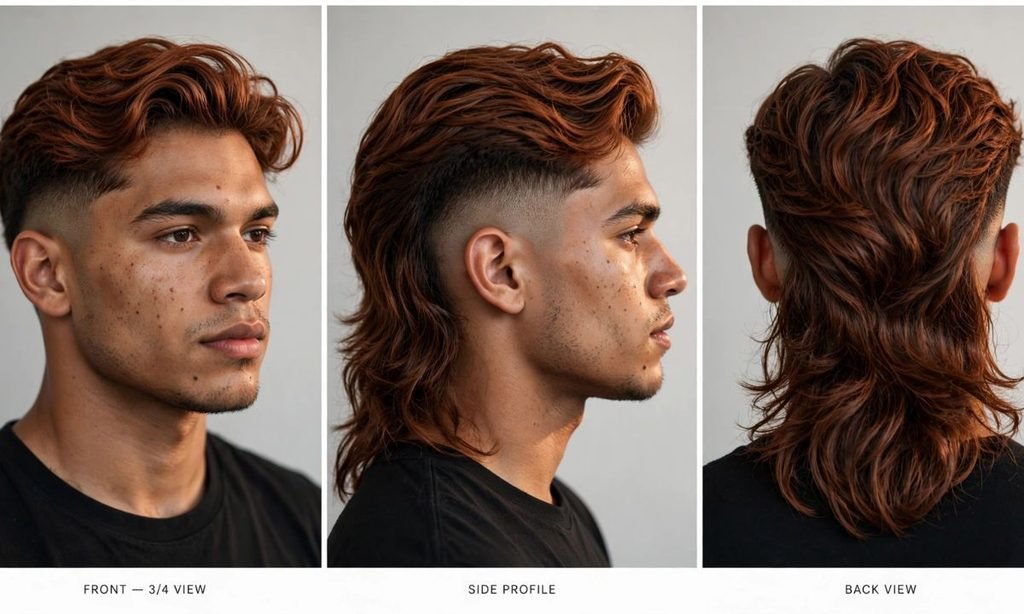
3. Low Burst Fade Mullet
This version keeps the sides tight through the burst while letting the back grow past the collar. It’s a deliberate contrast — short and controlled at the ear, loose and long at the nape. The mullet element gives it personality without looking dated, especially when the burst stays subtle instead of aggressive.
Best For: Oval, heart, and diamond faces; wavy or curly hair.
Tell Your Barber: “Number 1 low burst on the sides, leave the back long enough to sit past the collar.”
Maintenance: Trim the sides every three weeks; shape the back every five to six weeks.
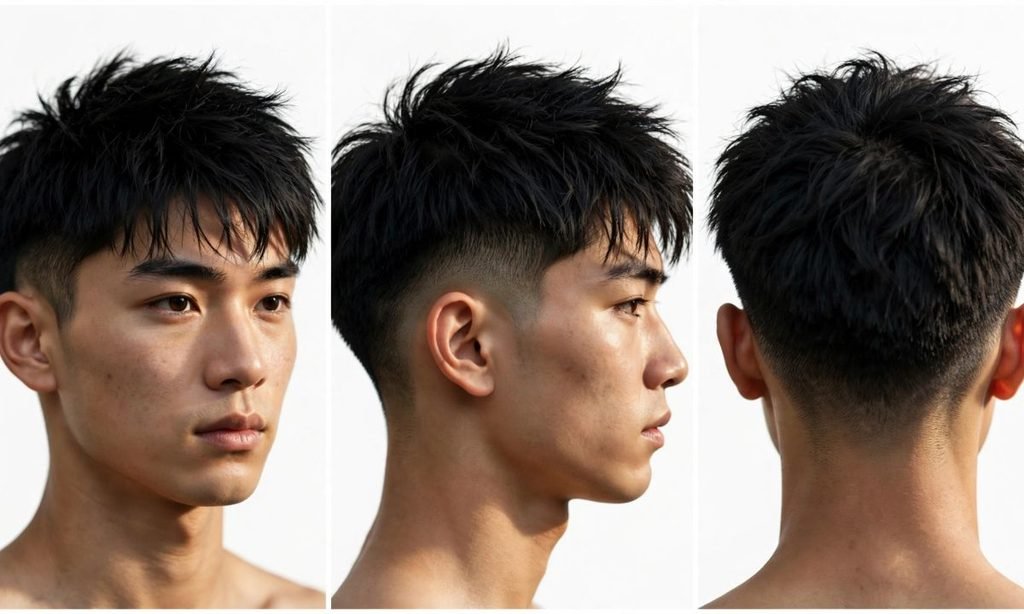
4. Low Burst Textured Crop
A textured crop keeps the top short and choppy, usually under two and a half inches, with point-cut layers that create movement. The low burst frames it cleanly so the messiness on top reads as intentional rather than unkempt. It’s a low-effort style once cut correctly — a bit of matte product, and you’re done.
Best For: Straight or thick hair, square and oval faces.
Tell Your Barber: “Low burst fade, point-cut texture on top, keep it under two and a half inches.”
Maintenance: Trim every four weeks; texture hides regrowth better than a clean top.
5. Low Burst Curly Crop
Unlike the skin-fade curl version, this crop keeps a gentler number 1 burst instead of going bare. The curls stay shorter overall, closer to two to four inches, giving a compact rounded shape rather than a large curl mass. It’s a tidier, more controlled way to wear natural curl.
Best For: Curly hair, diamond, and round faces wanting a neater profile.
Tell Your Barber: “Number 1 low burst, keep curls at natural length, and no thinning shears through the top.”
Maintenance: Trim every three weeks; condition regularly to prevent dryness at the ends.
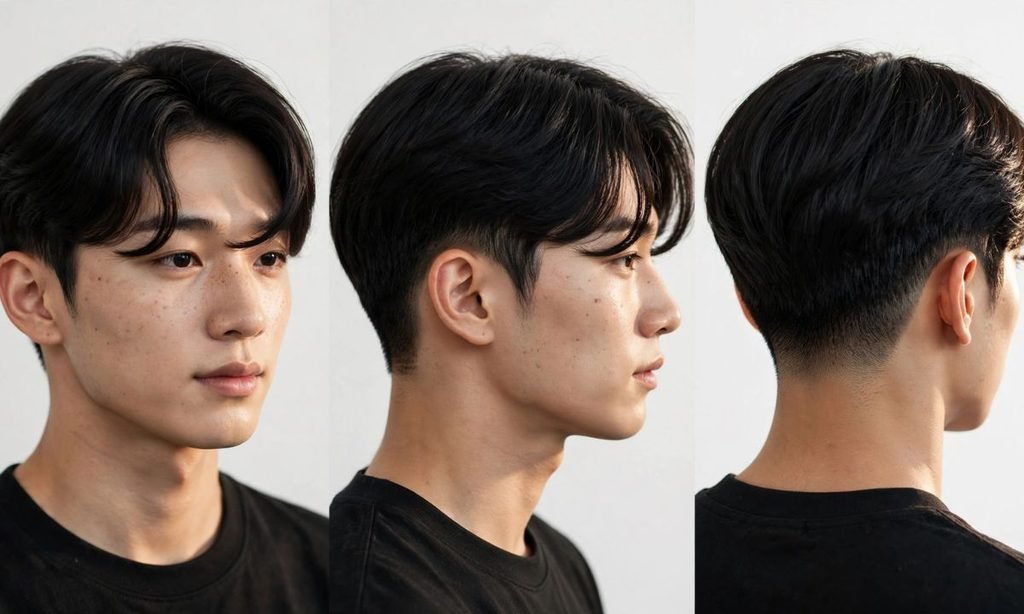
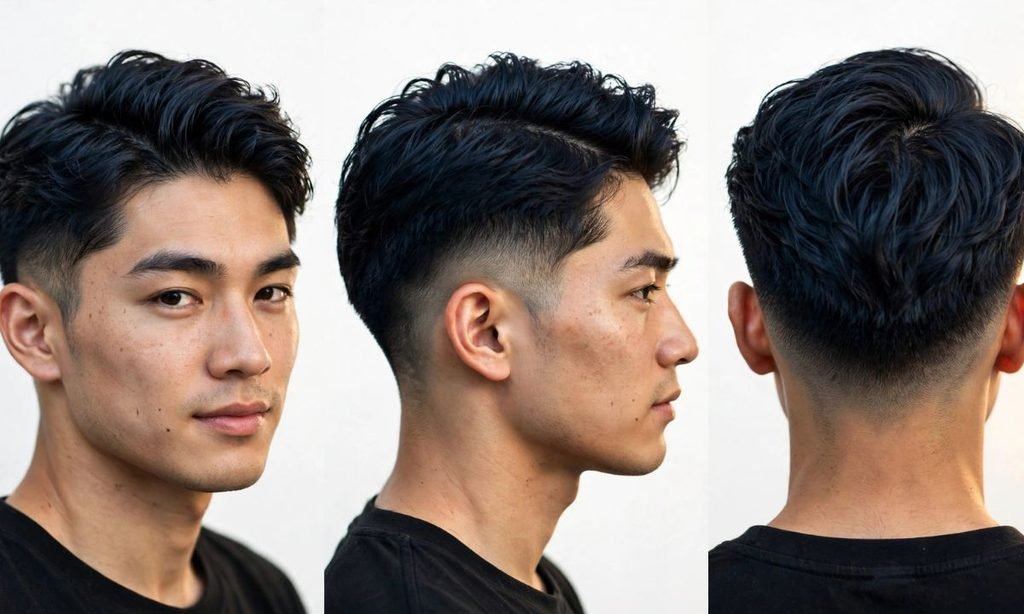
6. Low Burst Comma Fringe
The comma fringe curves inward across the forehead, borrowing from Korean-inspired styling. It needs enough length up front, usually around three inches, to hold that curved shape without flattening. The low burst stays quiet in the background so the fringe becomes the focal point of the whole cut.
Best For: Straight or lightly wavy hair, round and oval faces.
Tell Your Barber: “Low burst fade, keep three inches at the front for a curved fringe, and light layers only.”
Maintenance: Trim every four weeks to keep the fringe curve from growing out flat.
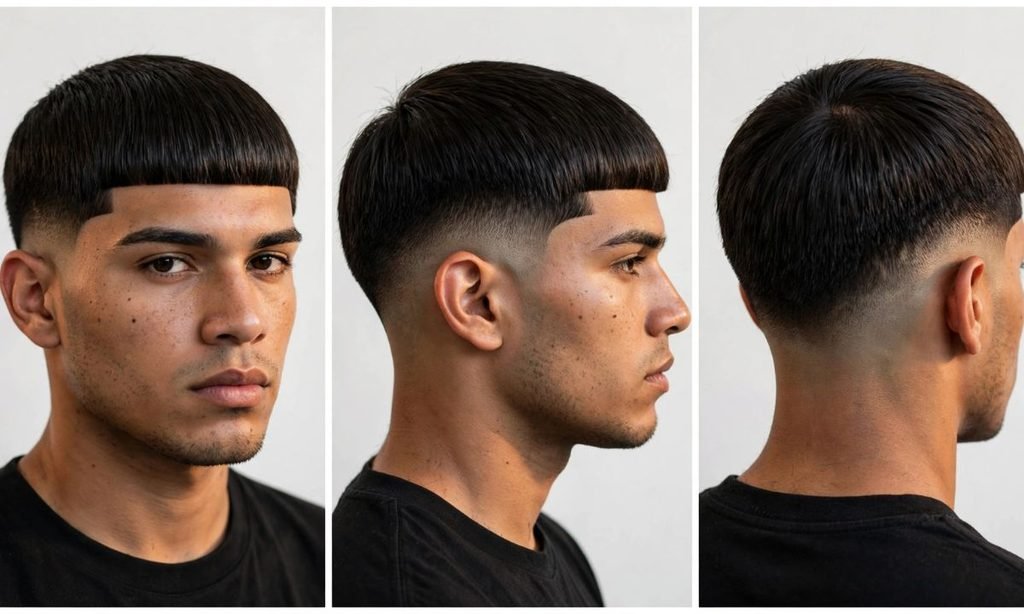
7. Low Burst Edgar
The Edgar pairs a blunt, straight-across fringe with the rounded burst near the ear — a deliberate mix of sharp and soft lines. The top length usually sits around two inches, just enough to hold a flat, defined edge. Because the fringe placement is so personal, bringing a photo matters more here than with most other variations.
Best For: Straight or dense hair, square and oval faces.
Tell Your Barber: “Low burst fade with a blunt Edgar fringe, about two inches on top, and a sharp front line.”
Maintenance: Trim every two to three weeks to keep the blunt edge crisp.
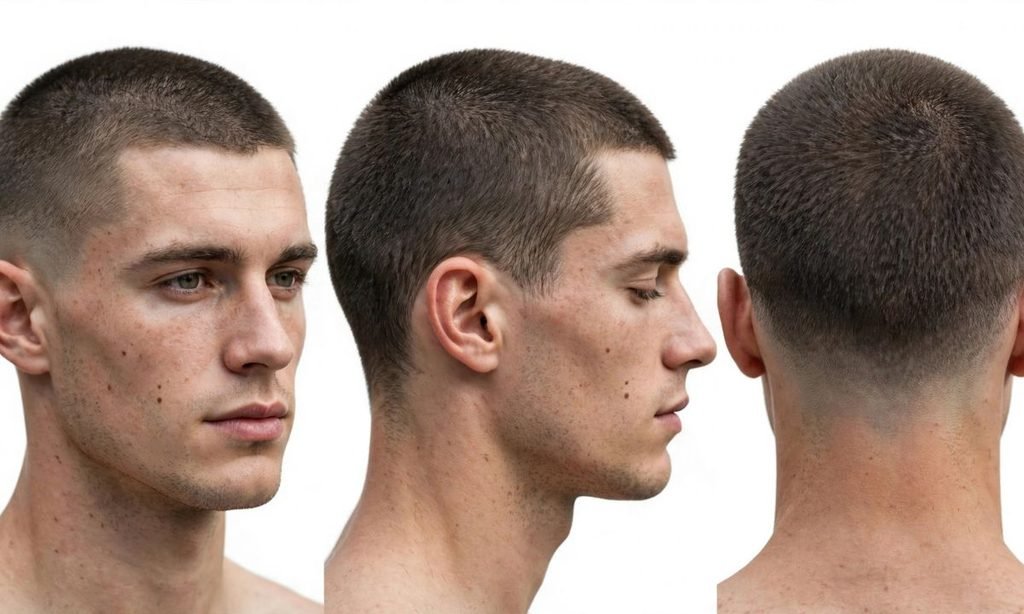
8. Low Burst Buzz Cut
This is the lowest-maintenance option on the list. The top stays under two inches, uniform all over, with just a soft 0.5 burst near the ear for shape. There’s no styling required — towel dry and go. It reads clean and simple without looking like a plain buzz cut, thanks to that subtle curve at the ear.
Best For: Any face shape, straight or coily hair, minimal-upkeep preference.
Tell Your Barber: “Number 2 buzz on top, 0.5 low burst around the ear, and keep it uniform.”
Maintenance: Trim every two to three weeks since short hair shows regrowth quickly.
9. Low Burst Mohawk
A central strip of hair, roughly three inches, runs down the middle while both sides fade low around the ears. Keeping the burst low rather than high makes this a wearable mohawk instead of an extreme one. Styling direction is upward with a strong-hold paste to keep the strip standing.
Best For: Thick or wavy hair, those wanting a bold but not overstated look.
Tell Your Barber: “Double low burst on both sides; leave a three-inch strip down the center.”
Maintenance: Trim every two weeks; the contrast between the strip and sides fades fastest.
10. Low Burst Faux Hawk
A softer cousin of the mohawk, the faux hawk keeps a raised center ridge without fully disconnecting the sides from the top. It’s styled upward and slightly inward rather than straight up, giving it a more everyday-wearable finish. Textured clay adds hold without the stiff, shiny look a mohawk often has.
Best For: Thick or wavy hair, oval and diamond faces.
Tell Your Barber: “Low burst fade; blend the sides into a raised center ridge, not a full mohawk.”
Maintenance: Trim every three weeks; less upkeep than a true mohawk.
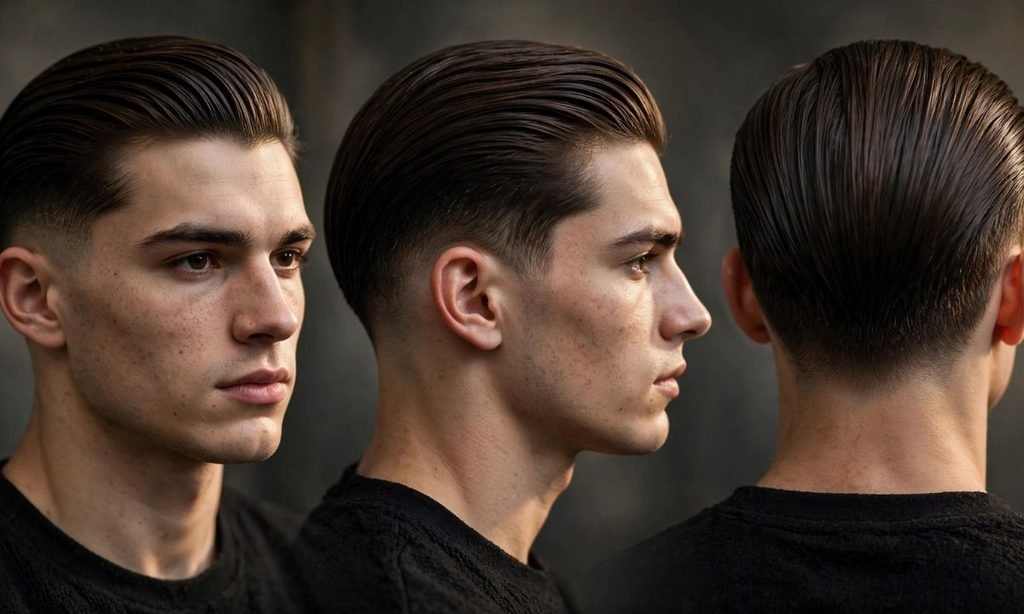
11. Low Burst Slick Back
The top grows to three to five inches and combs straight back, creating a polished, formal look. The burst stays low and quiet, letting the slicked top do the visual work. Pomade with a paddle brush gives the shine and hold needed to keep it in place through the day.
Best For: Oval, square, and diamond faces; straight or wavy hair.
Tell Your Barber: “Low burst fade; leave enough length on top to slick straight back.”
Maintenance: Trim every four weeks; the slicked top hides regrowth well.
12. Low Burst Middle Part
A center part splits three to four inches of top hair evenly to each side, echoing the same curve the burst creates near the ear. It’s one of the softer, more understated cuts on this list — no sharp lines, just a balanced, symmetrical shape. Light cream keeps the part defined without looking greasy.
Best For: Oval and diamond faces, straight or wavy hair.
Tell Your Barber: “Low burst fade, three to four inches on top for a center part.”
Maintenance: Trim every four weeks; the part itself needs no extra upkeep.
13. Low Burst Side Part
A more conservative option, this cut uses a defined side part with about three inches on top, brushed across rather than back. It’s the version most likely to pass a strict workplace dress code while still looking modern thanks to the low burst detail. A hard part line adds definition if you want it sharper.
Best For: Conservative workplaces, oval and square faces.
Tell Your Barber: “Low burst fade, side part, about three inches on top, tapered neckline.”
Maintenance: Trim every three to four weeks to keep the part clean.
14. Low Burst Blowout
Volume concentrates at the front and crown here, styled upward and slightly forward with a round brush. It works best on straight or wavy hair with medium density, since fine hair won’t hold the lift as well. The low burst keeps the sides controlled while all the visual interest happens on top.
Best For: Straight or wavy medium-density hair, round and oval faces.
Tell Your Barber: “Low burst fade, three to four inches on top, styled up and forward for volume.”
Maintenance: Trim every three weeks; daily styling needed to maintain the lift.
15. Low Burst Broccoli Top
A fluffy, rounded curl silhouette on top gives this style its nickname. The low burst keeps the curls from spreading too wide at the sides, so the shape stays compact rather than bushy. Curl cream and diffusing on low heat bring out definition without weighing the curls down.
Best For: Naturally curly hair or those with a perm, round and diamond faces.
Tell Your Barber: “Low burst fade, keep curls at natural length on top, and no heavy thinning.”
Maintenance: Trim every three to four weeks; deep condition regularly.
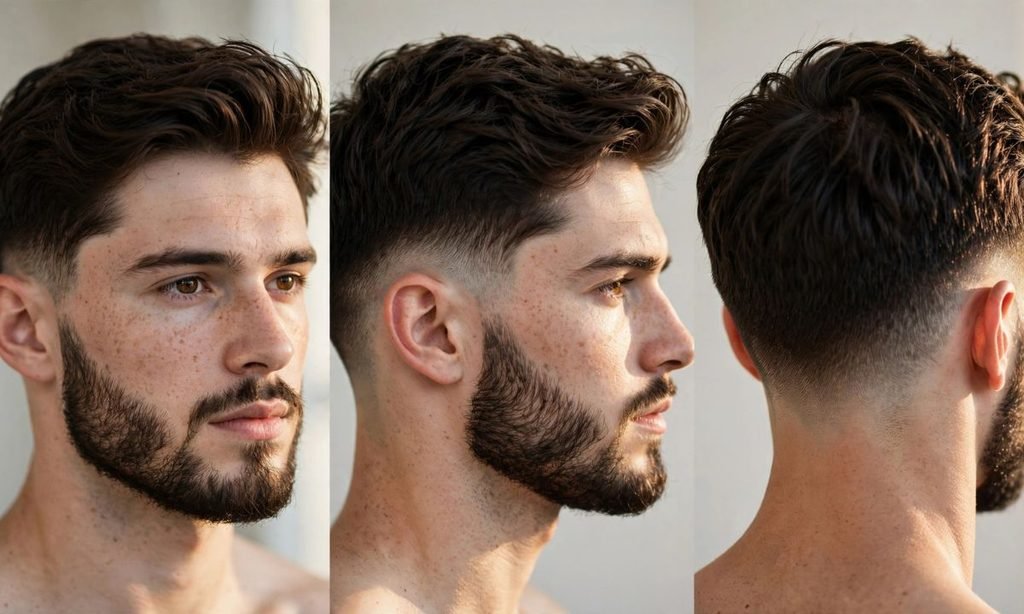
16. Low Burst Fade with Beard
This variation ties the sideburn directly into a beard through a blended transition, making the haircut and facial hair read as one continuous shape. The low placement keeps that connection tight and clean. Razor work near the sideburn helps smooth the line where hair meets beard.
Best For: Any face shape with facial hair, straight to wavy textures.
Tell Your Barber: “Low burst fade blended into my beard, razor-clean sideburn connection.”
Maintenance: Trim the fade every three weeks and the beard line weekly.
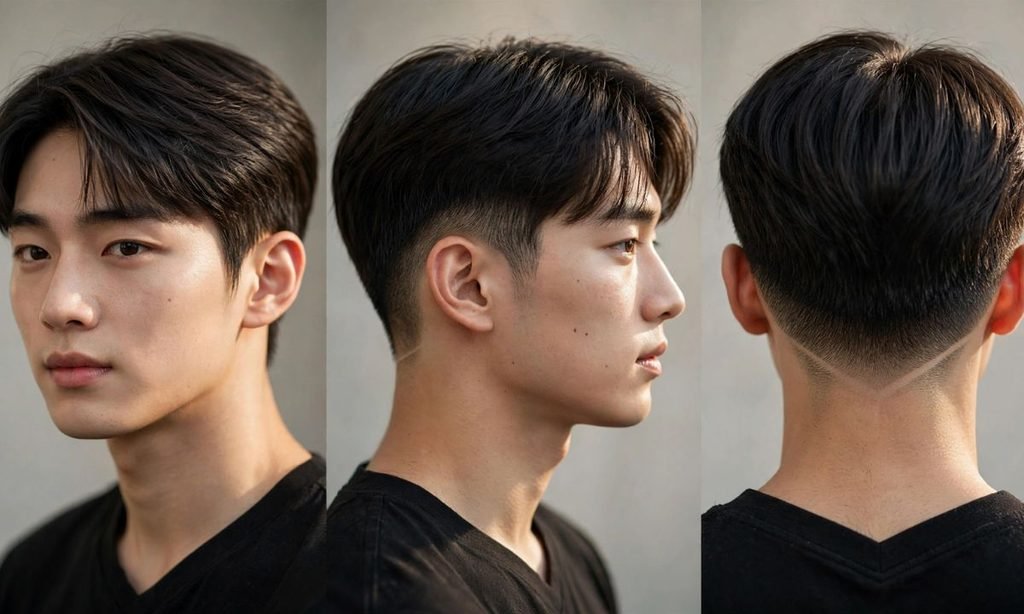
17. Low Burst V-Cut Design
An angular V-shaped neckline contrasts with the rounded ear arc, giving the back of the head a sharper, more graphic finish. Top length stays shorter, around one and a half to three inches, so the design at the nape stands out. It’s a subtle way to add detail without a fully shaved pattern.
Best For: Straight or wavy hair, anyone wanting added detail without heavy design work.
Tell Your Barber: “Low burst fade with a V-shaped neckline at the back.”
Maintenance: Trim every two to three weeks to keep the V shape crisp.
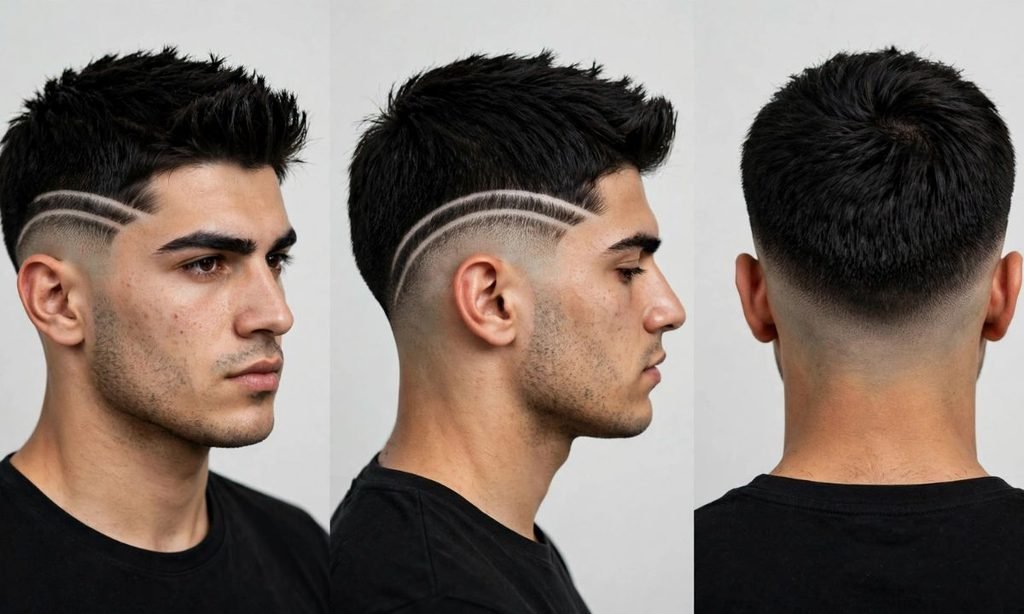
18. Low Burst Double-Line Design
Two shaved lines cut through the faded section near the temple, adding a graphic element to an otherwise simple cut. The top stays short, usually one to two inches, so the lines remain the focal point. This one needs the most precise upkeep of any style here, since the lines lose definition fast.
Best For: Straight or coily hair, anyone wanting a bolder personal touch.
Tell Your Barber: “Skin-level low burst with two shaved lines through the temple.”
Maintenance: Touch up the lines every one to two weeks.
19. Low Burst Ivy League
A refined, moderate-length top of two and a half to three and a half inches gives this classic cut flexibility — comb it side-parted, back, or leave it naturally tousled. The low burst modernizes what’s otherwise a traditional, conservative shape. It reads polished without needing much daily effort.
Best For: Straight or wavy hair, professional settings, square and oval faces.
Tell Your Barber: “Low burst fade, Ivy League length on top, keep it flexible for styling.”
Maintenance: Trim every four weeks; low-maintenance day to day.
20. Low Burst South of France
A wider mohawk-style shape with controlled volume down the center, this variation wraps the low burst around both ears rather than just one side. It’s bolder than a standard mohawk but softer than a full punk style because the fade stays low. Curly or coily hair adds extra dimension to the central strip.
Best For: Curly or coily hair and those wanting a statement cut without extremes.
Tell Your Barber: “Low burst around both ears, wide center strip left long for volume.”
Maintenance: Trim every two to three weeks; the wide strip needs regular shaping.
How to Tell Your Barber Exactly What You Want
Getting the right result starts with the right words. “Low fade” and “burst fade” mean different things to different barbers, so be specific.
Say “low burst fade,” not just “fade” or “taper.”
Give the guard number for the shortest point — skin, 0.5, 1, or 2.
State your top length in inches.
Describe where you want the arc to stop.
Choose a neckline: tapered, blocked, or V-shaped.
Explain how you want the top styled — forward, back, parted, or natural.
Bring a reference photo and point out the ear arc, temple height, and nape finish specifically, not just the overall look.
Maintenance and Upkeep
How often you need a trim depends entirely on fade intensity. Skin-level bursts show regrowth within one to two weeks. A number 1 or 2 guard can stretch to three or four weeks before it looks unkempt. Shaved line designs lose sharpness fastest and may need weekly touch-ups.
Between visits, keep the neckline and area around the ear tidy with light trimmer cleanup. Match your styling product to your top style — matte clay for texture, pomade for shine, curl cream for curls, and sea-salt spray for waves. If you have longer or curly hair, a satin or silk pillowcase helps protect the texture overnight. Avoid trying to redo the full fade gradient at home; a slightly overgrown burst is easy to fix, but an uneven DIY attempt usually isn’t.
Low Burst Fade vs. Similar Haircuts
Comparison
Key difference
Low burst fade vs. low fade
Burst curves around the ear; low fade rises in a straight vertical line.
Low burst fade vs. mid burst fade
Low burst sits near the sideburn; mid burst climbs to temple height.
Low burst fade vs. burst taper
Burst taper blends more gradually with less defined skin contrast.
Low burst fade vs. drop fade
Drop fade curves downward behind the ear toward the neck, not around it.
Low burst fade vs. South of France
South of France wraps both ears with a wider central section left long.
Low burst fade vs. undercut
Undercut uses a hard, disconnected line; burst fade blends gradually.
Frequently Asked Questions
What is a low burst fade haircut?
It’s a fade that curves in a rounded arc around the ear and drops toward the nape, staying below the temple line.
Is a low burst fade suitable for work or school?
Yes, especially with a number 1 or 2 guard, since it keeps skin exposure minimal and looks neat.
How often does a low burst fade need a trim?
Every two to four weeks, depending on how tight the fade is and how fast your hair grows.
Can a low burst fade work with curly or coily hair?
Yes, it works well with curly and coily hair, often using a skin or number 1 burst for contrast against the curls.
Can a low burst fade be paired with a beard?
Yes, the sideburn can blend directly into the beard for a connected, unified look.
Conclusion
The low burst fade earns its popularity by striking a balance most other fades can’t — sharp enough to look intentional, subtle enough to wear anywhere. Whether you go with a clean classic version, a curly crop, a mullet, or a bold design, the key is communication: name the cut correctly, give your barber a clear guard number and top length, and bring a photo that shows exactly where you want that arc to sit. Get those details right, and this haircut will hold its shape and style appeal for a long time.
Hi, I’m Oliver Bennett. I’m passionate about men’s hairstyles and love exploring modern cuts that are easy to understand and easy to ask your barber for. On this website, I share simple guides on styles like burst fades, mullets, curtain cuts, tapers, and other trending men’s hairstyles. My goal is to help you find a haircut that matches your hair type, face shape, and personal style.

3 thought on “Low Burst Fade Haircut: 20 Styles, Guard Numbers, and Styling Tips”