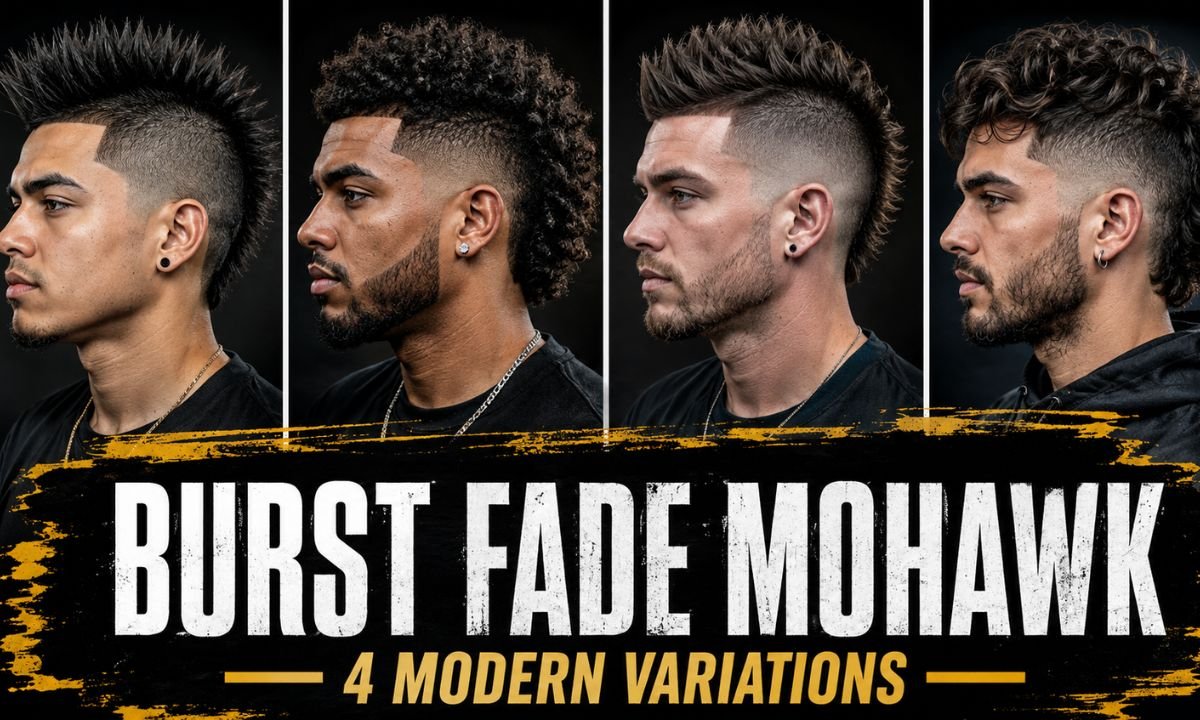
Burst Fade GuideBurst Fade: The Complete Guide to This Modern Haircut
Burst Fade: The Complete Guide to This Modern Haircut
September 13, 2026
/
No Comments
/
Oliver Bennett
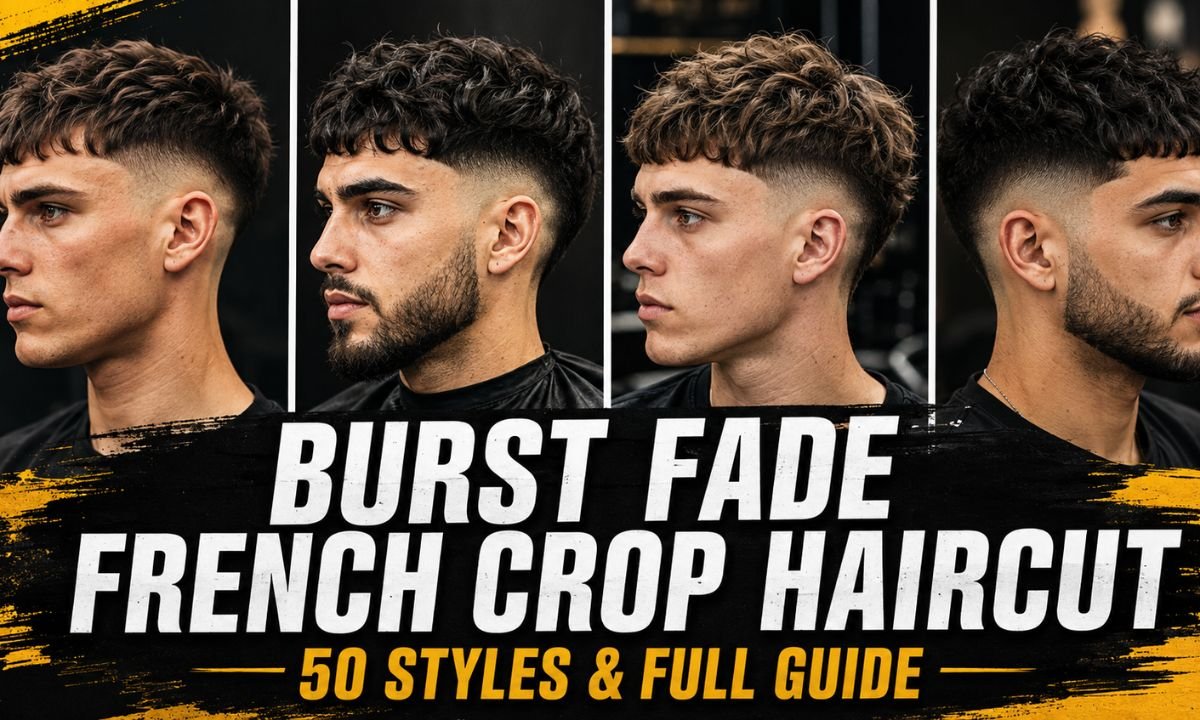
A burst fade is a stylish haircut that creates a curved fade around the ears. It keeps more length at the back while making the sides look clean and sharp. This versatile fade works with short, medium, curly, wavy, and textured hairstyles.
You can combine it with a crop, quiff, mullet, pompadour, or longer top. The right burst fade depends on your hair type, face shape, and preferred style. With the right cut and products, it can look fresh without being difficult to maintain.
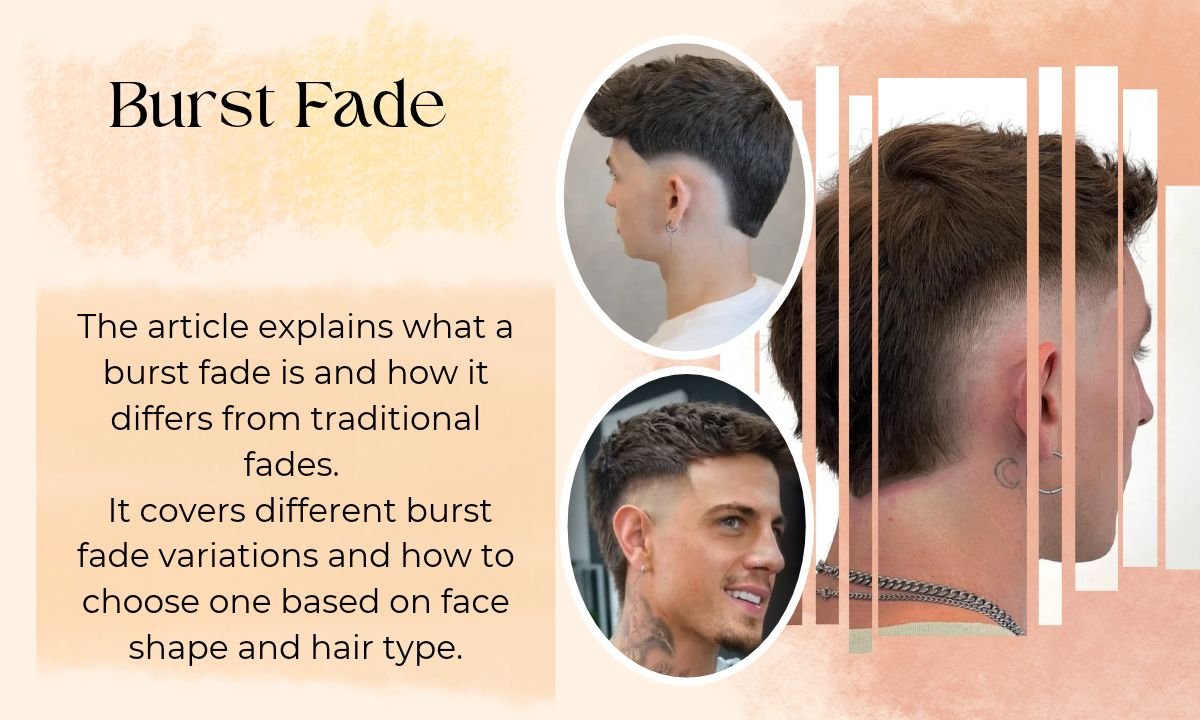
A burst fade is a type of fade that curves around the ear instead of running evenly around the entire side of the head. The hair gradually becomes shorter as it moves toward the ear, creating a rounded or semicircular effect. The back and neckline can remain longer, which makes this fade different from a traditional low, mid, or high fade.
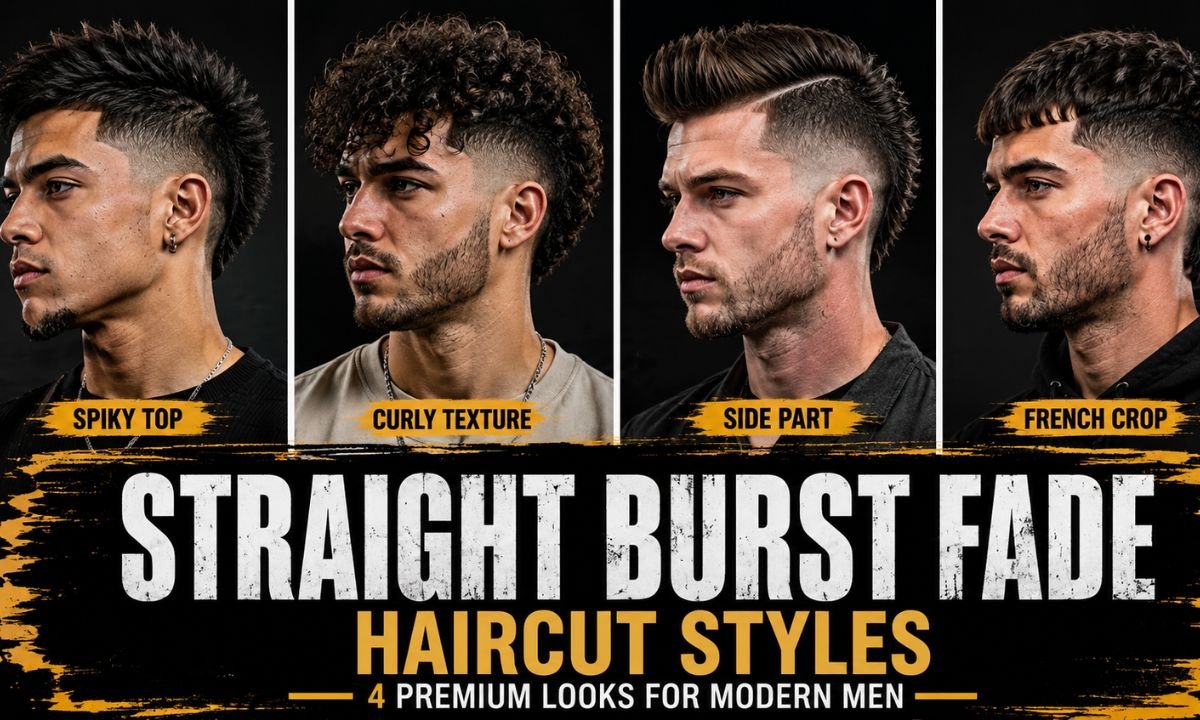
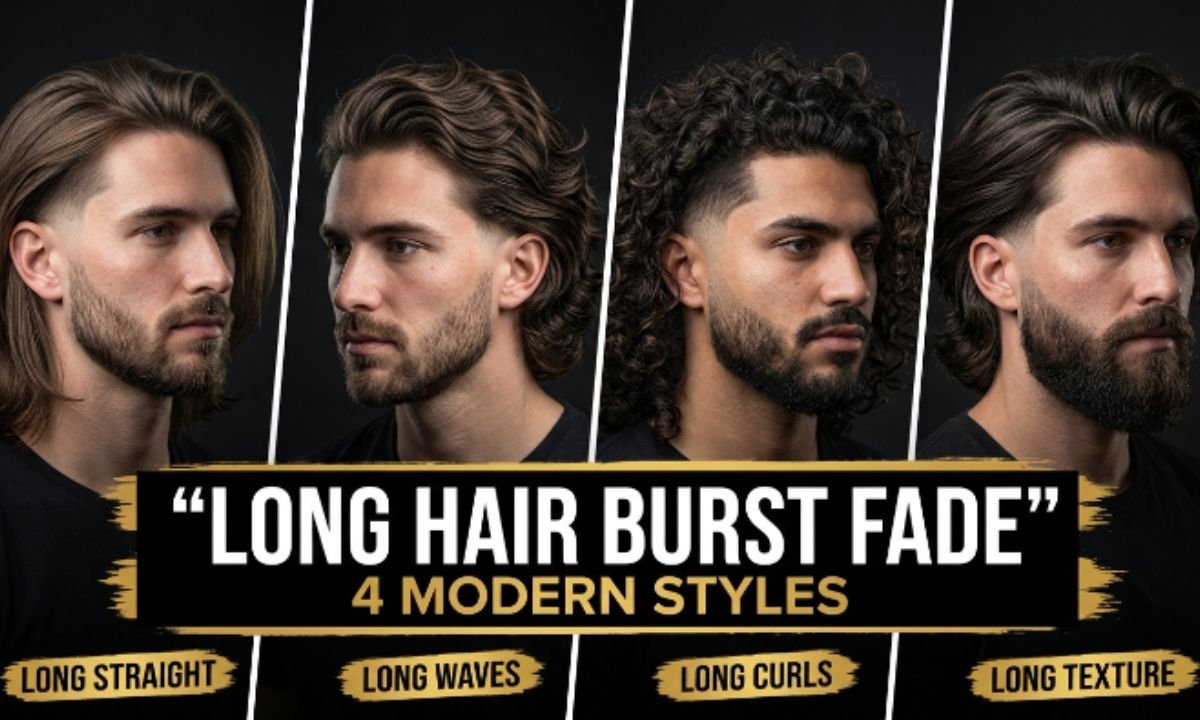
The burst fade is especially popular with modern textured hairstyles. It can be paired with a burst fade mullet, curly crop, textured crop, quiff, or slicked-back style. Because the fade focuses around the ears, it keeps the haircut clean without removing too much hair from the back.
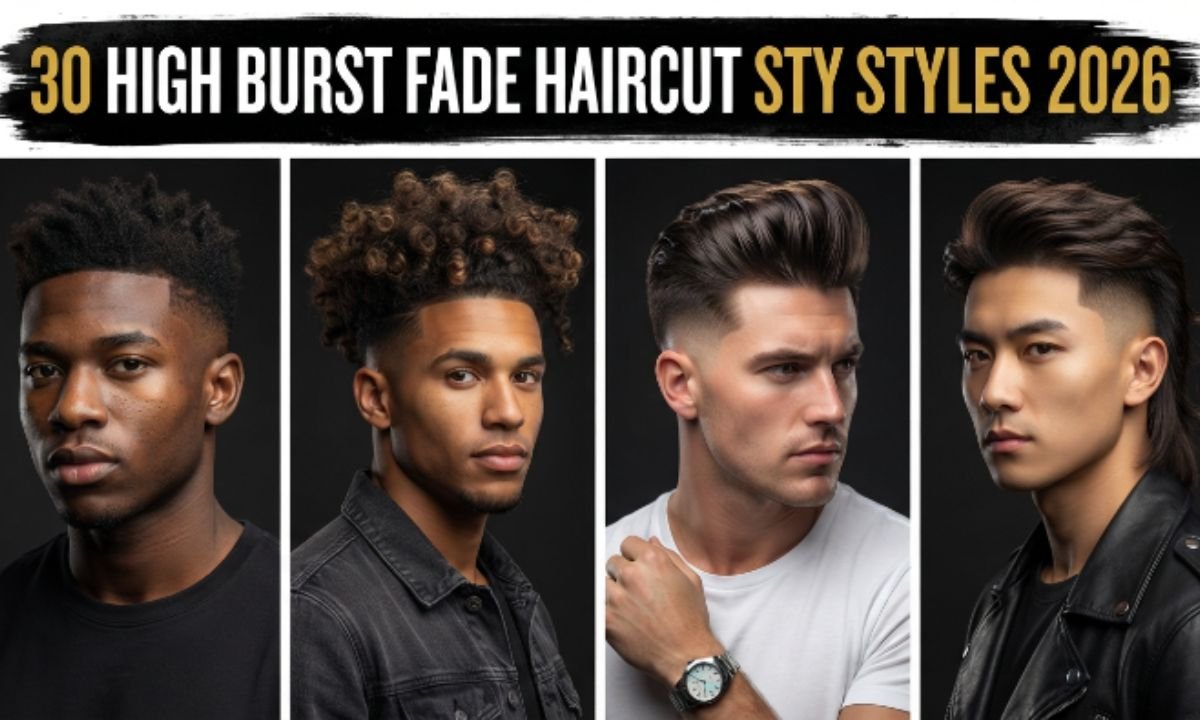
The finished appearance can range from subtle to dramatic. A low burst fade leaves more hair around the sides, while a high burst fade creates stronger contrast. A skin burst fade goes down to the skin, whereas a taper burst fade leaves some visible hair near the ear and neckline.
Should you get a burst fade? And who’s it best suited for?
A burst fade is a good choice if you want a modern haircut with noticeable shape around the ears while keeping some length through the back. It works particularly well for people who want more personality than a standard fade.
It can suit oval, square, heart, and rectangular face shapes, although the top length should be adjusted to balance your features. Straight hair can be styled into textured crops and quiffs, while curly or wavy hair can create excellent volume and definition with a burst fade.
For thick hair, the fade helps remove excess bulk around the sides. Fine hair can benefit from keeping enough length and texture on top to create the appearance of fullness.
Modern Textured Crop with Burst Fade
Modern Textured Crop with Burst Fade
This haircut has a short, textured top with a soft forward fringe and a clean fade around the sides. The front sits slightly forward, while the middle and crown keep enough texture to create natural movement and a fuller appearance.
The sides are kept noticeably shorter and blend neatly toward the back, giving the haircut a sharp but uncomplicated shape. A small amount of matte clay or styling powder can be worked through dry hair to separate the top and create its slightly messy finish.
Best For: Oval, square, and heart-shaped faces; best for straight to slightly wavy medium-density hair and a modern casual look.
Tell Your Barber: Ask for a short textured crop with a natural forward fringe and a clean burst-style fade around the ears, keeping moderate texture on top.
Maintenance: Trim every 2–3 weeks to keep the fade clean and the fringe from becoming too heavy.
Classic Swept-Back Cut with Burst Fade
Classic Swept-Back Cut with Burst Fade
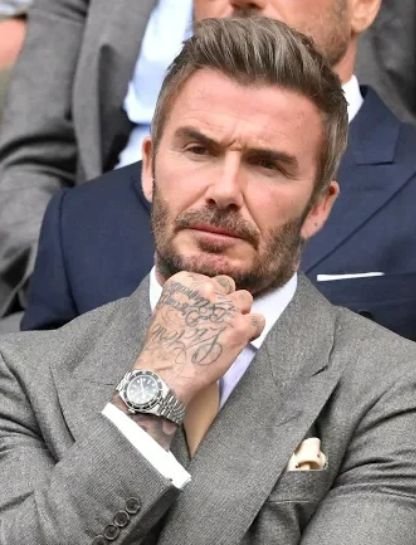
This style has a short, neatly swept-back top with controlled volume through the front and middle. The hair looks polished rather than heavily styled, while the sides become shorter and cleaner around the ears.
The back remains compact and tidy instead of forming a long mullet shape. Use a blow-dryer to direct the hair backward, then finish with a small amount of matte paste or lightweight pomade for definition and hold.
Best For: Oval, square, and rectangular faces; suitable for straight or slightly wavy medium-density hair and a refined appearance.
Tell Your Barber: Ask for a short swept-back textured top with controlled volume and a clean burst fade around the ears and sides.
Maintenance: Refresh the fade every 2–3 weeks and reshape the top every 4–5 weeks.
Short Swept-Up Quiff with Burst Fade
Short Swept-Up Quiff with Burst Fade
This haircut features a compact quiff that rises gently from the forehead and moves slightly backward. The front has more height than the middle and back, creating a structured shape without excessive volume.
The sides are closely tapered around the ears and transition smoothly toward the back. Blow-dry the front upward and backward, then use a small amount of matte paste to keep the quiff lifted while preserving a natural texture.
Best For: Oval, square, and rectangular faces; works especially well with straight, thick, or medium-density hair.
Tell Your Barber: Ask for a short textured quiff with moderate front height and a clean burst fade curving around the ears.
Maintenance: Trim every 2–3 weeks to keep the fade sharp and the quiff properly shaped.
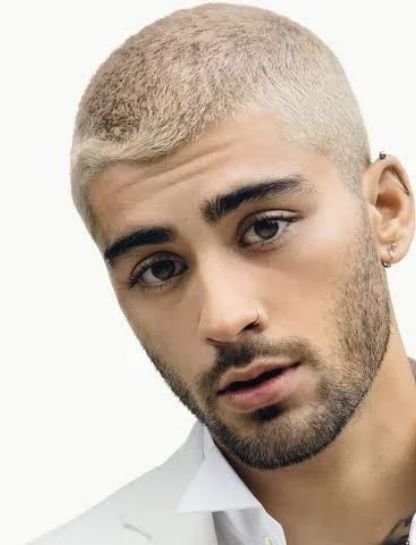
Platinum Buzz Cut with Burst Fade
Platinum Buzz Cut with Burst Fade
This is an ultra-short platinum buzz cut with an even, close-cropped appearance across the top. The front, middle, and crown stay almost uniform in length, while the shorter sides create a clean contrast around the head.
The platinum color makes the simple cut much more noticeable and gives it a bold, contemporary character. Styling is minimal, although a light moisturizer or scalp-friendly cream can help prevent the very short hair from looking dry.
Best For: Oval, square, and diamond-shaped faces; suitable for most straight and fine-to-medium hair types and a low-maintenance bold look.
Tell Your Barber: Ask for a very short uniform platinum buzz cut with a subtle burst fade around the ears and a clean natural hairline.
Maintenance: Touch up every 1–2 weeks for maximum sharpness and maintain the platinum color as roots appear.
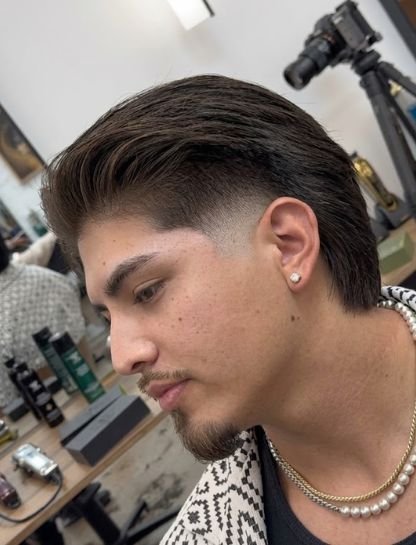
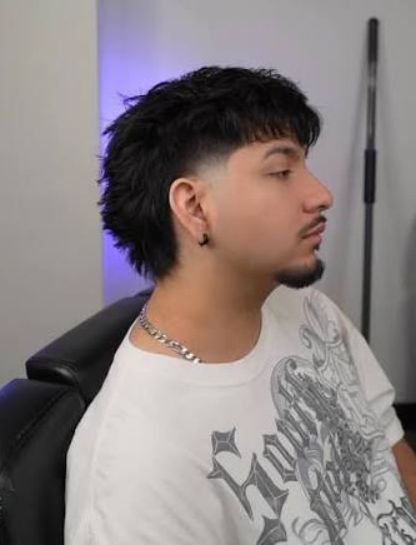
Textured Slicked-Back Cut with Longer Back
Textured Slicked-Back Cut with Longer Back
This hairstyle combines a swept-back top with noticeably more length toward the back. The front and middle are directed backward, creating a clean flow, while the back carries additional length for a relaxed, slightly rebellious silhouette.
The sides are shorter and tapered around the ears, creating contrast between the neat perimeter and longer upper-back section. Apply lightweight styling cream or matte pomade to damp hair, then blow-dry backward to establish the direction before adding a small amount of product.
Best For: Oval, square, and heart-shaped faces; particularly suitable for straight to slightly wavy medium or thick hair.
Tell Your Barber: Ask for a textured slicked-back top with extra length through the back and a low, clean taper around the ears.
Maintenance: Clean up the sides every 2–3 weeks while trimming the longer back only when its shape becomes uneven.
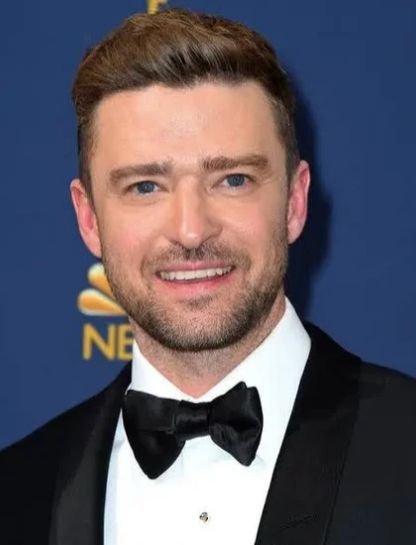
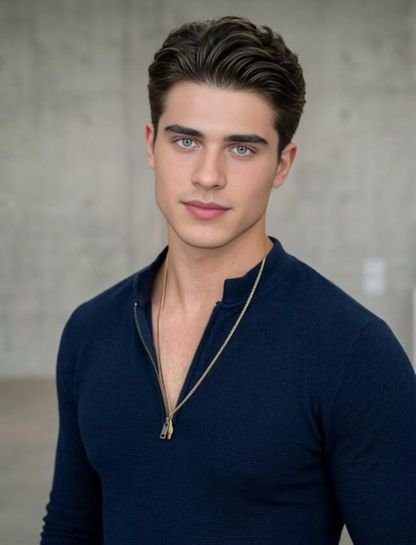
Classic Short Side-Swept Cut
This haircut has a short, neat top that is brushed slightly to one side, creating a traditional and polished appearance. The front has modest volume, while the middle and crown remain compact rather than forming a large quiff.
The sides are closely tapered and blend naturally into the back, giving the haircut a clean formal outline. A small amount of low-shine pomade or styling cream is enough to direct the hair and keep the side-swept finish controlled.
Best For: Oval, square, round, and rectangular faces; ideal for straight to slightly wavy fine or medium-density hair.
Tell Your Barber: Ask for a short classic side-swept top with subtle front volume and neatly tapered sides and back.
Maintenance: Schedule a trim every 2–3 weeks to keep the sides tidy and the top proportionate.
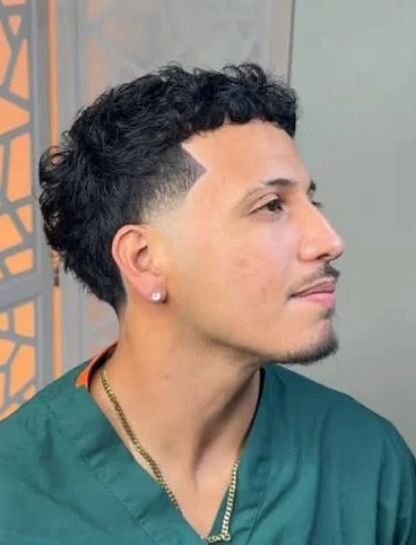
Short Curly Textured Crop with Burst Fade
Short Curly Textured Crop with Burst Fade
This style features naturally curly or wavy texture through the top with a short, slightly forward shape. The front has soft movement rather than a long fringe, while the middle and crown retain enough curl to create natural dimension.
The sides are much shorter and curve cleanly around the ears, making the textured top stand out. Apply curl cream or a lightweight leave-in product to damp hair, then allow it to air-dry or use a diffuser to preserve the curl pattern without creating excessive frizz.
Best For: Oval, square, and heart-shaped faces; best for naturally wavy or curly medium-density hair.
Tell Your Barber: Ask for a short curly textured crop with moderate length on top and a clean burst fade around the ears.
Maintenance: Refresh the fade every 2–3 weeks and reshape the curly top every 4–5 weeks.
Curly Textured Crop with Tapered Sides
Curly Textured Crop with Tapered Sides
This haircut keeps natural curl and texture across the top while maintaining a relatively short overall shape. The front sits forward naturally, and the middle and crown have enough density to show the curl pattern without creating excessive height.
The sides are tapered shorter to frame the head and make the curls more prominent from the front and profile. Use a small amount of curl cream on damp hair and gently scrunch with the fingers, then let it dry naturally or use a diffuser on low heat.
Best For: Oval, square, and heart-shaped faces; suitable for curly or wavy medium-density hair and a natural textured appearance.
Tell Your Barber: Ask for a short curly crop that keeps natural texture on top with clean tapered sides around the ears.
Maintenance: Trim every 3–4 weeks to maintain the shape while allowing enough length for the curls to remain defined.
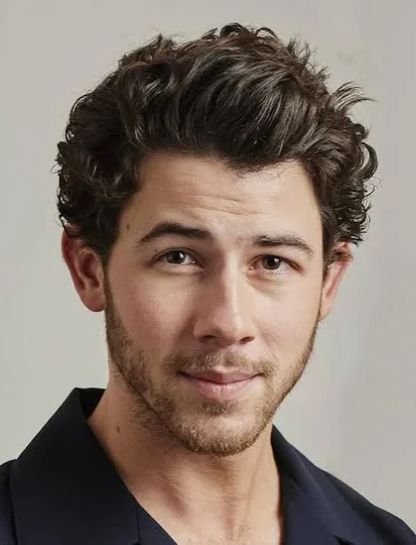
Curly Textured Crop with Low Taper
Curly Textured Crop with Low Taper
This hairstyle has naturally textured hair through the top and front, with the curls or waves kept relatively short and controlled. The front falls naturally toward the forehead, while the middle and crown provide soft volume and movement.
The sides are tapered close to the head without creating an exaggerated fade, giving the style a balanced and natural appearance. Work a lightweight curl cream through damp hair, shape the curls with your fingers, and let them air-dry for a softer finish.
Best For: Oval, square, and heart-shaped faces; works best with naturally curly or wavy hair and medium density.
Tell Your Barber: Ask for a short curly textured top with natural forward movement and a low, clean taper around the ears.
Maintenance: Get the sides cleaned up every 2–3 weeks and reshape the top every 4–5 weeks.
Short Textured Crop with Burst Fade
Short Textured Crop with Burst Fade
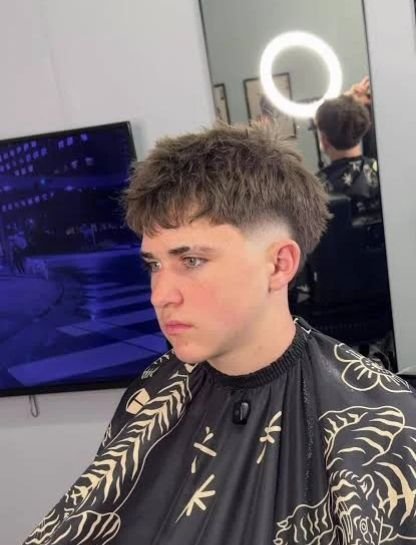
This haircut features a short, textured top with a slightly messy finish and a compact forward fringe. The front and middle carry the main texture, while the crown remains controlled and blends into the shorter back.
The sides are tapered closely around the ears, creating a noticeable contrast between the textured top and clean perimeter. Use matte clay or styling powder on dry hair, working it through the top with your fingers to create separation without making the hair look overly shiny.
Best For: Oval, square, and heart-shaped faces; ideal for straight to slightly wavy medium-density hair and a modern, effortless look.
Tell Your Barber: Ask for a short messy textured crop with a piecey forward fringe and a clean burst fade around the ears.
Maintenance: Trim every 2–3 weeks to keep the fade sharp and the textured top from becoming bulky.
How to cut a burst fade
A professional barber normally begins by deciding where the fade should start and how much length should remain around the sides, top, and back. The hair around the ear is then shaped into the characteristic curved burst pattern.
The barber uses progressively longer guards to create a smooth transition. The shortest section is usually closest to the ear, while the surrounding hair becomes gradually longer as it moves upward and backward.
Step-by-step cutting process
Establish the shape: The barber identifies the natural position of the ear and plans the curved fade around it.
Create the shortest area: Clippers are used around the ear to establish the lowest section of the fade.
Build the burst: The fade is expanded outward in a semicircular pattern rather than straight across the side.
Blend the lengths: Different clipper guards remove visible lines between short and longer sections.
Shape the top: The top is cut according to the chosen style, such as a crop, quiff, or textured finish.
Refine the back: The neckline and back are blended so the burst fade looks balanced from every angle.
Finish the edges: The barber cleans the temples, hairline, around the ears, and neckline for a sharper appearance.
The exact technique can vary according to hair texture and the desired result. Curly hair usually needs a softer transition, while straight hair can show sharper contrast between the fade and longer top.
Tools you’ll need
Cutting a burst fade at home can be challenging because the curved shape and blending require precision. Professional clippers and trimmers make it easier to create a clean result.
Tool
Purpose
Hair clippers
Create the main fade and remove bulk
Clipper guards
Control different lengths during blending
Detail trimmer
Clean the hairline and areas around the ears
Barber comb
Separate and control sections
Hair scissors
Shape and reduce length on top
Clipper brush
Remove loose hair while cutting
Hand mirror
Check the sides and back
Styling product
Finish and define the hairstyle
For a DIY haircut, good lighting and multiple mirrors are also useful. However, getting the curved burst fade even on both sides is difficult without professional experience.
How to Choose the Right Burst Fade for You
The best burst fade should complement the hairstyle you plan to wear on top. Choosing the fade first without considering the top can make the haircut look unbalanced.
Choose a low burst fade
A low burst fade is subtle and leaves more hair around the sides. It is a good option if you want a professional appearance without an extremely noticeable fade.
Choose a mid burst fade
A mid burst fade creates more contrast and gives the haircut a stronger modern appearance. It works well with textured crops, quiffs, and medium-length hairstyles.
Choose a high burst fade
A high burst fade removes more hair from the sides and creates a bold contrast with the top. It is particularly effective with curly hair, mohawks, and modern mullets.
Choose a skin burst fade
A skin burst fade tapers down to almost bare skin around the ear. It produces a crisp, high-contrast appearance but usually requires more frequent maintenance.
Match the fade to your hair type
Straight hair shows the fade transition clearly and works well with structured styles. Wavy hair adds natural movement, while curly hair creates a strong contrast between the textured top and clean sides.
Thick hair can handle a stronger fade because there is plenty of density on top. Fine hair often looks better with a softer fade and enough length on top to maintain visual volume.
Match the fade to your face shape
Oval faces can wear almost any burst fade variation. Square faces often look good with textured or slightly voluminous tops that complement their stronger jawline.
Heart-shaped faces can benefit from controlled volume that balances a narrower chin. For rectangular faces, excessive height may make the face appear longer, so a flatter textured top can create better proportions.
Best Hair Products for a Burst Fade
The fade itself does not require styling product, but the longer hair on top often does. The right product depends on your hair texture and the finish you want.
Matte clay works well for textured crops and thick straight hair. It provides separation and control without making the hair look overly shiny.
Styling powder is useful for fine or medium-density hair because it can add lightweight texture and volume. It works especially well when you want a messy, natural finish.
Matte paste provides flexible hold for quiffs, side-swept styles, and textured tops. It gives more control than powder while maintaining a natural appearance.
Pomade is better for polished styles such as slicked-back hair or a defined side part. Depending on the formula, it can provide medium to strong hold with a low-shine or glossy finish.
Curl cream is ideal for curly or wavy hair. It helps define the natural curl pattern, reduce frizz, and maintain softness without making the hair excessively stiff.
For most burst fade hairstyles, start with a small amount of product and add more only when necessary. Too much product can flatten the top and reduce the contrast that makes the burst fade attractive.
Frequently Asked Questions
What is a burst fade?
A burst fade is a curved fade that tapers around the ears while usually keeping more length toward the back.
Is a burst fade good for curly hair?
Yes, a burst fade works especially well with curly hair because the short sides create strong contrast with the natural volume on top.
How long does a burst fade last?
A burst fade usually looks sharp for around two to three weeks, although growth speed and fade length affect how often it needs trimming.
Is a burst fade the same as a taper?
No, a burst fade creates a more noticeable curved fade around the ear, while a taper generally reduces hair gradually around the sideburns and neckline.
What should I tell my barber for a burst fade?
Tell your barber the fade height you want and ask for a curved fade around the ears while specifying how much length you want to keep on top and in the back.
Final Words
A burst fade is a versatile modern haircut that combines clean sides with more freedom on top and toward the back. Its curved shape makes it different from traditional fades, while its ability to work with straight, wavy, curly, thick, and fine hair makes it highly adaptable. Choosing the right fade height, top style, and maintenance routine can give you a sharp look that fits both your hair type and personal style.
Hi, I’m Oliver Bennett. I’m passionate about men’s hairstyles and love exploring modern cuts that are easy to understand and easy to ask your barber for. On this website, I share simple guides on styles like burst fades, mullets, curtain cuts, tapers, and other trending men’s hairstyles. My goal is to help you find a haircut that matches your hair type, face shape, and personal style.