HairHow to Choose the Best Haircut for Your Face Shape (2026 Guide)
How to Choose the Best Haircut for Your Face Shape (2026 Guide)
September 22, 2026
/
No Comments
/
Oliver Bennett
The right haircut can change the way your face looks. Your face shape gives you a useful starting point. Your hair type also affects how a style sits and moves. The right fade can sharpen your overall appearance. Texture can add volume, movement, or structure. This guide helps you match modern haircuts with your face shape and hair type.
Your face shape affects how different haircuts look from the front and side. A style that adds height can make some faces look longer, while a style with more width can create better balance on longer faces. That is why you should consider your facial proportions before choosing a haircut.
Face shape does not limit your options. It simply helps you understand which haircut features may complement your natural structure. Fade height, top length, fringe position, texture, and beard shape can all change the final appearance.
A good haircut should also match your natural hair. Straight, wavy, curly, thick, and coily hair behave differently. The best hairstyle combines your face shape with your hair texture, density, and daily styling routine.
How to Identify Your Face Shape
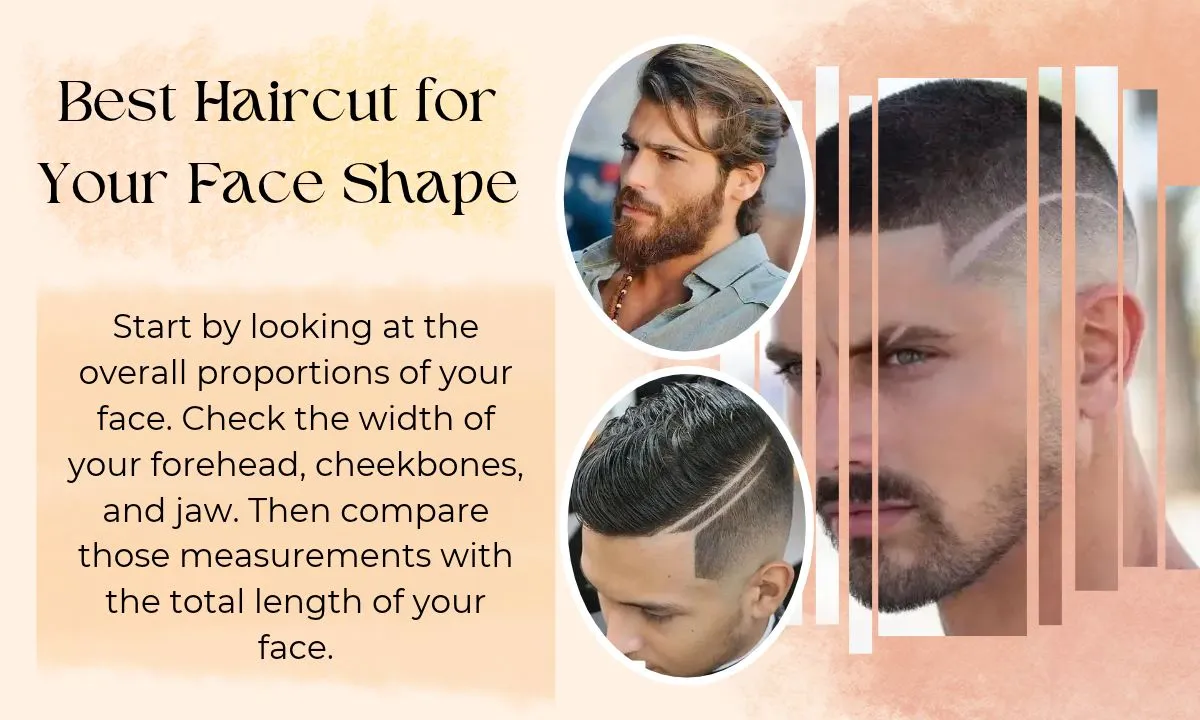
Start by looking at the overall proportions of your face. Check the width of your forehead, cheekbones, and jaw. Then compare those measurements with the total length of your face.
You can use a front-facing photo or look directly into a mirror with your hair pulled away from your forehead. Focus on the overall outline rather than one individual feature.
Common men’s face shapes include:
Oval: Longer than wide with balanced proportions.
Round: Similar width and length with softer angles.
Square: Strong jaw and forehead with similar overall width.
Diamond: Wider cheekbones with a narrower forehead and jaw.
Heart: Wider forehead with a narrower chin.
Oblong: Noticeably longer than it is wide.
If your face does not fit one category perfectly, that is normal. Many people have a combination of characteristics from two face shapes.
Match Your Hair Type With the Right Haircut
Your face shape is only one part of the decision. Your natural hair texture can determine whether a haircut creates the intended shape.
Straight hair usually works well with structured styles such as pompadours, slicked-back undercuts, hard parts, and textured quiffs. Wavy hair naturally creates movement and works well with crops, low tapers, and textured styles.
Curly and coily hair can create strong volume without excessive styling. Styles such as curly frohawks and textured Afro frohawks use that natural texture to create a bold shape.
Your hair density also matters. Thick hair can support height and texture, while finer hair often needs lightweight products and careful cutting to maintain volume.
Consider the Fade Height and Top Length
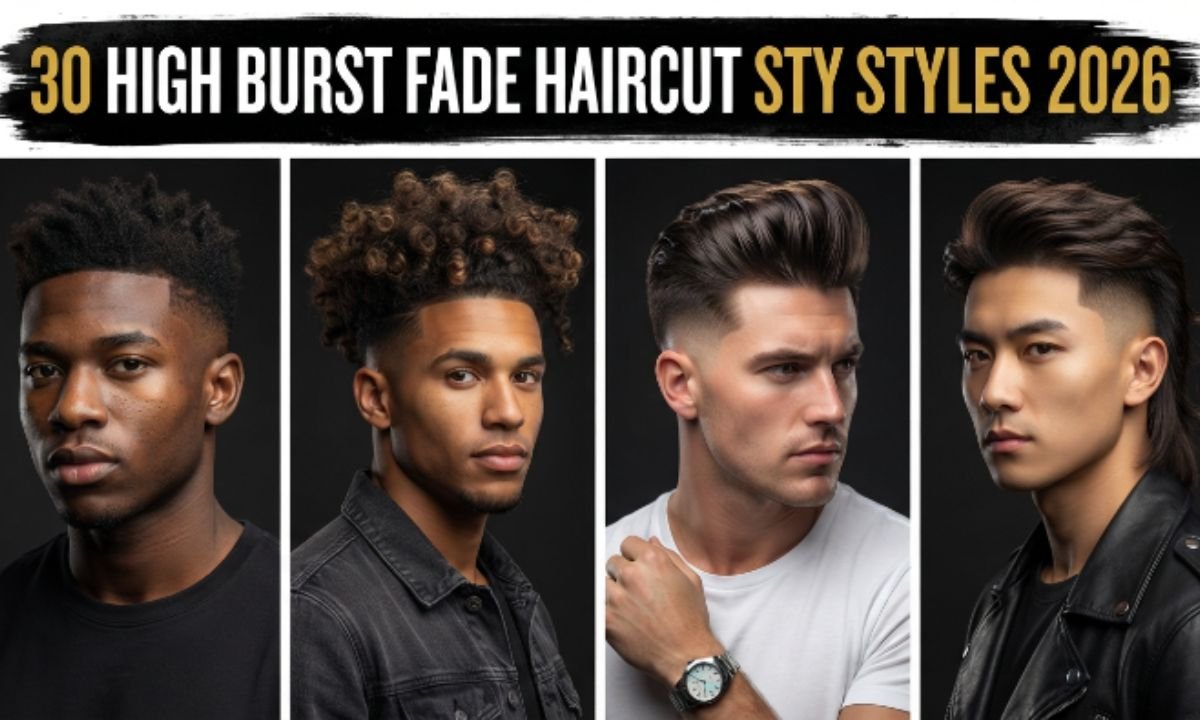
The fade changes the balance of a haircut. A low taper leaves more weight around the sides. A mid fade creates a cleaner contrast. A high skin fade removes more side volume and puts more attention on the top.
Top length also affects the final shape. Short hair creates a cleaner appearance, while longer hair gives you more options for quiffs, pompadours, slick-backs, and textured styles.
Think about the look you want before choosing the fade. A sharp high fade can create a dramatic modern appearance, while a low taper can create a softer and more natural finish.
Choose a Style That Fits Your Daily Routine
A haircut should look good outside the barbershop too. Consider how much time you want to spend styling it every morning.
Some styles need only a small amount of matte clay or sea salt spray. Others need a blow dryer, round brush, pomade, or curl-defining cream.
Your source material shows this difference clearly. The French crop uses a light application of matte clay or sea salt spray, while the textured quiff requires blow-drying and matte clay to create its height and definition.
Choose a haircut that fits your routine. A style that looks impressive but takes too much daily work may not suit your lifestyle.
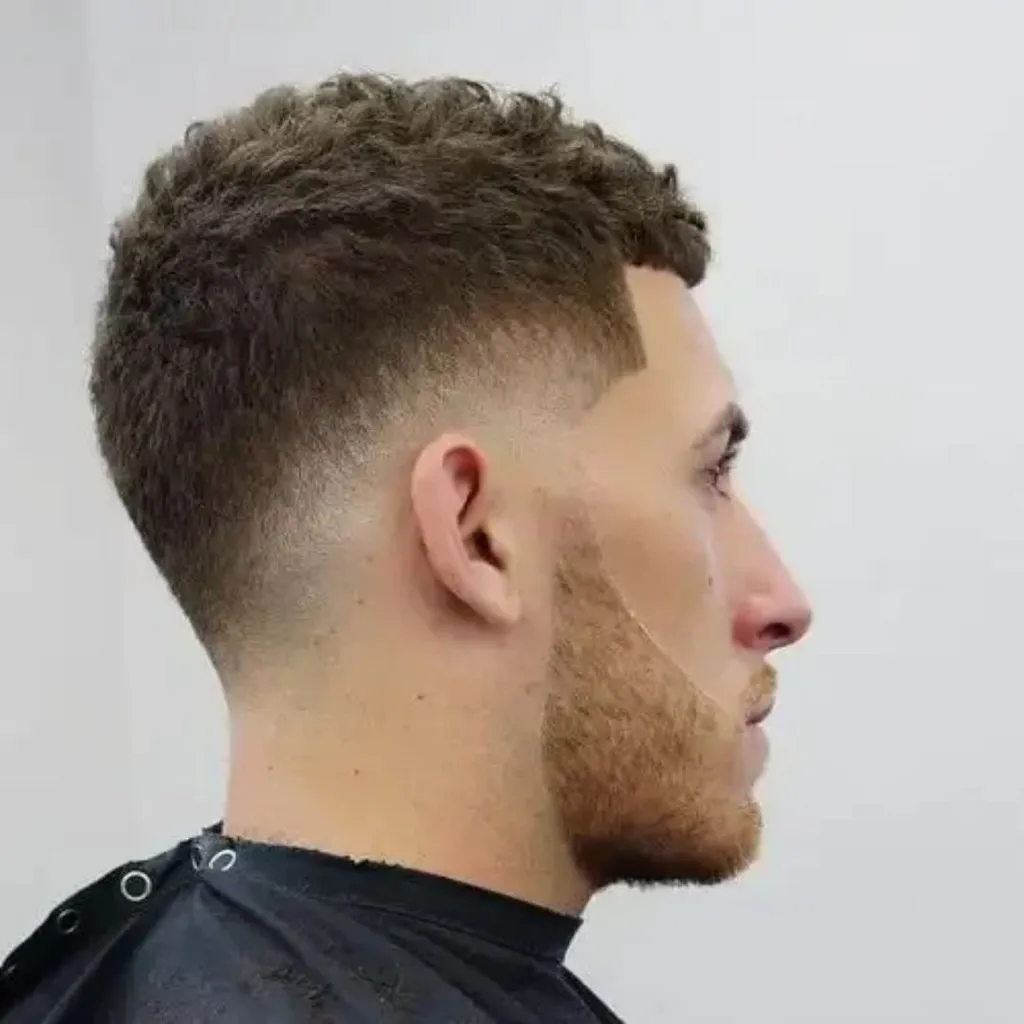
Textured French Crop with Mid Skin Fade
Textured French Crop with Mid Skin Fade
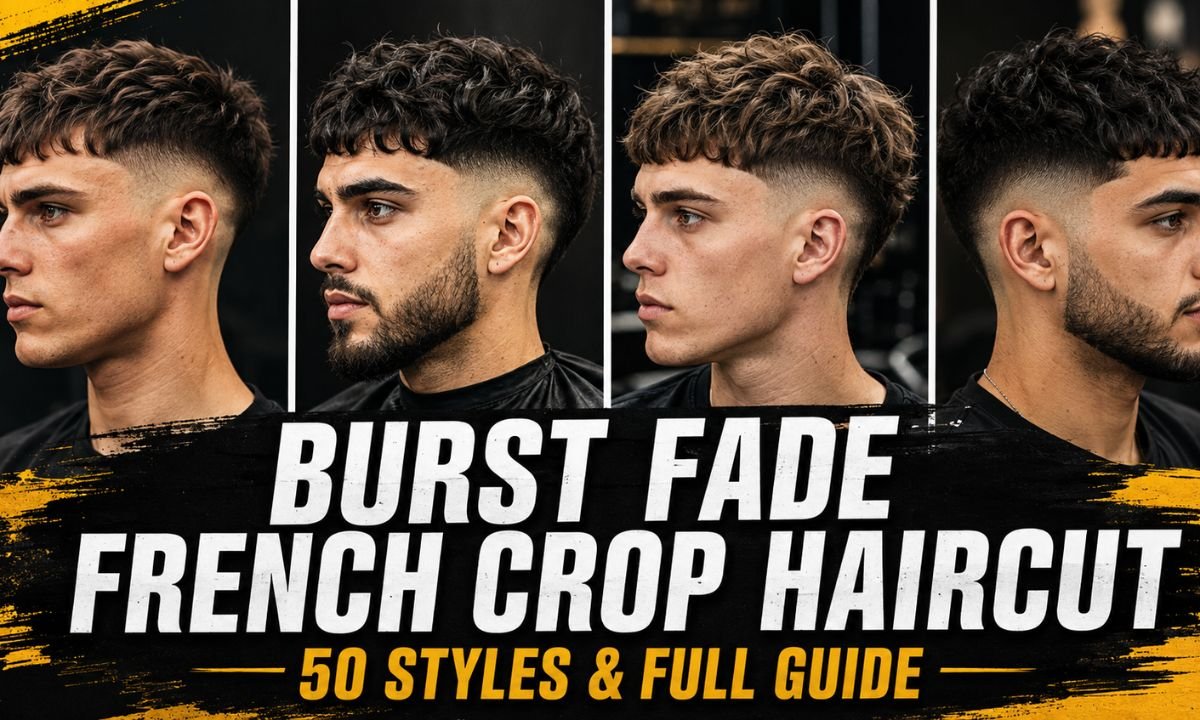
This hairstyle features short, tightly cropped curls on top with a clean lineup along the front fringe. The sides and back flow into a sharp mid skin fade that exposes clean skin around the ears and lower nape. A precise temple lineup sharpens the front profile and connects cleanly to a well-groomed beard.
Apply a light layer of matte clay or sea salt spray to enhance the natural curl pattern. Work the product through damp hair with your fingers and push the top toward the forehead. This cut delivers a low-maintenance, modern look with controlled volume and a lightweight finish.
Best For: Oval, square, and diamond face shapes with wavy, curly, or thick hair types.
Tell Your Barber: “Give me a textured French crop with a blunt fringe on top, a sharp mid skin fade on the sides and back, and clean up my hairline and beard edges.”
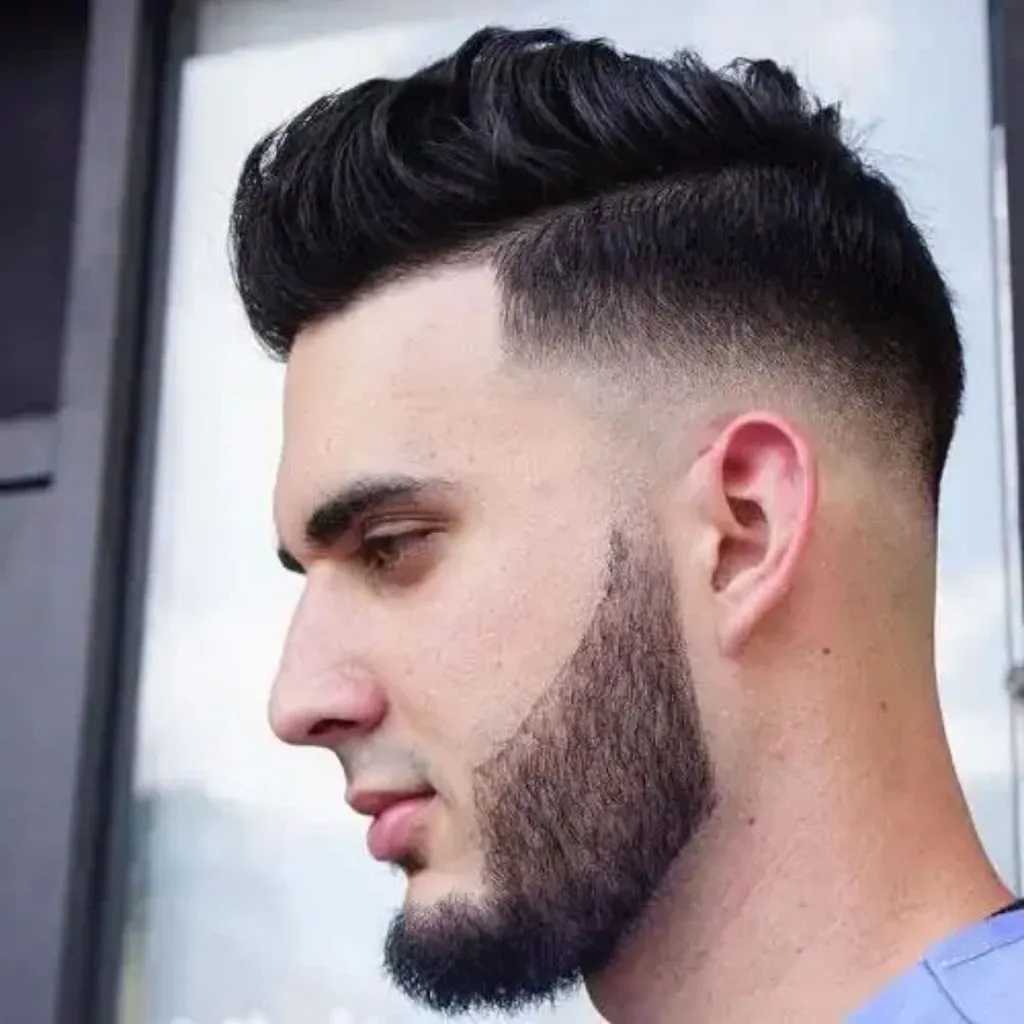
Textured Quiff with High Skin Fade
Textured Quiff with High Skin Fade
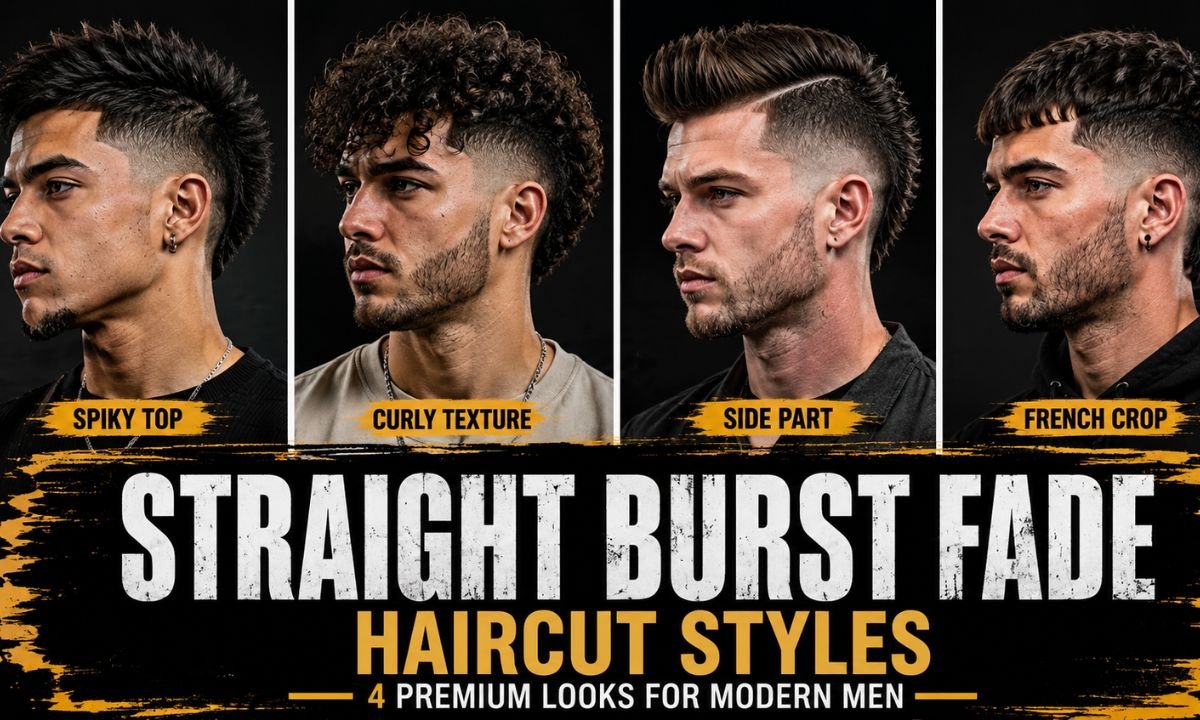
Sweeping strands at the front rise upward to create strong vertical volume and bold structure. A clean skin fade runs from the ears into the dense top and crown. A sharp hard part defines the side transition and adds contrast to the textured top.
Blow-dry damp hair upward with a round brush to lift the roots. Apply matte clay to the top and work it through the strands for strong, piecey definition. Straight or wavy hair works especially well because it creates natural height and holds the textured shape.
Best For: Oval, round, and square face shapes; thick, straight, or wavy hair types seeking a clean, sharp, modern edge.
Tell Your Barber: “Give me a high skin fade on the sides and back, carve a clean hard part on the left, and leave about 3 to 4 inches on top for a textured quiff.”
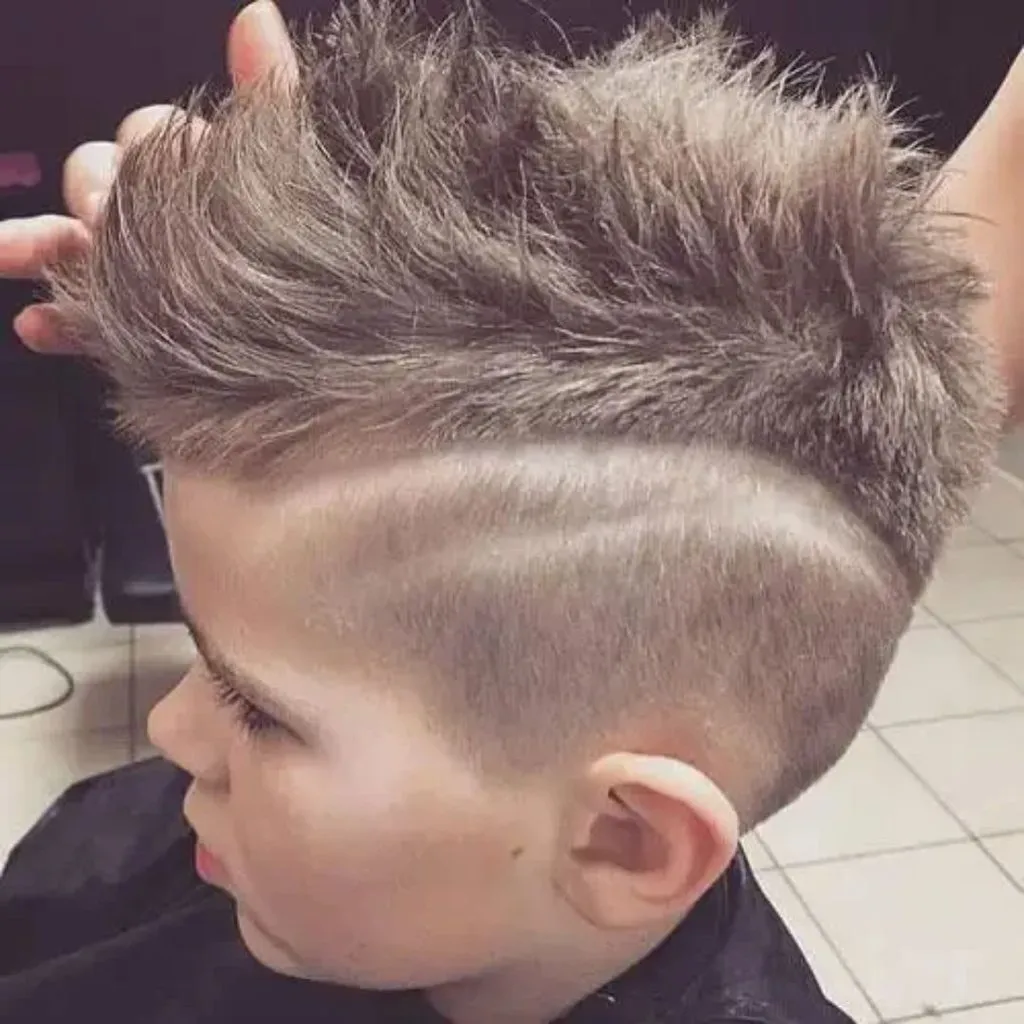
Textured Spiky Faux Hawk with Hard Part
Textured Spiky Faux Hawk with Hard Part
This haircut features closely cropped sides that taper into a short fade. A sharp razor-cut hard part separates the buzzed side from the longer top. The front and middle sections rise into bold, textured spikes that create strong vertical height.
Rub matte clay or styling wax between your palms, then pinch individual sections upward. Blow-dry the top forward and up to build height and piecey texture. Straight to medium-thick hair works well because the strands hold the spiky shape with ease.
Best For: Round, square, and oval face shapes; straight or slightly wavy, medium-to-thick hair; individuals seeking a high-energy, edgy appearance.
Tell Your Barber: “Give me a mid fade on the sides with a sharp hard part on the left, and leave about 2 to 3 inches of textured, choppy hair on top for a spiky finish.”
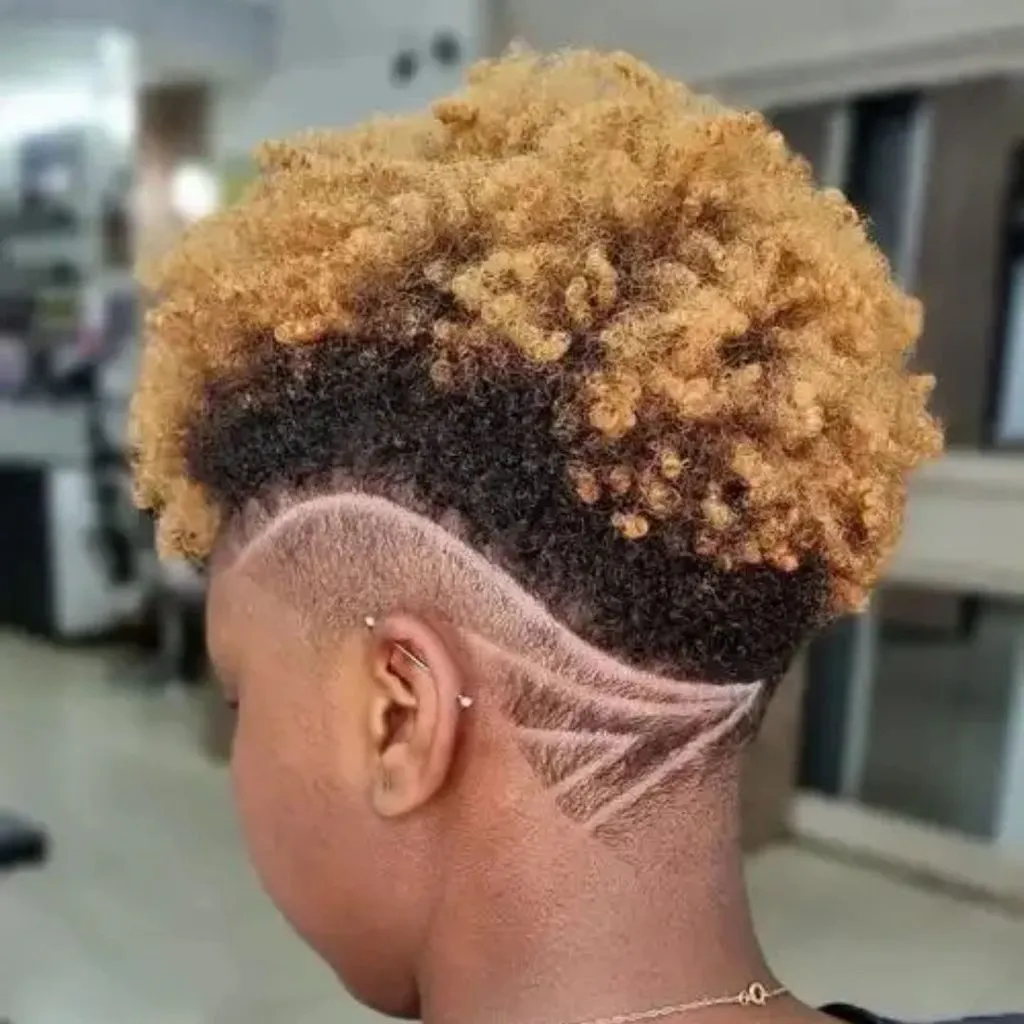
Blonde Curly Frohawk with Hair Design
Blonde Curly Frohawk with Hair Design
A clean skin fade sharpens the sides and back, while geometric designs add detail around the nape and temple areas. Dense blonde coils rise through the center from the front hairline to the crown. Dark natural roots contrast with the bright golden top and add depth to the bold, high-volume shape.
Apply curl-defining cream or hydrating leave-in conditioner to damp coils to maintain moisture and bounce. Use a twist sponge or your fingers to define individual curls across the top. Coily and kinky Type 4 hair works best because it supports the lifted, sculptural shape throughout the day.
Best For: Oval, square, and diamond face shapes; Type 4 coily or afro-textured hair; individuals seeking a bold, artistic fashion statement.
Tell Your Barber: “Give me a skin fade on the sides with geometric designs near the nape, dye the top blonde, and leave the center coils long enough for a high-volume frohawk.”
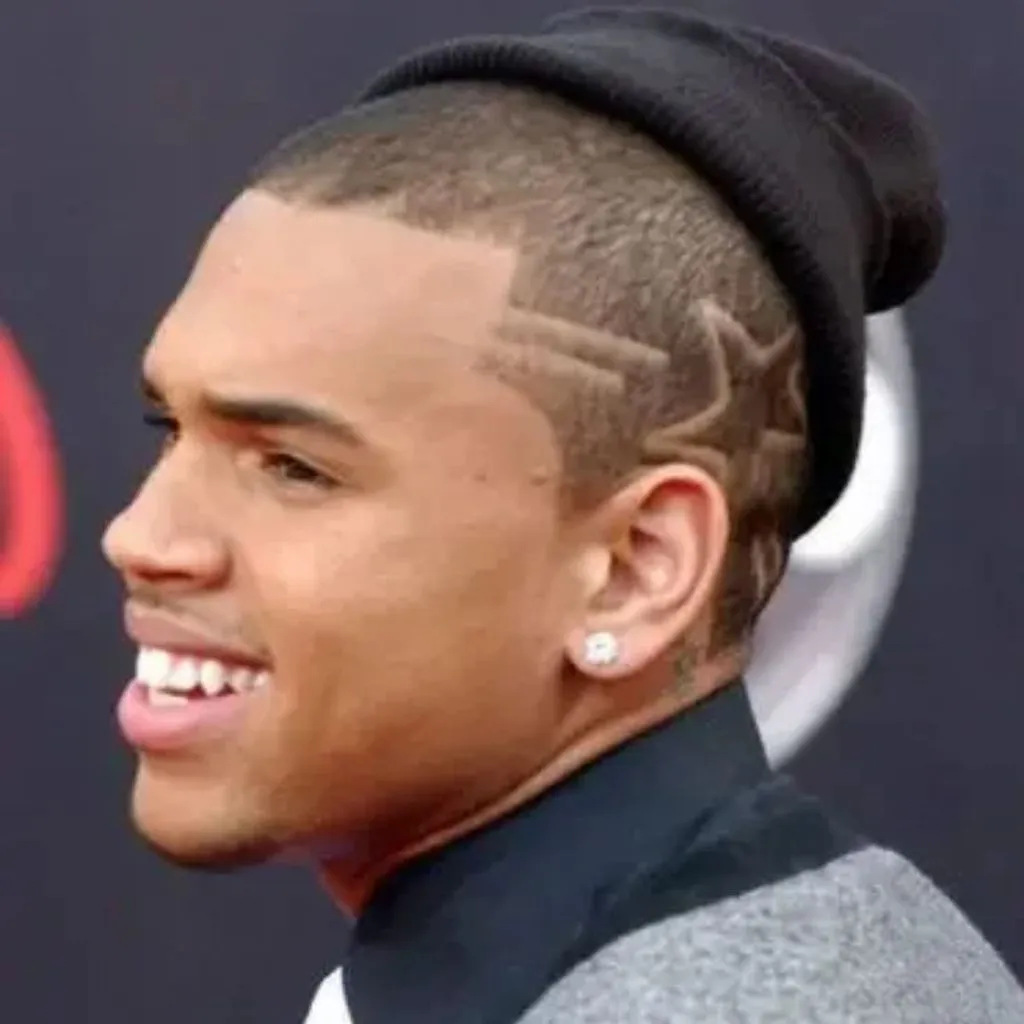
Buzz Cut with Lineup and Etched Hair Design
Buzz Cut with Lineup and Etched Hair Design
A razor-sharp lineup frames the forehead with clean, precise angles. Short, uniform hair covers the top, sides, and back beneath the beanie hat. Dual racing stripes and a carved star design add bold detail around the temple.
Maintain this ultra-short cut by brushing the hair daily with a soft-bristle wave brush. Apply lightweight scalp oil or pomade to retain moisture and add natural shine. All hair types suit this low-maintenance style because the close crop puts the focus on the scalp, lineup, and etched design.
Best For: Oval, square, and diamond face shapes; all hair types; individuals seeking a crisp, urban style with personal artistic flair.
Tell Your Barber: “Give me a uniform buzz cut with a crisp lineup, and carve a custom star and parallel-line design into my left temple.”
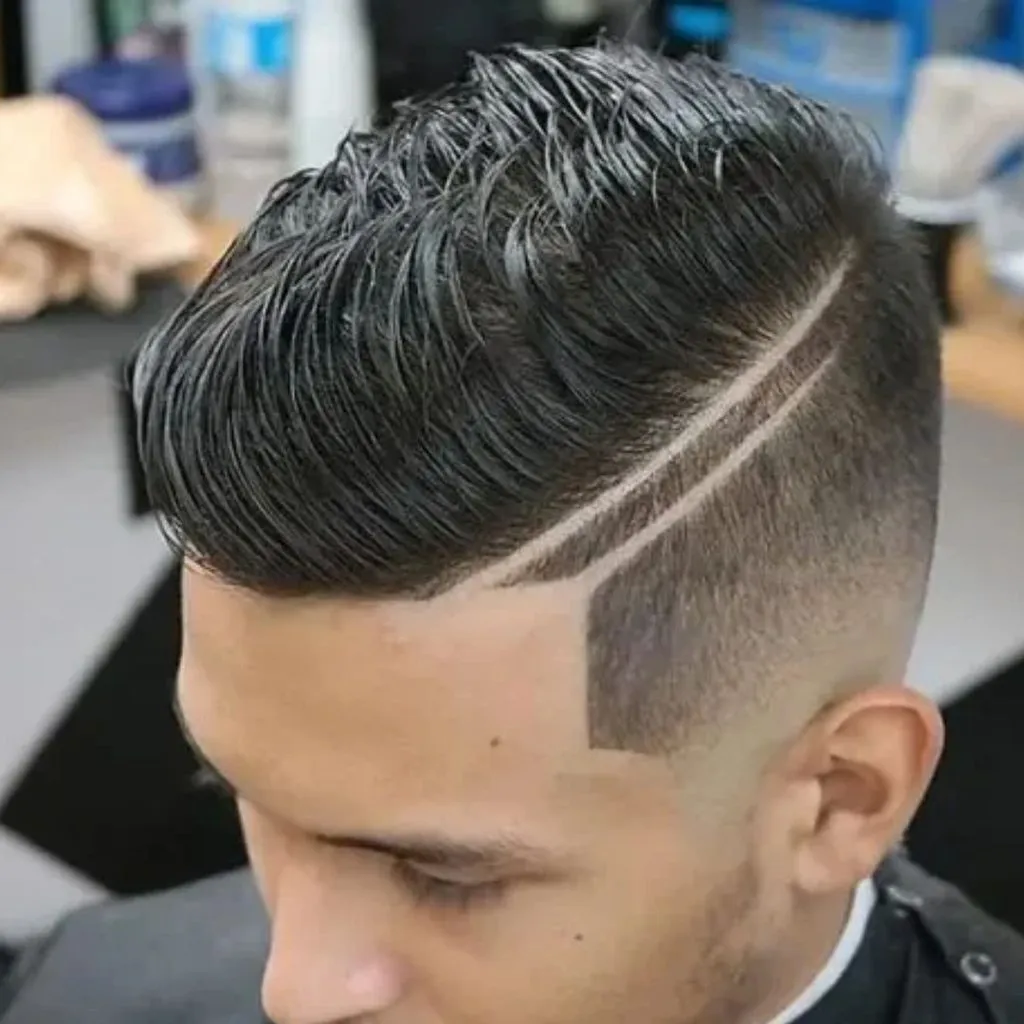
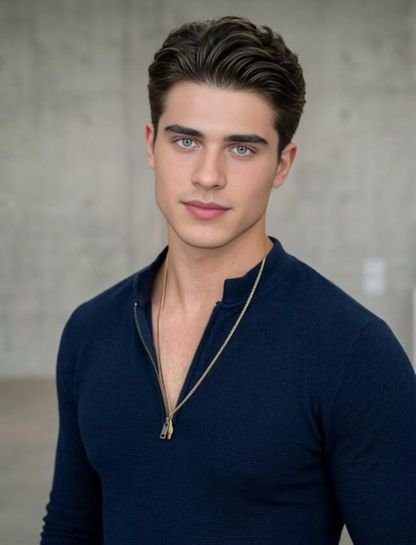
Slick Comb Over Pompadour with Double Hard Part
Slick Comb Over Pompadour with Double Hard Part
A high skin fade cuts the sides and back down to the skin, creating strong contrast with the thick top. Two sharp razor lines define the side part and separate the clean fade from the main top section. The front sweeps upward and back across the middle to form a glossy, structured pompadour.
Apply high-shine, water-based pomade to towel-dried hair for a sleek finish. Comb the hair sideways and slightly backward to create clean, visible teeth lines across the top. Straight, thick, or coarse hair works best because it supports the wet-look volume and holds the structure in place.
Best For: Oval, square, and round face shapes; straight or thick hair types; men who prefer a polished, high-contrast modern look.
Tell Your Barber: “Give me a high skin fade on the sides, carve a double hard part along the left side, and leave 3 inches on top to comb back with shine pomade.”
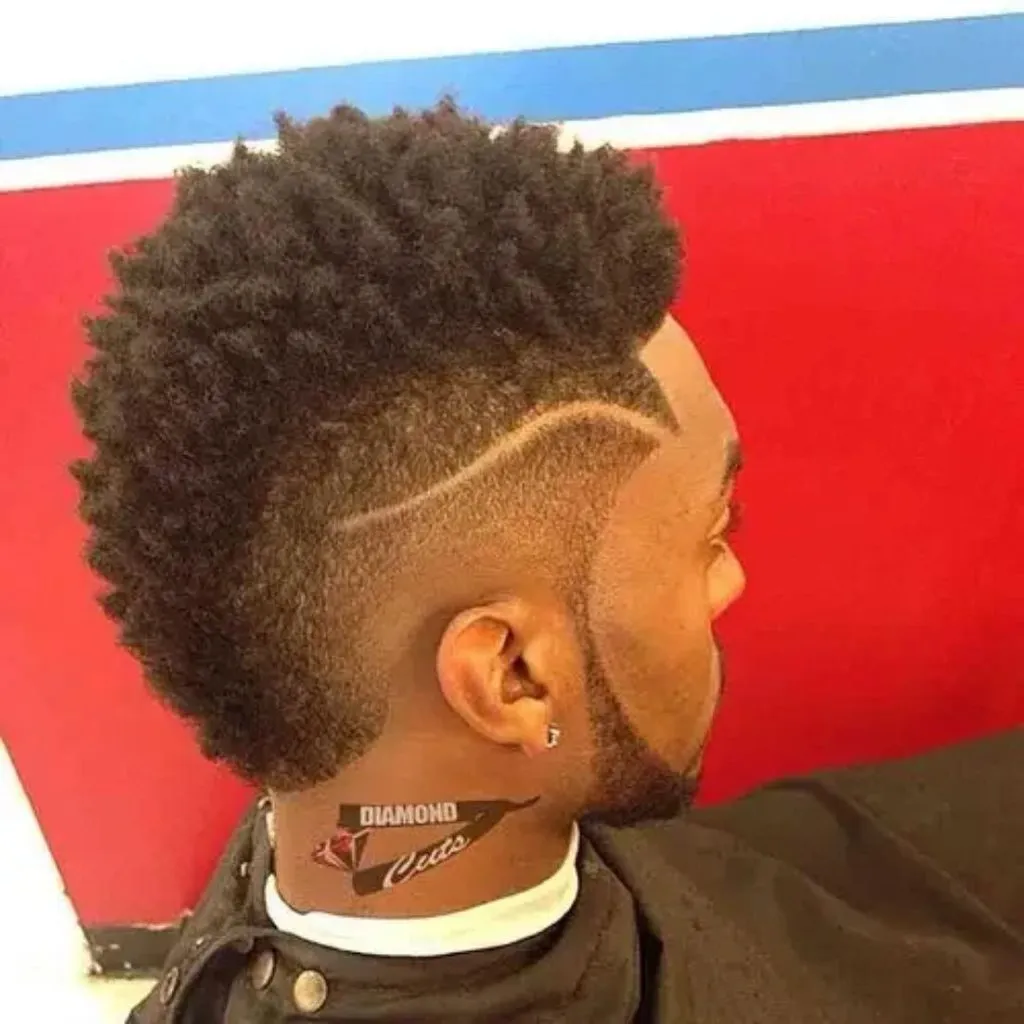
Textured Afro Frohawk with Surgical Line and Temple Fade
Textured Afro Frohawk with Surgical Line and Temple Fade
This bold cut builds high volume through the center while keeping the sides clean and tight. Short, faded temples create a sharp taper and highlight a curved surgical line. Twisted coils run from the front hairline to the nape and create a strong, defined profile.
Apply twist sponge or curl-defining cream to enhance the natural texture and build height. Thick, coily Type 4 hair provides the strength needed to hold the shape. Keep the forehead and beard connection sharply lined to frame the face with clean definition.
Best For: Oval, square, and round face shapes seeking vertical length, as well as dense, afro-textured hair types looking for a sharp, modern aesthetic.
Tell Your Barber: “Give me a burst fade frohawk with a clean arc line on the side, keep rich texture through the middle, and line up my beard sharply.”
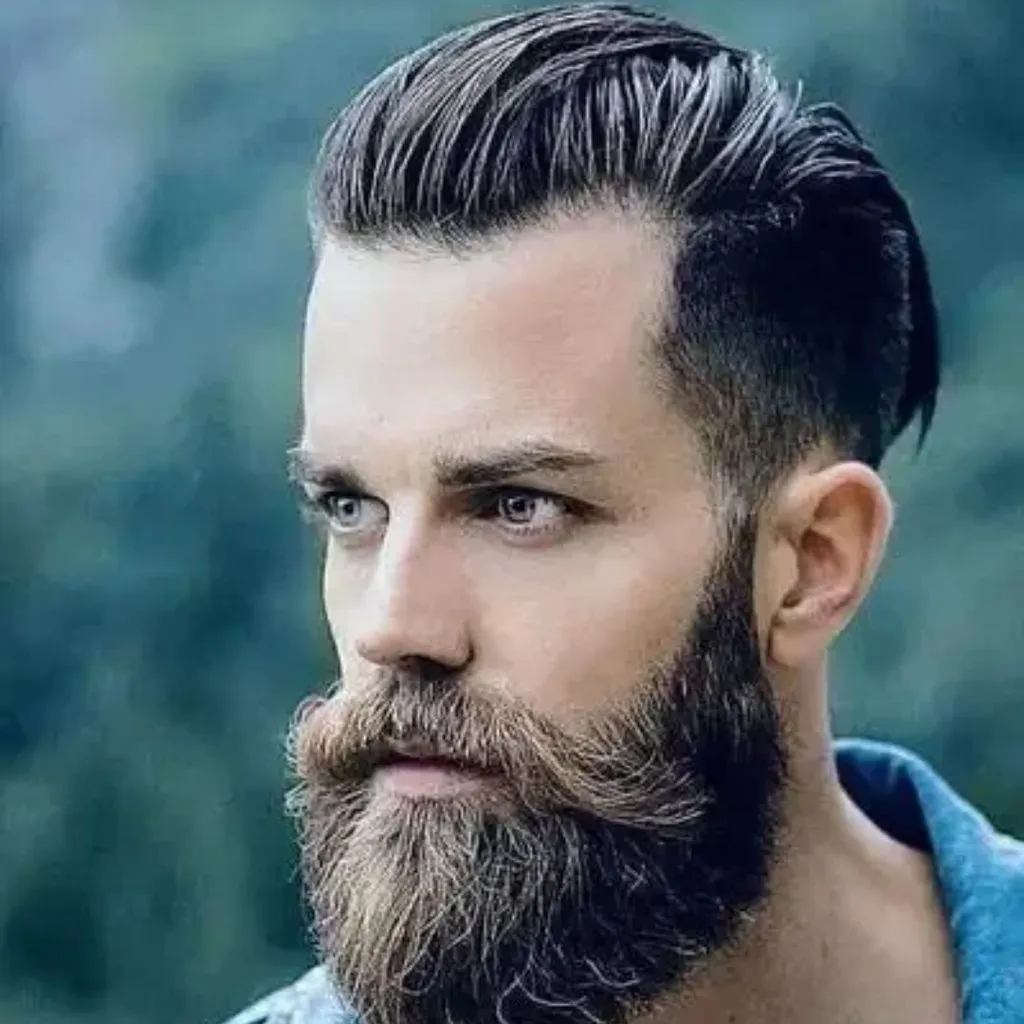
Slicked-Back Undercut with Full Beard
Slicked-Back Undercut with Full Beard
Long hair sweeps straight back from the forehead through the top, creating strong volume and direction. Short, closely cropped sides create sharp contrast with the longer top. The back tapers cleanly into the neck, while a full beard adds weight and balance to the silhouette.
Use a comb to work pliable pomade or medium-hold wax through damp hair. This controls flyaways and adds subtle shine. Straight to wavy hair handles the slicked-back direction well without losing its shape. The strong contrast between the clipped sides and dense top gives this style a distinct look.
Best For: Oval, square, or triangular face shapes; medium to thick straight hair types; men seeking a rugged, sharp aesthetic.
Tell Your Barber: “Give me a high undercut on the sides and back, leave plenty of length on top to slick straight back, and trim my full beard so it blends smoothly into the sideburns.”
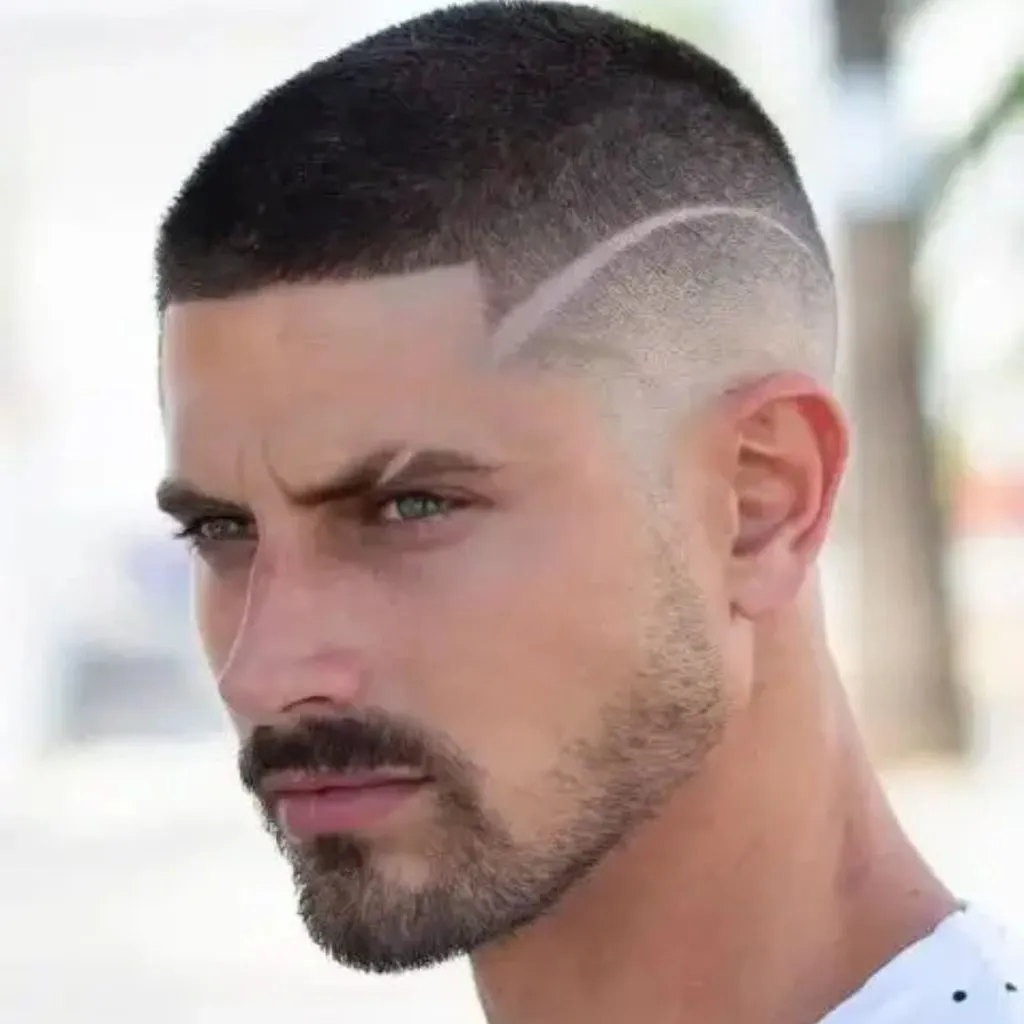
Buzz Cut Crop with High Skin Fade and Surgical Line
Buzz Cut Crop with High Skin Fade and Surgical Line
A sharp, straight-edged lineup frames the front hairline. A short, uniform buzz covers the top. A high skin fade cuts the sides down to bare skin and blends into the short top. A bold, curved surgical line cuts through the side fade and matches the slit in the eyebrow.
Apply a small amount of matte clay to dry hair for light, natural texture. Straight, thick hair holds this even length with ease, so you can skip heat styling. The surgical line and razor-sharp lineup give this buzz cut a distinct, athletic edge.
Best For: Oval, square, and chiseled face shapes; straight or coarse hair types; men seeking an edgy, athletic look.
Tell Your Barber: “Give me a high skin fade with a short buzz crop on top. Keep the front hairline sharp and carve a clean, curved line into the side.”
Textured Quiff with High Skin Fade and Full Beard
Textured Quiff with High Skin Fade and Full Beard
Textured strands sweep up and forward at the front, creating strong vertical height across the top. A high skin fade cuts the sides down to bare skin, while the back tapers tight above the neck. A full, dense beard connects to the sideburns and balances the height with strong jaw definition.
Work matte clay or styling paste through towel-dried hair to separate and shape the strands. Blow-dry the front upward with a round brush to lift the roots and build volume. Straight or wavy hair holds this textured shape well and creates a sharp contrast between the skin fade and the longer top.
Best For: Oval, round, and square face shapes; straight or wavy hair types; men seeking vertical balance and a sharp, modern look.
Tell Your Barber: “Give me a high skin fade on the sides. Leave enough textured length on top for a quiff, and shape my beard cleanly into the sideburns.”
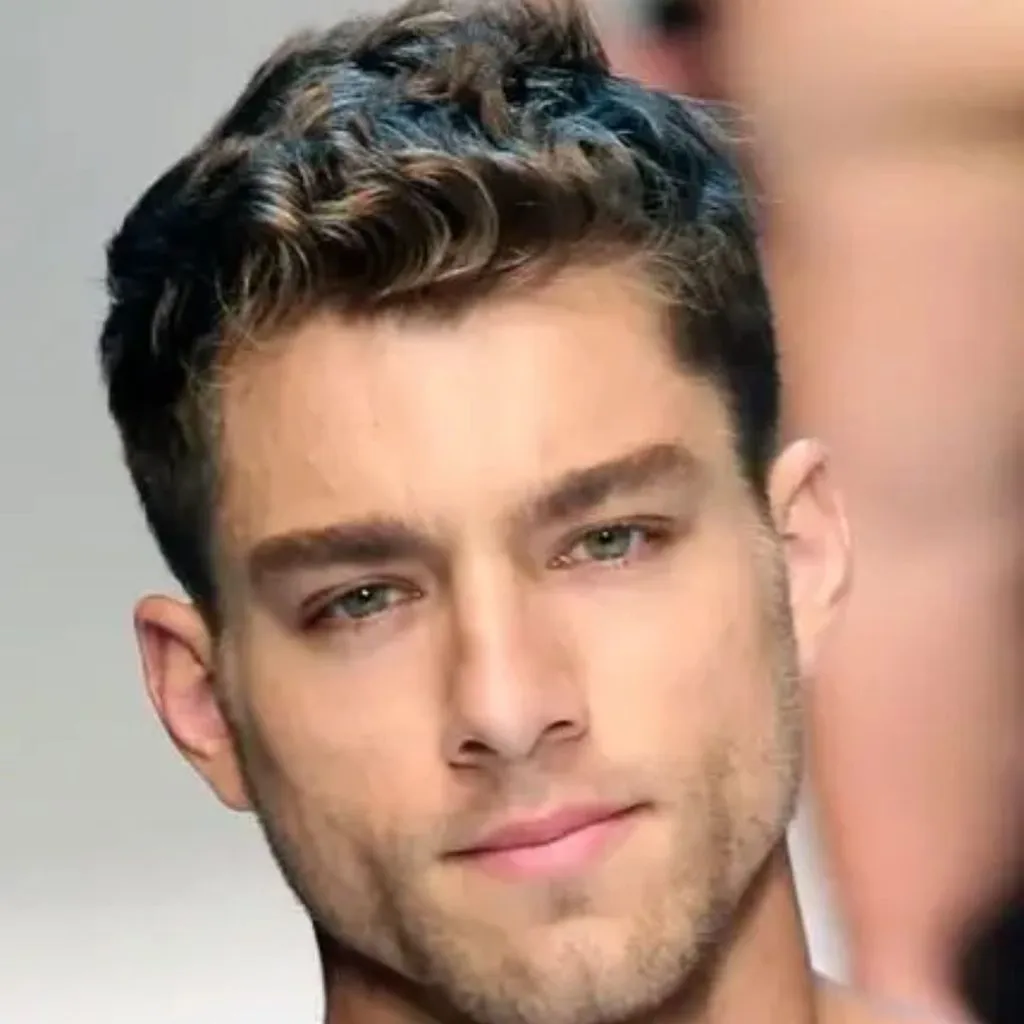
Textured Wavy Crop with Low Taper
Textured Wavy Crop with Low Taper
This cut features a clean front fringe that sweeps upward. Short sides and a tapered back frame the head and keep the shape neat. Natural waves add movement through the crown. Subtle blue highlights on top add contrast and emphasize the textured finish.
Apply matte clay or sea salt spray to damp hair. Work the product through the top with your fingers to lift the roots and define the natural waves. Thick or naturally wavy hair works especially well with this cut. It needs little daily styling while maintaining strong texture and movement.
Best For: Oval, square, and heart-shaped faces; naturally wavy or thick hair types seeking a textured, effortless look.
Tell Your Barber: “Give me a low taper fade on the sides and back. Leave about 2 to 3 inches on top with plenty of texture to enhance the natural waves.”
How to Choose the Right Haircut From These Styles
Start with your face shape, then consider your hair texture. A round face can work well with styles that add vertical height, such as a textured quiff or faux hawk. An oval face gives you more flexibility. You can try crops, quiffs, buzz cuts, pompadours, or slicked-back styles.
Your hair type should guide the final choice. Straight hair works well with structured quiffs, pompadours, and slick-backs. Wavy hair adds natural movement to crops and textured quiffs. Curly and coily hair can create strong frohawks and textured styles with less product.
Think about maintenance, too. A buzz cut needs less styling than a pompadour. A French crop takes less daily work than a high-volume quiff. Choose a haircut that fits your face shape, hair type, style goals, and daily routine.
How to Explain Your Haircut to Your Barber
A haircut name does not always communicate every detail. Tell your barber exactly what you want.
Mention:
Fade height
Top length
Fringe length
Texture
Hard part
Hair design
Beard connection
Styling preference
For example, you can describe the textured French crop by asking for a blunt fringe, mid skin fade, clean hairline, and defined beard edges. The supplied material provides similar barber instructions for every hairstyle.
Bring a clear reference image when possible. Then explain what you like about it. Your barber can adjust the cut to suit your hairline, density, and natural texture.
Haircut Maintenance Tips for a Sharp Look
A good haircut needs regular maintenance to keep its original shape.
Follow these simple habits:
Use the right styling product for your hair texture.
Avoid applying too much product at once.
Wash and condition your hair according to its needs.
Keep your neckline and edges clean.
Trim your beard regularly if it connects to your haircut.
Ask your barber how often the fade should be refreshed.
Protect curly and coily hair from excessive dryness.
Use a blow dryer only when the hairstyle requires extra volume.
Your styling method should match the haircut. Matte clay works well for textured crops and quiffs, while high-shine pomade suits a polished pompadour. Curl-defining products work better for frohawks and other coily styles.
Frequently Asked Questions
What is the best haircut for my face shape?
Choose a haircut that complements your face shape while also matching your natural hair texture, density, and styling routine.
Which haircut suits an oval face?
Oval faces can work well with styles such as textured crops, quiffs, pompadours, buzz cuts, and slicked-back looks.
What haircut makes a round face look longer?
A textured quiff, faux hawk, or another style with controlled vertical height can create more visual length.
Is a fade good for every face shape?
A fade can work with many face shapes, but the barber should adjust its height and side weight to suit your proportions.
How do I choose a haircut for thick or curly hair?
Choose a style that works with your natural texture, such as a textured crop, curly frohawk, or Afro frohawk, instead of fighting the hair’s natural movement.
Conclusion
Choosing the best, most handsome haircut for your face shape starts with understanding your natural proportions. Then match your face shape with your hair texture, density, hairline, and lifestyle. Use your face shape as a guide, not a strict rule.
A textured French crop creates a clean, low-maintenance look. A quiff or faux hawk adds strong vertical height. A buzz cut keeps your style simple, while a pompadour or slicked-back undercut adds structure. Curly and coily hair can create bold shapes with frohawk and textured styles.
Once you know which styles suit your face and hair, you can give your barber clear instructions. This helps you choose a haircut that looks sharp and fits your daily routine.
Hi, I’m Oliver Bennett. I’m passionate about men’s hairstyles and love exploring modern cuts that are easy to understand and easy to ask your barber for. On this website, I share simple guides on styles like burst fades, mullets, curtain cuts, tapers, and other trending men’s hairstyles. My goal is to help you find a haircut that matches your hair type, face shape, and personal style.